

Key Highlights
- Emergency dentist costs vary by treatment, with initial exams typically ranging from $100–$300 and higher costs for procedures like root canals, extractions, or crown repairs.
- Dental emergencies include severe toothaches, knocked-out teeth, fractures, infections, swelling, and lost restorations.
- Insurance may cover emergency exams and diagnostics, but coverage depends on the plan’s terms, deductibles, and annual limits.
- Emergency dental care without insurance depends on the diagnostics and procedures performed during the visit.
- Payment options may include in-house plans, healthcare financing, dental discount programs, and HSA/FSA funds.
- Hospital ERs usually provide pain relief or antibiotics, but rarely perform dental procedures.
- Dentist Tree of the Heights in Houston provides emergency exams, digital diagnostics, and treatments such as extractions and restorative repairs.
Dental emergencies do not just bring pain; they bring uncertainty about cost. A sudden toothache, cracked tooth, or swelling can force you to seek care quickly, often without knowing how much you will have to pay.
For many people, the fear of unexpected dental bills leads to delaying treatment or avoiding it altogether. Waiting can turn a minor issue into a more serious and expensive problem.
According to the American Dental Association, around 2 million emergency room visits each year in the United States are for dental pain. Many of these cases could be treated more affordably by local dentists, saving up to $1.7 billion.
Emergency dental costs can vary widely based on the issue, treatment, and insurance coverage. This guide explains what counts as a dental emergency, what insurance typically covers, and what you can expect to pay.
What Situations Actually Qualify as a Dental Emergency?
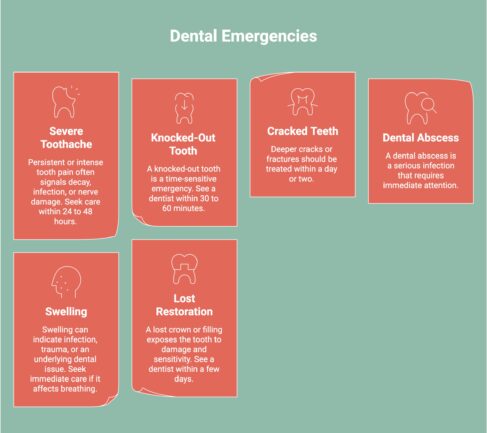
Not every dental issue requires immediate care, but some problems need urgent attention to relieve pain, prevent complications, and avoid higher treatment costs. Knowing what qualifies as a dental emergency helps you act quickly and avoid turning a minor issue into a more expensive one.
Below are common dental emergencies, along with why timing matters for both your health and your wallet.
1. Severe Toothache That Does Not Go Away
Persistent or intense tooth pain often signals decay, infection, or nerve damage. If the pain is constant, worsens while eating, or comes with swelling, you should seek care within 24 to 48 hours.
Delaying treatment can turn a simple filling into a root canal or extraction, significantly increasing the overall cost.
2. Knocked-Out Tooth After an Injury
A knocked-out tooth is a time-sensitive emergency. You should see a dentist within 30 to 60 minutes for the best chance of saving the tooth.
If treated quickly, the tooth may be reinserted at a lower cost. Waiting too long often leads to tooth replacement options like implants or bridges, which are far more expensive.
3. Cracked, Broken, or Chipped Teeth
Minor chips may not require urgent care, but deeper cracks or fractures should be treated within a day or two.
Early treatment may only require bonding or a crown. Ignoring it can expose the inner tooth, leading to infection and the need for more complex procedures like root canals or extractions.
4. Dental Abscess or Infection
A dental abscess is a serious infection that requires immediate attention, ideally the same day.
If left untreated, the infection can spread and require more intensive care, including surgical procedures or hospitalization. Early treatment is not only safer but also far less costly.
5. Swelling in the Gums, Face, or Jaw
Swelling can indicate infection, trauma, or an underlying dental issue. If it affects breathing, swallowing, or worsens quickly, seek immediate care.
Delays can lead to emergency interventions and higher medical and dental costs, especially if the condition spreads.
6. Lost Crown, Filling, or Dental Restoration
While not always painful, a lost crown or filling exposes the tooth to damage and sensitivity. It is best to see a dentist within a few days.
Replacing a restoration early is usually straightforward and affordable. Waiting too long can lead to decay or fractures, increasing the cost of repair.
Why Acting Early Matters?
Seeking care early not only protects your oral health but also helps control costs. Most dental emergencies become more complex and expensive when ignored, often requiring advanced treatments that could have been avoided with timely care.
However, if extraction becomes necessary, you may need a long-term solution. Learn how long dental implants typically last and what affects their durability.
Will Your Insurance Cover an Emergency Dental Visit?
Many patients worry about how much an emergency dentist costs, especially when urgent care is not available. The good news is that dental insurance may help cover part of the emergency dentist visit cost, depending on your plan and the type of treatment required.
What Emergency Dental Insurance Usually Covers
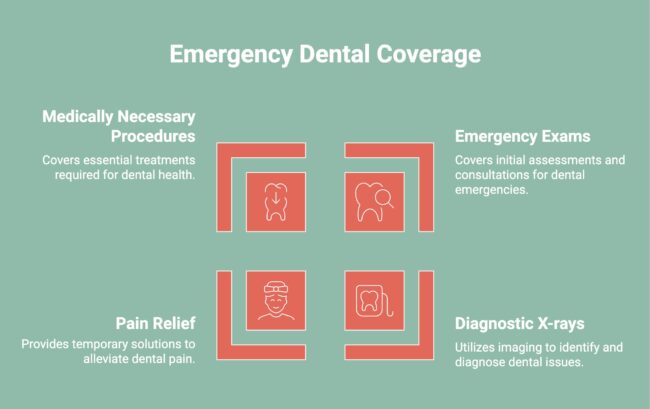
Most dental insurance plans cover emergency evaluations and basic diagnostic procedures. This often includes:
- Emergency dental exams
- X-rays to diagnose the issue
- Pain relief or temporary treatments
- Some medically necessary procedures
If your plan includes these benefits, the emergency dentist cost with insurance is typically lower because the insurer pays a portion of the treatment fee.
What Insurance May Not Fully Cover
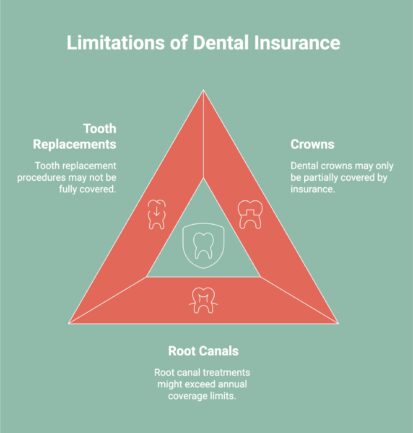
Even with coverage, insurance may not pay for every procedure associated with emergency care. For example, treatments such as crowns, root canals, or tooth replacements may only be partially covered or may fall under your annual coverage limit.
In these cases, patients may still need to pay a portion of the emergency dentist appointment cost out of pocket.
Coverage Can Vary by Plan
Dental insurance policies differ widely, so the amount covered during an emergency visit depends on several factors, including:
- Your insurance provider
- The type of dental procedure required
- Annual coverage limits
- Deductibles and copayments
Because of these differences, the total emergency dentist visit cost can vary significantly from one patient to another. It is always a good idea to check with your insurance provider or dental clinic to understand what your plan covers before receiving treatment.
How Much Does an Emergency Dentist Cost Without Insurance?
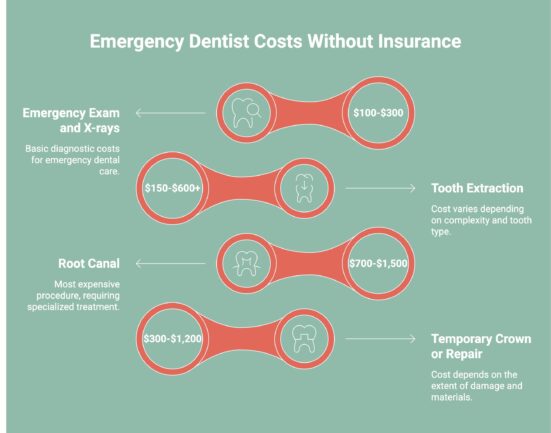
If you do not have dental insurance, the cost of emergency dental treatment without insurance will depend on the type of treatment you need. Some patients only require an exam and X-rays, while others may need procedures such as extractions or root canals.
In many cases, the emergency dentist appointment cost for an initial exam ranges from $150 to $300. This typically covers the consultation and diagnostic tests needed to identify the problem.
However, the total emergency dentist visit cost can increase if treatment is required during the same appointment. Typical estimated costs include:
- Emergency exam and X-rays: $100 to $300
- Tooth extraction: $150 to $600+
- Root canal: $700 to $1,500
- Temporary crown or repair: $300 to $1,200
Also, these are general estimates, and actual costs may vary depending on your condition and the dental provider.
Because every case is different, overall emergency dentist costs can vary widely. If Invisalign is part of your next step, it is helpful to know whether you can eat with Invisalign.
What Influences Emergency Dental Costs Without Insurance?
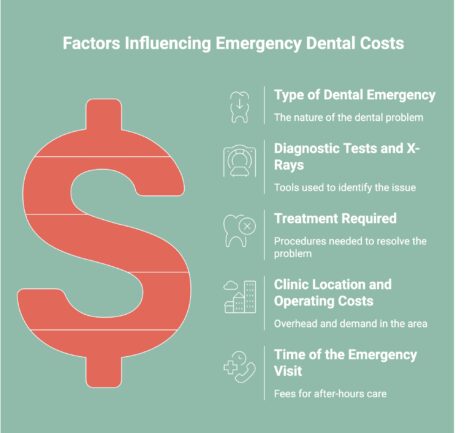
The emergency dentist cost without insurance can vary widely because every dental emergency is different. Several factors determine the final emergency dentist visit cost, from the type of problem to the treatment required.
1. Type of Dental Emergency
The biggest factor affecting emergency dentist costs is the issue being treated. A simple exam for tooth pain may cost much less than treating a severe infection, broken tooth, or dental abscess that requires additional procedures.
2. Diagnostic Tests and X-Rays
Many emergency visits require diagnostic tools such as dental X-rays to identify the root cause of the problem. These tests are usually part of the emergency dentist appointment cost and can add to the overall bill depending on how many images are needed.
3. Treatment Required During the Visit
In some cases, the dentist may only provide an evaluation and temporary pain relief. In others, immediate treatment such as an extraction, filling, or root canal may be required. The more complex the procedure, the higher the overall cost.
4. Clinic Location and Operating Costs
Dental pricing can vary depending on the clinic’s location, equipment, and operating costs. For example, the Houston emergency dentist cost may be higher than in smaller cities due to higher overhead and demand for urgent dental care.
5. Time of the Emergency Visit
After-hours, weekend, or holiday appointments can sometimes increase the total emergency dentist visit cost. Clinics may charge additional fees for urgent care outside of regular operating hours.
Understanding these factors can help patients better estimate how much an emergency dentist costs and prepare for potential expenses before seeking treatment.
What Payment Options Are Available If You Don’t Have Insurance?
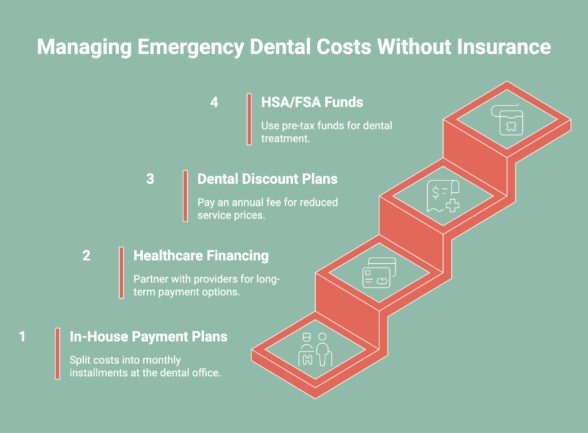
If you are concerned about the emergency dentist cost without insurance, there are several ways patients can manage the expense. Many dental clinics offer flexible payment solutions to make urgent care more accessible.
1. In-House Dental Payment Plans
Some dental offices provide in-house payment plans, allowing patients to split the emergency dentist appointment cost into smaller monthly payments. This option is commonly used for treatments like extractions, crowns, or root canals.
2. Healthcare Financing Programs
Many dental clinics partner with financing providers that allow patients to pay for treatment over time. Popular options include:
- CareCredit
- LendingClub Patient Solutions
- Sunbit healthcare financing
These programs allow patients to spread larger emergency dentist costs across monthly installments, sometimes with short-term promotional interest rates.
3. Dental Discount Plans
Dental discount plans are not insurance, but they provide reduced pricing on common procedures. Patients pay an annual membership fee and receive discounted rates for services.
Examples include:
- Aetna Dental Access
- Cigna Dental Savings Plan
- DentalPlans.com
These plans may help reduce the overall emergency dentist visit cost, especially for basic treatments.
4. Health Savings Accounts (HSA) and Flexible Spending Accounts (FSA)
If you have an HSA or FSA through your employer, these funds can typically be used to pay for dental treatment. Since the money is set aside before taxes, it can help reduce the effective cost of an emergency dental visit.
Before starting treatment, many dental clinics can provide an estimate of the cost of an emergency dentist visit. Understanding the pricing upfront helps patients choose the most suitable payment option and avoid unexpected expenses.
Can You See Any Dentist for a Dental Emergency?
Yes. You do not have to wait for your regular dentist during a dental emergency. Many clinics accept same-day emergency patients, even if you have never visited the office before.
During the visit, the dentist will evaluate the issue and determine the next steps. This usually includes:
- A dental exam
- X-rays if needed
- Pain relief or temporary treatment
- Recommendations for further treatment
The total cost depends on the exam, diagnostic tests, and any procedures performed during the visit.
If you have insurance, coverage depends on your plan and whether the dentist is in your network. Without insurance, many clinics provide upfront cost estimates and may offer payment options for treatment.
Curious about what makes dental implants so durable? Discover what dental implants are made of and how materials like titanium help them integrate with the jawbone.
Do Emergency Rooms Have Dentists?
Most hospital emergency rooms do not have dentists on staff. Emergency departments focus on medical emergencies, not dental procedures.
If you go to the ER for dental pain, the medical team may:
- Check the affected area
- Provide pain relief medication
- Prescribe antibiotics for infection
- Refer you to a dentist for treatment
Emergency rooms typically cannot perform dental procedures such as fillings, extractions, or root canals. In most cases, you will still need to visit a dentist to treat the underlying problem.
Need Emergency Dental Care in Houston? Visit the Dentist Tree of the Heights
If you are dealing with severe tooth pain, swelling, or a broken tooth, quick treatment matters. At Dentist Tree of the Heights, we provide prompt emergency dental care for patients in Houston Heights and nearby areas.
Our goal is simple: diagnose the problem quickly and relieve your discomfort as soon as possible. Whether it is a painful toothache, a cracked tooth, or signs of infection, we evaluate the issue and recommend the right treatment.
When you visit our clinic for urgent dental care, we provide:
- Emergency dental exams and diagnostics
- Treatment for tooth pain, infections, and injuries
- Procedures such as extractions and restorative repairs
- A comfortable and patient-focused experience
If you need urgent dental care in Houston, our team at Dentist Tree of the Heights is here to help you get relief quickly and protect your oral health.
Conclusion
Dental emergencies can happen without warning, and the emergency dentist costs can vary depending on the problem and treatment needed.
The most important step is to seek care quickly. Prompt treatment can relieve pain, prevent complications, and avoid more costly procedures later. Knowing where to go for urgent dental care helps you act quickly and protect your long-term oral health.
Frequently Asked Questions
How much will emergency dental cost?
The cost of emergency dental care depends on the specific issue, treatment needed, and location. Emergency dentistry visits may cost more than regular office hours, especially if additional treatments like temporary fillings or CT scans are required.
Will an emergency dentist extract a wisdom tooth?
Yes, emergency dentists or oral surgeons may perform wisdom teeth removal if severe pain, infection, or swelling occurs. Depending on the case, it could involve a simple tooth extraction or a surgical extraction to prevent further damage.
What is the 3-3-3 rule for a toothache?
The 3-3-3 rule for toothache suggests seeking dental care if pain lasts three days, swelling spreads, or symptoms worsen within three hours. It helps identify when a simple toothache may require emergency treatment to prevent further damage.
How much does it cost to get a tooth pulled in Houston?
In Houston, a simple tooth extraction may cost around $150–$400, while a surgical tooth extraction or wisdom teeth removal can cost more. Dental care prices vary based on the dentist, complexity, and insurance coverage.
Do dentists charge extra for emergency appointments?
Some dentists charge an extra fee for emergency appointments, especially outside regular office hours. Emergency dentistry visits may involve higher costs due to urgent care, diagnostics, and immediate treatment needed to prevent further dental complications.
How much is an ER visit for tooth pain?
An ER visit for tooth pain can cost significantly more than visiting a dentist. Hospitals usually provide temporary relief and may order CT scans, but they rarely perform dental procedures to treat the specific issue.
Are there any payment plans or financing options for emergency dental care?
Yes. Many clinics offer dental plans, dental discount programs, or financing options to help uninsured patients manage dental care costs. Community health centers and dental schools may also provide emergency treatment at lower prices.
How much is a tooth repair without insurance?
The cost of treatment without insurance depends on the damage. Repairing a chipped tooth may cost less, while procedures like root canal costs or dental crown replacement increase dental services expenses. Prices also vary between urban areas and smaller towns.
Is dental insurance worth the investment?
Dental insurance can provide peace of mind by helping manage dental services and the unexpected costs of emergency care. However, value depends on the plan’s terms, annual limits, and coverage for treatments like dental crown replacement or dental implants.
What can I do if my tooth hurts, but I have no insurance?
If a dental emergency strikes and you lack insurance, visit general dentists who offer affordable dental services. Clinics in rural areas or smaller towns may provide lower prices. Seeking care early helps prevent higher root canal costs.