

Key Highlights
- Dental implants are designed as a long-term solution and can remain stable for decades with proper care.
- The implant post is extremely durable, while the crown may need replacement due to normal wear.
- Implants are more stable than bridges or dentures and help maintain jawbone support.
- Good oral hygiene and healthy gums play a major role in implant longevity.
- Smoking, teeth grinding, and poor maintenance increase the risk of implant complications.
- Expert placement and regular dental monitoring improve long-term success.
Losing a tooth is already stressful. Now you are trying to make a big decision, and one question keeps coming up in your mind: how long do dental implants last? You do not want a temporary fix. You want something that feels natural, works like a real tooth, and stays with you for years.
Maybe you are worried about investing in treatment that might not hold up. Maybe you have heard mixed things from friends, or read online that implants “can last forever,” but no one really explains what that means for you. That uncertainty can make the choice feel overwhelming.
In this guide, we will walk through realistic timelines, what affects longevity, and how you can make your dental implants last as long as possible. You will leave knowing what to expect and how to protect your smile.
Do Dental Implants Last Forever?
Dental implants are built to be a long-term solution, but “forever” depends on care.
The titanium implant post fuses with your jawbone and can last a lifetime because it does not decay and is highly stable.
What usually wears out first is the crown on top. It handles daily chewing and may need replacement after about 15 to 20 years. This does not mean the implant has failed.
Implants can last decades, but certain factors shorten their lifespan:
- Poor oral hygiene
- Gum disease
- Smoking
- Teeth grinding
- Skipping dental visits
The implant is permanent by design. How long it truly lasts depends on how well your mouth is maintained.
Not sure whether dentures or implants are right for you? Explore the key differences in comfort, stability, maintenance, and long-term value in this helpful guide:
How Long Do Dental Implants Usually Last Compared to Other Tooth Replacement Options?
If long-term durability is your priority, dental implants lead the way. They are placed in the jawbone, not just on top of the gums or attached to other teeth, which gives them stronger support and better stability over time.
Other options can restore your smile, but they usually need replacement sooner.
- Dental implants: Often last 15 to 25+ years, and the implant post can be lifelong.
- Dental bridges: Typically last 5 to 15 years.
- Dentures: Commonly last 5 to 10 years and may loosen as bone changes.
Implants also help preserve jawbone and cannot develop cavities, making them a more durable long-term solution.
Nervous about pain during implant treatment? See what the procedure actually feels like, how discomfort is controlled, and what recovery is like. Get clear, reassuring answers in Do Dental Implants Hurt? and feel more confident about your decision.
How Long Do the Implant Post and Crown Last?
When people ask how long dental implants last, they are often referring to two separate parts. The implant post and the crown on top function differently, so they do not wear out at the same rate over time.
Implant Crown Lifespan
The crown is the visible part of the tooth that handles daily chewing and biting. Most implant crowns last 15 to 20 years before wear leads to replacement. Replacing a crown is usually simple because the implant beneath it often remains secure.
To help your crown last longer:
- Avoid chewing ice or hard objects
- Use a night guard if you grind
- Maintain brushing and flossing
- Attend regular dental checkups
Implant Post Lifespan
The implant post sits in the jawbone and acts like a tooth root. With healthy gums, good hygiene, and regular care, it can last decades and often a lifetime.
In most cases, the crown may be replaced over time, but the implant foundation is designed for long-term stability.
How Long Do All-on-4 Dental Implants Last?
All-on-4 uses four implants to support a full arch of teeth. This design provides strong stability and long-term function.
The implants can last 20 years or more, often decades. The prosthetic teeth may need repair or replacement over time due to normal wear.
Long-term success improves with:
- Consistent home care
- Professional cleanings
- Avoiding smoking
- Managing health conditions
- Protecting against grinding
How Long Does Dental Implant Surgery Last?
The procedure itself is usually shorter than most people expect. For a single implant, surgery often takes about one to two hours. Larger cases take longer.
The more important timeline is healing. During this phase, the implant bonds with your jawbone.
For smooth recovery:
- Follow all post-surgery instructions
- Keep the area clean
- Avoid pressure on the implant site
- Attend follow-up visits
Proper healing supports long-lasting results.
Curious about newer implant options? Learn how screwless dental implants offer a streamlined design, improved comfort, and a natural look without visible screw access holes.
What Factors Affect How Long Dental Implants Last?
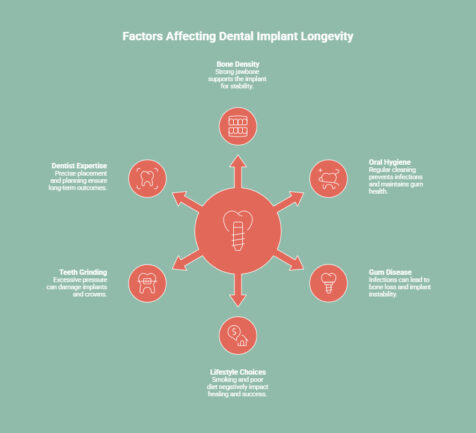
Dental implants are highly durable, but their longevity depends on your health, habits, and how well the implant is placed. When bone support, gum health, daily care, and expert treatment come together, implants can stay stable and functional for decades without complications.
1. Bone Density and Jaw Health
Your jawbone supports the implant. If the bone is weak or reduced due to tooth loss or disease, stability may suffer. Imaging helps determine if bone grafting is needed to create a stronger, longer-lasting foundation.
Key influences:
- Bone volume and strength
- Healing ability
- History of bone loss
2. Oral Hygiene Habits
Plaque around implants can infect gums and damage supporting bone. Daily care keeps tissues healthy and prevents complications that shorten implant lifespan.
Protective habits:
- Brush twice daily
- Clean around implants carefully
- Keep regular dental visits
3. Gum Disease Risks
Gum infection can lead to bone loss around implants, reducing stability. Early signs like bleeding or swelling should never be ignored.
Watch for:
- Bleeding gums
- Swelling or tenderness
- Gum recession
4. Smoking and Lifestyle
Smoking slows healing and raises infection risk. Poor diet and heavy alcohol use can also affect long-term success.
Helpful choices:
- Avoid smoking
- Limit alcohol
- Eat a balanced diet
5. Teeth Grinding and Bite Force
Grinding puts excess pressure on implants and crowns, leading to damage over time. A night guard protects your teeth and restoration.
6. Implant Placement and Dentist Expertise
Precise placement improves stability, alignment, and long-term outcomes. Skilled planning reduces risks and supports implant longevity.
Ready for implants designed to last? Book a consultation at Dentist Tree of the Heights and plan your long-term smile health.
What Types of Dental Implants Last the Longest?
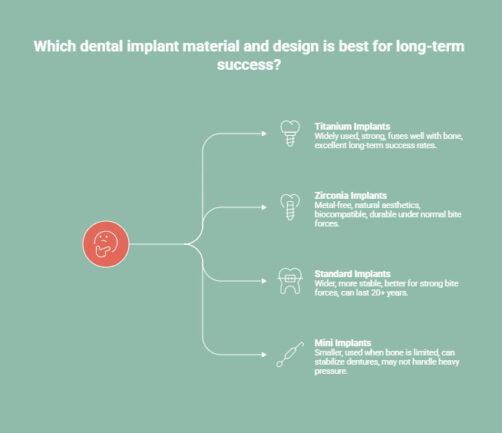
If you are wondering which implants last the longest, it usually comes down to material and design. Modern implants are made from biocompatible materials that bond with your jawbone, creating a strong, stable foundation meant to hold up for decades.
The two main materials are titanium and zirconia, and both are built for long-term success when properly cared for.
1. Titanium Implants
Titanium implants are the most widely used and have the longest track record in dentistry.
- Fuses extremely well with bone
- Very strong under chewing pressure
- Highly resistant to fracture
- Excellent long-term success rates
Because of their strength and reliability, titanium implants are often considered the longest-lasting dental implants for most patients.
2. Zirconia Implants
Zirconia implants are a metal-free ceramic option that also performs well long-term.
- Tooth colored material for natural aesthetics
- Biocompatible and gum-friendly
- Corrosion resistant
- Durable under normal bite forces
They are a strong alternative for patients who prefer metal-free solutions, with longevity that can be comparable to titanium in the right case.
3. Standard vs Mini Implants
Design matters too.
- Standard implants are wider, more stable, and better suited for strong bite forces. They often last 20 years or more.
- Mini implants are smaller and used when bone is limited or to stabilize dentures. They can last many years, but may not handle heavy pressure as well.
In the end, the longest-lasting implant is the one that fits your bone, bite, and oral health, and is maintained with consistent home care and dental visits.
Why Choose Dentist Tree of the Heights for Long-Lasting Dental Implants?
The long-term success of dental implants depends on precise planning, skilled placement, and proper follow-up care. Choosing an experienced dental team helps ensure your implant heals well, functions comfortably, and remains stable for many years.
At Dentist Tree of the Heights, implant care is patient-focused and detail-driven. The team evaluates bone and gum health carefully before treatment and designs restorations that look natural and support a balanced bite.
What Supports Implant Longevity Here
- Thorough exams and imaging to guide accurate implant positioning
- Careful placement to promote strong integration with the jawbone
- Custom restorations designed for comfort, function, and appearance
- Emphasis on healthy gums and supporting bone
- Ongoing checkups and maintenance to protect long-term results
Care continues even after placement. Regular monitoring and professional cleanings help keep your implant and surrounding tissues healthy. If you want a durable, well-supported solution for missing teeth, scheduling a consultation is a practical next step.
Ready to take the next step toward a healthier, more confident smile? Contact us today to schedule your visit. Our team is here to answer your questions and help you get started.
Final Thoughts
Dental implants are one of the most dependable long-term solutions for missing teeth, often lasting decades with proper care. While the implant post can stay stable for life, its success relies on healthy gums, consistent oral hygiene, and professional monitoring. Small daily habits make a big difference over time.
If you are considering implants or want to protect the ones you have, speak with a dental professional to create a personalized plan that supports lasting comfort, function, and overall smile health.
Frequently Asked Questions
Do dental implants really last a lifetime, or will they need replacement?
The implant post can last a lifetime because it bonds with the jawbone. However, the crown on top may need replacement every 15 to 20 years due to wear. Lifespan depends on oral hygiene, bone health, and avoiding habits that stress implants.
What percentage of dental implants last beyond 10 years?
Research shows that about 90 to 95 percent of dental implants last longer than 10 years. With proper care, regular checkups, and healthy gums, implants remain one of the most reliable long-term solutions for replacing missing teeth.
Does dental implant durability vary with age or medical conditions?
Yes. Conditions like uncontrolled diabetes, osteoporosis, or smoking can affect healing and bone strength. While implants work well for older adults, overall health, gum care, and lifestyle habits influence long-term durability and success rates.
What foods turn dental implants yellow or brown?
Implant crowns resist staining, but plaque buildup can discolor from coffee, tea, red wine, and dark sauces. Regular brushing, flossing, and professional cleanings help keep the crown surface bright and prevent staining around the gums.
Is flossing necessary if I have dental implants?
Yes, flossing is essential. While implants cannot get cavities, plaque around them can cause gum disease, a major reason implants fail. Daily brushing, flossing, and checkups protect the gums and support long-term implant stability.
Do dental implants last a lifetime?
They are designed to be long–lasting, but not guaranteed for life. Implant posts often last decades, while crowns may need replacement. Lifespan depends on hygiene, bone health, medical conditions, and avoiding habits like smoking or grinding.
How long do full mouth dental implants last?
Full mouth implants can last 20 years or more with good care. The implant posts are highly durable, while the attached teeth may need maintenance or replacement over time. Consistent hygiene and dental visits help extend their lifespan.