

Key Highlights
- Always remove your invisible aligners before eating or drinking anything other than plain water.
- Eating with your aligners in can cause them to stain, warp, or break, disrupting your Invisalign treatment.
- Trapped food particles increase the risk of cavities and can impact your overall dental health.
- You have complete freedom in your food choices as long as you take your aligners out first.
- Proper cleaning of both your teeth and aligners after every meal is essential.
- Maintaining a consistent daily routine helps ensure your treatment stays on track.
Starting your Invisalign treatment is an exciting step toward a straighter smile. This innovative orthodontic treatment uses a series of clear, removable aligners to gradually shift your teeth.
One of the biggest questions people have is about eating and drinking. While the removability of your aligners is a major benefit, it comes with a few simple rules.
Understanding how to manage your aligners during meals is key to protecting your investment and ensuring your treatment is successful.
Can You Eat with Invisalign Aligners On?
Invisalign offers flexibility with food choices, but aligners are not designed to be worn while eating. To protect your trays and maintain oral hygiene, aligners should always be removed before meals. This simple habit plays a key role in keeping treatment effective and your teeth healthy.
Removing aligners before meals is a core rule of Invisalign treatment. Although Invisalign allows dietary freedom, eating with aligners on can lead to damage and hygiene issues. Taking them out before eating protects both the trays and your long-term dental health.
Here’s why removing aligners before meals is essential:
- Prevents staining, warping, or cracking of clear plastic aligners during chewing.
- Stops food particles from getting trapped, reducing the risk of plaque buildup and tooth decay.
- Allows saliva to naturally cleanse teeth and support better oral health.
- Makes brushing and flossing more effective before reinserting aligners.
Consistently removing aligners before eating helps keep your treatment on track while supporting a cleaner, healthier smile.
What Can Happen If You Eat While Wearing Invisalign Aligners?
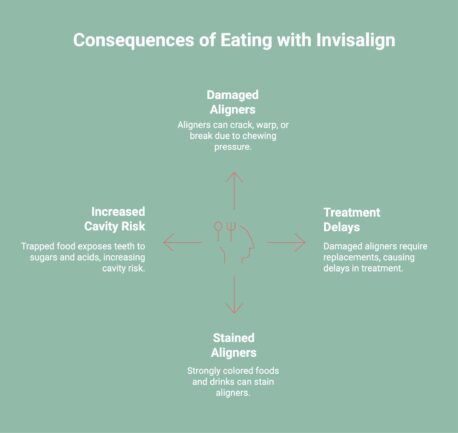
Eating with aligners in, even occasionally, can create avoidable problems during treatment. Invisalign trays are not built for chewing pressure, and food contact can affect both the aligners and your teeth. Understanding these risks helps prevent delays and extra costs.
Here’s what may happen if you eat with aligners in:
1. Aligner Damage from Chewing Pressure
Chewing applies force that Invisalign aligners are not built to withstand. This pressure can crack, warp, or break the trays, affecting how they fit and disrupting planned tooth movement.
2. Treatment Delays and Replacement Costs
Damaged aligners often need to be replaced. Waiting for new trays can slow treatment progress and may result in additional costs, especially if damage occurs repeatedly.
3. Staining from Coloured Foods and Drinks
Strongly coloured foods and beverages can stain aligners when worn during eating. Stained trays lose their clear, discreet appearance and may become more noticeable during daily wear.
4. Higher Risk of Cavities and Tooth Decay
Food trapped between aligners and teeth exposes enamel to sugars and acids for longer periods. This increases the risk of cavities, plaque buildup, and other oral health issues.
Removing aligners before eating helps protect your treatment timeline, oral health, and the clear appearance of your Invisalign trays.
Which Foods Should You Avoid During Invisalign Treatment?
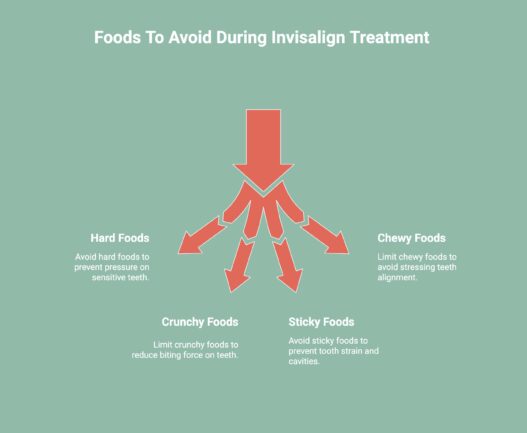
One of Invisalign’s advantages is food freedom, since aligners are removed before eating. However, teeth can feel sensitive, especially with a new tray. Choosing the right foods during these periods helps reduce discomfort and supports smoother tooth movement throughout treatment.
Here are foods best limited during Invisalign treatment:
1. Hard Foods That Put Pressure on Sensitive Teeth
Hard foods such as candies, ice cubes, or hard crackers place excess force on shifting teeth. This pressure can increase soreness and make eating uncomfortable, particularly during the first few days of a new aligner set.
2. Crunchy Foods That Require Strong Biting
Crunchy items like hard nuts, pretzels, popcorn kernels, or chips demand significant biting force. These foods can aggravate sensitive teeth and may cause unnecessary discomfort while teeth are actively moving.
3. Sticky Foods That Increase Cavity Risk
Sticky foods such as chewing gum, caramel, toffee, or taffy cling to teeth and are difficult to clean away. They increase the risk of plaque buildup and cavities, especially if teeth are sensitive or harder to brush thoroughly.
4. Chewy Foods That Strain Teeth Alignment
Chewy foods like tough bread, dense granola bars, jerky, or bagels require prolonged chewing. This can strain teeth under alignment pressure and make soreness last longer during Invisalign treatment.
5. Foods That Can Worsen Early Aligner Discomfort
During the early phase of each tray, limiting hard, crunchy, sticky, and chewy foods helps keep eating comfortable. Choosing gentler options during these times supports healthier teeth and a smoother Invisalign experience overall.
Being mindful of food choices, especially early on, helps keep treatment comfortable and teeth healthy.
What Are Invisalign-Friendly Foods and Snacks to Eat Comfortably?
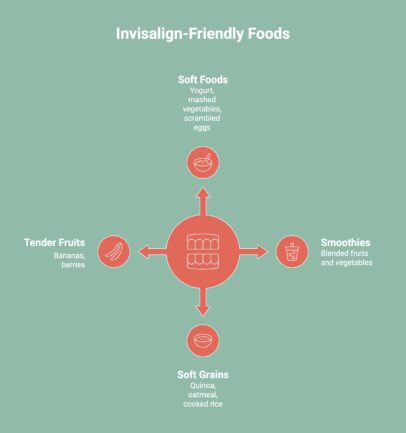
When starting a new set of aligners, teeth may feel tender. Choosing soft, Invisalign-friendly foods reduces pressure and discomfort. These foods are easier to chew and clean away, making it simpler to maintain hygiene before reinserting your aligners.
1. Soft Foods That Reduce Pressure on Sensitive Teeth
Foods such as yogurt, mashed vegetables, scrambled eggs, cottage cheese, and soft pasta require minimal chewing. These options are gentle on sore teeth and are easy to rinse away, making post-meal cleaning simpler.
2. Smoothies and Blended Foods for Easy Eating
Smoothies, protein shakes, pureed soups, and blended vegetable dishes provide nutrition without stressing sensitive teeth. These foods are especially helpful during the first few days of a new aligner set.
3. Soft Grains That Are Easy to Chew
Well-cooked rice, oatmeal, quinoa, couscous, and soft noodles offer filling meal options without excessive chewing. These grains are comfortable to eat and pair well with other soft ingredients.
4. Tender Fruits That Are Gentle on Teeth
Bananas, ripe berries, mango, papaya, and soft melons are easy to bite and chew. They provide natural sweetness and nutrients while being kinder to teeth than crunchy fruits.
5. Mild, Easy-to-Chew Meal Options
Dishes like vegetable khichdi, soft lentils, paneer bhurji, steamed fish, or lightly cooked vegetables are comfortable choices during Invisalign treatment and support stress-free eating with sensitive teeth.
Selecting softer foods helps keep meals enjoyable while supporting a smoother Invisalign experience.
How Should You Manage Drinks While Wearing Invisalign Aligners?
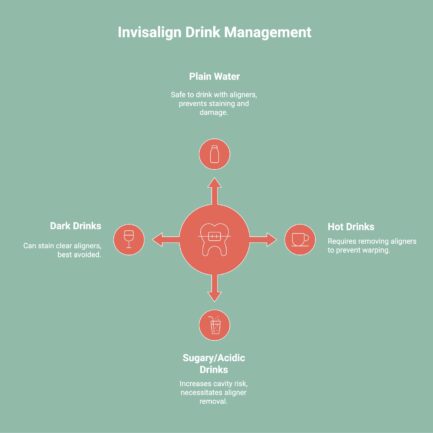
Managing drinks correctly is essential during Invisalign treatment. While aligners are in, only plain water is safe. Other beverages can damage aligners or increase cavity risk if consumed without removing trays first.
Here’s how to handle drinks during Invisalign treatment:
- Drink plain, cool water while wearing aligners to avoid staining or tooth damage.
- Remove aligners before hot drinks like coffee or tea to prevent warping.
- Take aligners out before sugary or acidic beverages to reduce cavity risk.
- Avoid dark drinks such as red wine or cola that can stain clear aligners.
Following these drink guidelines helps protect both your aligners and your teeth throughout treatment.
What Are the Dos and Don’ts of Eating with Invisalign?
Eating with Invisalign requires a few mindful habits to protect your aligners and maintain oral hygiene. Knowing what to do, and what to avoid, helps prevent damage, staining, and delays, ensuring your treatment stays comfortable, effective, and on track throughout daily meals and snacks.
Dos When Eating During Treatment
Following these best practices helps keep your aligners in good condition while supporting oral hygiene and treatment progress during everyday meals and snacks.
- Always remove your aligners before eating
Aligners are not designed for chewing. Removing them before meals prevents cracking, warping, and food particles getting trapped, which can affect fit, hygiene, and overall treatment progress. - Drink only water while wearing aligners
Plain, cool, or room-temperature water is safe with aligners. Other drinks can stain trays, trap sugar, or cause heat damage, increasing the risk of discolouration and oral health issues. - Store aligners in their case during meals
Placing aligners in their protective case reduces the risk of loss, accidental damage, or throwing them away with napkins while eating out or on the go. - Brush and floss after eating before reinserting
Cleaning your teeth after meals removes food debris and plaque, preventing bacteria from getting trapped under aligners and helping maintain fresh breath and healthy gums. - Clean aligners regularly
Even with good oral hygiene, aligners can collect bacteria. Rinsing and gently cleaning them daily helps keep them clear, odour-free, and comfortable to wear.
Don’ts to Keep in Mind
Avoiding these common mistakes helps prevent aligner damage, staining, and hygiene issues that could interfere with your Invisalign treatment.
- Don’t eat while wearing aligners
Chewing with aligners on can damage the plastic, trap food, and increase bacterial buildup, leading to hygiene problems and reduced aligner effectiveness. - Don’t drink hot, sugary, or coloured beverages with aligners in
These drinks can warp aligners or cause staining and tooth decay. Always remove trays before consuming anything other than water. - Don’t leave aligners loose or within reach of pets
Pets often chew aligners, and leaving them exposed increases the chance of loss or damage, potentially delaying your treatment. - Don’t forget to reinsert aligners after meals
Consistent wear is essential for Invisalign success. Leaving aligners out too long can slow progress and affect how well each new tray fits. - Don’t wrap aligners in napkins
Wrapping aligners in tissue or napkins makes them easy to forget or accidentally throw away. Always use the designated aligner case instead.
How Should You Properly Clean Invisalign Aligners Every Day?
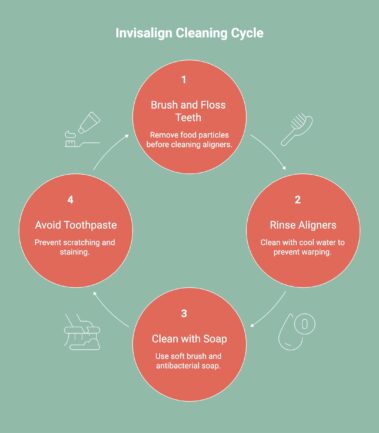
Cleaning your aligners is essential for both oral health and treatment success. Invisalign wearers must clean aligners after every meal to prevent plaque and odour. Good hygiene also supports dietary freedom, even when enjoying whole grains, crunchy foods, or acidic drinks.
Here’s a safe and effective way to clean Invisalign aligners:
1. Daily Aligner Cleaning Is Essential
Cleaning aligners after every meal helps prevent plaque, odour, and bacterial buildup that can affect oral health. Consistent hygiene keeps aligners clear, comfortable, and effective while supporting treatment progress and protecting gums and enamel from staining and irritation during daily wear.
2. Brush and Floss Before Reinserting Aligners
Brushing and flossing before reinserting aligners removes food debris and plaque from teeth. This step prevents bacteria from getting trapped under aligners, lowers the risk of cavities and gum irritation, and helps maintain a clean, fresh feeling throughout the day.
3. Rinse Aligners with Cool or Lukewarm Water
Rinsing aligners with cool or lukewarm water helps wash away saliva and debris safely. Hot water should be avoided because heat can warp the plastic, alter the fit, and reduce the aligner’s effectiveness during the course of treatment.
4. Gently Clean Using a Soft Brush and Clear Soap
Using a soft-bristled toothbrush with clear antibacterial soap allows gentle yet effective cleaning. This method removes bacteria and residue without scratching the aligners, helping them stay transparent, smooth, and comfortable against teeth and gums during extended wear.
5. Avoid Toothpaste and Harsh Cleaners
Toothpaste and harsh cleaners contain abrasive ingredients that can scratch aligners. Scratches make aligners look cloudy and stain more easily over time, affecting appearance and comfort while potentially reducing how discreet the aligners remain during treatment.
6. Stay Consistent for Clear and Effective Results
Following the same cleaning routine every day helps keep aligners clear, odour-free, and comfortable. Consistency supports oral health, preserves aligner quality, and ensures your Invisalign treatment stays effective from the first tray to the last.
Why Are More Patients in Houston, Texas Choosing Invisalign for Teeth Straightening?
Invisalign has become a preferred orthodontic option in Houston, Texas, for patients who want effective results without the inconvenience of metal braces. At Dentist Tree of the Heights, Invisalign clear aligners are custom-designed to correct spacing, crowding, and bite issues while remaining comfortable and nearly invisible.
Our experienced dental team uses advanced digital planning to guide every stage of treatment, ensuring predictable progress and a smooth experience. Invisalign’s removable design allows you to eat freely, maintain proper oral hygiene, and continue your lifestyle without disruption. With flexible payment options and personalised care, we make Invisalign accessible for families and working professionals alike.
Ready to transform your smile with Invisalign? Schedule your Invisalign consultation at Dentist Tree of the Heights today and take the first step toward a confident smile.
Conclusion
Managing your eating habits while using Invisalign is crucial for both your treatment success and oral health. Removing your aligners before meals not only protects them from damage but also ensures that your teeth continue to shift correctly. Being mindful of the foods you choose can make a significant difference in your overall experience. By selecting Invisalign-friendly options and maintaining good hygiene practices with your aligners, you can navigate your daily routines with ease.
Frequently Asked Questions
Can I eat with Invisalign attachments on my teeth?
Yes, you can eat with Invisalign attachments on your teeth because they stay bonded during treatment. However, aligners must be removed before eating. Attachments may feel slightly uncomfortable initially, but most patients adjust quickly with guidance from their orthodontist.
How long can I leave my aligners out for eating?
Invisalign aligners should be worn 20 to 22 hours daily. This allows two to four hours for meals, drinks, and cleaning. Planning meals carefully and reinserting aligners promptly helps maintain consistent pressure and keeps treatment progressing as scheduled.
Do I need to clean my aligners after every snack?
Yes, aligners should be cleaned after every snack. Even small food particles can become trapped, leading to plaque, odor, or cavities. Brushing teeth and rinsing aligners before reinsertion keeps your mouth healthy and prevents unwanted buildup during treatment.
What are the best tips for eating comfortably during Invisalign treatment?
Eat softer foods initially, cut meals into smaller pieces, and chew slowly to reduce sensitivity. Remove aligners before eating, rinse your mouth afterwards, and reinsert trays promptly. These habits improve comfort and help maintain consistent Invisalign wear throughout treatment.
Can eating with Invisalign cause damage to the aligners?
Yes, eating with Invisalign aligners can damage them. Chewing may crack, warp, or stain trays, affecting fit and effectiveness. Always remove aligners before meals to protect them and ensure proper tooth movement throughout your orthodontic treatment timeline.
What happens if you accidentally eat with your Invisalign in?
Accidentally eating with Invisalign may cause minor damage, staining, or food buildup. Remove aligners immediately, rinse thoroughly, and inspect for warping. If trays feel tight or distorted afterwards, contact your orthodontist to prevent disruptions to treatment progress.
Can I drink through a straw with my Invisalign in?
Drinking plain water through a straw with Invisalign is generally safe. Avoid sugary, hot, or colored beverages, as they can seep under trays, cause staining, or promote decay. When in doubt, remove aligners before drinking anything besides water.
What is the hardest week of Invisalign?
The first week is often the hardest because your mouth is adjusting to pressure and new sensations. Mild soreness, tightness, and speech changes are common. These symptoms typically fade as your teeth adapt and aligner changes become more routine.
Where do you put Invisalign when eating?
When eating, store Invisalign aligners in their protective case. Avoid placing them on napkins or surfaces where they can be lost or contaminated. Using the case consistently protects trays, maintains hygiene, and reduces the risk of accidental damage.