

Key Highlights
- Teeth whitening is safe when done correctly, especially under professional dental supervision.
- Professional treatments offer faster, more reliable results with minimal risk of sensitivity.
- Over-the-counter products like strips can be safe but require careful and limited use.
- Common side effects include temporary tooth sensitivity and mild gum irritation.
- Certain groups, including pregnant women and patients with dental issues, should avoid whitening.
- Safe methods include in-office treatments, custom trays, and ADA-approved products.
- Consulting a dentist ensures personalized care, better results, and reduced risks.
A brighter smile is one of the quickest ways to improve your appearance, but many people hold back from teeth whitening because they are unsure if it is truly safe. The good news is that dentist-approved whitening is not only effective but also scientifically designed to protect your enamel when used correctly.
The real issue is not whitening itself. It is how and when it is used. Misuse, overuse, or skipping proper dental checks is what leads to sensitivity, uneven results, or discomfort.
In this guide, you will learn exactly how teeth whitening works, the real risks to watch for, and how to whiten your teeth safely using methods dentists actually recommend.
Is Teeth Whitening Safe According to Dentists?
Teeth whitening is generally considered safe by dentists when performed correctly and under proper guidance. Most treatments use controlled concentrations of hydrogen peroxide (typically 3-40%) or carbamide peroxide (around 10-35%, which breaks down into hydrogen peroxide) to lighten stains without harming tooth enamel.
These formulas are buffered to a near-neutral pH (around 6-7) and often include stabilizers like glycerin or carbopol, which help control the release of oxygen and protect enamel during the whitening process.
Dentists emphasize that safety depends on how the product is used. Professional teeth whitening is the safest option because it is tailored to your dental condition, with protective measures for your gums and surrounding tissues.
Over-the-counter products can also be safe if used as directed, but misuse or overuse may lead to temporary sensitivity or irritation. Before starting any whitening treatment, it is always best to consult a dentist to ensure your teeth and gums are healthy and suitable for the procedure.
Now that you know whitening is safe, are you curious about how long the results actually stay? Explore how long teeth whitening lasts to understand what affects your results over time.
How Does Teeth Whitening Work? Myths vs Facts You Should Know
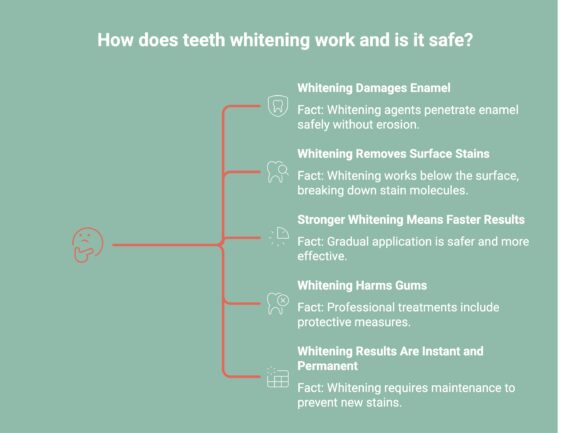
Teeth whitening often sounds harsh or damaging, but most concerns come from misunderstandings. Here’s a clearer breakdown to explain how whitening actually works and why it is safe when done correctly.
Myth 1: Whitening Damages Your Enamel
Fact: Whitening agents like hydrogen peroxide penetrate enamel safely to target stains, not destroy tooth structure. When used as directed, they do not erode or weaken healthy enamel.
Myth 2: Whitening Only Removes Surface Stains
Fact: Whitening works below the surface, breaking down stain molecules at a deeper level using oxygen reactions. This is why results look more noticeable than regular brushing or polishing.
Myth 3: Stronger Whitening Means Faster and Better Results
Fact: Whitening is designed to work gradually and safely. Higher concentrations or overuse can increase sensitivity without improving results, making controlled application the safer and more effective approach.
Myth 4: Whitening Harms Your Gums and Soft Tissues
Fact: Professional treatments and well-designed at-home kits include protective measures to keep gums safe, such as barriers, precise applicators, or custom-fit trays.
Myth 5: Whitening Results Are Instant and Permanent
Fact: Whitening happens step by step, and results require maintenance. Lifestyle habits like coffee, tea, or smoking can cause new stains over time, so follow-up care is essential.
Teeth whitening works by safely breaking down stains, not damaging your teeth. When you follow proper guidelines or consult a dentist, it is a controlled, science-backed process that delivers reliable results.
Wondering what actually powers most whitening treatments? Learn if hydrogen peroxide whitens teeth and how it safely breaks down stains for visible results.
Is Laser Teeth Whitening Safe for Quick Results?
Laser teeth whitening is generally safe when performed by a qualified dental professional. The procedure uses a controlled bleaching agent, usually hydrogen peroxide, activated by a specialized light or laser to accelerate whitening results. Because the process is closely monitored, the risk of damage to enamel or gums is minimal.
It is considered one of the fastest whitening methods, often delivering noticeable results in a single session. Dentists take precautions such as protecting the gums and adjusting the intensity based on your tooth sensitivity, which enhances both safety and comfort.
However, some patients may experience temporary sensitivity after treatment. Laser whitening may not be suitable for individuals with existing dental issues, such as cavities or gum disease, so a dental evaluation is essential before proceeding.
Are Teeth Whitening Strips Safe for Daily Use?
Teeth whitening strips are generally safe for daily use when used exactly as directed. These strips contain a mild bleaching agent, typically hydrogen peroxide, that helps remove surface stains over time without damaging enamel.
However, using them more frequently than recommended or for longer durations can lead to tooth sensitivity and gum irritation. This is one of the most common issues seen with at-home whitening products.
They are best suited for mild to moderate staining and should not be used on damaged teeth, untreated cavities, or sensitive gums. If you experience discomfort or uneven results, it is important to stop use and consult a dentist.
Prefer whitening your teeth at home, but unsure which options are actually safe and effective? Explore the best at-home teeth whitening methods that deliver results without harming your enamel.
Teeth Whitening During Pregnancy: Is It Safe or Better to Wait?
Teeth whitening during pregnancy is generally not recommended, even though there is no strong evidence showing it is harmful. Most dentists advise waiting until after pregnancy as a precaution, since the effects of whitening agents on developing babies have not been studied extensively.
Hormonal changes during pregnancy can also make gums more sensitive, increasing the risk of irritation or discomfort during whitening treatments. This can make the experience less comfortable than usual.
If you are concerned about stained or dull teeth, safer alternatives include professional dental cleanings and maintaining good oral hygiene. It is always best to consult your dentist before considering any cosmetic dental procedure during pregnancy.
What Are the Risks of Teeth Whitening And How Do You Manage Them?
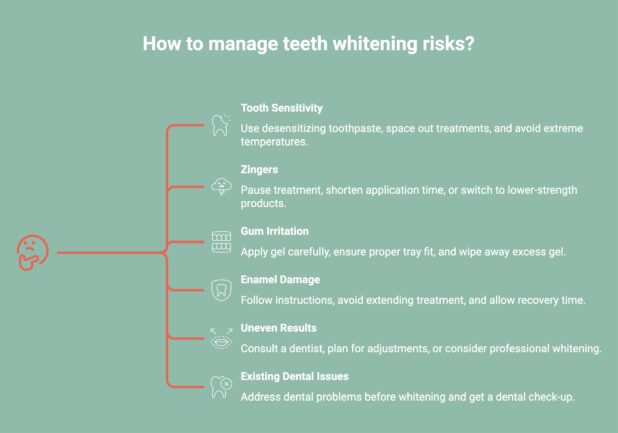
Teeth whitening is generally safe, but understanding how to recognize and manage side effects helps you avoid unnecessary discomfort. Below are the most common risks, explained clearly with practical steps you can take.
1. Tooth Sensitivity
Tooth sensitivity is the most common side effect of whitening, usually triggered by peroxide-based agents that temporarily expose microscopic pathways in enamel. This can make teeth more reactive to temperature changes, especially when consuming hot, cold, or sweet foods and drinks.
What to do:
- Use a desensitizing toothpaste like Sensodyne toothpaste.
- Space out treatments instead of consecutive sessions.
- Avoid extreme temperatures for 24-48 hours.
2. Zingers (Sharp Sensitivity Flashes)
“Zingers” are sudden, sharp, electric-like jolts of pain that occur during or shortly after whitening treatments. They happen when whitening agents irritate the tooth nerve temporarily, causing brief but intense discomfort that can catch patients off guard.
What to do:
- Pause whitening immediately if zingers occur.
- Shorten application time in future sessions.
- Switch to lower-strength whitening products if needed.
3. Gum Irritation
Gum irritation occurs when whitening gel comes into contact with soft tissues instead of staying on the teeth. This can lead to redness, soreness, or a mild burning sensation, especially when excess product leaks from trays or strips during application.
What to do:
- Apply only a small, controlled amount of gel.
- Ensure trays fit properly and are not overfilled.
- Wipe away excess gel from gums quickly.
4. Enamel Damage from Overuse
Excessive whitening or improper use of products can gradually weaken enamel, making teeth more vulnerable to sensitivity and damage. Overuse often comes from trying to speed up results, which can compromise the long-term health and strength of your teeth.
What to do:
- Follow product instructions strictly.
- Avoid extending treatment duration.
- Give your teeth recovery time between sessions.
5. Uneven Whitening Results
Whitening treatments only work on natural tooth enamel, not on dental restorations like crowns, veneers, or fillings. This can lead to uneven coloring, where natural teeth appear whiter while restorations remain unchanged, creating a noticeable mismatch in your smile.
What to do:
- Consult your dentist before starting.
- Plan for adjustments or replacements if needed.
- Consider professional whitening for better uniformity.
6. Increased Discomfort with Existing Dental Issues
If you have untreated cavities, gum disease, or receding gums, whitening can intensify pain and sensitivity. These conditions expose vulnerable areas of the teeth, allowing whitening agents to penetrate deeper and cause more significant irritation or discomfort.
What to do:
- Address all dental issues before whitening.
- Get a professional dental check-up.
- Delay treatment until your oral health is stable.
Whitening risks are manageable when you respond early and adjust your approach. Paying attention to signs like sensitivity or zingers helps you stay in control and achieve safer, more comfortable results.
Dealing with sensitivity after whitening or worried it might happen? Discover sensitive teeth whitening options that are designed to brighten your smile without discomfort.
What Are the Good Teeth Whitening Methods That Are Actually Safe?
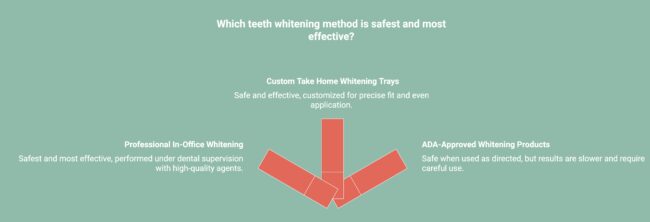
Safe teeth whitening depends on choosing methods that protect enamel while delivering visible results. Not all options are equally effective or risk-free. Below are the most recommended teeth whitening methods that are considered safe by dentists:
1) Professional In-Office Whitening
This is the safest and most effective whitening method, performed under dental supervision using high-quality bleaching agents. Dentists apply protective barriers to shield gums and soft tissues while controlling the strength of the whitening solution.
Results are often visible in a single visit, making it ideal for those seeking fast, reliable improvement with minimal risk of sensitivity or uneven whitening.
2) Custom Take Home Whitening Trays
Dentist-provided whitening trays are designed to fit your teeth precisely, ensuring even application of the whitening gel. These kits use controlled concentrations that are safer than over-the-counter options.
Because the trays are customized, they reduce gum exposure and irritation. This method offers gradual, consistent results while allowing you to whiten your teeth comfortably at home under professional guidance.
3) ADA-Approved Whitening Products
Over-the-counter products with ADA approval are tested for safety and effectiveness. These include whitening strips, gels, and toothpaste that use mild bleaching agents to remove surface stains.
When used as directed, they can safely improve tooth color over time. However, results are slower compared to professional treatments, and careful use is important to avoid sensitivity or uneven results.
Choosing the right method ensures safer whitening, better results, and a healthier, brighter smile.
Trying to figure out which whitening option actually delivers the best results? Explore the best dental whitening procedures to compare treatments and choose what suits your smile goals.
Who Should Not Use Teeth Whitening Products?
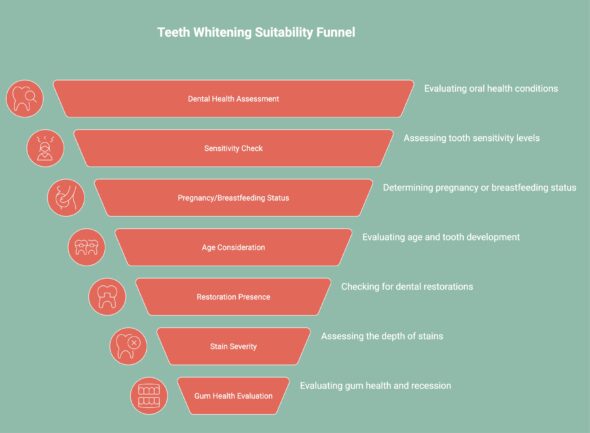
Teeth whitening is not suitable for everyone, especially if certain dental or health conditions are present. Using whitening products in these cases can lead to discomfort or ineffective results. Below are the groups who should avoid or delay treatment:
- People with cavities or gum disease: Whitening can worsen sensitivity and irritate already affected areas.
- Individuals with sensitive teeth: Existing sensitivity may increase during or after treatment.
- Pregnant or breastfeeding women: Whitening is usually postponed as a precaution.
- Children and teenagers: Teeth are still developing, making whitening unsafe.
- Those with dental restorations: crowns, veneers, and fillings, do not respond to whitening agents
- Severe or intrinsic stains: Deep discoloration may require alternative cosmetic treatments.
- Receding Gums: Exposed tooth roots are more sensitive and can react strongly to whitening agents, causing pain, irritation, or heightened discomfort.
A dental consultation is the best way to determine if teeth whitening is safe and suitable for you.
How to Make Teeth Whitening Safe and Effective?
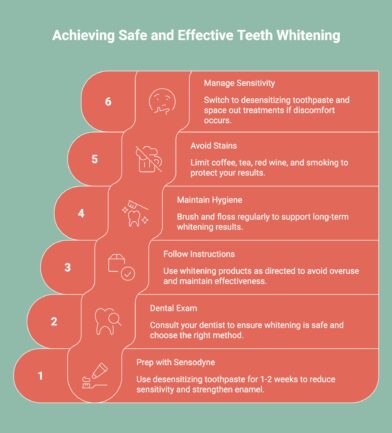
If you want whiter teeth without damaging your enamel or increasing sensitivity, follow this safe and dentist-backed protocol:
1. Prep with Sensodyne toothpaste
Start preparing your teeth 1-2 weeks before whitening.
- Use a desensitizing toothpaste daily.
- Helps reduce nerve sensitivity and strengthen enamel.
- Especially helpful if you’ve had whitening sensitivity before.
2. Get a Professional Dental Exam
Before any whitening treatment, consult your dentist.
- Detect cavities, gum issues, or enamel damage.
- Confirms if whitening is safe for you.
- Helps choose the right method (in-office or at-home).
3. Follow Proper Whitening Instructions
Use products exactly as directed.
- Avoid overuse or extended application times.
- Stick to dentist-approved or clinically tested options.
- Pause if you experience sensitivity.
4. Maintain Results with Good Oral Hygiene
Support long-term whitening results.
- Brush twice daily and floss regularly.
- Consider occasional touch-ups if needed.
- Keep enamel healthy to maintain brightness.
5. Avoid Stain-Causing Habits
Protect your results after whitening.
- Limit coffee, tea, red wine, and smoking.
- Rinse your mouth after consuming staining foods.
- Use a straw when possible.
6. Manage Sensitivity the Right Way
If discomfort occurs:
- Switch to a desensitizing toothpaste.
- Space out treatments.
- Avoid very hot or cold foods temporarily.
A safe whitening routine is about preparation, professional guidance, and proper aftercare, not just the product. Follow this protocol for a brighter smile without unnecessary risks.
Why Professional Whitening at Dentist Tree of the Heights Is Safer?
Professional whitening at Dentist Tree of the Heights is safer because every treatment is customized to your unique dental condition. Before starting, our dentists assess your teeth and gums to ensure you are a suitable candidate, reducing the risk of complications.
We use clinically approved whitening agents in controlled concentrations, along with protective barriers to shield your gums and soft tissues. This level of precision helps minimize sensitivity and prevents uneven results that are common with over-the-counter products.
Our team also monitors the entire procedure, adjusting the treatment based on your comfort and response. With advanced technology and a patient-first approach, you can achieve a brighter smile safely, comfortably, and with long-lasting results.
If you are considering teeth whitening, contact Dentist Tree of the Heights today to schedule your consultation and get a treatment plan tailored to your smile.
Conclusion
Teeth whitening is safe and effective when done correctly and with proper guidance. Understanding the different methods, potential risks, and who should avoid treatment helps you make informed decisions. While at-home options can work for mild staining, professional whitening offers safer, faster, and more reliable results under expert supervision.
The key is to prioritize your oral health before cosmetic improvements. A dental consultation ensures your teeth and gums are healthy and suitable for whitening. With the right approach, you can achieve a brighter smile without compromising safety. Always choose trusted methods and follow professional advice for the best long-term results.
Frequently Asked Questions
How often can you safely whiten your teeth?
Teeth whitening frequency depends on the method used and the concentrations of hydrogen peroxide involved. Most dentists recommend whitening every few months or as advised, allowing enough time between sessions. Overuse can increase temporary tooth sensitivity and other potential side effects.
Is it true that teeth whitening is always harmful to your teeth?
No, that is a myth. When done correctly, teeth whitening is safe and not harmful. The bleaching process targets tooth stains on the surface of your teeth without causing permanent damage. However, misuse of OTC products can increase the risk of adverse effects.
What does the American Dental Association say about teeth whitening safety?
The American Dental Association supports whitening products that carry the ADA Seal of Acceptance, confirming their safety for teeth and effectiveness. These professional products and approved OTC options are backed by scientific research and designed to protect enamel.
How can I whiten my teeth without causing damage?
Start with a dental consultation to ensure the health of your teeth. Follow instructions carefully, maintain strong oral hygiene habits, and avoid DIY methods like oil pulling. Choosing the best option, especially professional care, helps achieve a whiter smile safely.
Does whitening your teeth make them more sensitive?
Yes, temporary dental sensitivity is one of the most common side effects. It usually occurs due to the chemical reaction during whitening, but it fades quickly. Using products with potassium nitrate or sodium fluoride gel can help reduce discomfort.
Are some methods of teeth whitening safer than others?
Yes, is professional teeth whitening safe compared to at-home methods? Absolutely, it is the safest approach. Dentists use controlled techniques that minimize risks and improve the appearance of your teeth. Overall, good teeth-whitening results come from supervised treatments rather than uncontrolled use.
Is it true that teeth whitening is always harmful to your teeth?
No, teeth whitening is not always harmful. When done correctly using dentist-approved products and proper techniques, it is safe. Problems usually arise from overuse, high concentrations, or ignoring dental issues like cavities, gum disease, or sensitivity beforehand.