

Key Highlights
- Professional dental whitening procedures remove stains more effectively than store products while protecting enamel and gums.
- Both surface stains and many deeper discolorations can be improved with dentist-supervised whitening treatments.
- In-office whitening delivers the fastest, most noticeable results, often in a single visit.
- Custom take-home trays offer gradual whitening with more control for patients with sensitivity.
- Whitening is safest and most effective when teeth and gums are healthy before treatment begins.
- Professional care provides stronger, longer-lasting results with better gum protection and supervision.
Are you dreaming of a brighter smile? You are not alone. Many people feel self-conscious about stains that build up from coffee, tea, wine, or just everyday habits. Even with good brushing, teeth can slowly lose their shine, and that can affect how confident you feel when you talk, laugh, or take photos.
The good news is you do not have to settle for a dull smile. Modern cosmetic dentistry offers safe and effective ways to lighten teeth beyond what store products can achieve. A professional dental whitening procedure targets deeper discoloration while protecting your enamel and gums throughout the process.
In this guide, you will discover how dental whitening procedures work, which options deliver the best results, who is an ideal candidate, and how to maintain your brighter smile after treatment. By the end, you will feel informed, reassured, and ready to take the next step toward a more confident smile.
What Is a Dental Whitening Procedure?
A dental whitening procedure is a cosmetic treatment that brightens natural teeth by reducing stains and discoloration. Over time, enamel absorbs pigments from food, drinks, smoking, and aging, which can make teeth look yellow or dull.
Whitening uses safe bleaching agents, typically hydrogen peroxide or carbamide peroxide, to break down stain molecules within the enamel. As stains are lifted, teeth reflect light more evenly, creating a cleaner, brighter, and more natural-looking smile that regular brushing alone cannot achieve. This is the right fit for your specific needs and goals, ensuring your journey to a whiter smile is both safe and effective.
What Types of Stains Do Dental Whitening Procedures Treat?
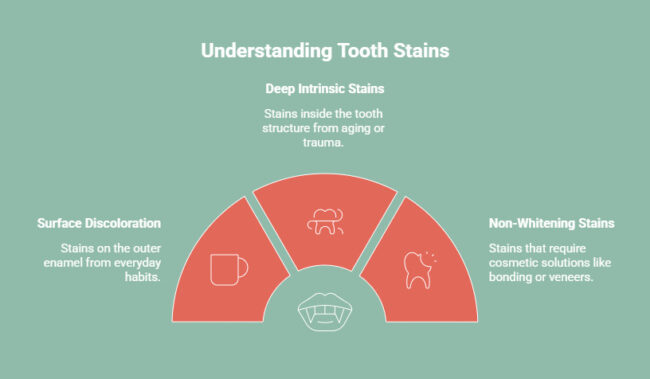
Before choosing any treatment, it helps to understand why your teeth look discolored in the first place. Not all stains behave the same way, and that is exactly why some dental whitening procedures work beautifully for one person but give limited results for another.
In general, tooth stains fall into two main groups. Once you know which type you have, selecting the right approach becomes much easier and more predictable.
1. Surface Discoloration (Extrinsic Stains)
These stains sit on the outer enamel. They build up gradually from everyday habits and are the most common reason teeth lose brightness.
Typical causes include:
- Coffee, tea, and red wine
- Smoking or tobacco use
- Dark sauces, berries, and colored drinks
- Plaque buildup from inconsistent oral care
The good news? These respond extremely well to teeth whitening dental procedures. Professional treatments either lift stains through gentle bleaching or break down discoloration chemically, revealing the lighter enamel underneath. With good hygiene and routine cleanings, these stains are also easier to control long-term.
2. Deep Intrinsic Stains
These stains are inside the tooth structure, either within the enamel or dentin. They are not something you can scrub away.
They often develop from:
- Aging, which naturally thins enamel
- Childhood medication exposure
- Tooth trauma or internal damage
Because the discoloration is deeper, store-bought kits often fall short. Professional whitening uses stronger, controlled agents designed to penetrate the tooth and lighten these internal stains more effectively.
3. Stains That May Not Respond to Whitening
Some discoloration simply is not a whitening issue. Instead, it is structural or restorative.
Whitening may not work well for:
- Stains from tooth nerve damage
- Gray or purplish medication-related staining
- Crowns, veneers, or tooth colored fillings
In these situations, dentists often recommend cosmetic options like bonding or veneers. This is why an exam matters. It ensures you choose a solution that actually works, instead of wasting time on one that cannot.
Understanding the type of stain you have helps set realistic expectations and guides you toward the most effective treatment. A professional evaluation ensures your whitening plan is tailored to your teeth, not guesswork.
Wondering how long your brighter smile will really last? Find out what affects longevity and how to keep results looking fresh in this guide on how long teeth whitening lasts.
What Professional Dental Whitening Procedures Are Available?
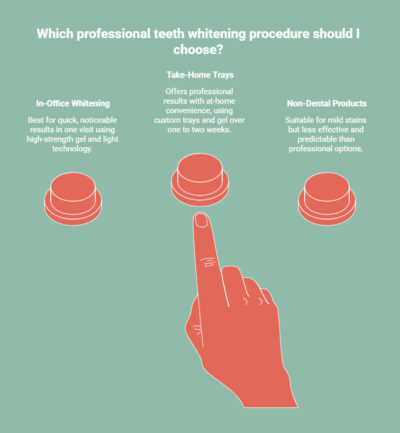
Professional whitening is not one size fits all. The right option depends on how fast you want results, your sensitivity level, and how much flexibility you prefer. Some treatments are completed in one visit, while others work gradually at home under dental supervision.
1. In-Office Teeth Whitening Dental Procedure
Often seen as the best dental whitening procedure for a quick change, this treatment is done entirely at the dental office, usually in about an hour.
Key benefits:
- High-strength whitening gel
- Gums carefully protected
- Light technology may be used
- Noticeable results in one visit
This is ideal when you want fast, visible improvement.
2. Dentist Supervised Take Home Tray Systems
This option offers professional results with at-home convenience. It is still a teeth whitening dental procedure, just more gradual.
How it works:
- Custom-fitted trays
- Professional strength gel
- Daily use for one to two weeks
- Adjustments if sensitivity occurs
Custom trays improve safety and even whitening.
3. Whitening Approaches Not Performed in Dental Settings
Store products can help mild stains, ins but are less effective than a professional dental procedure for teeth whitening.
Examples:
- Whitening strips
- Whitening toothpastes
- Charcoal or baking soda products
They work more slowly and offer less predictable results.
Professional options balance safety, strength, and better outcomes. A dentist helps match the method to your smile goals.
Who Is a Good Candidate for the Best Dental Teeth Whitening Procedure?
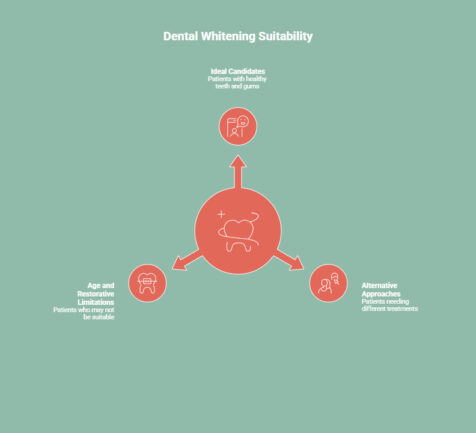
Not sure if whitening is right for you? That is a smart place to start. Professional whitening works best when your mouth is healthy, and your expectations are realistic. A quick dental exam helps confirm that your teeth and gums can handle the treatment comfortably and safely.
1. Ideal Oral Health Conditions
You are a strong candidate when your foundation is solid:
- No untreated cavities or tooth decay
- Healthy gums without active gum disease
- Good daily habits like brushing and flossing
- Routine dental checkups and cleanings
Why this matters: Whitening agents can irritate inflamed gums or seep into untreated decay, which may cause pain. A healthy mouth lowers sensitivity risk and helps your results look brighter and last longer.
2. Patients Who May Need Alternatives
Whitening is not one size fits all. You may need a different approach if you have:
- Crowns, veneers, or tooth colored fillings on front teeth
- Moderate to severe gum disease or irritation
- Worn enamel or a history of strong sensitivity
These situations can lead to uneven color or discomfort. Your dentist may suggest bonding or veneers for a more uniform result.
3. Age and Restorative Limitations
Whitening is usually not recommended for children or teens under 16 because the tooth nerves are still developing. Also, restorations do not whiten. If you have visible dental work, your plan may include updating those restorations after whitening for a balanced smile.
Have sensitive teeth but still want a brighter smile? Learn how whitening can be done comfortably and safely with options designed to reduce discomfort in this guide on sensitive teeth whitening.
When Is Whitening Not Recommended?
Teeth whitening can do amazing things for your smile, but timing matters. Dentists look at the health of your mouth first, because whitening agents work best and safest when your teeth and gums are in good condition. If there are underlying issues, the goal is to fix those before focusing on brightness.
Whitening is usually delayed in situations like these:
- Active gum disease – Inflamed or bleeding gums can become more irritated during whitening.
- Untreated cavities – Bleaching gel can reach inside damaged areas and cause sharp pain or sensitivity.
- Worn enamel or exposed roots – These teeth are more sensitive and may react strongly to whitening products.
- Cracked or injured teeth – Structural problems increase discomfort risk.
- Pregnancy or breastfeeding – Many dentists recommend waiting as a precaution.
- Poor oral hygiene – Plaque buildup and gum inflammation should be controlled first.
In most cases, this is simply a pause, not a permanent restriction. Once your oral health is stable, whitening often becomes a safe option again.
How Do Professional Whitening Procedures Compare to Store Products?
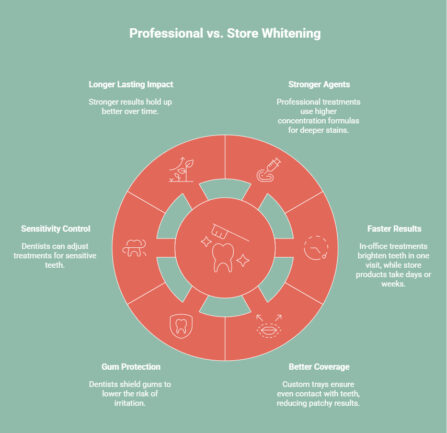
At first glance, whitening strips, pens, and kits seem similar to what dentists use. The real difference, though, is not just the product. It is the strength, precision, and professional guidance behind the treatment.
Professional whitening is designed to work efficiently while keeping your teeth and gums protected. Store products focus more on convenience and affordability, which can mean slower or less predictable results.
Here is how they differ in practical terms:
- Stronger whitening agents – Professional treatments use higher concentration formulas that can lift deeper stains more effectively.
- Faster visible change – Many in-office treatments brighten teeth in about one visit, while store products take days or weeks.
- Better coverage – The dentist applied gels or custom trays to ensure even contact with teeth, reducing patchy results.
- Gum protection – Dentists shield your gums during treatment, lowering the risk of irritation.
- Supervised sensitivity control – If your teeth react, the dentist can adjust the process right away.
- Longer lasting impact – Because results are stronger, they often hold up better over time.
Store products can help with mild surface stains, but for deeper discoloration, uneven shade, or sensitive teeth, professional whitening usually offers a safer and more noticeable outcome.
Why Choose Dentist Tree of the Heights for Whitening?
Where you get your teeth whitened matters. At Dentist Tree of the Heights in Houston, TX, whitening is done with a focus on comfort, safety, and natural-looking results, not just speed.
Before starting any teeth whitening dental procedure, the team evaluates your enamel, gums, sensitivity level, and existing dental work. This helps them choose the right approach for your smile, whether you need fast in-office results or a gentler take-home option.
What patients appreciate most:
- Personalized treatment based on your stain type and tooth health
- Professional strength whitening with gum protection
- Options designed for sensitive teeth
- Clear instructions to help results last longer
- A calm, patient centered experience
If you want the best dental whitening procedure with expert care and honest guidance, Dentist Tree of the Heights is a trusted choice.
Book your whitening consultation today and start your journey to a brighter smile.
Final Thoughts
A brighter smile is more achievable than you might think. The best dental whitening procedure depends on your stain type, tooth sensitivity, and overall oral health. Professional treatments offer safer, faster, and more reliable results than store options, especially for deeper discoloration.
The first step is a dental evaluation to choose the right approach for you. With the right plan and care, you can enjoy a noticeably whiter smile and greater confidence every day.
Frequently Asked Questions
Are over-the-counter whitening products as effective as dental procedures?
Store-bought whitening products are less effective than professional treatments, especially for deep stains. They contain lower-strength ingredients and provide gradual, milder results. Dentist-supervised whitening uses stronger formulas, safer application, and delivers faster, more noticeable, and longer-lasting improvements.
Can dental whitening treatments cause lasting sensitivity?
Sensitivity after whitening is usually mild and temporary, often fading within a few days. Lasting sensitivity is uncommon and typically linked to overuse or existing enamel issues. Dentists can adjust gel strength and use desensitizing methods to keep treatments comfortable.
How do people get such white teeth?
Very white smiles often come from professional whitening, veneers, or bonding. Consistent oral hygiene, regular cleanings, and limiting stain-causing foods also help. Toothpaste alone rarely produces dramatic whitening without professional cosmetic treatments.
What is In-Office Teeth Whitening?
In-office teeth whitening is a professional treatment performed at a dental clinic using high-concentration whitening agents. It often includes light activation and delivers fast, visible results, making it one of the quickest ways to brighten teeth safely.
Which is the best dental whitening procedure for immediate results?
In-office professional whitening is the best choice for fast results and achieving whiter teeth. It can lighten teeth several shades in about one visit. Strong, dentist-controlled formulas break down deep stains quickly, while at-home kits require weeks for similar improvement.
Which dental procedure for teeth whitening is best for sensitive teeth?
People with sensitive teeth benefit most from dentist-supervised whitening solutions. Lower-strength gels, desensitizing treatments, and custom trays allow gradual brightening with less discomfort. Dentists can adjust timing and concentration to maintain comfort while achieving effective results.
How safe are tooth whitening dental procedures?
Professional whitening is safe under dental supervision by dental professionals. Dentists protect soft tissues, assess oral health, and monitor the treatment, while also considering the side effects of teeth whitening. Temporary sensitivity or mild gum irritation may occur, but serious complications are rare when instructions are followed carefully.
How long do results from dental whitening procedures last?
Results commonly last six months to a few years. Habits like coffee drinking and smoking can shorten duration. Proper brushing, flossing, professional cleanings, and occasional touch-up treatments help maintain brightness longer.
How can patients maintain results after a whitening procedure?
To maintain results, limit dark beverages, brush twice daily, floss, and attend routine cleanings. Dentist-recommended touch-up trays and the type of treatment you choose, along with good oral hygiene, help extend whitening effects and keep your smile bright over time.
How much does the best dental whitening procedure usually cost?
The best dental whitening procedure typically costs between $500 and $1,000 for in-office treatment. Price varies based on location, technology used, and stain severity. Dentist-supervised take-home kits cost less but work gradually, while store products are cheaper with milder, slower results.