

Key Highlights
- Most hospital emergency rooms do not have dentists on staff; ER teams are trained to handle medical emergencies rather than perform dental procedures.
- The ER can control pain, prescribe antibiotics, and check for serious infections or injuries, but it usually cannot treat the underlying dental problem.
- Common dental treatments like root canals, extractions, cavity repairs, or crowns are typically performed only in dental clinics.
- Visiting the ER makes sense when symptoms involve severe facial swelling, difficulty breathing, heavy bleeding, or major facial trauma.
- For most dental emergencies, such as toothaches, cracked teeth, infections, or lost fillings, seeing a dentist provides faster diagnosis and proper treatment.
- Searching for a dental clinic that offers same-day or emergency appointments can help you get relief and prevent the issue from worsening.
- For urgent dental care in Houston, Dentist Tree of the Heights provides prompt evaluations and treatment for common dental emergencies so patients can address the problem quickly and get lasting relief.
Severe tooth pain can strike at any time, especially late at night or over the weekend when many dental clinics are closed. When the pain becomes unbearable, people often search online for “do emergency rooms have dentists,” hoping a hospital can provide quick treatment.
The confusion is common. Dental emergencies can feel just as urgent as medical ones, but most people are unsure whether hospitals actually have dentists available. While emergency rooms can help with pain or infections, they usually cannot provide full dental treatment.
In this guide, we explain whether emergency rooms have dentists, what ERs can and cannot do for dental problems, and where to go to get proper care during a dental emergency.
Do Hospital Emergency Rooms Have Dentists on Staff?
In most hospitals, the emergency room does not have a dentist on staff. Emergency departments are designed to treat medical emergencies such as injuries, infections, and trauma. Because of this, the teams working in emergency rooms are typically made up of physicians, nurses, and other medical specialists rather than dental professionals.
In general, hospital emergency rooms are set up to handle medical stabilization, not dental treatment. That means they may help with immediate concerns, but usually cannot provide full dental care.
What the Emergency Room Can Actually Do for Dental Pain?
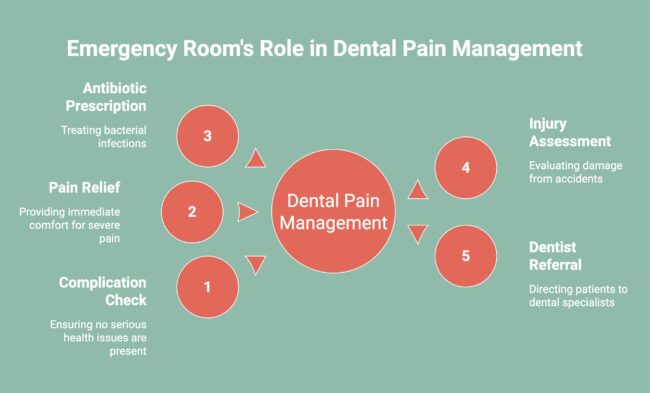
Emergency rooms focus on stabilising your condition, not fixing the dental issue itself. Here’s how they typically help:
- Check for serious complications like spreading infection, swelling, or breathing difficulty
- Provide pain relief to manage severe discomfort
- Prescribe antibiotics if there are signs of infection
- Assess injuries from accidents, such as jaw damage or deep cuts
- Refer you to a dentist for proper diagnosis and treatment.
In short, the ER can manage symptoms and ensure safety, but a dentist is needed to resolve the underlying problem.
For long-term solutions like dental implants, it helps to understand the materials behind them. Explore what dental implants are made of and why dentists trust them for durable tooth replacement.
What the Emergency Room Usually Cannot Do?
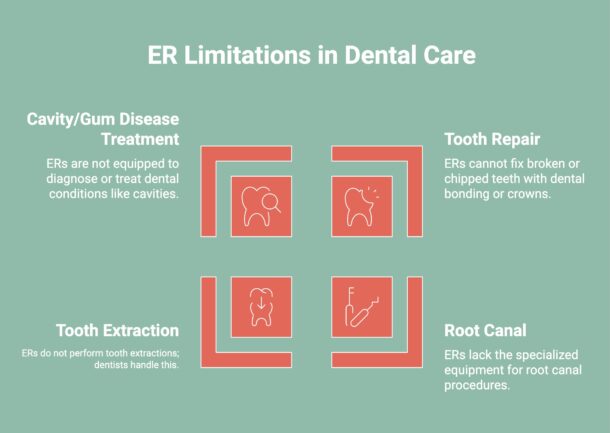
While the ER can help manage pain or stabilize serious symptoms, it’s important to understand that most dental treatments simply aren’t performed in an emergency room. Hospitals are not equipped with the tools or specialists needed for routine dental procedures.
For example, the ER typically cannot:
- Repair a broken or chipped tooth: Fixing damaged teeth usually requires dental bonding, crowns, or other restorative treatments that are done in a dental clinic.
- Perform a root canal: If tooth pain is caused by an infected nerve, a root canal may be needed to remove the infection and save the tooth. This procedure requires specialized dental equipment.
- Extract a severely damaged tooth: Tooth extractions are normally performed by dentists or oral surgeons, not ER physicians.
- Treat cavities or gum disease: These are dental conditions that require proper diagnosis and treatment by a dentist.
Because of these limitations, many people who visit the ER for tooth pain still need to schedule a dental appointment afterward to actually fix the underlying problem.
In most cases, visiting a dentist as soon as possible helps resolve the problem early and prevents more serious complications.
When Does It Make Sense to Visit the Emergency Room for a Dental Problem?
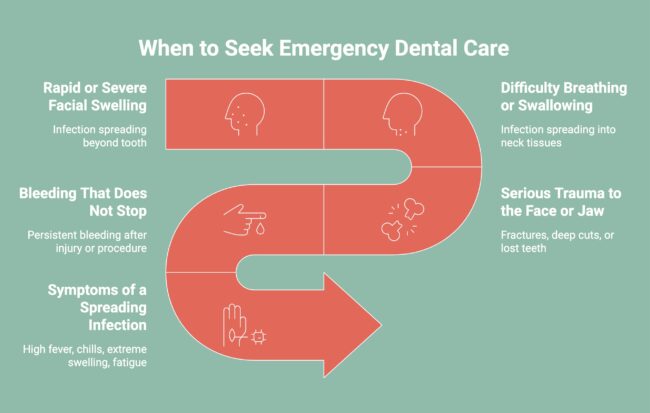
Most dental issues, such as toothaches, cracked teeth, or lost fillings, are best treated by a dentist. However, there are certain situations where a dental problem can turn into a medical emergency, and visiting the emergency room may be necessary.
1. Rapid or Severe Facial Swelling
A dental infection can sometimes spread beyond the tooth and affect the face, jaw, or neck. If the swelling increases quickly or begins affecting the eye area or throat, it may signal that the infection is spreading and needs immediate medical evaluation.
2. Difficulty Breathing or Swallowing
In rare cases, an untreated dental infection can spread into deeper tissues of the neck. This can make breathing or swallowing difficult, which is a serious medical concern that requires urgent hospital care.
3. Serious Trauma to the Face or Jaw
Accidents such as falls, car crashes, or sports injuries can damage the jaw, cause deep cuts inside the mouth, or knock out multiple teeth. Hospital doctors can evaluate fractures, control bleeding, and stabilize the injury before dental treatment begins.
4. Bleeding That Does Not Stop
Persistent bleeding from the mouth after an injury or dental procedure may require medical attention. The emergency room can help control the bleeding and prevent complications.
5. Symptoms of a Spreading Infection
High fever, chills, extreme swelling, or severe fatigue, along with dental pain, may indicate that the infection is no longer limited to the tooth. In these cases, hospital care may be needed to manage the infection safely.
In situations like these, the emergency room focuses on stabilizing the condition and addressing the immediate medical risk. After that, follow-up care with a dentist is usually required to treat the dental problem itself.
If you’re using Invisalign as part of your dental care, keeping your aligners clean is just as important. Learn how to use Invisalign cleaning crystals correctly to maintain hygiene and clarity.
Why a Dentist Is Usually the Better Choice for Dental Emergencies?
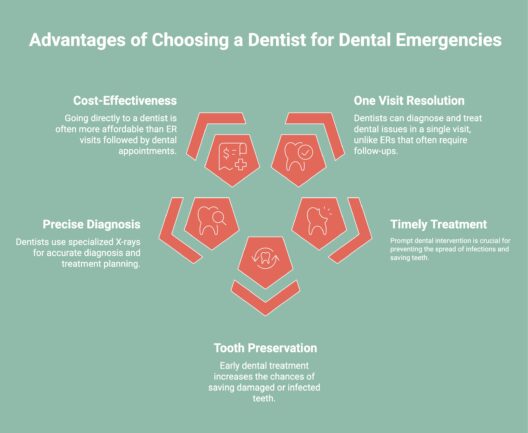
For most dental problems, the difference comes down to how quickly the issue is actually resolved, not just managed.
1. One Visit vs. Multiple Visits
At the ER, you’ll likely receive pain relief or antibiotics and be told to see a dentist later. With a dentist, issues like cavities, infections, or broken teeth can often be diagnosed and treated in the same visit.
2. Time to Treatment Matters (Especially for Infections)
Dental infections can worsen within days. A dentist can drain an abscess, start a root canal, or remove the source immediately, reducing the risk of the infection spreading further.
3. Better Chances of Saving the Tooth
Delays caused by ER visits can reduce the chances of saving a damaged or infected tooth. Prompt dental treatment increases the likelihood of preserving the tooth and avoiding extraction.
4. More Precise Diagnosis
Dentists use targeted dental X-rays to identify issues like deep decay, abscesses, or root damage that ER scans may not focus on. This leads to more accurate and faster treatment decisions.
5. Lower Overall Cost for the Same Problem
An ER visit plus a follow-up dental visit often costs more than going directly to a dentist. Since the ER doesn’t fix the issue, you end up paying twice for the same problem.
For most cases, seeing a dentist first means faster resolution, fewer visits, better chances of saving your tooth, and lower total cost.
What Are The Common Dental Emergencies That Need a Dentist?
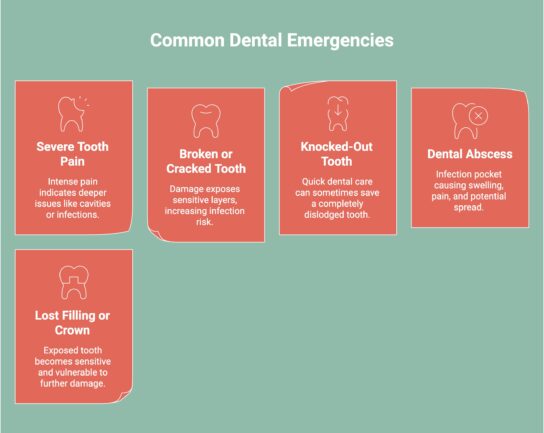
Not every dental problem requires a hospital visit, but many still need prompt attention from a dentist. Dental emergencies often involve pain, damage to a tooth, or infections that will not resolve on their own.
1. Severe Tooth Pain
Persistent or intense tooth pain is often a sign that something deeper is happening, such as a cavity reaching the nerve, an infection inside the tooth, or an abscess forming around the root. A dentist can examine the tooth, take X-rays if needed, and determine the right treatment.
2. Broken or Cracked Tooth
Teeth can crack or break due to accidents, biting into hard foods, or untreated decay, weakening the structure. Even if the damage looks minor, it can expose sensitive inner layers of the tooth and increase the risk of infection.
3. Knocked-Out Tooth
When a tooth is completely knocked out, timing becomes critical. Quick dental care can sometimes allow the tooth to be placed back into the socket and saved, especially if treatment happens within a short window after the injury.
4. Dental Abscess
A dental abscess is a pocket of infection that forms around the tooth or gum. It can cause swelling, severe pain, bad taste in the mouth, and sometimes fever. Without treatment, the infection may spread to surrounding tissues.
5. Lost Filling or Crown
Fillings and crowns protect damaged teeth. When they fall out, the exposed tooth can become extremely sensitive and vulnerable to further damage, making prompt dental care important.
These conditions usually require professional treatment to fix the problem and prevent it from getting worse. For cases that involve restoring or replacing teeth, understanding options like Invisalign and how they compare in cost can also help you plan your next steps.
How Can You Find Help for a Dental Emergency?
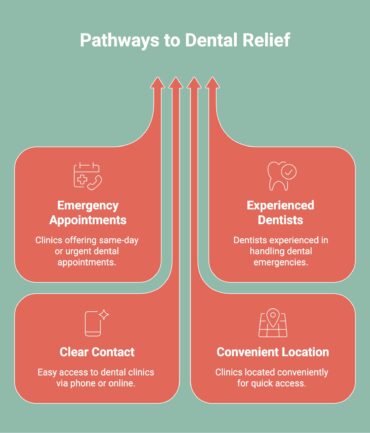
When severe tooth pain or a dental injury happens, many people immediately search online for help nearby, sometimes typing things like emergency room dentist near me while trying to find fast relief.
A good starting point is to look for dental clinics that offer emergency or same-day appointments. Many dental practices set aside time in their schedule specifically for urgent cases like severe toothaches, broken teeth, infections, or lost crowns.
It also helps to check a few practical things before choosing where to go:
- Same-day or urgent appointments – Clinics that treat emergency cases can usually see patients quickly.
- Experience with dental emergencies – Practices that regularly handle urgent dental problems are better prepared to diagnose and treat them efficiently.
- Clear contact options – Clinics that provide phone support or online booking can help you get care faster.
- Location and availability – Finding a clinic close to you can make it easier to get treatment without delay.
Taking a few minutes to find the right dental provider can make a big difference in how quickly the pain is addressed and the problem is properly treated.
Need Fast Help for a Dental Emergency? Dentist Tree of the Heights Is Here for You
When a dental emergency happens, the priority is simple: relieve the pain and fix the problem quickly. While hospital emergency rooms may offer temporary relief, they usually cannot treat the actual dental issue. That’s where Dentist Tree of the Heights in Houston can help.
At Dentist Tree of the Heights, we provide prompt care for urgent dental problems so you can get real relief without unnecessary delays. Our team is experienced in diagnosing and treating dental emergencies in a comfortable, patient-focused environment.
We commonly treat emergencies such as:
- Severe toothaches that make it difficult to eat or sleep
- Broken, chipped, or cracked teeth from accidents or hard foods
- Dental infections or abscesses that cause swelling and pain
- Knocked-out teeth that need immediate attention
- Lost crowns or fillings that expose the tooth
Because we offer comprehensive dental care in one place, we can quickly identify the problem and begin treatment right away whenever possible. When you’re in pain, getting help from a dedicated dental team can make a big difference.
Final Thoughts
When a tooth suddenly starts hurting or breaks unexpectedly, it’s easy to panic and head straight to the nearest hospital. But in most cases, the emergency room can only help manage the symptoms, not fix the dental problem itself.
The better move is to get in touch with a dentist who can actually treat the issue causing the pain. The sooner you receive proper dental care, the sooner you can get back to eating, sleeping, and going about your day without that constant discomfort.
Frequently Asked Questions
What emergency room has a dentist?
Most hospitals do not have dentists working directly in the emergency department. In most cases, emergency room staff focus on stabilizing patients and then recommend seeing a dentist who provides proper dental treatment for the underlying issue.
Are there any hospitals where you can get dental procedures done in an emergency?
Some large hospitals with oral surgery departments may offer limited dental procedures during an emergency. However, most patients needing emergency dental care are usually referred to a dentist or clinic equipped to handle urgent dental treatment.
Can an emergency room actually fix a broken tooth or just provide temporary relief?
Emergency rooms usually provide temporary help rather than fixing the tooth. Doctors may offer pain relief or evaluate the injury, but repairing a broken tooth typically requires treatment from a dentist who can properly restore the damage.
Do emergency rooms have dentists on staff who can treat dental emergencies?
Most hospitals do not have dentists available in the emergency department. While doctors can help manage symptoms during an emergency room visit, they typically recommend seeing a dentist who can diagnose and treat the dental problem.
Are there any hospitals where you can get dental procedures done in an emergency?
A few hospitals may provide dental care through oral surgeons, especially when injuries involve the facial bones. However, routine dental procedures and treatments for tooth pain are usually handled by dentists outside the hospital setting.
Can an emergency room doctor pull a tooth?
In most situations, emergency room doctors do not perform extractions. If a tooth needs removal due to severe damage or infection, patients are usually referred to a dentist who can perform an emergency tooth extraction safely.
Can a dentist work in an ER?
Dentists rarely work in hospital emergency departments. Most ERs do not have an emergency room with a dentist on staff, though some large hospitals may have on-call oral surgeons or dental specialists who assist with severe facial injuries or infections.