

Key Highlights
- Invisalign cleaning crystals are designed to clean aligners safely without damaging their fit or clarity
- Regular use helps remove plaque, bacteria, and odours that brushing alone may miss
- Proper soaking with lukewarm water keeps aligners clear and comfortable to wear
- Following the correct step-by-step cleaning method prevents staining and buildup
- Avoiding common mistakes helps protect the aligner shape and long-term effectiveness
- Using Invisalign-specific cleaning products supports better oral hygiene and treatment results
Clear aligners lose their appeal quickly when they start to look cloudy or smell unpleasant. Invisalign is meant to be discreet, but without proper care, aligners can stain, trap bacteria, and become uncomfortable to wear, which can affect both confidence and oral health.
The good news is that keeping your aligners clean does not have to be complicated. With a consistent routine and the right products, you can maintain their clarity, reduce odours, and support the success of your treatment. Understanding how to use Invisalign cleaning crystals correctly helps you avoid damage while keeping aligners fresh.
In this guide, we explain how to use Invisalign cleaning crystals, how often to clean your aligners, how long to soak Invisalign in cleaning crystals, and common mistakes to avoid so your treatment stays on track from start to finish.
What Are Invisalign Cleaning Crystals and How Do They Work?
Invisalign cleaning crystals are made specifically to clean Invisalign aligners without affecting the material or fit. When mixed with water, they dissolve into a cleaning solution that targets daily buildup while remaining gentle on clear aligners.
If you are wondering how do Invisalign cleaning crystals work, the solution acts on plaque, bacteria, and residue that collect during normal wear. It breaks down buildup that can cause cloudiness or odours, helping aligners stay clear and comfortable throughout treatment. Because the formula is designed for Invisalign products, it avoids the risks associated with abrasive or household cleaners.
What Ingredients Are in Invisalign Cleaning Crystals and What Do They Do?
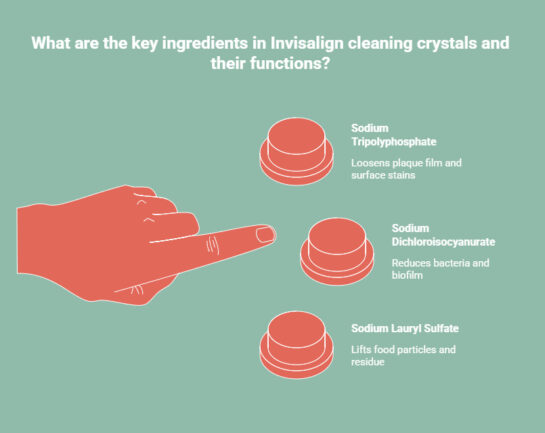
Each packet contains ingredients chosen to clean aligners effectively without scratching, clouding, or weakening the plastic. Instead of simply covering odours, these components target the sources of buildup that affect clarity, hygiene, and comfort.
Key ingredients include:
- Sodium tripolyphosphate, which helps loosen plaque film and surface stains from the aligner
- Sodium dichloroisocyanurate, which helps reduce bacteria that contribute to odours and biofilm buildup
- Sodium lauryl sulfate, which lifts food particles and residue from the aligner surface
Together, these ingredients provide a deep yet gentle clean, helping maintain aligner transparency, freshness, and proper fit throughout treatment.
What Are the Benefits of Using Cleaning Crystals for Aligners and Retainers?
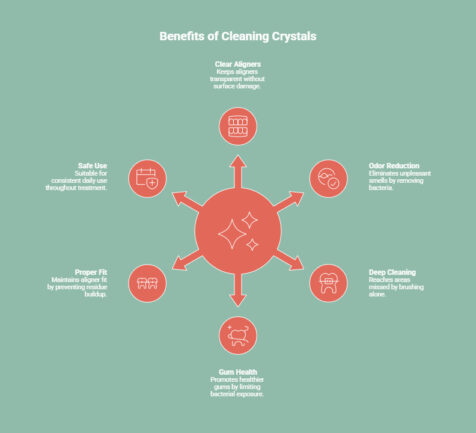
Using Invisalign cleaning crystals regularly offers more than cosmetic benefits. They are designed to clean aligners at a level that brushing alone often cannot achieve.
- Keeps aligners clear without scratching the surface: Cleaning crystals dissolve plaque film and protein buildup through a soaking action rather than abrasion. This protects the smooth plastic surface, helping aligners stay transparent and less visible during wear.
- Reduces odours by targeting bacteria: Aligners trap saliva and bacteria between the trays and teeth. Cleaning crystals helps break down the bacterial biofilm responsible for unpleasant smells, keeping trays fresher throughout the day.
- Reaches areas that brushing may miss: Small grooves, attachment spaces, and edges of aligners can hold debris. The soaking solution flows into these tight areas, lifting buildup that toothbrush bristles cannot effectively reach.
- Supports gum health: Reducing bacterial accumulation on aligners lowers the chance of transferring microbes back onto teeth and gums, which helps decrease the risk of irritation, inflammation, and plaque-related issues.
- Helps maintain proper fit: Residue buildup can slightly alter how aligners seat on teeth. Regular deep cleaning prevents film accumulation that may affect snug contact and tracking accuracy.
- Safe for daily use during treatment: Cleaning crystals are formulated for aligner materials, making them gentle enough for routine use without degrading plastic or affecting tray performance.
With regular use, cleaning crystals help maintain both aligner hygiene and comfort, supporting a smoother and more effective Invisalign treatment experience.
Wondering what Invisalign really costs in Houston? This guide breaks down pricing, insurance considerations, and what factors affect your final treatment cost.
How Do You Use Invisalign Cleaning Crystals Step by Step?
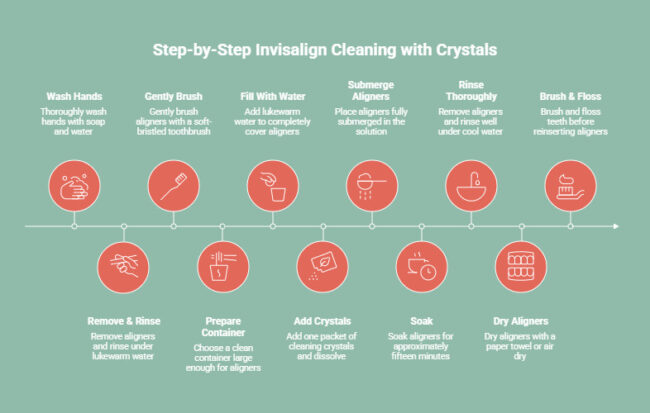
Many patients ask how to use Invisalign cleaning crystals as part of their daily routine. The process itself is simple, but following each step in the correct order helps ensure your aligners are cleaned effectively without being damaged.
The Invisalign cleaning crystals instructions below outline a safe, practical method that fits easily into everyday care.
Step 1: Wash Your Hands
Before handling your aligners, wash your hands thoroughly with soap and water. This helps prevent bacteria from transferring to your aligners during cleaning.
Step 2: Remove Aligners and Rinse
Remove your aligners and rinse them under lukewarm water. This initial rinse clears away saliva and loose debris, allowing the cleaning solution to work more effectively.
Step 3: Gently Brush Aligners
Using a soft-bristled toothbrush reserved only for your aligners, gently brush the inside and outside surfaces. This loosens plaque and buildup before soaking. Avoid toothpaste or abrasive products.
Step 4: Prepare a Clean Soaking Container
Choose a clean cup, bowl, or Invisalign cleaning tub that is large enough to submerge both aligners fully.
Step 5: Fill With Lukewarm Water
Add enough lukewarm water to completely cover the aligners. Never use hot water, as heat can warp the plastic and affect the fit of your trays.
Step 6: Add One Packet of Cleaning Crystals
Add one packet of cleaning crystals to the water and allow it to dissolve fully. This step is essential to how to use the Invisalign cleaning crystals safely and effectively.
Step 7: Submerge Aligners Fully
Place both aligners into the solution, making sure they are completely submerged. Full coverage is important for even cleaning.
Step 8: Soak for the Recommended Time
If you are unsure how long to soak Invisalign in cleaning crystals, about fifteen minutes is typically sufficient for daily cleaning. Longer soaking is rarely necessary.
Step 9: Rinse Thoroughly After Soaking
Remove the aligners and rinse them well under clean, cool water to wash away any remaining solution and loosened debris.
Step 10: Dry Aligners
Dry your aligners with a clean paper towel or allow them to air dry in a clean case before use.
Step 11: Brush and Floss Before Reinserting
Before placing your aligners back in your mouth, brush and floss your teeth. This prevents bacteria from being trapped under clean trays and supports better oral hygiene.
Following these steps consistently helps keep your aligners clear, fresh, and comfortable to wear. A simple daily routine makes a noticeable difference in both your oral health and the success of your Invisalign treatment.
Curious about what actually happens during Invisalign treatment? Learn how Invisalign works, from digital scans to aligner changes, and what to expect at each stage.
How Often Should You Use Invisalign Cleaning Crystals?
Invisalign aligners are worn for 20 to 22 hours a day, which means they are constantly exposed to saliva, bacteria, and food particles. Because of this, cleaning crystals are not an occasional product. They are intended to be part of a daily hygiene routine to keep aligners clear, fresh, and functioning properly.
What Is the Standard Daily Use?
For most patients, the recommended frequency is:
- Once per day soaking in cleaning crystals for about 15 minutes
- Ideally done while eating a meal, when aligners are already removed
- Followed by a thorough rinse with lukewarm water before reinserting
This daily deep clean helps dissolve plaque film and protein buildup that brushing alone cannot fully remove.
Why Daily Cleaning Matters?
Skipping regular soaking allows biofilm to accumulate on the aligner surface. Over time, this can lead to:
- Cloudiness that makes aligners more noticeable
- Odours caused by bacterial growth
- Increased transfer of bacteria back onto teeth and gums
- Residue buildup that may slightly affect how aligners seat on teeth
Daily use prevents these issues before they develop rather than trying to fix them later.
When Frequency May Change?
Some situations may require temporary adjustments:
- Twice-daily use of aligners develops odour or visible cloudiness
- More frequent cleaning after illness to reduce bacterial load
- Slightly reduced frequency if your dentist confirms minimal buildup
Your dentist or orthodontist may tailor guidance based on your oral hygiene, saliva composition, and wear habits.
Wondering whether Invisalign is uncomfortable or painful? Learn what patients actually experience, what’s normal during treatment, and how to manage any soreness as your teeth adjust.
What Mistakes Should You Avoid?
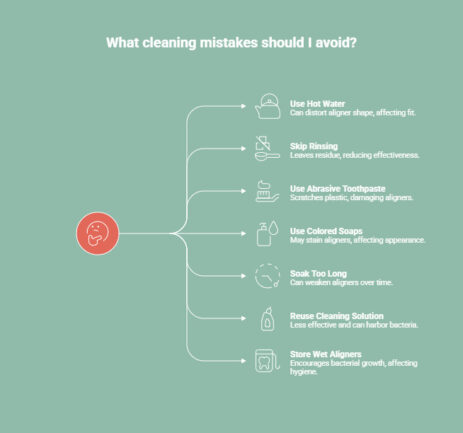
Even small cleaning errors can affect aligner clarity, fit, and hygiene over time. Because aligners sit tightly against teeth for most of the day, improper care can impact both the trays and your oral health.
Common mistakes to avoid include:
- Using Hot or Boiling Water: High temperatures can warp the thermoplastic material used in aligners. Even slight distortion may affect how the tray sits on your teeth, which can interfere with tracking and treatment accuracy.
- Skipping the Rinse After Soaking: Residual cleaning solution left on aligners may cause an unpleasant taste or mild irritation. Rinsing thoroughly ensures no chemical film remains before reinsertion.
- Using Abrasive Toothpaste: Many toothpastes contain silica or whitening particles that scratch the aligner surface. These micro-scratches make trays appear cloudy and create areas where bacteria can accumulate more easily.
- Cleaning with Colored or Scented Soaps: Dyes and fragrances in household soaps may stain aligners or leave residue not intended for oral appliances. This can affect appearance and introduce unnecessary chemicals into the mouth.
- Soaking Longer Than Recommended: Extended soaking does not improve cleaning and may gradually affect material integrity. Following the recommended soak time preserves the aligner structure.
- Reusing Old Cleaning Solution: Once used, the solution contains loosened debris and bacteria. Reusing it reduces cleaning effectiveness and may redeposit residue onto the aligners.
- Storing Aligners While Wet: Moist environments encourage bacterial growth. Allowing aligners to dry before storage reduces microbial buildup and helps maintain freshness.
Following proper Invisalign cleaning crystals directions protects aligner transparency, ensures proper fit, and supports better oral hygiene throughout treatment.
How Do Invisalign Cleaning Crystals Compare to Other Cleaning Methods?
Many patients compare Invisalign cleaning crystals with household or alternative cleaning options. While some methods may seem convenient, they do not always offer the same level of safety or effectiveness.
Different methods vary in how they clean and how they affect the aligner material over time. Choosing the right approach helps protect aligner integrity.
When comparing cleaning options:
- Household solutions may leave lingering tastes or odours
- Some cleaners can weaken or dull the aligner surface
- DIY methods may not fully remove bacteria or plaque
- Invisalign cleaning crystals are designed specifically for aligner materials
- Formulated solutions balance cleaning strength with material safety
- Consistent results are easier to achieve with purpose-made products
Using a cleaning method designed for Invisalign supports long-term clarity, comfort, and treatment success.
How Does Dentist Tree of the Heights Support Your Invisalign Care?
Keeping your Invisalign aligners clean is an important part of treatment, but having the right professional support makes the process easier and more effective. At Dentist Tree of the Heights, Invisalign care goes beyond the trays themselves, with guidance that helps patients stay comfortable and confident throughout treatment.
From your initial consultation to ongoing check-ins, care is focused on both alignment progress and daily oral health. Clear instructions and personalised recommendations help patients avoid common issues and stay on track.
If you are considering Invisalign or already wearing aligners, Dentist Tree of the Heights offers ongoing guidance to help you care for your aligners and achieve the best possible results.
Ready to start or have questions about Invisalign care? Contact us today to speak with our team and get personalized guidance.
Final Thoughts
Using Invisalign cleaning crystals correctly is a simple but important part of aligner care. A consistent routine helps keep your aligners clear, fresh, and comfortable while supporting better oral hygiene throughout treatment.
By following the recommended steps, soaking time, and frequency, you can avoid common mistakes and protect the fit and appearance of your trays. With proper daily care, your aligners stay discreet, hygienic, and aligned with your treatment goals from start to finish.
Frequently Asked Questions
Are Invisalign cleaning crystals safe for all aligners?
Yes. These special cleaning crystals are designed for Invisalign aligners and clear retainers, including Vivera. They provide an effective way to clean without damaging the material, unlike some denture cleaner options that may be too harsh.
How long should I soak my aligners?
Most patients soak their aligners for about fifteen minutes as part of the cleaning process. This timing allows the solution to break down food particles and residue effectively without overexposing the aligners to the cleaning agents.
Do I need to rinse after soaking?
Yes. Always rinse aligners thoroughly with tap water after soaking. This removes any remaining solution, leftover food debris, and residue from the cleaning process before placing aligners back in your mouth.
Why do my aligners still smell after cleaning?
Odours often mean plaque or food debris was not fully removed. Gently brushing before soaking helps loosen buildup so the packets of cleaning crystals can work more effectively and deliver the best results.
What happens if I use hot water?
Hot water can warp aligners and affect their fit. Always use lukewarm tap water in your cleaning container to protect the aligner material and maintain proper alignment throughout treatment.
Where can I buy official Invisalign cleaning crystals?
You can purchase packets of clear aligner cleaner through your dental provider or authorised retailers. Your dentist can also offer expert guidance on best practices and alternative cleaning options if needed.