

Key Highlights
- Most people need a dental checkup and routine cleaning every 6 months, adjusted based on current oral health and risk factors
- Dental problems often develop without pain, making regular dental checkups key for early detection and simpler treatment
- Cleanings remove tartar, while exams detect oral health issues early, both working together to maintain good oral health
- Visit frequency increases with braces, gum disease, or health issues like diabetes due to higher risk of dental disease
- Signs like tooth pain, bleeding gums, or bad breath indicate underlying oral health problems and need prompt dental attention
- Daily dental hygiene directly impacts how often you need dental services and supports long-term oral health
- At Dentist Tree of the Heights, we personalize your care plan to match your dental health and specific needs
Most people don’t think about the dentist until something starts hurting, but that is usually when the problem has already progressed. In fact, the World Health Organization reports that oral diseases affect nearly 3.5 billion people worldwide. That is not just bad luck. It is often the result of delayed or irregular dental care.
The tricky part is that many dental issues do not hurt at first. Cavities, gum disease, and plaque buildup can develop quietly without clear warning signs. So waiting for pain is not a reliable signal. It often means you are already behind.
That is exactly what this guide will help you fix. We will break down how often you should go to the dentist based on your needs, including cleanings, exams, age, braces, and risk factors, so you can stay ahead of problems instead of reacting to them.
What Is the Recommended Dental Visit Frequency?
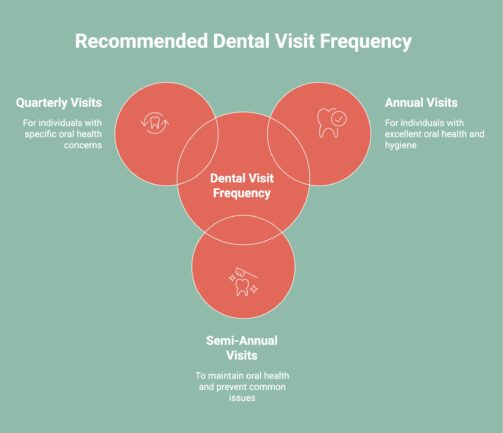
For most people, dentists recommend visiting every 6 months for a routine checkup and professional cleaning. This guideline is supported by organizations like the American Dental Association and works as a reliable starting point for maintaining oral health.
However, your ideal visit frequency can vary based on your individual needs:
- Once a year: If you have healthy teeth and gums, follow good oral hygiene, and have no history of major dental issues
- Every 6 months: If you want to maintain oral health and prevent common problems like cavities and plaque buildup
- Every 3 to 4 months: If you have gum disease, frequent cavities, wear braces, smoke, or have conditions like diabetes
The reason for this variation is simple. Dental issues do not develop the same way for everyone. Some people are more prone to plaque buildup or gum problems, while others maintain stable oral health with fewer visits.
Why Regular Dental Visits Matter?
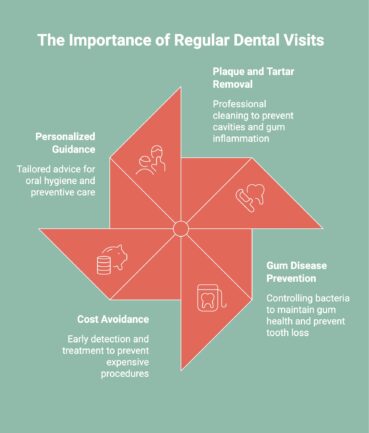
Even if you brush and floss daily, that alone is not enough to fully protect your teeth and gums. Dental problems often develop slowly and without pain, which is why many people underestimate the importance of routine visits.
Here is what regular dental visits actually help you do:
1. Remove Plaque and Tartar Buildup
Even with consistent brushing and flossing, plaque can harden into tartar in areas that are difficult to clean at home. Once tartar forms, it must be removed professionally to help prevent cavities, gum inflammation, and long-term dental problems.
2. Prevent Gum Disease and Protect Long-Term Oral Health
Gum disease often begins with mild symptoms like bleeding or swollen gums, but can eventually lead to bone loss and tooth loss if left untreated. Routine cleanings and exams help control harmful bacteria and keep your gums healthier over time.
3. Avoid Costly and Invasive Dental Treatments
Treating small dental issues early is usually simpler, faster, and less expensive. Delaying care can allow minor problems to progress into conditions that require root canals, crowns, extractions, or other major procedures.
4. Receive Personalized Guidance for Your Oral Health
Your dentist can recommend care routines, preventive treatments, and lifestyle adjustments based on your specific oral health needs. This is especially helpful if you are unsure how often you should visit the dentist based on your habits, age, or risk factors.
Regular dental visits are not just routine appointments. They are a proactive way to protect your oral health, reduce long-term risks, and maintain a healthier smile with less effort over time.
Dental care is not just about visits; it is also about knowing what to expect. Learn more in this guide on whether a dentist can refuse to treat a patient.
How Often Should You Get Dental Cleanings vs Check-Ups?
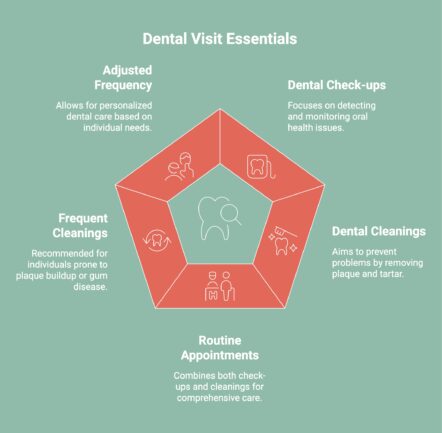
Dental cleanings and check-ups are often done in the same visit, but they are not the same thing. Understanding the difference helps you better plan your visits and know what your dentist is actually doing during each appointment.
- Dental check-ups focus on detecting and monitoring issues: During a check-up, your dentist examines your teeth, gums, and overall oral health. They look for early signs of cavities, gum disease, bite problems, and other concerns. X-rays may also be used when needed to identify issues that are not visible during a visual exam.
- Dental cleanings focus on preventing problems: A professional cleaning removes plaque and tartar buildup, especially in areas that are hard to reach at home. This reduces your risk of cavities, gum disease, and bad breath while helping maintain healthier teeth and gums.
- Most visits include both a cleaning and a check-up: In a routine appointment, your dentist will typically perform an exam and follow it with a cleaning. This approach ensures that any buildup is addressed immediately after assessing your oral health.
- Some people need more frequent cleanings: If you are prone to plaque buildup or have gum disease, your dentist may recommend cleanings every 3 to 4 months. This helps manage bacteria levels and prevents the condition from worsening.
- Your dentist may adjust the frequency of each: Depending on your oral health, you may not always need X-rays or a full exam at every visit, but cleanings may still be required regularly to maintain oral hygiene.
In simple terms, check-ups help identify problems early, while cleanings help prevent them. Both are essential, and together they form the foundation of good dental care.
Dental issues are not always obvious. This guide on is a chipped tooth an emergency explains when a small chip in a tooth becomes an emergency.
How Often Should You Go to the Dentist at Different Ages?
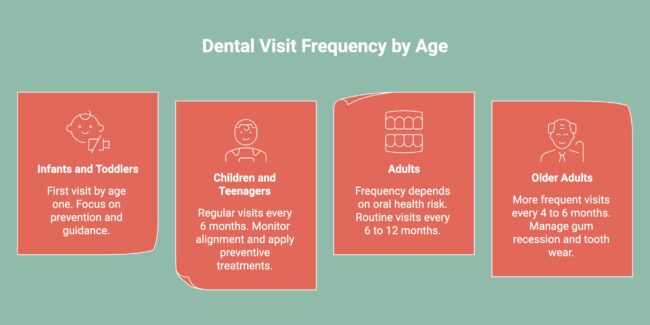
Dental needs change at every stage of life, which is why visit frequency is adjusted based on age. What works for a healthy adult may not be enough for a child with developing teeth or an older adult managing gum health and medical conditions.
1. Infants and Toddlers (0–3 Years)
The first dental visit should happen by age one or within six months of the first tooth appearing. At this stage, visits are less about treatment and more about prevention and guidance.
Dentists check early tooth development, look for signs of baby bottle tooth decay, and help parents build proper brushing and feeding habits. Follow-up visits are usually recommended every 6 to 12 months, depending on risk.
2. Children and Teenagers (4–18 Years)
As children grow, they become more prone to cavities due to diet, developing brushing habits, and changing teeth. Regular visits, typically every 6 months, help monitor tooth alignment, detect early decay, and apply preventive treatments like fluoride or sealants.
These visits are also important for reinforcing good oral hygiene habits during formative years.
3. Adults (18–60 Years)
For adults, dental visit frequency depends largely on overall oral health risk. Adults with healthy gums, good oral hygiene, and no history of frequent dental problems may only need routine visits every 6 to 12 months.
However, adults with higher risk factors, such as smoking, frequent cavities, gum disease, high sugar intake, teeth grinding, or inconsistent oral care, often benefit from more frequent check-ups and professional cleanings to prevent problems from progressing.
4. Older Adults (60+ Years)
Aging introduces new dental challenges, such as gum recession, tooth wear, and dry mouth caused by medications. These factors increase the risk of decay and gum disease.
Because of this, many older adults benefit from more frequent visits, often every 4 to 6 months, to manage these changes and help prevent complications like tooth loss.
The key takeaway is that dental care is not fixed. Your age, oral health history, and risk factors all influence how often you should visit the dentist, which is why care schedules are often tailored to your individual needs.
How Often Should You Go to the Dentist with Braces or Clear Aligners?
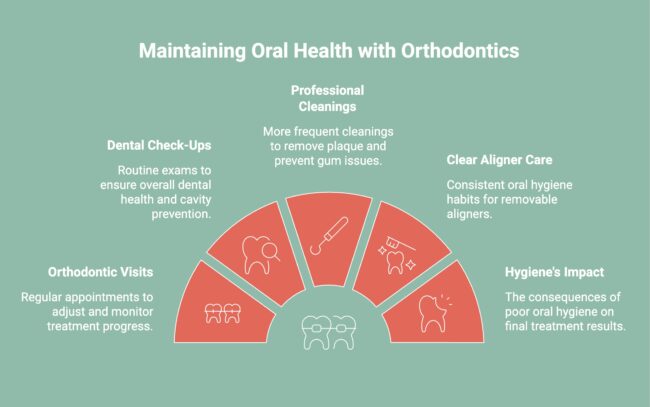
If you have dental braces or are using aligners, your dental care routine needs closer attention than usual. Orthodontic appliances create small spaces where food and plaque can get trapped, making it easier for cavities and gum issues to develop if oral hygiene is not maintained properly.
1. More Frequent Orthodontic Visits Are Necessary
Patients with braces or clear aligners usually visit their orthodontist every 4 to 8 weeks. These appointments allow your provider to adjust wires, monitor aligner progress, and make sure your teeth are moving correctly. Missing visits can slow down or affect your treatment results.
2. Regular Dental Check-Ups Are Still Important
Orthodontic visits focus on tooth alignment, not overall dental health. You should still see your general dentist regularly for exams to check for cavities, monitor gum health, and identify any problems early.
3. Professional Cleanings May Be Needed More Often
Brackets, wires, and even clear aligners can make oral hygiene more challenging. Plaque tends to build up faster around orthodontic appliances, so dentists often recommend more frequent professional cleanings during treatment.
4. Clear Aligners Still Require Consistent Oral Care
Although clear aligners are removable and easier to clean around than traditional braces, they still require good oral hygiene habits. Trapped bacteria, wearing aligners over unclean teeth, or inconsistent cleaning can increase the risk of decay and bad breath.
5. Poor Oral Hygiene Can Affect Final Results
Without proper dental care during orthodontic treatment, plaque buildup can lead to cavities, gum disease, or permanent white spots on the teeth. These issues can remain even after braces or aligners are removed.
Having braces or clear aligners does not just change your smile; it also changes how closely your oral health should be monitored. Staying consistent with both orthodontic appointments and dental check-ups helps protect your teeth throughout treatment.
Thinking about improving your smile along with your dental routine? This guide on professional teeth whitening explains what to expect and how it works.
What Signs Mean You Should Visit the Dentist Sooner?
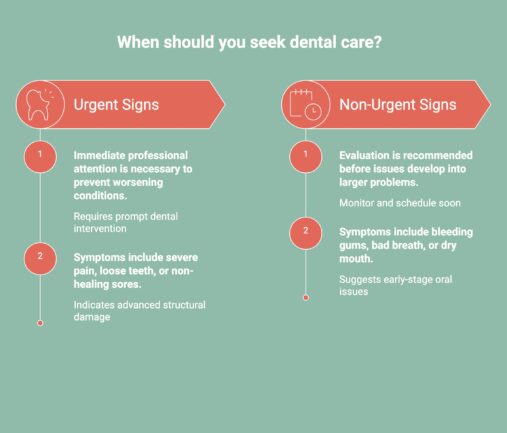
Even if you follow a regular schedule, there are times when you should not wait for your next appointment. Your mouth often gives early warning signs when something is wrong, and acting on them quickly can prevent bigger problems.
Urgent Signs You Should Not Ignore
Here are the signs that may require prompt dental attention and should not be ignored:
1. Severe Tooth Pain or Sudden Sensitivity
Persistent pain or sharp sensitivity to hot, cold, or sweet foods can indicate cavities, infections, or nerve involvement. These issues often worsen quickly without treatment.
2. Loose Teeth or Changes in Bite
Adult teeth should never feel loose. Any shifting, looseness, or noticeable change in how your teeth fit together may point to advanced gum disease or bone loss.
3. Mouth Sores or Unusual Spots That Do Not Heal
Sores, patches, or lumps that remain for more than two weeks should be examined promptly. While some may be harmless, others can signal more serious oral health concerns.
Non-Urgent Warning Signs to Monitor
These signs may not require emergency care, but they should still be evaluated before they develop into larger dental problems:
1. Bleeding or Swollen Gums
Gums that bleed during brushing or appear red and swollen may be an early sign of gum disease. Early treatment can help prevent progression.
2. Persistent Bad Breath
Bad breath that does not improve with brushing or mouthwash may be linked to plaque buildup, gum infections, or other underlying dental issues.
3. Dry Mouth or Unusual Taste
A constant dry feeling or unusual taste in your mouth can increase your risk of cavities and may be related to medications or health conditions.
If you notice any of these signs, it is best to schedule a dental visit sooner rather than waiting for your next routine appointment. Early care can help prevent discomfort, reduce treatment complexity, and protect your long-term oral health.
How Can You Maintain Oral Health Between Dental Visits?
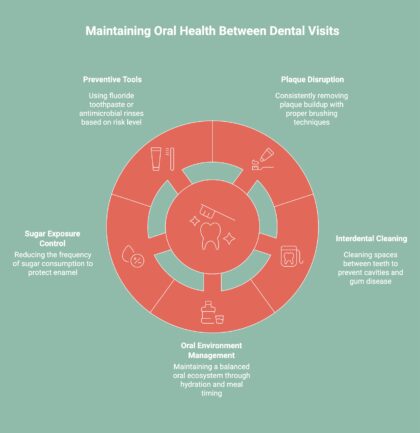
What you do between dental visits directly influences how often you will need professional care. Dentists do not just look at whether you brush and floss. They assess how effectively you control plaque, manage bacterial activity, and protect your enamel over time.
Here are the habits that actually make a measurable difference:
1. Focus on Plaque Disruption, Not Just Brushing Frequency
Plaque starts reforming within hours after brushing. The goal is to consistently disrupt this buildup before it matures into a more harmful biofilm. This comes down to technique, not just habit. Angling your brush toward the gumline, brushing thoroughly across all surfaces, and spending enough time ensures you are actually removing plaque rather than just going through the motions.
2. Clean Interdental Areas Where Disease Often Begins
The spaces between your teeth are where many dental problems start. These areas are prone to plaque accumulation and are not reached by a toothbrush. Daily flossing or using interdental brushes helps reduce bacterial buildup in these zones, lowering your risk of cavities and early gum disease.
3. Manage Your Oral Environment, Not Just Your Routine
Your mouth is an ecosystem, and saliva plays a key role in protecting it. Reduced saliva flow, caused by dehydration, frequent snacking, or certain medications, can increase the risk of decay. Staying hydrated and allowing time between meals helps maintain a balanced oral environment and supports natural enamel protection.
4. Control Frequency of Sugar Exposure, Not Just Quantity
It is not only how much sugar you consume, but how often. Each time you consume sugar, bacteria produce acids that weaken enamel. Frequent snacking keeps your mouth in an acidic state for longer periods, increasing the risk of decay. Reducing how often you consume sugar is one of the most effective ways to protect your teeth.
5. Use Preventive Tools Based on Your Risk Level
Not everyone needs the same level of preventive care. Fluoride toothpaste, prescription-strength fluoride, or antimicrobial rinses may be recommended depending on your risk for cavities or gum disease. Dentists tailor these recommendations based on your oral health, which is why personalized care is more effective than a one-size-fits-all routine.
Strong daily habits do more than keep your teeth clean. They actively slow down the processes that lead to dental problems, helping you maintain better oral health between visits.
Want to learn more about maintaining strong oral hygiene habits? Read this detailed guide on Understanding Oral Hygiene Guide
Who Should Go to the Dentist More Often?
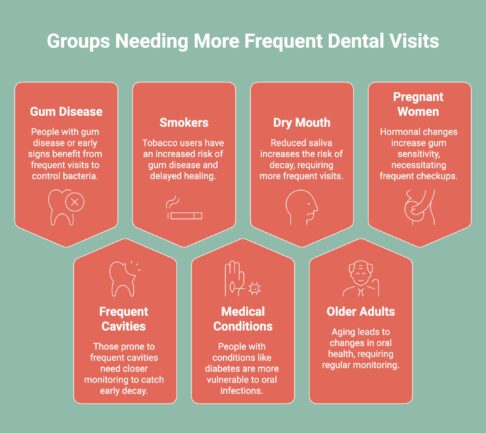
While some people can maintain oral health with routine visits, others need more frequent checkups and cleanings to prevent problems from developing or worsening. This usually comes down to how your gums respond, how quickly plaque builds up, and whether you have specific risk factors.
Here are the groups that typically benefit from more frequent dental visits:
- People with gum disease or early signs of it: If you have bleeding gums, inflammation, or a history of periodontal issues, more frequent visits, often every 3 to 4 months, help control bacteria and prevent progression.
- Those prone to frequent cavities: Regular cavities often indicate higher bacterial activity or weaker enamel. Closer monitoring helps catch early decay and reduce the need for complex treatments.
- Smokers or tobacco users: Tobacco use increases the risk of gum disease, infections, and delayed healing. Regular dental care helps manage these risks more effectively.
- People with medical conditions like diabetes: Conditions like diabetes can make gums more vulnerable to infection and inflammation. More frequent checkups help maintain better control over oral health.
- Individuals with dry mouth or on certain medications: Reduced saliva increases the risk of decay since saliva helps neutralize acids. More frequent visits help manage this increased risk.
- Older adults with changing oral health needs: Aging can lead to gum recession, tooth wear, and sensitivity. Regular visits help monitor and manage these changes early.
- Pregnant women: Hormonal changes during pregnancy can increase gum sensitivity and inflammation. More frequent visits help maintain healthy gums and support overall oral health during pregnancy.
The common thread across all these groups is higher risk. When your mouth is more vulnerable to plaque, bacteria, or inflammation, more frequent dental visits help keep problems under control and prevent them from becoming serious.
Looking for a Dentist You Can Trust? Consider Dentist Tree of the Heights
Knowing how often to visit the dentist is one thing. Staying consistent is what actually protects your oral health. At Dentist Tree of the Heights, we focus on making that consistency easy, comfortable, and tailored to you.
Here is how we support your dental care:
- Personalized visit schedules: We do not follow a one-size-fits-all approach. Your visit frequency is based on your oral health, so you get the right level of care at the right time.
- Complete care in one place: From cleanings and exams to cosmetic and advanced treatments, we handle everything under one roof so your care stays simple and seamless.
- Comfort-first experience: We prioritize a calm, stress-free environment, especially if you feel anxious about dental visits.
- Modern, efficient treatment: We use advanced technology to make your visits quicker, more precise, and more comfortable.
- Flexible care that fits your routine: With convenient scheduling and accessible options, we make it easier for you to stay on track.
If you have been putting off your dental visits or are unsure about the right schedule, now is the time to take the next step.
Schedule your dental appointment today!
Final Words
There is no single rule that works for everyone when it comes to dental visit frequency. The right schedule depends on your age, oral health, and risk factors. What stays constant is the role of consistency. Regular visits help catch issues early, reduce the need for complex treatments, and keep your teeth and gums in a stable, healthy condition.
The key shift is moving from reactive care to preventive care. Instead of waiting for pain or visible problems, staying on top of routine checkups and cleanings helps you avoid them altogether. When your visits are aligned with your needs, dental care becomes more predictable, less stressful, and far more effective in the long run.
Frequently Asked Questions
Does dental insurance cover multiple visits per year?
Most dental insurance plans cover regular dental checkups and routine cleaning on a regular basis, often twice yearly. Coverage may extend to frequent dental appointments if you have specific health needs or oral health issues requiring ongoing dental services.
How often do you really need a dental cleaning?
A good rule of thumb is a routine cleaning every six months for good oral health. However, your dental hygienist may recommend more frequent dental appointments based on current oral health, low-risk status, or underlying health issues.
Can a dentist detect lymphoma?
Dentists cannot diagnose lymphoma, but during a dental exam, they may notice unusual oral health issues like persistent swelling, sores, or enlarged lymph nodes. Early detection during regular dental checkups can prompt a timely referral for further medical evaluation.
How often should I go to the dentist in Denver?
Whether you live in Denver or elsewhere, visit frequency depends on your dental health, not location. Most people benefit from regular dental checkups every six months, though those with oral health issues may need more frequent dentist appointments.
How often should you go to the dentist for a cleaning?
A routine cleaning every six months is a good rule of thumb for maintaining good oral health. However, your dental hygienist may recommend more frequent visits if you have plaque buildup, gum issues, or a higher risk of dental disease.
How often should you go to the dentist for a check-up?
Regular dental checkups are typically recommended every six months to support early detection of oral health problems. However, frequency can vary based on your current oral health, risk level, and specific health needs identified during your dental exam.
How often should you see your dentist after having a root canal?
After a root canal, you should attend follow-up dentist appointments as advised, usually within a few weeks, then return to regular dental checkups. Frequency depends on healing, dental work done, and your current oral health condition.
Is going to the dentist every six months really necessary?
For many people, visiting on a regular basis every six months is a good rule of thumb. Regular exams support early detection of dental disease, but frequency may vary depending on dental health, risk level, and specific health needs.