

Key Insights
- Oral hygiene is essential for preventing gum disease, decay, and maintaining overall health.
- Poor dental care can increase the risk of heart disease, diabetes, and inflammation.
- Warning signs like bleeding gums or bad breath indicate your routine needs improvement.
- Brush twice daily with fluoride toothpaste and floss once a day to remove hidden plaque.
- Use an alcohol-free mouthwash daily to control bacteria and keep your breath fresh.
- Schedule dental cleanings every six months to prevent buildup and detect early issues.
- For personalized, gentle care, schedule your visit with Dentist Tree of the Heights.
A healthy smile starts with more than just a toothbrush. The small details, such as flossing daily, rinsing properly, and cleaning your tongue, make all the difference in keeping your mouth free from gum disease and decay.
Good oral hygiene also protects more than your teeth. The American Dental Association reports that poor dental health is linked to conditions such as heart disease and diabetes, showing how closely your mouth and body work together.
In this blog, you will learn easy, consistent habits to strengthen your oral care routine and protect your long-term health.
What Is Oral Hygiene and Why Does It Matter?
Oral hygiene is the daily care that keeps your mouth clean and your gums healthy. It goes beyond brushing and helps protect your body from harmful bacteria that can cause infection and inflammation.
It affects far more than just your smile, which is why experts agree that good oral hygiene is key to lasting health.
According to the World Health Organization, nearly 3.7 billion people worldwide are affected by oral diseases, which can lead to pain, poor nutrition, and other health complications.
Along with brushing and flossing, visiting your dentist regularly for exams, cleanings, and dental X-rays is essential for preventing oral health issues. Regular checkups help maintain healthy teeth and gums for the long term.
What Are the Real Benefits of Taking Oral Hygiene Seriously?
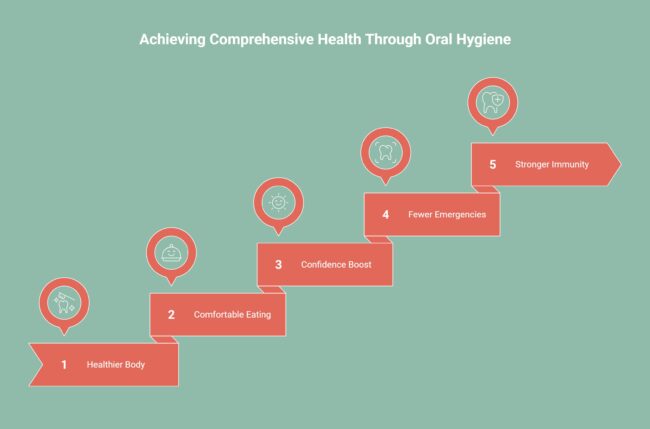
Taking care of your mouth is about much more than avoiding dental problems. It affects how you feel, how you function, and how confidently you interact with others. Here is how good oral health and hygiene can truly benefit you.
1. A Healthier Body Starts with a Healthy Mouth
Good oral care keeps harmful bacteria under control. When plaque and gum inflammation are ignored, bacteria can enter your bloodstream and cause inflammation throughout your body. This raises the risk of heart disease, diabetes complications, and respiratory issues. By protecting your gums, you are also protecting your overall health.
2. Eat Comfortably and Digest Better
Strong teeth and healthy gums make it easier to chew food properly, which helps your body digest nutrients efficiently. When your mouth is free from pain or sensitivity, you can enjoy your meals fully and maintain better nutrition.
3. Confidence That Shows
Good oral hygiene keeps your mouth clean, your breath fresh, and your smile confident, giving you a natural boost in both personal and professional settings.
4. Fewer Dental Emergencies and Lower Costs
Daily brushing, flossing, and regular dental checkups prevent major problems before they start. Preventive care is always more comfortable and affordable than treatments like fillings or extractions. Consistent oral hygiene helps you save time, money, and stress in the long run.
5. Stronger Immunity and Better Wellness
A healthy mouth supports a strong immune system. When you control bacteria and plaque, your body does not have to constantly fight infection. This reduces inflammation and helps your entire system function more efficiently.
Good oral hygiene is one of the simplest ways to protect your health, confidence, and comfort. The small steps you take each day create lasting benefits that go far beyond your smile.
When you are ready to take your routine further, a professional dental visit can make all the difference. Schedule your first visit today to get expert care tailored to your smile.
7 Signs Your Oral Hygiene Routine Isn’t Enough.
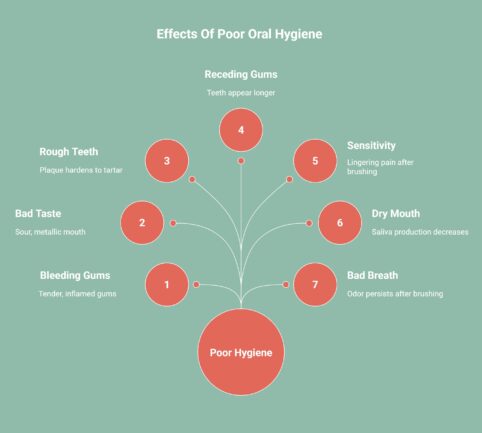
Your mouth often gives early warning signs long before serious problems develop. They may seem minor at first, but these subtle changes can reveal that your oral hygiene routine needs more attention.
Here are some signs you may have poor oral hygiene:
1. Gums That Bleed or Feel Tender
Seeing blood when you brush or floss is a clear sign your gums need care. This is often the first indicator of gingivitis, an early form of gum disease caused by plaque buildup. Addressing it early can prevent long-term damage to your oral health.
2. Persistent Bad Taste in Your Mouth
If you frequently notice a sour or metallic taste, it could mean that bacteria are thriving below the gumline. This lingering taste is often a sign of infection or early tooth decay that needs professional cleaning.
3. Teeth That Feel Rough or Coated
A rough or grainy feeling on your teeth is often a sign that plaque has hardened into tartar. This coating creates tiny hiding spots for bacteria, making brushing and flossing less effective. The longer tartar stays on your teeth, the higher your risk for cavities and gum problems.
4. Gums Pulling Away from Teeth
If your teeth look longer than they used to, your gums may be receding. Gum recession exposes sensitive roots and creates spaces where bacteria collect, often leading to tooth sensitivity and infection.
5. Mouth Sensitivity That Lingers
Occasional sensitivity is normal, but pain that lasts after brushing or eating can point to enamel wear, decay, or gum inflammation. Ignoring it can allow deeper damage that affects nerves and roots.
6. Dry Mouth That Doesn’t Go Away
A constantly dry mouth is more than discomfort; it means your saliva isn’t doing its job of washing away food particles and neutralizing acids. This creates the perfect environment for cavities and bacterial growth.
7. Chronic Bad Breath Despite Brushing
If brushing and mouthwash only mask bad breath for a short time, bacteria may be hiding in plaque buildup or gum pockets. Persistent odor often signals an infection that needs professional care, not just freshening up.
Poor oral hygiene rarely becomes a major issue overnight. These early signs are your body’s reminders to take action early.
Book a gum disease consultation to keep your smile healthy and prevent future complications.
How to Build the Best Oral Hygiene Routine?
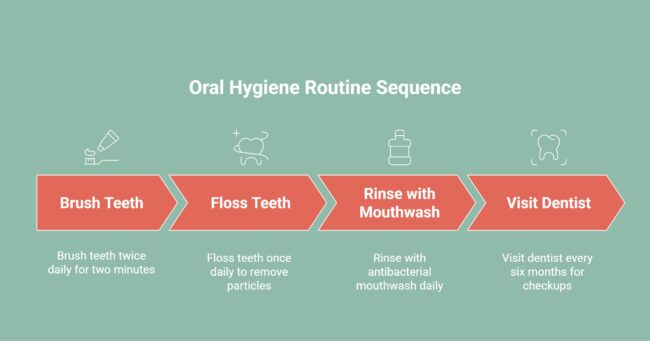
A healthy mouth starts with a routine that fits easily into your daily life. The key to great oral hygiene is not complexity but consistency and care.
The essential steps include proper brushing, daily flossing, and using an antibacterial mouthwash to protect your gums and teeth.
When paired with regular dental visits, these simple habits create a strong foundation for lasting oral health. Let’s take a closer look at each of these essentials.
1. Master the Art of Brushing
Brushing your teeth properly is the cornerstone of a healthy mouth. To be effective, brush at least twice a day for two full minutes. Use a soft-bristled toothbrush to protect your gums and enamel from wear.
Angle your brush at a 45-degree angle toward the gum line to sweep away plaque where it builds up most. Move the brush gently in small circles rather than scrubbing back and forth. Clean all surfaces of each tooth, including the front, back, and chewing areas.
Key oral hygiene tips for better brushing:
- Use fluoride toothpaste to strengthen enamel and prevent cavities.
- Brush your tongue daily to remove odor-causing bacteria.
- Try an electric toothbrush for a more consistent, deep clean.
2. Treat Flossing as a Non-Negotiable
Brushing only reaches about two-thirds of your tooth surface. The rest hides between your teeth, where food and bacteria settle. Flossing once a day removes these hidden particles and prevents gum irritation.
Use about 18 inches of dental floss and wrap it around your fingers for control. Slide the floss gently between your teeth and curve it around each one in a C shape. Move it up and down to clean just below the gum line before moving to the next space.
Flossing done right:
- Be gentle to avoid cutting your gums.
- Use fresh sections of floss as you move along.
- Consider a water flosser if you find traditional flossing difficult.
3. Rinse with Purpose
A good mouthwash does more than freshen your breath. It helps kill bacteria, reduces plaque, and strengthens your teeth. Use a therapeutic, alcohol-free mouthwash once a day after brushing and flossing.
When choosing a mouthwash, look for one that meets your oral health needs—such as cavity prevention, gum protection, or enamel repair.
How to choose the right rinse:
- Check for the American Dental Association (ADA) Seal of Acceptance on the label.
- Pick an alcohol-free option to avoid dry mouth.
- Swish for at least 30 seconds for maximum benefit.
4. Make Dental Visits Part of Your Routine
Even the best home care cannot replace professional cleanings. Your dentist and hygienist can remove tartar, polish your teeth, and catch issues before they become serious.
The American Dental Association recommends regular dental exams and cleanings about every six months, though your dentist may suggest more frequent visits depending on your oral health.
Why regular visits matter:
- Professional cleanings remove buildup that brushing cannot.
- Your dentist can spot early signs of decay or gum disease.
- Regular screenings help detect oral cancer and other conditions early.
Consistency is what makes your routine powerful. Even small habits, done daily, have a lasting impact on your health, comfort, and confidence. With the right technique and regular dental care, your smile will stay strong for years to come.
Why Choose Dentist Tree of the Heights for Your Dental Care?
We understand that visiting the dentist is not always easy. Many people delay appointments because of fear, discomfort, or busy schedules. At Dentist Tree of the Heights, we are here to change that. Our mission is to make dental care comfortable, stress-free, and focused entirely on you.
We offer complete dental care in one place, combining expertise, compassion, and advanced technology. Whether you are due for a cleaning or need specialized treatment, our team provides solutions that protect your health and enhance your smile.
Here is what you can expect when you visit us:
- A friendly, relaxing atmosphere that feels welcoming from the moment you arrive
- Skilled professionals who use advanced technology for precise results
- Transparent treatment plans and flexible options that fit your needs.
If you have been putting off dental care, we are ready to help you feel comfortable and confident about your smile again.
Call us today at 281-849-8858 to schedule your appointment.
Final Thoughts
Your smile deserves daily care and attention. The few minutes you spend brushing, flossing, and seeing your dentist regularly can protect more than just your teeth; they safeguard your overall health and confidence.
Start today. Refresh your routine, stay consistent, and don’t wait for pain to remind you of what prevention can do. A healthy smile is more than a goal; it is a lifelong investment in yourself.
Frequently Asked Questions
Are mouthwashes necessary for proper oral hygiene?
While not strictly necessary like brushing with fluoride toothpaste, using a mouthwash is highly recommended. It complements your good oral hygiene routine by helping to rinse away debris and reduce harmful bacteria that cause plaque and gingivitis.
What foods should I avoid for healthy teeth and gums?
For healthy teeth, it’s best to limit or avoid sugary and acidic foods and drinks, like soda and candy. These items feed harmful oral bacteria, which produce acids that erode tooth enamel and lead to tooth decay.
How often should adults visit the dentist for oral checkups?
Most dentists recommend a check-up and cleaning every six months, though your schedule may vary. If you’re more prone to gum disease or cavities, your dentist might suggest more frequent visits to maintain optimal oral health.
How to not get discouraged and fix my oral health?
Start with small, consistent habits like brushing twice daily and flossing once a day. Celebrate progress instead of perfection and schedule regular dental visits to stay motivated and track visible improvements over time.
What is your oral hygiene routine?
An effective oral hygiene routine includes brushing twice daily for two minutes, flossing once a day, using mouthwash, cleaning your tongue, and visiting your dentist regularly for professional checkups and cleanings.
What are some things no one tells you about oral hygiene?
Oral health affects your whole body, not just your teeth. Poor hygiene can increase the risk of heart disease and diabetes. Also, brushing too hard can harm your gums and enamel instead of helping.
What is the 2 2 2 rule for teeth?
The 2-2-2 rule means brushing your teeth twice a day for two minutes and visiting your dentist twice a year. It’s an easy way to remember the basics of maintaining strong, healthy teeth.
How to improve oral hygiene by myself?
You can improve oral hygiene by brushing twice daily for two minutes, flossing once a day, using fluoride toothpaste, and rinsing with mouthwash. Stay hydrated, limit sugary foods, and visit your dentist regularly for cleanings and early detection.