

Key Highlights
- Dental veneers improve the appearance of existing teeth, but cannot replace a missing tooth
- Veneers require a natural tooth surface for bonding, making them unsuitable for empty gaps
- Missing teeth must be restored first using dental implants, bridges, or dentures
- Dental implants are the most durable option, while bridges and dentures offer effective alternatives
- Veneers can enhance surrounding teeth after replacement to create a uniform smile
- Veneers do not restore chewing function or bite strength in areas with missing teeth
- A personalized dental consultation helps determine the right solution and combination of restorative and cosmetic treatments.
Imagine feeling confident in your smile until a missing tooth suddenly makes you hesitate. It’s natural to look for a quick fix like dental veneers, but can they really replace a missing tooth? It’s a common concern, and many people start looking for quick cosmetic fixes like dental veneers to restore their smile.
Veneers are known for improving the appearance of chipped, stained, or uneven teeth, but they are not designed to replace missing ones. This often leads to confusion, as patients assume veneers can fill gaps when, in fact, they rely on the existing tooth structure.
In this guide, you’ll learn whether you can get veneers with missing teeth, why they don’t work in most cases, and the best alternatives like dental implants, bridges, and dentures to restore both function and confidence.
Can You Get Veneers with Missing Teeth?
Dental veneers for missing teeth cannot replace a missing tooth because they require an existing tooth surface to bond to. However, veneers can still be used after the missing tooth is restored with treatments like implants or bridges to improve the overall appearance of your smile.
Dental veneers are thin shells placed on the front of natural teeth. Since they attach to an existing tooth, they cannot fill an empty gap on their own.
If you have a missing tooth, your dentist will first recommend a restorative option such as:
- Dental implants
- Dental bridges
- Partial dentures
Once the gap is properly restored, veneers may be used on nearby teeth to:
- Match color and shade
- Improve tooth shape and size
- Create a more balanced and natural-looking smile
Veneers are best used for cosmetic enhancement, not for replacing missing teeth.
What Are Dental Veneers and How Do They Work?
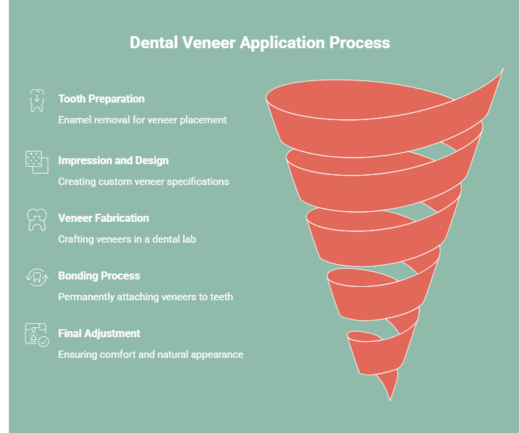
Dental veneers are thin, custom-made shells placed over the front surface of natural teeth to improve their appearance. They are typically made from porcelain or composite resin and are designed to match the size, shape, and color of surrounding teeth.
How Do Dental Veneers Work?
Here’s a simple step-by-step breakdown:
- Tooth Preparation: A small amount of enamel is gently removed from the front of the tooth to create space for the veneer.
- Impression and Design: Your dentist takes an impression of your teeth to design veneers that match your natural shape, size, and color.
- Veneer Fabrication: Custom veneers are fabricated in a dental lab using materials such as porcelain or composite resin.
- Bonding Process: The veneer is carefully placed and permanently bonded to the tooth using a strong dental adhesive.
- Final Adjustment: Your dentist makes minor adjustments to ensure a comfortable fit and a natural appearance.
This process enhances the appearance of your natural teeth while preserving their structure. To compare veneers with other tooth replacement options, see Dental Implants vs. Veneers on the Dentist Tree Heights site.
Book online to get relief today.
Why Don’t Veneers Work for Missing Teeth in Most Cases?
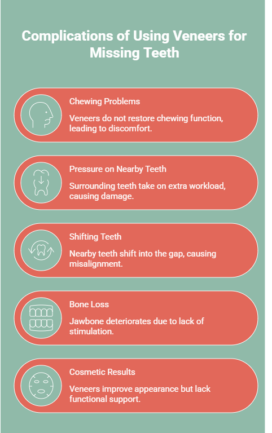
Dental veneers are designed to improve the appearance of existing teeth, not to replace missing ones. While they can enhance shape, color, and alignment, they do not restore function or address the deeper oral health issues caused by tooth loss. As a result, relying on veneers instead of proper treatment can lead to several long-term complications.
1. Chewing Problems Remain Unresolved
A missing tooth directly affects your ability to bite and chew properly. Veneers do not restore chewing function because they are thin cosmetic coverings, not structural replacements. Without addressing the gap, everyday activities like eating can remain uncomfortable and inefficient.
2. Extra Pressure on Nearby Teeth
When a tooth is missing, surrounding teeth take on additional workload to compensate for the gap. This increased pressure can lead to faster wear, strain, and even damage over time. Veneers do not reduce this pressure, which means the underlying problem continues to worsen.
3. Shifting Teeth and Bite Misalignment
Teeth naturally move to fill empty spaces. When a missing tooth is not replaced, nearby teeth can shift into the gap, causing misalignment and bite issues. Veneers cannot stop this movement, leading to uneven spacing and long-term alignment problems.
4. Bone Loss in the Jaw
The roots of natural teeth stimulate the jawbone and keep it strong. When a tooth is missing, that stimulation is lost, causing gradual bone deterioration. Veneers do not interact with the jawbone, so they cannot prevent bone loss or maintain facial structure.
5. Cosmetic Results Without Functional Support
Veneers can improve how your smile looks, but they do not restore strength, stability, or function. This means you may achieve a better appearance temporarily, but the underlying issue remains untreated, which can lead to more complex dental problems over time.
Choosing the right treatment early helps protect your bite, prevent complications, and maintain a healthy, functional smile.
Concerned about missing teeth and veneers? Contact Dentist Tree today for expert care!
What Are the Best Alternatives to Veneers for Missing Teeth?
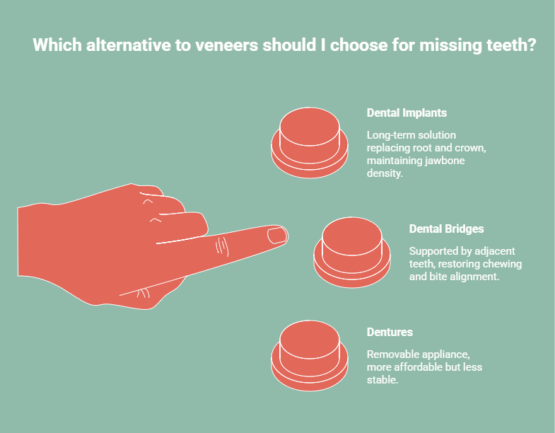
Dental veneers cannot replace missing teeth, so restorative treatments are needed to fill the gap and restore function. Options like dental implants, bridges, and dentures are designed to replace the missing tooth structure, improve chewing ability, and support long-term oral health.
1. Dental Implants: Long-Term and Natural Solution
Dental implants replace both the root and crown of a missing tooth. A titanium post is placed into the jawbone, where it fuses with the bone to create a stable foundation. A custom crown is then attached to restore function and appearance.
Treatment Timeline:
Typically 3 to 6 months, depending on healing time and whether additional procedures like bone grafting are required.
Key Benefits:
- Replaces the full tooth structure, including the root
- Restores natural chewing ability
- Does not impact surrounding teeth
- Helps maintain jawbone density and facial structure
2. Dental Bridges: Fixed and Functional Replacement
Dental bridges fill the gap by using adjacent teeth for support. A prosthetic tooth is anchored to crowns placed on neighbouring teeth, restoring both function and appearance.
Treatment Timeline:
Usually completed in 2 to 3 weeks over a few dental visits.
Key Benefits:
- Fixed solution that stays in place
- Restores chewing function and bite alignment
- Faster treatment compared to implants
- Suitable when nearby teeth can support the bridge
Consideration:
May require reshaping healthy adjacent teeth.
3. Dentures: Affordable and Removable Option
Dentures are removable appliances used to replace one or more missing teeth. Partial dentures are used when some natural teeth remain, while full dentures replace an entire arch.
Treatment Timeline:
Typically 3 to 6 weeks, depending on fittings and adjustments.
Key Benefits:
- More affordable than other options
- Can replace multiple or all missing teeth
- Non-invasive compared to implants
- Restores basic chewing function
Consideration:
Less stable than fixed solutions and may require adjustments over time.
Quick Comparison: Which Option Is Right for You?
- Best long-term solution: Dental implants
- Best budget-friendly option: Dentures
- Best fixed alternative: Dental bridges
This quick breakdown helps you choose based on your priorities, whether it is durability, cost, or convenience.
Early action matters. Schedule your implant check with Dentist Tree immediately.
What Are the Pros and Cons of Using Veneers Near Missing Teeth?
While veneers cannot replace a missing tooth, they may still be used on nearby teeth after the gap is restored. Understanding their benefits and limitations helps determine whether they can safely enhance appearance without compromising overall function.
Pros
- Improve the appearance of adjacent teeth by correcting discoloration, uneven shape, or minor alignment issues
- Help create a more uniform and balanced smile after a missing tooth has been replaced
- Blend natural teeth with restorations such as implants or bridges for a seamless look
- Require minimal alteration compared to full crowns
- Provide long-lasting cosmetic results with proper care
Cons
- Cannot replace or fill a missing tooth
- Do not restore chewing function or bite strength
- Require the removal of a small amount of enamel from healthy teeth
- May increase sensitivity in some cases
- Limited to cosmetic improvement without addressing underlying structural issues
Choosing veneers makes the most sense after your missing tooth has been replaced, such as with a dental implant. To Know More About Dental Implant, check this guide. When you want to match the colour and shape of surrounding teeth for a more natural-looking smile.
Why Choose Dentist Tree of the Heights for Smile Restoration?
For many patients, the biggest challenge isn’t improving their smile. It’s knowing which treatment will actually fix a missing tooth. At Dentist Tree of the Heights, we make the process simple by combining restorative solutions with cosmetic treatments like veneers to achieve natural, long-lasting results.
We replace missing teeth with reliable options such as dental implants, bridges, or dentures, and then enhance surrounding teeth with veneers to create a balanced, uniform smile. This approach ensures both function and appearance are fully restored.
Quality care never means compromise. You’ll receive advanced treatment, clear guidance, and support from a team focused on your comfort and long-term oral health.
Call our Houston Heights office today at 281.849.8858 or schedule your appointment online.
Conclusion
Dental veneers enhance the appearance of natural teeth but cannot replace a missing tooth due to a lack of support and function. To restore both aesthetics and chewing ability, treatments like tooth replacement, dental implants, bridges, or dentures are necessary.
Each option offers different benefits based on your oral health, budget, and long-term goals. A professional dental consultation helps you choose the most effective and lasting solution, ensuring proper function, long-term stability, and a healthy, confident smile.
Frequently Asked Questions
Can Snap-On Veneers Temporarily Fix Missing Teeth?
Snap-on veneers can temporarily cover gaps from missing teeth for cosmetic purposes, but they do not restore function or stability. They are not a long-term solution and cannot replace proper treatments like implants, bridges, or dentures.
Do I need to have a dental implant before getting veneers for a missing tooth?
Yes, if you have a missing tooth, it should be replaced first with a dental implant, bridge, or denture. Veneers can then be used on adjacent teeth to improve appearance and create a uniform, natural-looking smile.
What disqualifies you for veneers?
You may not be a candidate for veneers if you have untreated gum disease, active tooth decay, insufficient enamel, severe misalignment, or habits like teeth grinding. Missing teeth also disqualify that area, as veneers require a healthy natural tooth for support.
How can I cover up my missing tooth?
You can cover a missing tooth with options like dental implants, bridges, or removable partial dentures that feature artificial teeth. Implants offer a permanent solution, while bridges and dentures restore appearance and function depending on your needs and budget.
Can dental veneers be used to replace missing teeth?
The best option is often a dental implant, as it replaces both the root and crown, preserves jawbone health, and doesn’t affect nearby teeth. However, bridges or dentures may be suitable depending on your oral health, budget, and preferences.
Is it possible to get traditional veneers if I’m missing one or more teeth?
No, traditional veneers cannot be placed where a tooth is missing because they require a natural tooth surface for bonding. This is a common question we encounter, as many patients often wonder about their options. You can first replace the missing tooth with an implant, bridge, or denture, then use veneers on adjacent teeth for cosmetic enhancement.
Can dental veneers be used to replace missing teeth?
No, dental veneers cannot replace missing teeth. They require an existing tooth to bond to. However, they can be used after treatments like implants or bridges to improve the appearance of surrounding teeth and create a more balanced smile.