

Key Highlights
- Veneers are not lifetime restorations, but they are irreversible due to enamel removal.
- Porcelain veneers last 10 to 15+ years, while composite veneers last 5 to 7 years.
- Temporary veneers help preview your smile and refine results before final placement.
- Costs range from $250 to $2,500 per tooth, depending on material and complexity.
- Veneers require good oral hygiene and regular care to maintain long-term results.
- Not everyone is a candidate; healthy gums and teeth are essential for treatment.
- Veneers can be replaced over time, but the original tooth structure cannot be restored.
Many people want a brighter, more confident smile but hesitate when they hear that veneers may be permanent. The idea of altering your natural teeth can feel overwhelming, especially when you are unsure about the long-term commitment.
At the same time, concerns about cost, durability, and whether veneers can be reversed often make the decision even more confusing. Patients want clarity before choosing a treatment that affects both their appearance and oral health.
This blog explains whether veneers are truly permanent, how long they last, what they cost, and what to expect from the process, helping you make an informed and confident decision.
Are Veneers Permanent?
Veneers are often described as permanent, but that can be misleading. They are not permanent in lifespan, but they are irreversible. A thin layer of enamel is usually removed, so the natural tooth cannot return to its original state and will always need protection.
However, veneers do not last forever. Porcelain veneers typically last 10 to 15 years or longer with proper care, while composite veneers last around 5 to 7 years. They may need replacement due to wear, damage, or aesthetic changes.
In simple terms, veneers are a long-term commitment, not a lifetime solution.
Not sure if veneers are the right long-term option? Compare your choices in detail with dental implants vs. veneers to understand which treatment fits your smile goals better.
Porcelain vs Composite Veneers: What Is the Difference?
Porcelain and composite veneers differ in durability, appearance, and permanence, which often makes the choice confusing. Understanding how each option performs across key areas can help you decide what fits your goals, timeline, and budget.
Permanence and Tooth Preparation
Porcelain veneers are considered a permanent treatment because a thin layer of enamel is removed to place them. Once done, the process cannot be reversed.
Composite veneers, on the other hand, require minimal tooth preparation. In some cases, little to no enamel is removed, which makes them a more conservative and sometimes reversible option.
Lifespan and Longevity
Porcelain veneers are designed for long-term use and typically last 10 to 15 years or more with proper care.
Composite veneers have a shorter lifespan, usually around five to seven years. They may need touch-ups or replacement sooner, especially if exposed to wear or staining habits.
Durability and Strength
Porcelain is a stronger and more resilient material. It resists chips, cracks, and everyday wear better, making it suitable for long-term cosmetic results.
Composite veneers are less durable and more prone to chipping or surface damage. They can be repaired easily, but may not hold up as well over time.
Appearance and Stain Resistance
Porcelain veneers offer a highly natural appearance. They reflect light in a way similar to natural enamel and are also resistant to stains, helping maintain their look for years.
Composite veneers can still improve appearance significantly, but they are more likely to stain and may lose their polish over time, especially with coffee, tea, or smoking.
Procedure and Treatment Time
Porcelain veneers usually require two visits. The first visit involves tooth preparation and impressions, while the second visit is for final placement after lab fabrication.
Composite veneers are often completed in a single visit. The material is applied, shaped, and polished directly on the teeth, making the process quicker.
Cost and Affordability
Porcelain veneers have a higher upfront cost due to lab work, materials, and longer-lasting results.
Composite veneers are more affordable and accessible, which makes them a good option for those looking for a quicker or budget-friendly cosmetic solution.
Temporary Veneers Before Permanent Ones: Why Do They Matter?
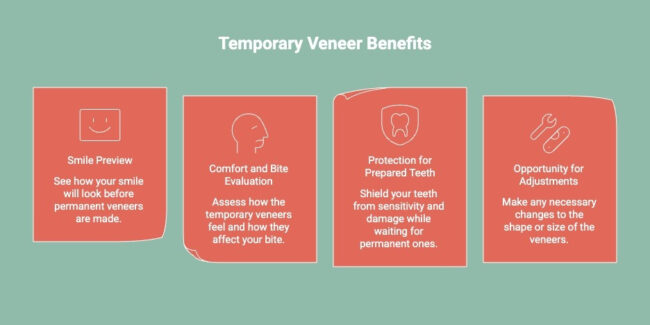
Temporary veneers play a critical role between tooth preparation and final placement. They are not just placeholders, but an essential step that protects your teeth, guides the final outcome, and helps you adjust before permanent veneers are bonded. Here are the key reasons they matter:
- Smile Preview: Gives you a realistic preview of your new smile, including shape and overall appearance, so you can feel confident before final placement
- Comfort and Bite Evaluation: Helps you test how your teeth feel when speaking, eating, and closing your bite, allowing early adjustments if something feels off
- Protection for Prepared Teeth: Covers teeth after enamel removal, reducing sensitivity to temperature, pressure, and daily use
- Opportunity for Adjustments: Allows your dentist to refine size, alignment, and aesthetics based on your feedback before final veneers are created
They act as a “test phase,” ensuring your final veneers are not just visually appealing but also comfortable and functional for everyday use.
What Does Permanent Veneers Cost and What Should You Expect?
The cost of permanent veneers can vary based on the material used, case complexity, and your dentist’s expertise. On average, porcelain veneers range from $1,000 to $2,500 per tooth, while composite veneers cost between $250 and $1,500 per tooth.
Porcelain veneers cost more due to their durability, stain resistance, and natural appearance, while composite veneers are more affordable but may require more frequent replacement.
Veneers cannot be reversed, but they can be replaced over time as needed.
Factors like the number of veneers, level of customization, and technology used can also impact pricing. A consultation is the best way to get an accurate, personalized estimate.
What Are the Pros and Cons of Permanent Veneers?
Understanding the pros and cons of permanent veneers helps you decide if this long-term treatment fits your goals and expectations. Here is a clearer, balanced view:
Pros:
- Natural Appearance: Custom-designed to match your teeth for a realistic smile
- Long-Lasting Results: Porcelain options can last 10 to 15 years or more
- Stain Resistance: Better resistance to staining than natural enamel
- Minimally Invasive: Less tooth reduction compared to crowns
Cons:
- Irreversible: Cannot be reversed once placed
- High Cost: Can be expensive, especially for multiple teeth
- Not Permanent: Will need replacement over time
- Risk of Damage: Can chip or crack with grinding or hard foods
Weighing both sides helps you decide if veneers are the right long-term investment for your smile.
Exploring more ways to enhance your smile? Discover popular cosmetic dentistry procedures that can address different aesthetic concerns and complement your veneer results.
What Is the Step-by-Step Process of Getting Veneers?
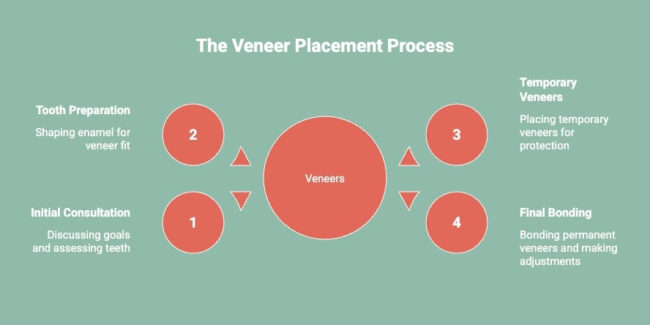
Getting veneers involves a carefully planned process to ensure natural results, comfort, and long-term success. Each step is designed to deliver precision and personalized care. Here are the key steps involved:
1) Initial Consultation and Smile Assessment
Your dentist begins by understanding your goals, concerns, and expectations. A detailed examination of your teeth and gums is carried out to confirm suitability for veneers. Digital scans, photographs, or mock-ups may be used to preview your future smile. This stage helps create a personalized treatment plan aligned with your facial features and desired outcome.
2) Tooth Preparation and Enamel Shaping
A thin layer of enamel is gently removed from the front of your teeth to create space for the veneers. This ensures they sit naturally without appearing bulky. The dentist reshapes the teeth with precision while preserving as much structure as possible. Impressions are then taken and sent to a dental lab to craft your custom veneers.
3) Temporary Veneer Placement
Temporary veneers are placed to protect your teeth while the final ones are being made. They also allow you to experience how your new smile looks and feels in everyday situations. You can evaluate comfort, bite, and aesthetics during this phase. Any feedback helps refine the final veneers before permanent bonding.
4) Final Veneer Bonding and Adjustments
Once ready, the dentist removes the temporary veneers and carefully bonds the permanent ones to your teeth. Adjustments are made to ensure proper fit, bite alignment, and overall appearance. A strong dental adhesive is used to secure them in place. The result is a natural-looking, durable smile designed to last for years.
This step-by-step process ensures your veneers feel comfortable, look natural, and deliver long-lasting results.
How Do You Care for Permanent Veneers?
Taking proper care of your permanent veneers is essential to maintain their appearance, durability, and overall oral health. With the right habits, you can extend their lifespan and keep your smile looking its best. Here are some essential care tips:
- Maintain Daily Oral Hygiene: Brush twice daily with a non-abrasive toothpaste and floss regularly to keep your veneers and surrounding gums healthy.
- Avoid Hard and Sticky Foods: Do not bite on hard objects like ice, pens, or nuts, as this can damage or chip veneers.
- Limit Staining Foods and Drinks: Reduce intake of coffee, tea, red wine, and tobacco to maintain the brightness of your veneers.
- Wear a Night Guard if Needed: If you grind your teeth, use a custom night guard to protect your veneers from excessive pressure.
- Schedule Regular Dental Checkups: Visit your dentist for cleanings and exams to ensure your veneers remain in good condition.
- Use Proper Tools: Choose a soft-bristled toothbrush and avoid abrasive dental products that can wear down the veneer surface.
- Address Issues Early: Contact your dentist if you notice discomfort, chips, or looseness to prevent further damage.
Consistent care and regular dental visits will help your veneers stay strong, natural-looking, and long-lasting.
Want your veneers to last longer and stay bright? Follow this oral hygiene guide to build simple habits that protect your smile and improve overall dental health.
What Happens During a Veneer Consultation?
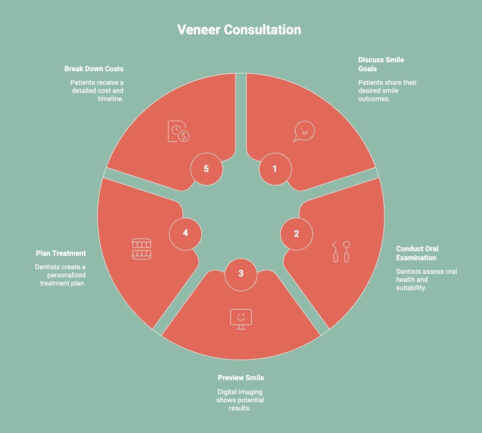
A veneer consultation is the first step in creating a personalized smile makeover. It allows your dentist to understand your goals, evaluate your oral health, and determine if veneers are the right option for you. Below is what typically happens during a consultation:
- Smile Goals Discussion: You share what you would like to improve, such as color, shape, gaps, or alignment.
- Comprehensive Oral Examination: Your dentist checks your teeth, gums, and overall oral health to ensure you are a suitable candidate.
- Digital Imaging and Smile Preview: Photos, scans, or mock-ups may be used to show how your new smile could look.
- Treatment Planning: A customized plan is created, including the number of veneers, material choice, and procedure steps.
- Cost and Timeline Breakdown: You receive a clear estimate of pricing, available financing options, and how long the process will take.
This consultation ensures you have a clear understanding of the procedure, helping you make a confident and informed decision.
Why Choose Dentist Tree of the Heights for Veneers?
At Dentist Tree of the Heights, veneer treatments are designed around your comfort, goals, and long-term results. Our experienced cosmetic dentists take a personalized approach, ensuring your veneers look natural and complement your overall smile.
We use advanced technology and high-quality materials to deliver precise, durable outcomes while keeping the process smooth and stress-free. From your first consultation to final placement, you receive clear guidance, transparent pricing, and flexible financing options to make treatment more accessible.
Our team focuses on both aesthetics and oral health, helping you achieve a confident smile that lasts. Book your consultation today and discover a patient-first approach to cosmetic dentistry.
Conclusion
Veneers are a long-term cosmetic solution that can dramatically enhance your smile, but they are not truly permanent. Because the procedure involves enamel removal, it is an irreversible commitment that requires ongoing care and eventual replacement over time. Understanding the differences between porcelain and composite veneers, along with their lifespan and cost, helps you make a confident, informed decision.
The best way to determine if veneers are right for you is through a professional consultation. With the right guidance and proper care, veneers can deliver natural-looking, lasting results that improve both your appearance and confidence for years to come.
Frequently Asked Questions
Is it painful to get permanent veneers applied?
Most patients experience minimal discomfort during veneer placement. A small layer of enamel is gently removed under local anesthesia, making the process comfortable. You may notice slight sensitivity afterward, but it usually settles within a few days.
What happens to your natural teeth when you get veneers?
During the veneer process, a thin layer of tooth enamel is removed to help the thin shells fit naturally. This change is permanent, meaning your teeth will always need a protective restoration after veneers are placed.
What is the difference between temporary veneers and permanent veneers?
Temporary veneers are used during treatment to protect teeth and preview your new smile. Permanent veneers are custom-made and bonded with dental cement, offering a stronger, long-term solution for improving the appearance of your smile.
Do veneers require any special care to make them last longer?
Veneers last longer with good oral hygiene habits like regular brushing and flossing. Routine dental visits and avoiding hard foods help maintain veneer longevity and protect both your veneers and natural teeth over time.
Are there any risks or downsides to getting permanent veneers?
Permanent veneers are irreversible because they involve removing tooth enamel. Some risks include sensitivity, damage, or replacement over time. Patients with gum disease or grinding habits may need additional evaluation before treatment.
Can anyone get permanent veneers, or are there certain requirements?
If you are wondering, can you get permanent veneers? Eligibility depends on having healthy gums, good oral hygiene, and minimal dental issues. Many patients searching for permanent veneers near me benefit from a consultation to confirm suitability.
Are veneers reversible or replaceable?
Veneers cannot be reversed, but they can be replaced. If they become worn, damaged, or you want to update their appearance, your dentist can remove the existing veneers and bond new ones. Replacement is a normal part of maintaining long-term results.