

Key Highlights
- Dental implants replace missing teeth, restoring both the root and visible tooth, while veneers enhance the appearance of natural teeth that are already healthy.
- The choice between implants and veneers depends on structural need versus cosmetic improvement.
- Implants are ideal for tooth loss, severe decay, structural damage, and bone preservation.
- Veneers are best for stains, small chips, minor gaps, and uneven tooth edges when the tooth structure is sound.
- Implants generally last longer, often decades, while veneers typically last 10 to 15 years before replacement.
- The right option comes from a professional evaluation that balances health, function, appearance, and long-term value for your smile.
Are you trying to decide between dental implants and dental veneers to improve your smile, but feeling unsure which direction makes sense for you? It is completely normal to feel stuck. Both treatments promise a more confident smile, yet they solve very different problems. Without clear guidance, it can be challenging to determine whether you require a cosmetic upgrade, a functional replacement, or a combination of both.
Maybe you are dealing with stained, chipped, or uneven teeth. Or perhaps you are missing a tooth and are worried about how it affects your bite, appearance, and long-term oral health. Your goal is simple. You want a solution that looks natural, feels comfortable, and actually fits your lifestyle and budget.
This guide breaks down dental implants and veneers in plain language. You will learn what each treatment does, who it is best for, how procedures differ, and how to choose the option that truly supports your smile goals.
What Are Dental Implants?
Dental implants are fixed replacements for missing teeth that restore both the root and the visible tooth. Unlike dentures that rest on the gums, implants are placed into the jawbone, creating a stable base that supports normal chewing, speech, and daily function.
Their key advantage is integration with bone. Once healed, the implant behaves like a natural tooth root, which is why it feels secure and long-lasting.
Components of a Dental Implant
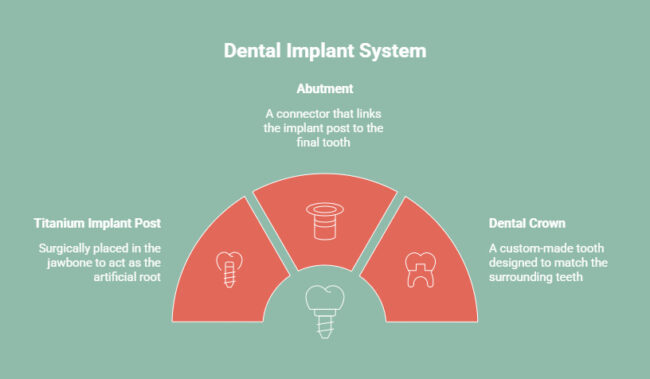
Each implant functions as a complete tooth replacement system:
- Titanium implant post – Surgically placed in the jawbone to act as the artificial root
- Abutment – A connector that links the implant post to the final tooth
- Dental crown – A custom-made tooth designed to match the surrounding teeth
This structure replaces the entire tooth, not just the surface.
Purpose of Dental Implants
Implants are used to restore function and stability after tooth loss. They help you:
- Chew effectively
- Maintain clear speech
- Keep nearby teeth from shifting
- Support natural facial structure
Jawbone can shrink after tooth loss. Implants stimulate the bone, helping limit this change.
Conditions Dental Implants Treat
Implants are recommended when teeth are missing or cannot be saved. Common situations include:
- Tooth loss from decay, injury, or gum disease
- Teeth too damaged for crowns or root canals
- Areas where bone preservation matters
A dental evaluation determines bone health, gum condition, and overall suitability for implant treatment.
Curious about your implant options? Explore the different types of dental implants and learn which one may fit your needs, bone structure, and smile goals best.
What Are Dental Veneers?
Dental veneers are a cosmetic treatment focused on improving how your smile looks rather than replacing teeth. They are ultra-thin, custom shells bonded to the front surface of natural teeth to enhance color, shape, and overall balance. If your teeth are healthy but you are unhappy with their appearance, veneers offer a surface-level transformation without surgery.
This is where understanding dental implants versus veneers becomes important. Veneers enhance existing teeth. Implants replace missing ones. The purpose and depth of treatment are very different.
Materials Used for Veneers
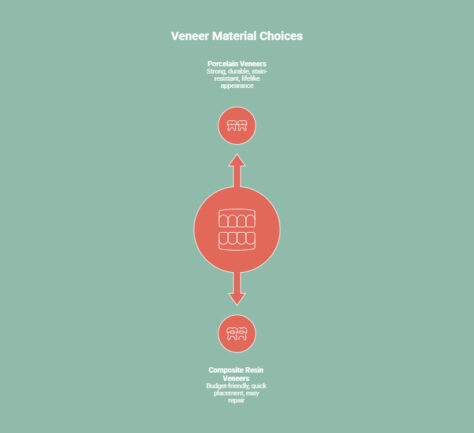
Veneers are usually made from porcelain or composite resin. Each material supports different needs, timelines, and budgets.
Porcelain veneers
- Known for strength and long-term durability
- Resist stains from coffee, tea, and wine
- Reflect light similarly to natural enamel for a lifelike look
- Typically requires two visits for design and placement
Composite resin veneers
- More budget-friendly
- Often completed in a single visit
- Easier to repair if chipped
- Best for smaller cosmetic adjustments
Your dentist helps you weigh appearance goals, longevity, and cost before choosing the material.
Purpose of Veneers
The purpose of veneers is simple: improve visual appearance while keeping your natural tooth underneath. They are ideal when you want a brighter, more even smile without changing the tooth root or jaw.
Veneers can:
- Create a uniform color across teeth
- Refine shape and proportions
- Improve balance and symmetry
If your concern is cosmetic rather than structural, veneers provide a focused solution.
Smile Concerns Veneers Address
Veneers are commonly used to correct:
- Deep stains that whitening cannot remove
- Small chips or worn edges
- Minor gaps between teeth
- Slightly uneven or irregular shapes
They deliver noticeable improvement quickly, making them a popular choice for smile makeovers where health is stable but aesthetics need attention.
What Is the Difference Between Dental Implants and Veneers?
When comparing dental implants versus veneers, the key difference comes down to role, not just appearance. These treatments may both improve your smile, but they solve entirely different types of problems.
Dental implants are designed to replace something that is missing. They substitute the full tooth structure, including the root inside the jawbone and the visible crown above the gumline. Because of this, implants restore strength, stability, and chewing function along with appearance.
Veneers improve something that already exists. They are thin shells bonded to the front of natural teeth to enhance color, shape, and alignment. The underlying tooth stays in place, and the focus is cosmetic refinement rather than structural rebuilding.
This is why the decision usually starts with one question:
Are you replacing a tooth or upgrading the look of a tooth you still have?
How do They Differ in Practical Terms?
Here is a clearer side-by-side breakdown:
Purpose
- Dental Implants: Replace a missing or unsalvageable tooth completely
- Dental Veneers: Improve the look of a healthy but cosmetically flawed tooth
How They Work
- Dental Implants: A titanium post integrates with the jawbone and supports a crown
- Dental Veneers: A custom shell is bonded to the tooth’s front surface
Level of Treatment
- Dental Implants: Surgical and restorative
- Dental Veneers: Non-surgical and cosmetic
Best Suited For
- Dental Implants: Tooth loss, severe damage, or advanced decay
- Dental Veneers: Stains, minor chips, small gaps, or uneven edges
Longevity
- Dental Implants: Often last decades with proper care
- Dental Veneers: Typically last 10 to 15 years before replacement may be needed
Understanding the difference between veneers and dental implants helps narrow your options quickly. Once you know whether your concern is structural or cosmetic, a dentist can tailor the details to your oral health, goals, and long-term comfort.
When Are Dental Implants the Better Choice?
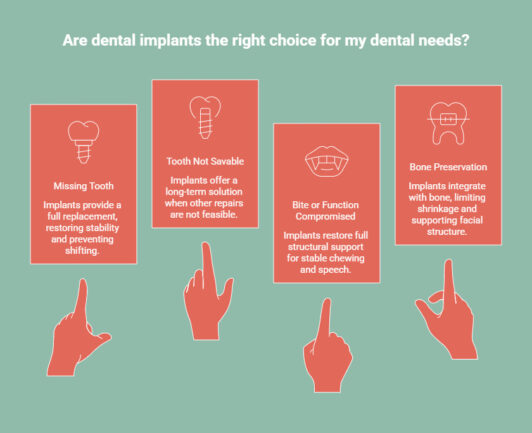
Dental implants become the better choice when the issue is structural, not just cosmetic. The goal is to restore strength, function, and long-term oral health, not simply improve appearance. Because implants replace the entire tooth, including the root, they are used when the foundation of the tooth is the problem.
Missing Tooth
When a tooth is gone, the space needs a full replacement, not a surface enhancement. An implant fills that gap from the root up, restoring stability and preventing neighboring teeth from shifting. It also helps maintain proper bite alignment and chewing ability.
Tooth Not Savable
Sometimes a tooth is too damaged from decay, fracture, or infection to support crowns or other repairs. In these cases, removing the failing tooth and replacing it with an implant provides a more predictable, long-term solution rather than repeated treatments on a weak structure.
Bite or Function Compromised
If chewing feels unstable, painful, or uneven, the issue often goes deeper than the enamel. Implants restore full structural support, allowing normal biting forces and speech. This makes them a better option when function, not just appearance, needs correction.
Bone Preservation Priority
Tooth roots stimulate the jawbone. When that stimulation is lost, bone can shrink over time. Implants are the only tooth replacement that integrates with bone and helps limit this loss, supporting facial structure and long-term oral stability.
In each of these situations, the need goes beyond cosmetic improvement. Dental implants provide a foundation-level solution designed to restore both health and performance.
Considering a full smile restoration? Learn how All-on-4 dental implants can replace an entire arch of teeth with fewer implants and faster results.
When Are Veneers the Better Choice?
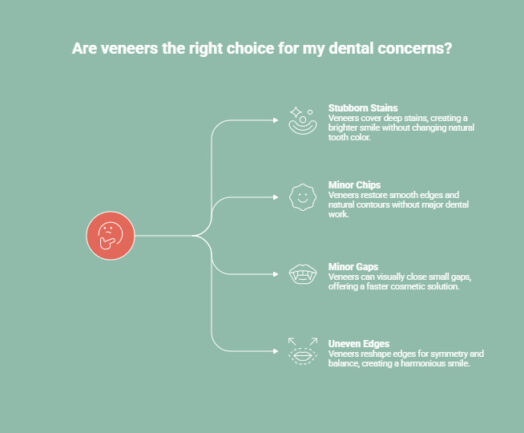
Veneers work when teeth are healthy and aligned enough, and the goal is appearance. This treatment focuses on cosmetic refinement, not structural repair. If your teeth are stable but you want to improve color, shape, or symmetry, veneers offer a conservative way to upgrade your smile without replacing teeth.
Veneers are commonly chosen for concerns like:
1. Stubborn Stains
Some discoloration lies deep within the tooth and does not respond well to whitening. Veneers cover the front surface, creating a brighter, more even look.
They are helpful when stains result from:
- Medication effects
- Past tooth injury
- Long-term internal discoloration
Rather than altering the natural tooth shade, veneers create a new visible surface.
2. Minor Chips
Small chips may not threaten tooth health but can affect confidence. Veneers restore smooth edges and natural contours with minimal tooth reshaping.
They work well for:
- Slightly chipped corners
- Worn enamel edges
- Small surface flaws
The repair blends naturally with surrounding teeth.
3. Minor Gaps
Tiny spaces, especially between front teeth, can be visually distracting. Veneers can be shaped slightly wider to close these gaps cosmetically.
This approach fits when:
- Spacing is minimal
- Bite alignment is healthy
- Orthodontics is not necessary
It provides a quicker cosmetic solution for small gaps.
4. Uneven Edges
Teeth may look irregular from wear or genetics. Veneers reshape the visible edge to create symmetry and a smoother smile line.
They help improve:
- Jagged outlines
- Uneven lengths
- Worn-down surfaces
Veneers enhance what is already there. They refine aesthetics, while implants are used when teeth are missing or structurally compromised.
How do Dental Implants vs Veneers Cost Compare?
When comparing dental implants vs veneers, it helps to think in terms of what drives cost, not just the number on the estimate. These treatments differ in procedure complexity, materials, and long-term maintenance, which all shape total investment.
What Drives the Cost?
Dental implants tend to cost more upfront because they involve:
- Surgical placement in the jawbone
- Advanced materials like titanium and custom crowns
- Imaging, planning, and multiple appointments
- Healing and follow-up care
Veneers are usually lower per tooth initially because they involve:
- Surface-level tooth preparation
- Custom cosmetic materials like porcelain or resin
- Fewer visits and no surgery
Cost Per Tooth vs Cost Per Smile Zone
- Implants are typically evaluated per missing tooth since each one replaces a full structure.
- Veneers are often planned as a group, especially for front teeth, because patients usually want a balanced “smile zone” rather than changing just one tooth.
Insurance Likelihood
Insurance is more likely to contribute to implants when they are medically necessary, while veneers are usually considered cosmetic and less likely to be covered.
The Value Lens: Upfront vs Replacements
Veneers may cost less at the start, but they often require replacement after 10 to 15 years. Implants involve a higher upfront investment yet are designed as long-term replacements, which can make them more cost-effective over time depending on your needs.
Veneers may cost less at first, but implants can offer stronger long-term value depending on your dental needs.
Which Lasts Longer: Dental Implants or Veneers?
Longevity matters when you are investing in your smile. Dental implants and veneers both improve appearance, but they function differently. Their lifespan reflects whether they replace an entire tooth or simply enhance the front surface.
Dental Implant Durability
- Implant posts fuse with the jawbone, creating a strong, stable foundation
- With proper care, the implant root can last decades or longer
- The crown attached to the implant may need replacement over time, even if the implant itself remains secure
Maintenance looks like:
- Daily brushing and flossing, especially around the gumline
- Regular dental cleanings to protect the surrounding bone and tissue
- Monitoring the crown for wear or bite changes
Veneer Lifespan
- Porcelain veneers typically last about 10 to 15 years
- Edge wear, chipping, or changes in the tooth underneath can require replacement
- Teeth grinding or clenching can shorten the veneer if not managed
Maintenance looks like:
- Gentle brushing with non-abrasive toothpaste
- Avoiding biting hard objects
- Wearing a nightguard if grinding is present
- Routine dental visits to check the bonding edges
Implants tend to last longer structurally, while veneers are durable but more sensitive to habits and surface wear.
Considering a complete smile restoration? Explore how full mouth dental implants rebuild function, stability, and confidence when multiple teeth are missing.
How Treatment and Recovery Compare?
Understanding both the procedure and healing timeline helps set realistic expectations. Implants and veneers differ in how the mouth is prepared, how long treatment takes, and what recovery involves.
Implant Timeline in 4 Steps
- Imaging and planning to evaluate bone structure and treatment design
- Surgical placement of a titanium implant post into the jawbone
- Healing period where the bone integrates with the implant for stability
- Placement of the custom crown after integration is complete
Recovery includes mild soreness early on, soft food recommendations, and follow-up visits while the bone heals and strengthens around the implant.
Veneer Timeline in 4 Steps
- Light reshaping of the front tooth surface
- Impressions or scans taken for custom veneer design
- Temporary veneers are placed in some cases
- Final bonding of permanent veneers
Recovery is minimal. Some temporary sensitivity may occur, but most people return to normal activities immediately.
Veneers are faster and lighter. Implants are longer but rebuild the foundation.
Want to understand the full dental implant journey, benefits, and what to expect step by step? Explore this detailed guide to dental implants and see how they restore strength, function, and confidence to your smile.
Do Dental Implants and Veneers Look Natural?
A natural look is often the main goal. Both dental implants and veneers are designed to blend with your smile, not stand out. Modern dental materials and digital planning make highly realistic results possible.
Natural Appearance of Implants
- Custom crowns match surrounding teeth in color and shape
- Designed to function and feel like natural teeth
- Integrated into the gumline for a realistic appearance
Natural Appearance of Veneers
- Porcelain mimics the light-reflecting quality of enamel
- Shape and shade are tailored to your facial features
- Ideal for creating a bright, symmetrical smile
When done well, both treatments can look incredibly natural and balanced.
Considering implants later in life? Learn how dental implants can safely restore comfort, confidence, and chewing ability for older adults in this helpful guide for seniors.
Are Dental Implants and Veneers the Same Thing?
This is one of the most common points of confusion. Although both improve your smile, they serve completely different purposes. Understanding this difference is key to choosing the right treatment.
What Dental Implants Do?
- Replace missing teeth entirely
- Restore chewing ability
- Support jawbone health
What Veneers Do?
- Cover the front of existing teeth
- Improve color, shape, and alignment
- Focus on cosmetic enhancement
The key difference: Implants restore structure, while veneers improve appearance. Your needs determine which path makes sense.
Why Patients Trust Dentist Tree of the Heights for Implants and Veneers?
By now, you can see that choosing between dental implants and veneers is not a quick decision. It depends on your oral health, goals, comfort level, and long-term plans. That is exactly why working with the right dental team matters just as much as choosing the treatment itself.
At Dentist Tree of the Heights, care begins with listening, not selling. Your dentist takes time to understand what is bothering you about your smile, what you hope to change, and what concerns you might have about procedures, healing, or cost. From there, they build a plan that makes sense for you, not a generic template.
What Makes Their Approach Different?
- Comprehensive evaluations that look at bone health, gum condition, bite, and smile design before recommending implants or veneers
- Clear explanations so you understand why a treatment is suggested and what alternatives exist
- Advanced technology that supports precise planning and natural-looking results
- Comfort-focused care for patients who feel nervous about dental treatment
- Long-term mindset, focusing on solutions that support both appearance and oral health
Whether you need a full tooth replacement with implants or a cosmetic transformation with veneers, the goal is the same. Create a smile that looks natural, functions well, and feels like it truly belongs to you.
If you are still unsure which option fits your situation, the best next step is a consultation. Schedule a visit with us and get a personalized plan built around your smile, your health, and your confidence.
Final Thoughts
Choosing between dental implants and veneers ultimately depends on your unique dental needs and aesthetic goals. While implants are ideal for cases of tooth loss and structural damage, veneers excel in enhancing the appearance of stained, chipped, or uneven teeth.
Both options offer longevity and a natural look when performed by skilled professionals. It’s essential to weigh the costs, recovery times, and specific concerns related to your oral health. If you’re still unsure which option suits you best, don’t hesitate to reach out to us for a consultation.
Frequently Asked Questions
How do dental implants and veneers compare in terms of cost, durability, and longevity?
Dental implants cost more upfront because they involve surgery and full tooth replacement, but they often last decades. Veneers usually cost less per tooth initially, yet they may need replacement after 10 to 15 years, affecting long-term value.
When is it better to choose dental implants over veneers for damaged or missing teeth?
Dental implants are preferred when a tooth is missing or too damaged to support cosmetic treatment. Veneers require healthy tooth structure. If strength, stability, and long-term function are concerns, implants provide a more reliable foundation than surface enhancements.
Which is the best option to improve my smile, implants or veneers?
The best choice depends on your dental condition. Veneers enhance the look of healthy teeth with cosmetic concerns. Implants replace missing or severely compromised teeth. A professional evaluation helps determine whether your needs are primarily cosmetic or structural.
Are dental implants or veneers better for people with missing teeth?
Dental implants are the appropriate option for missing teeth because they replace the root and visible portion of the tooth. Veneers cannot fill empty spaces. Implants restore chewing ability, maintain alignment, and support jawbone health in ways veneers cannot.
What care tips help dental implants and veneers last longer?
Both treatments benefit from consistent oral hygiene. Brush and floss daily, attend regular dental checkups, and avoid biting hard objects. For implants, keep gums healthy to protect supporting bone. For veneers, limit habits like grinding that may stress the surface.
What is the difference between dental veneers and dental implants?
Dental implants replace a missing tooth entirely, including the solid base root anchored in the jaw. Veneers cover the front surface of existing teeth to improve appearance. Implants restore structure and function, while veneers focus on cosmetic refinement of natural teeth.
How painful is getting a dental implant?
Implant placement is done under local anesthesia, so pain during the procedure is minimal. Mild swelling or soreness may occur afterward. Most discomfort is manageable with medication and subsides within days as healing progresses and the implant integrates with bone.