

Key Highlights
- Implant insurance usually offers partial coverage only.
- PPO, DHMO, indemnity, group, and supplemental plans handle implants differently.
- Coverage depends on pre-authorization, medical necessity, and annual limits.
- Typical costs: $3,000–$6,000 per implant, with a total cost of $ 20,000 or more per arch.
- Endosteal implants are most commonly covered.
- Financing, HSAs/FSAs, or medical insurance can offset costs.
- Dentist Tree helps maximize benefits and provides flexible payment options.
Dental implants can feel life-changing. They restore your ability to eat comfortably, smile with confidence, and protect your long-term oral health. But for many patients, the excitement fades once they see the price tag.
Insurance should make things easier, yet the details are often confusing. Some plans cover the crown or abutment, others require preapproval, and many exclude implants altogether unless medically necessary. That uncertainty leaves patients frustrated, delaying treatment while living with discomfort or unstable dentures.
This blog will simplify the process. You will learn how dental implant insurance really works, what factors affect coverage, and the smartest ways to reduce your out-of-pocket costs. By the end, you will know exactly how to move forward with confidence.
How Does Dental Insurance Typically Work for Implants?
If you’ve ever tried to figure out whether your dental insurance covers implants, you know how confusing it can be. One plan may cover part of the procedure, while another may exclude implants entirely. That lack of clarity often leaves patients wondering what’s covered, what isn’t, and how much they’ll really have to pay.
The key is to understand how your specific dental insurance policy defines implant treatment and what conditions must be met for reimbursement. While every policy is different, here are the most common rules patients encounter when planning for advanced dental procedures:
- Partial Coverage: Most plans won’t cover the whole procedure. Instead, they may contribute to specific parts such as the crown or abutment.
- Preauthorization: Insurers often require your dentist to submit a treatment plan and cost estimate in advance before confirming eligibility.
- Waiting Periods: Some plans include a waiting period, often up to a year, before they’ll cover major procedures like implants.
- Medical Necessity: Coverage is more likely if implants are considered medically necessary. For example, if you lost a single replacement tooth due to trauma, disease, or extraction, insurers may help. If the implant is primarily for cosmetic artificial teeth, you will likely pay the entire bill yourself.
Knowing these factors up front can take away some of the guesswork and help you plan for the financial side of treatment without unpleasant surprises.
Ready to restore your smile without the stress of insurance? Explore your coverage options with Dentist Tree today.
How to Find Insurance That Actually Helps With Implant Costs?
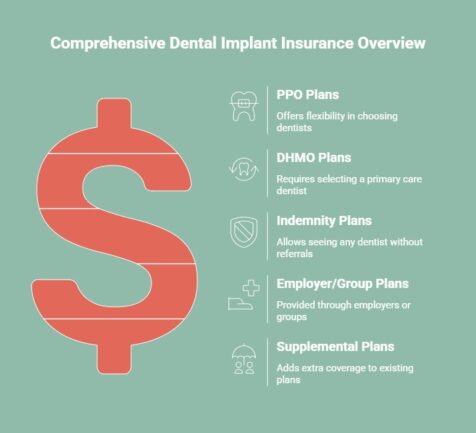
Wondering if your insurance will cover dental implants can be stressful. The rules are often unclear, but some plans do provide partial coverage. Here is how the most common options typically work:
1. PPO (Preferred Provider Organization) Plans
PPOs are usually the most flexible and sometimes cover implants as a major procedure. Coverage is often partial, such as 50 percent of the crown or abutment, which still leaves patients with a sizable bill.
Best for patients who want freedom to choose their dentist and at least some help covering costs.
2. DHMO (Dental Health Maintenance Organization) Plans
These are designed for lower monthly premiums but come with tighter rules. Many DHMOs exclude implants completely, instead covering bridges or dentures. A few enhanced plans may cover implants if your dentist can show they are medically necessary.
Best for patients focused on keeping premiums low but willing to accept limited coverage for implants.
3. Indemnity (Fee-for-Service) Plans
Indemnity plans are less common today, but they allow you to see almost any dentist and reimburse a set percentage of your bill. Some include partial implant coverage, though exclusions are common. The trade-off is higher premiums.
Best for patients who want maximum freedom and are willing to pay more for it.
4. Employer-Sponsored or Group Dental Plans
If you are fortunate to have substantial workplace benefits, group dental insurance may offer expanded coverage that includes implants. Preauthorization is usually required, but these plans can make treatment more manageable than individual coverage.
Best for employees with comprehensive dental benefits through work.
5. Supplemental Dental Insurance
If your primary plan does not include implants, supplemental insurance may be helpful. These add-on policies are meant to fill gaps and can sometimes cover implants, crowns, or abutments.
Best for patients whose primary plan does not include implants.
Pro Tip: Always request a pre-treatment estimate or pre-authorization before scheduling implant surgery. This ensures you know exactly how much your insurance will cover and what your out-of-pocket responsibility will be.
What Factors Affect Your Dental Implant Coverage?
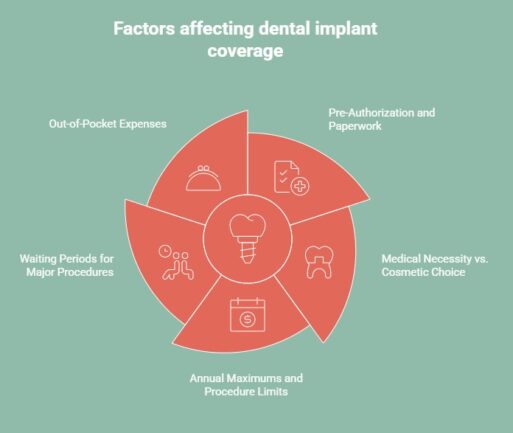
Even if your dental plan lists implants as a covered service, the actual benefits you receive depend on a few fine-print details. Understanding these factors can help you plan realistically and avoid costly surprises.
1. Pre-Authorization and Paperwork
Most insurers require documentation before approving implant coverage. Your dentist will usually need to submit X-rays, a treatment plan, and a treatment cost estimate. If this step is skipped, your insurer may deny payment even if implants are technically covered.
2. Medical Necessity vs. Cosmetic Choice
Coverage is more likely if implants are considered medically necessary. For example, if you lost a single tooth due to trauma, disease, or an extraction, insurers may help. If the implant is primarily for cosmetic reasons, you will likely pay the entire bill yourself.
3. Annual Maximums and Procedure Limits
Many dental insurance plans cap annual benefits between $1,000 and $2,000. Since a single implant can cost $3,000 to $6,000, you may reach your coverage limit with just one procedure. Some plans also restrict the number of implants they will cover per year.
4. Waiting Periods for Major Procedures
Even when implants are included, many plans enforce a waiting period of 6 to 12 months before you can use benefits for major dental care services. This is important if you are hoping to get treatment soon after enrolling.
5. Out-of-Pocket Expenses Beyond the Implant
Coverage usually applies only to certain parts of the procedure, such as the crown or abutment. Additional treatments like bone grafts, extractions, or sinus lifts are often excluded, which can add $500 to $3,000 or more to your final bill.
Instead of being caught off guard by exclusions or limits, use these factors as a checklist when reviewing your policy so you know exactly what your implant will cost.
How Much Do Dental Implants Cost on Average?
Dental implants are a long-term investment in your smile, but they also come with a significant price tag. Costs vary depending on the number of implants needed, the complexity of treatment, and where you live.
Here’s a breakdown of common procedures and their average price ranges in the U.S.:
- Single dental implant: $3,000 to $6,000. Includes implant post, abutment, and crown.
- Implant-supported bridge: $5,000 to $15,000. Replaces multiple teeth using fewer implants.
- Full arch (All-on-4 or All-on-6): $20,000 to $45,000 per arch. Fixed denture supported by several implants.
- Tooth extraction: $100 to $500 per tooth. Often needed before implant placement.
- Bone grafting: $200 to $3,000. Helps restore bone density for implant stability.
- Sinus lift surgery: $1,500 to $5,000. Required for upper jaw implants when bone loss is present.
- Location impact: $25,000 to $40,000 per arch. Urban clinics typically cost more than rural ones.
Disclaimer: The costs listed above are average estimates based on typical U.S. pricing. Actual fees may vary depending on your dentist, geographic location, the complexity of your case, and whether additional procedures are required. Insurance coverage also differs by provider and plan, so always confirm details with your insurance company and dental office before starting treatment.
Do Insurance Plans Cover Different Types of Implants?
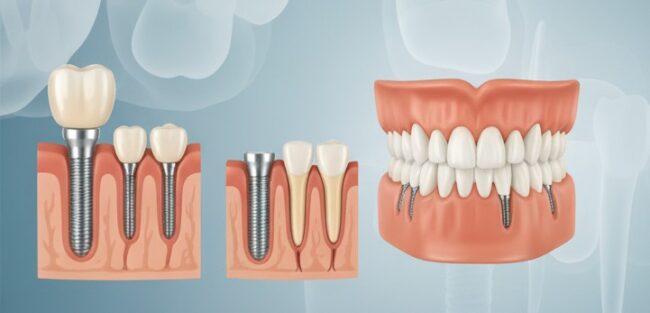
Not all implants are created equal, and your insurance company is aware of this. That means the type of implant you need can directly influence whether your plan helps with the bill, or leaves you paying most of it yourself.
- Endosteal implants are the standard option most dentists use, and they are also the ones insurers are most likely to cover partially. If your plan includes implant benefits, they typically apply here.
- Subperiosteal implants are less common and may only receive coverage if your dentist can demonstrate that they are medically necessary. Without that documentation, insurers often consider them elective.
- Zygomatic implants are the rarest and most complex. Because they are placed in the cheekbone and require advanced surgery, very few dental plans include them. In most cases, you should expect little to no help from insurance.
When it comes to coverage, insurers play it safe. Standard implants stand the best chance of being included in your benefits, while specialized options often require extra approvals or may not be covered at all.
Wondering which type of implant is right for you and whether it’s covered? Explore your implant options here.
What to Look For in a Dental Insurance Plan If You Need Implants?
If dental implants are in your future, choose a plan that addresses this need. A low premium may sound appealing, but it often comes with limitations, such as low annual maximums or lengthy waiting periods. Instead, focus on plans that provide strong coverage for primary restorative dental care.
Key things to prioritize when shopping for a plan:
- Select a plan with an annual maximum of at least $2,000 so your benefits truly make a difference.
- Choose one with no waiting period (or as short as possible) for primary dental services.
- Look for 50% coinsurance on major procedures to reduce out-of-pocket costs.
- Confirm if coverage applies to single tooth implant cost with insurance or multiple implants.
Plans with more substantial benefits may have higher monthly premiums, but they often save you thousands when it is time to pay for implants.
What Are Your Options If Insurance Doesn’t Cover Implants?
No coverage doesn’t mean no implants. In some cases, health insurance may provide coverage if tooth loss is caused by an accident or a pre-existing health condition. HSAs and FSAs allow you to pay with pre-tax dollars, saving you money immediately.
Many dentists now offer membership plans with built-in discounts, and financing options like CareCredit make it possible to break a big bill into smaller monthly payments. With a bit of creativity, implants can still fit your budget even without full insurance support.
Struggling with Implant Costs? Dentist Tree Has You Covered
Dental implants can transform your smile, but the high cost often stops patients from getting the care they need. At Dentist Tree of the Heights, we make sure finances are never the reason you delay treatment.
We accept all PPO dental insurance plans to help you maximize your benefits. For expenses not fully covered by insurance, we offer flexible financing options, including CareCredit, LendingClub, Denefits, and our in-house membership plan. This makes it easy to spread payments into manageable monthly installments.
From your first consultation to the final implant placement, our team provides advanced care, transparent pricing, and a supportive, comfortable experience every step of the way.
Schedule your appointment online today.
Conclusion
Dental implants are more than a treatment. They are a long-term investment in your health and confidence. Do not let insurance details or costs delay your decision. Start by reviewing your coverage, asking about pre-authorization, and exploring financing options that make care affordable.
The sooner you take action, the sooner you can enjoy a smile that looks, feels, and functions like your own. Schedule a consultation today and take control of your dental health with confidence.
Frequently Asked Questions
Are dental implants covered by insurance?
Yes, some dental insurance plans cover implants, but usually only partially. Most policies pay about 50% of eligible costs, subject to annual maximums, waiting periods, and medical necessity requirements.
Which dental insurance companies are known for covering implants?
Several major insurance companies offer dental insurance plans that include implant coverage. Companies like Humana, Cigna, and Delta Dental are known for having Dental PPO plans that may cover a portion of implant costs. Always review the specific health insurance plan details, as coverage varies widely.
How much will dental insurance typically pay for dental implants?
Most insurance policies that offer dental coverage for implants typically cover approximately 50% of the cost of dental implants. However, this is subject to your dental plan’s annual deductible and annual maximum, which is the total amount your type of plan will pay for care in one year.
Can you get full coverage dental insurance that includes dental implants?
While the term “full coverage” is common, no dental insurance plan covers 100% of all costs. However, you can find comprehensive options, including dental insurance that covers implants immediately, with PPO plans often paying a significant percentage of implant expenses.
How to get dental implants covered by medical insurance?
To get dental implants covered by medical insurance, they must be deemed medically necessary, such as after trauma, illness, or jaw damage. While dental insurance that covers implants 100 percent is rare, your dentist can help by submitting documentation, X-rays, and a treatment plan proving medical necessity for approval.
What insurance covers dental implants?
Dental PPO plans from insurance providers like Delta Dental, Cigna, and Humana often cover implants partially, usually around 50%. Coverage depends on plan type, annual maximums, waiting periods, and whether the implants are considered medically necessary.
How much do dental implants cost with insurance in Texas?
In Texas, single dental implants average $2,500–$6,000, while full arches start at $20,000. With insurance, coverage typically reduces costs by 10%–50%, depending on your plan’s limits, deductibles, and eligibility rules.