

Key Highlights
- Invisalign treatment uses a series of custom-made clear aligners to gradually give you straight teeth.
- These aligners are a discreet and comfortable alternative to traditional braces.
- Your journey begins with a digital scan used to create a personalized treatment plan.
- Invisalign can address a wide range of orthodontic issues, from simple to complex.
- The aligners are removable, making it easy to eat, drink, and maintain oral hygiene.
- Consistent wear of 20-22 hours a day is essential for effective results.
Want a straighter smile but worried about the look or discomfort of traditional braces? Many people feel the same. Visible brackets and long treatment times can make orthodontal treatments feel overwhelming.
You deserve a solution that keeps you feeling confident while your teeth are transforming. Invisalign offers a clear, comfortable alternative that fits naturally into everyday life.
In this guide, we’ll walk through what Invisalign is, how the treatment works, how long it takes, and whether it may be the right choice for you.
What Is Invisalign and How Does It Work?
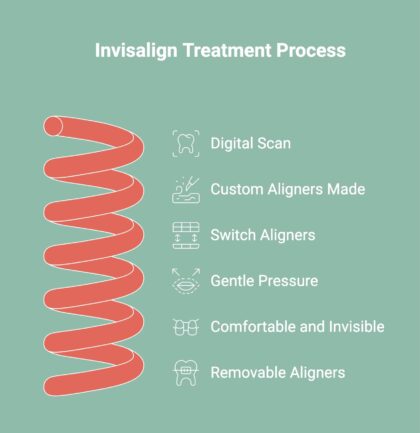
Invisalign is a modern orthodontic treatment that uses a series of clear, removable aligners to straighten your teeth gradually. These custom-made trays fit comfortably over your teeth and apply gentle pressure to guide them into better alignment.
The process begins with a digital 3D scan that allows your orthodontist to plan the complete movement of your teeth from start to finish, giving you a clear idea of your future smile. It is a comfortable, discreet, and flexible alternative to traditional braces.
How does Invisalign work?
Here’s how the process works in simple steps:
- A digital scan creates a personalized roadmap showing how your teeth will shift throughout treatment
- A series of custom aligners is made just for you, each designed to move specific teeth slightly
- You switch to a new set of aligners every one to two weeks as your teeth continue to shift
- Gentle pressure from each tray gradually guides teeth into position comfortably and predictably
- The clear SmartTrack plastic material keeps aligners comfortable and nearly invisible while worn
- Aligners are removable, so eating, brushing, and flossing stay simple and stress-free
With consistent wear and regular check-ins, Invisalign helps you achieve a straighter, healthier smile without the inconvenience of metal braces.
If you want to understand how to straighten your teeth comfortably and affordably, read our guide, Affordable Invisalign in Houston.
Who Is a Good Candidate for Invisalign?
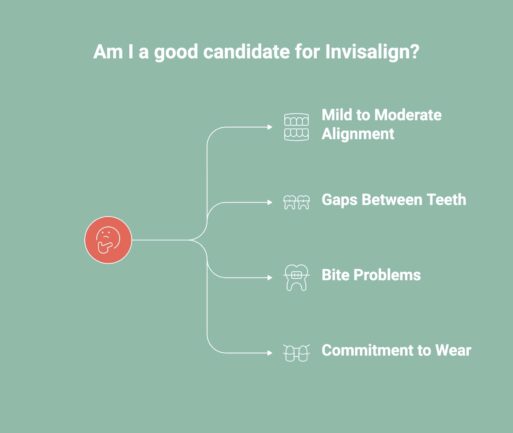
Invisalign is a great option for many people looking to straighten their teeth without traditional braces. Ideal candidates typically have mild to moderate alignment problems and are committed to wearing their aligners consistently for the recommended number of hours each day.
You may be a great fit for Invisalign if you:
- Have crooked or misaligned teeth that need gentle repositioning
- Have gaps or spaces between teeth you want to close
- Have mild to moderate bite problems like overbite, underbite, or crossbite
- Can wear aligners 20 to 22 hours daily and take care of them responsibly
A consultation with an experienced provider is the most reliable way to understand whether Invisalign is truly the right fit for your needs.
This helps you understand not just if Invisalign can work, but how well it can achieve your goals compared to other options, giving you clarity and confidence before committing to treatment.
What Types of Cases Will Invisalign Work On?
Before choosing treatment, it helps to understand the specific orthodontic issues Invisalign can improve:
- Overcrowded teeth that need space to align correctly
- Gaps and spaces between teeth that affect appearance or function
- Bite alignment problems, including overbites, underbites, and crossbites
If you want to understand what truly influences dental pricing and how to plan wisely, read our guide Why Is Dental Care So Expensive? Understanding the Costs.
How Do You Start Invisalign Treatment?
Ready to take the first step toward a straighter smile? Beginning your Invisalign journey is straightforward and designed to help you feel confident and informed at every stage.
Let’s have a look at the steps involved:
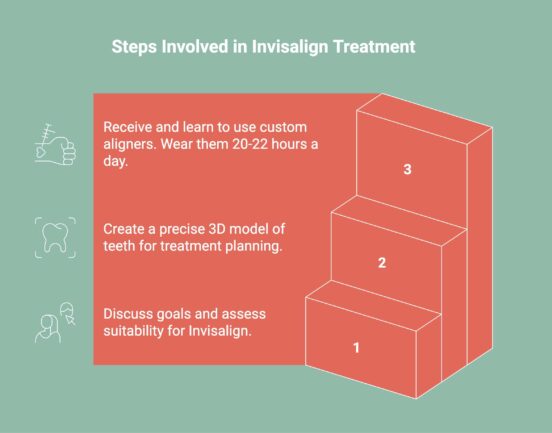
Step 1: Your First Consultation
Your first appointment is all about helping you understand what to expect and feel confident about your decision. Many people walk in wondering whether Invisalign will really work for their smile, how long treatment might take, or what the investment looks like.
During this visit, your orthodontist will examine your teeth and bite, talk through your goals, explain how the process works, review timelines and cost, and answer any questions so you leave with a clear picture of your options and next steps.
Step 2: Digital Scans and Treatment Planning
Once you are approved for treatment, a digital 3D scan is taken to create a precise model of your teeth. Using this, your orthodontist maps out every planned movement and shows a preview of your final result. Your custom series of aligners is then created from comfortable BPA-free material tailored to your mouth.
Step 3: Getting and Wearing Your Aligners
You receive your first set of aligners and learn how to use and care for them. Aligners must be worn 20 to 22 hours per day, removed only for eating and oral hygiene. You will switch to a new set every one to two weeks, gradually moving closer to your final smile.
Throughout treatment, you’ll have regular check-in appointments to monitor progress and ensure teeth are moving as planned. Once treatment is complete, you’ll receive retainers to maintain your results long-term. Staying consistent with wear and follow-up appointments helps protect your investment and keeps your smile looking amazing for years to come.
If you’re ready to begin, scheduling a consultation is the best next step to understanding your personalized timeline, cost, and expected results. Your new smile is closer than you think.
Are There Any Advantages or Disadvantages to Using Invisalign?
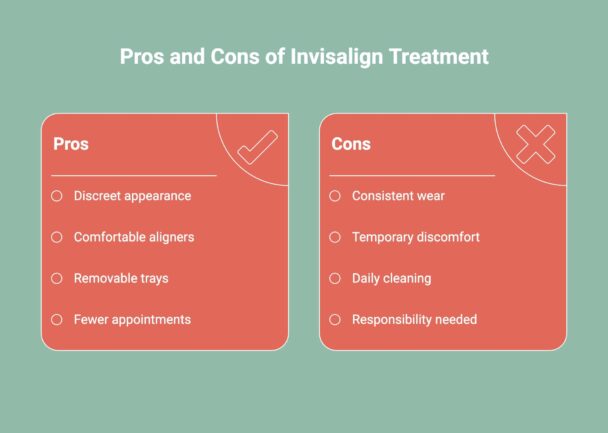
Yes, Invisalign has unique strengths and considerations, and knowing what they look like in real life can help you determine whether it truly fits your habits, schedule, and expectations.
Before choosing treatment, it helps to take a clear look at both the benefits and the possible drawbacks.
Advantages of Choosing Invisalign
Many patients prefer Invisalign for the benefits that can significantly improve comfort and confidence throughout treatment.
- A discreet, nearly invisible appearance helps you feel confident in social and professional settings, especially if you want to avoid the look of metal braces during photos, meetings, interviews, or school events.
- Smooth, comfortable aligners prevent irritation from brackets and wires, reducing mouth sores and discomfort during daily activities like talking and eating.
- Removable trays offer total flexibility with food and oral hygiene, meaning no food restrictions and an easier time maintaining brushing and flossing habits that protect long-term dental health.
- Fewer in-office appointments help fit treatment smoothly into a busy schedule, since progress usually moves forward through scheduled aligner changes instead of frequent tightening visits.
Potential Challenges with Invisalign
While Invisalign offers convenience and flexibility, some aspects require discipline and daily responsibility.
- Wearing aligners 20 to 22 hours a day is essential for results, so forgetting to put them back in can slow progress and extend overall treatment time.
- Mild pressure or soreness may occur with new aligners, which is normal as teeth shift, but understanding this helps set realistic expectations during the adjustment period.
- Daily cleaning of aligners and teeth prevents staining, odor, and bacterial buildup, which requires a consistent routine and may not suit those who prefer minimal maintenance.
- Because aligners are removable, they can be misplaced or accidentally thrown away, especially when wrapped in napkins at restaurants, so staying organized is important to avoid delays and replacement costs.
If these considerations feel overwhelming, discussing your habits, goals, and lifestyle with an orthodontist can help you decide whether Invisalign is the right fit for your journey to a healthier smile.
How Effective Is Invisalign Compared to Traditional Braces?
Invisalign and traditional braces are both effective options for straightening teeth, but they differ in comfort, appearance, lifestyle flexibility, and treatment experience. Invisalign uses clear, removable aligners, while braces rely on fixed metal brackets and wires. Both can deliver excellent results, but the right choice depends on your goals and case complexity.
Before deciding, it helps to understand how they compare in everyday use and overall effectiveness.
1. Appearance and Daily Comfort
Invisalign provides a more comfortable and discreet experience. The nearly invisible aligners are made from smooth plastic, reducing irritation caused by metal brackets and wires. They’re removable, so eating and brushing stay easy with no food restrictions. Mild pressure may occur when switching to a new set, but it usually fades within a few days.
2. Treatment Duration and Effectiveness
Invisalign typically takes 4 months to 2 years, while traditional braces often require 2 to 3 years. Both can deliver excellent results, depending on case complexity and consistency. Invisalign offers strong patient satisfaction and predictable progress through monitored check-ins and planned tooth movement, helping ensure reliable treatment outcomes.
3. Cost Differences
Costs can vary significantly between Invisalign and traditional braces, depending on provider expertise, treatment complexity, insurance coverage, and additional expenses like replacement aligners or retainers. Asking for a clear, itemized cost breakdown helps avoid unexpected fees.
4. Maintenance Responsibilities
Maintenance requirements differ between the two options. Invisalign needs disciplined daily cleaning and careful storage to prevent damage, while braces require thorough brushing and flossing around brackets and wires to prevent plaque, staining, and gum irritation.
5. Suitability for Complex Cases
For severe alignment challenges such as major bite issues, heavy crowding, or significant tooth rotation, braces often provide greater control. Invisalign is typically better suited for mild to moderate cases where movement is more predictable and straightforward.
6. Risk of Losing Aligners
Invisalign aligners can be misplaced, damaged, or accidentally discarded, which may delay treatment and increase overall cost. Braces remove that concern entirely since they remain fixed and do not rely on daily patient management.
Choosing between Invisalign and braces ultimately comes down to your lifestyle, treatment needs, and comfort level, so speaking with an orthodontist for a personalized evaluation is the best way to decide which option will support your ideal smile.
How Does Invisalign Compare to Mail-In Aligners?
Invisalign includes in-office care with orthodontist supervision, while mail-in aligners are ordered online without exams or check-ins. Invisalign offers safer treatment through dental evaluations, X-rays, and monitored progress.
It treats mild, moderate, and some complex bite issues, while mail-in aligners suit only minor cosmetic shifts. Invisalign provides more predictable results, allowing adjustments if teeth move unexpectedly.
How Much Does Invisalign Cost in Houston, Texas?
The cost of Invisalign in Houston typically ranges from $3,000 to $8,000. Pricing depends on factors such as the complexity of your case, the number of aligners needed, and the expected length of treatment. Costs can also vary between providers.
What affects your total cost:
- Complexity of tooth movement and alignment needs.
- Number of aligner trays required.
- Treatment timeline and progress check appointments.
- Provider experience and technology.
Ways to make Invisalign more affordable:
- Many dental insurance plans cover part of the cost.
- Flexible monthly payment plans through orthodontists.
- Third-party financing options like CareCredit or Sunbit.
- Health Savings Accounts and Flexible Spending Accounts may apply.
Scheduling a consultation and requesting a detailed cost breakdown can help you compare options and plan confidently.
Why Choose Dentist Tree of the Heights for Your Invisalign Treatment?
Finding the right dentist makes a big difference in your Invisalign results and overall experience. At Dentist Tree of the Heights, you’re treated like family from the moment you walk in. Our team takes time to listen, understand your goals, and guide you through the process with honesty and care. Every smile is unique, which is why we design treatment plans that truly fit your needs, lifestyle, and comfort level.
With advanced technology, clear communication, and a supportive atmosphere, you can feel confident knowing you’re in trusted hands. We’re here to make your journey smooth, stress-free, and exciting as you watch your smile transform.
Book your Invisalign consultation with Dentist Tree of the Heights today and take the first step toward the smile you’ve always wanted.
Conclusion
Invisalign offers a modern, discreet approach to teeth straightening that appeals to many looking for an alternative to traditional braces. By understanding the key features, benefits, and potential challenges associated with this treatment, you can make an informed decision about whether it’s the right choice for you. A good next step is to book a consultation with an orthodontist, ask questions about timelines and costs, and explore how Invisalign would work with your lifestyle. You deserve a smile you feel great about, and this is a helpful place to start.
Frequently Asked Questions
Can you explain how Invisalign straightens teeth?
Invisalign is a popular choice than traditional metal braces because it uses controlled tooth movement to guide teeth into their desired position, creating a new smile and straighter teeth. A scan of your teeth supports a customized treatment plan.
What materials are Invisalign aligners made of?
Invisalign aligners are made from SmartTrack, a flexible, medical-grade, BPA-free plastic designed for comfortable wear and precise tooth movement. The material is smooth, clear, and nearly invisible when it’s worn.
Is Invisalign suitable for everyone or only certain types of cases?
Invisalign works well for many mild to moderate alignment and bite issues, but severe or complex cases may need braces or a combination treatment. A consultation determines whether Invisalign is appropriate.
How long does it typically take for Invisalign to work?
Most Invisalign treatments take 6 to 18 months, depending on case complexity, oral health and consistent wear. Some minor adjustments finish sooner, while more complicated alignment may require additional treatment time.
Do Invisalign aligners hurt or cause discomfort?
Invisalign aligners may cause temporary pressure or mild discomfort, especially when switching to a new set. This feeling usually fades within a few days as teeth adjust and begin moving.
What should I know before starting Invisalign treatment?
Success with Invisalign requires wearing aligners 20 to 22 hours daily, maintaining consistent hygiene, attending check-ups, and following instructions closely. Commitment is essential to keep progress on track effectively.
Are there any common problems people experience with Invisalign?
Common issues include initial soreness, slight speech changes, forgetting to wear aligners, and increased cleaning routines. These challenges improve with time, consistency, and good habits supporting smooth treatment progress.
Does Invisalign work faster than braces?
Invisalign can be quicker for mild to moderate dental issues due to efficient planned movement, while braces may take longer. However, complex cases sometimes finish faster using traditional braces instead.
Does Invisalign work for overbite?
Yes, Invisalign can treat many overbites by gradually repositioning teeth and improving bite alignment. Severe skeletal overbites may require additional orthodontic methods or combined approaches for optimal results and a confident smile.