

Key Highlights
- Mini and regular dental implants differ in size, placement method, healing time, and long-term durability.
- Regular implants provide stronger bite support and are often preferred for molars and high-pressure chewing areas.
- Mini implants involve a less invasive procedure and are commonly used for denture stabilization or limited bone support cases.
- Implant costs vary based on bone grafting, imaging, crown material, sedation, and overall treatment complexity.
- Recovery from mini implants is usually faster, while regular implants require more healing time for full bone integration.
- Bone density, gum health, lifestyle habits, and long-term treatment goals all influence the best implant choice.
- Dentist Tree of the Heights offers personalized implant evaluations, advanced imaging, and customized treatment plans for long-term smile restoration.
Missing teeth can change the way you eat, speak, and smile comfortably. Many people start avoiding certain foods, covering their mouths while talking, or feeling less confident in social situations. Over time, even small gaps in your smile can begin to affect daily comfort and self-confidence.
What makes the decision harder is that both implant options can sound similar at first. Patients are often unsure whether mini dental implants or regular implants are the better fit, especially when cost and recovery time become major concerns. A lower-cost option may seem appealing initially, but the right choice also depends on factors like bone density, tooth location, bite pressure, and long-term durability.
This guide explains the key differences between mini dental implants vs regular implants in a clear and practical way. You’ll learn how they compare in structure, healing time, performance, and overall suitability so you can better understand which option aligns with your needs and long-term goals.
What Are Mini and Regular Dental Implants?
Dental implants are designed to replace missing tooth roots and support restorations that look and function more like natural teeth. While both options serve the same purpose, mini dental implants vs regular implants differ in size, structure, and how they function under pressure.
Regular dental implants are larger and typically use a two-piece design made from titanium. One part is placed into the jawbone, while the second piece connects the implant to the crown, bridge, or denture. Their wider diameter creates stronger support and stability, which is why they are commonly recommended for areas exposed to higher chewing force, such as molars.
Mini dental implants are much narrower, usually less than 3 millimeters in diameter, and often use a one-piece design. Because of their smaller structure, they require less space and a simpler placement process, making them a less invasive option. They are frequently used for stabilizing dentures, especially in elderly patients, or for replacing smaller teeth where biting pressure is lower.
The difference in diameter also affects long-term performance. Wider implants distribute chewing pressure more evenly across the jawbone, which improves stability and durability over time. Smaller implants place less demand on the bone during placement, but they are generally better suited for lighter-use areas rather than heavy chewing zones.
How Do Mini and Regular Implants Differ Structurally and Procedurally?
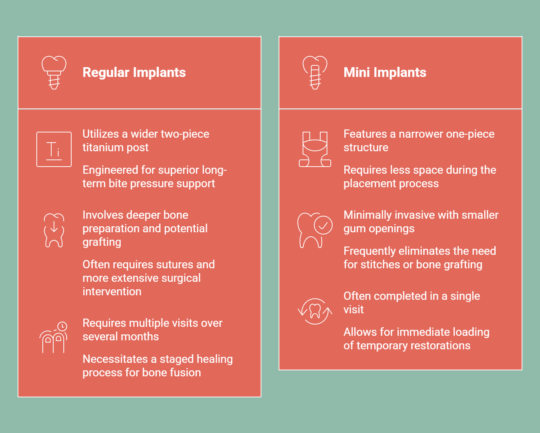
Choosing between mini dental implants vs regular implants is not just about size. The procedure itself can feel very different depending on the implant type, the number of visits required, and how much preparation your jawbone needs beforehand. These differences directly affect recovery time, comfort, and the overall treatment experience, potentially leading to less discomfort during the healing process.
Size and Structural Design
Regular implants use a wider titanium implant post designed to handle stronger bite pressure and support larger restorations. They commonly follow a two-piece design, where the titanium implant and connector are placed separately. Mini implants are narrower and often use a one-piece structure, which reduces the amount of space needed during placement.
The wider diameter of regular implants improves long-term stability, but it also means the jawbone must have enough thickness and density to support the implant securely.
Placement Procedure and Healing Stages
Regular implants usually involve multiple stages spread over several months. The implant is first placed into the jawbone, followed by a healing phase where the bone gradually fuses to the implant. Once healing is complete, the connector and final restoration are attached. In some cases, bone grafting is needed before placement if the jaw lacks enough support.
Mini implants follow a simpler placement process and are often completed in fewer visits. Because they are smaller, they can frequently be placed without extensive incisions or grafting. Many patients also qualify for immediate loading, meaning the denture or temporary restoration may be attached on the same day instead of waiting months.
Surgical Complexity and Comfort
Regular implant surgery is more involved and may require sutures, longer healing stages, and deeper bone preparation. The procedure is commonly performed using local anesthesia, though sedation may also be recommended for complex cases.
Mini implants are considered less invasive because the placement often requires smaller openings in the gum tissue. In many cases, stitches are not needed, and the procedure time is shorter. Patients usually experience less swelling and discomfort afterward, which is one reason mini implants are popular among patients looking for a quicker recovery.
Procedure Time and Visits
Regular implants often require multiple appointments over several months due to healing and restoration stages. Mini implants can sometimes be completed in a single visit, depending on the treatment plan and restoration type.
The biggest difference between these procedures lies in how much preparation, healing, and surgical work is involved in mini dental implants vs regular implants. One follows a longer, staged process designed for maximum strength, while the other focuses on a faster and less invasive treatment experience.
Which Lasts Longer and Performs Better: Mini Dental Implants vs Full Implants?
Long-term performance is one of the biggest concerns patients have before choosing an implant. Most people want a solution that feels stable while eating, lasts for years, and does not require frequent repairs or replacement. The difference usually comes down to how much pressure the implant can handle over time and how well it adapts to daily wear in mini dental implants vs traditional implants.
Bite Strength and Daily Function
Regular implants are designed to tolerate stronger chewing forces, making them a better option for high-pressure areas like molars. Their wider structure distributes pressure more evenly across the jawbone, which improves stability during daily use in mini dental implants vs regular implants.
Mini implants are narrower and generally better suited for lower-pressure areas or denture stabilization. While they can function well in the right cases, they are more likely to experience stress-related wear when exposed to heavy biting forces over long periods.
Stability and Long-Term Bone Support
Regular implants integrate deeply with the jawbone through a process called osseointegration. This strong bond helps maintain stability and reduces movement over time. They are often considered the more durable option for patients looking for long-term tooth replacement.
Mini implants also integrate with bone, but their smaller diameter provides less surface contact. In patients with ongoing bone loss or higher bite pressure, this may affect long-term stability sooner.
Lifespan Expectations
With proper dental care, regular implants can often last 20 years or longer, and many remain successful for decades. Mini implants can also last for years, but they may require earlier replacement in patients with strong chewing habits or higher stress on the implant area.
Several factors can shorten the lifespan of either option:
- Teeth grinding (bruxism) increases pressure on the implant and surrounding bone
- Smoking slows healing and raises the risk of implant complications
- Bone loss reduces long-term support and stability
- Poor oral hygiene increases the risk of gum infection around the implant
Why Maintenance Matters
No implant is maintenance-free. Regular dental visits, good oral hygiene, and managing habits like grinding or smoking all play a major role in long-term success. Even the strongest implant can fail earlier without proper care and monitoring.
Long-term success in mini dental implants vs regular implants depends on more than just the implant itself. Bite pressure, bone support, lifestyle habits, and maintenance all influence how well the implant performs over time. The stronger option for one patient may not always be the most suitable for another.
What Are the Pros and Cons of Each Option?
Both implant options replace missing teeth, but they solve the problem in very different ways. Some patients prioritize faster treatment and lower upfront costs, while others focus more on long-term durability and stability. Understanding the real-world tradeoffs in mini dental implants vs regular implants helps set clearer expectations before starting treatment.
Mini Dental Implants: Pros and Cons
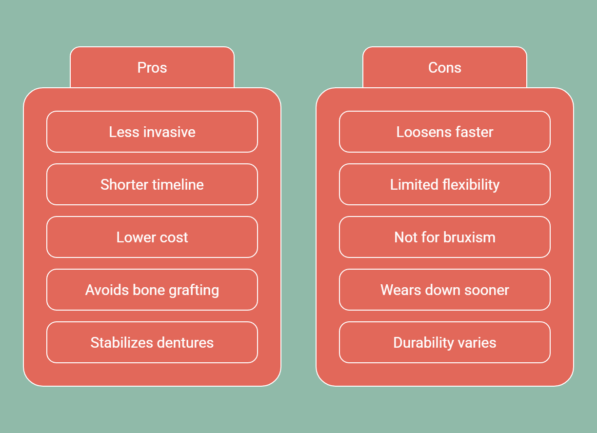
Mini dental implants are commonly chosen by patients looking for a quicker and less invasive procedure. They are especially popular among older adults who want better denture stability without undergoing bone grafting or extensive surgery.
Pros
- A smaller placement approach often means less swelling and discomfort afterward
- Shorter treatment timeline with fewer surgical steps
- Lower upfront cost compared to regular implants
- Frequently avoids bone grafting in patients with limited jawbone support
- Commonly used to stabilize loose dentures more comfortably
Cons
- May loosen faster in high-pressure areas like molars
- Limited flexibility for larger restorations or complex full-mouth cases
- Not ideal for patients with severe teeth grinding (bruxism)
- A smaller structure may wear down sooner under heavy chewing force
- Long-term durability can vary depending on placement location and bite pressure
Mini implants work well for patients prioritizing simplicity, affordability, and reduced surgical involvement, especially in lower-pressure areas or denture support cases.
Regular Dental Implants: Pros and Cons
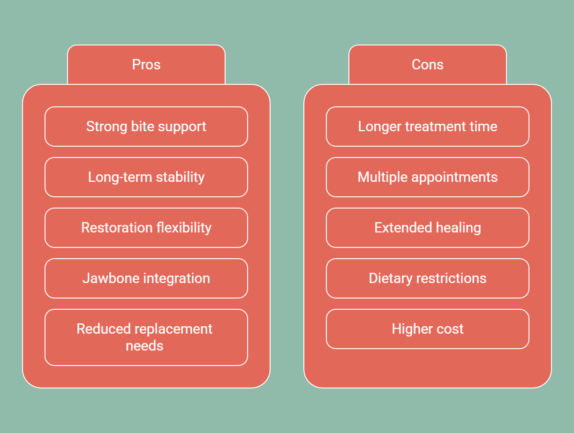
Regular implants are designed for patients who want stronger bite support and a solution intended for long-term daily function. They are more commonly recommended for full chewing restoration and demanding bite areas.
Pros
- Better suited for molars and areas exposed to strong chewing pressure
- Lower risk of loosening under long-term bite force
- Supports a wider range of restorations, including bridges and full arches
- Stronger jawbone integration improves long-term stability
- Often reduces the likelihood of future replacement or repair needs
Cons
- Requires a longer overall treatment commitment
- Multiple appointments are usually needed across several months
- Healing depends on a longer osseointegration period
- Temporary dietary restrictions are common during healing
- Bone grafting may be necessary in patients with reduced bone support
- Higher upfront investment compared to mini implants
Regular implants require more time and preparation, but they are often preferred when long-term strength, stability, and restoration flexibility are the priority.
Each option comes with different tradeoffs in comfort, durability, treatment time, and long-term maintenance. The better choice depends less on which implant is best overall and more on which one fits your oral condition, lifestyle, and long-term expectations.
How Much Do Mini Dental Implants vs Regular Implants Cost in Houston?
Cost is one of the biggest reasons patients hesitate before starting implant treatment. While mini implants are usually less expensive upfront, the final price depends on far more than the implant itself. Procedure complexity, restoration type, imaging, and additional treatments can all affect the total investment in mini implants vs conventional implants and mini dental implants vs regular implants.
Why Mini Implants Usually Cost Less
Mini implants are generally more affordable because they use a smaller implant post and often involve a simpler placement procedure. In many cases, they also reduce the need for bone grafting, extensive surgery, or multiple appointments, which lowers overall treatment costs.
Regular implants involve more planning, surgical stages, and restorative work, which increases the total price but also supports stronger long-term function.
Average Implant Costs in Houston
- Mini Dental Implants: Usually range from $500 to $1,500 per implant
Commonly used for denture stabilization or smaller tooth replacement cases - Regular Dental Implants: Typically range from $3,995 to $6,560 per implant
Designed for full tooth replacement and stronger long-term support - Multiple Regular Implants: Often range from $1,850 to $2,420 per implant in larger treatment plans
Used for bridges, multiple missing teeth, or full-mouth restorations
What Can Increase the Total Cost?
Several additional factors can affect implant pricing:
- Bone grafting if the jaw lacks enough support
- 3D imaging and CT scans for treatment planning
- Sedation or anesthesia during surgery
- Crown material, such as zirconia or porcelain
- Temporary restorations during healing
- Complexity of placement location and bite alignment
Insurance and Financing Considerations
Dental insurance may help cover parts of the treatment, such as extractions, imaging, or restorations, but full implant coverage is often limited. Many practices also offer monthly financing options to make treatment more manageable over time.
Cost vs Long-Term Value
Lower upfront cost does not always mean better long-term value. Mini implants may reduce immediate expenses, but regular implants can provide better durability and stability in high-pressure chewing areas, potentially reducing future replacement or repair costs in mini dental implants vs regular implants.
The total cost depends on both the procedure itself and the long-term demands placed on the implant. Understanding what contributes to pricing helps patients look beyond the initial number and focus on overall function, durability, and long-term value.
Who Is the Right Candidate for Mini vs Regular Implants?
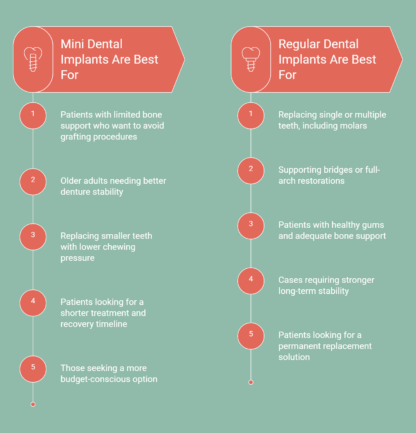
Not every implant option works the same for every patient. The right choice in mini dental implants vs regular implants depends on bone density, gum health, bite pressure, medical history, and long-term treatment goals. A proper evaluation helps determine which option is more likely to succeed while reducing the risk of complications or early implant failure.
When Mini Dental Implants Are Recommended
Mini dental implants are often recommended when patients need a less invasive solution or have reduced jawbone support. They are considered a great option in cases where avoiding extensive surgery or bone grafting is a priority.
Best suited for:
- Patients with limited bone support who want to avoid grafting procedures
- Older adults needing better denture stability
- Replacing smaller teeth with lower chewing pressure
- Patients looking for a shorter treatment and recovery timeline
- Those seeking a more budget-conscious option
Important Considerations
Mini implants may not be ideal for patients with severe teeth grinding, heavy bite pressure, or advanced bone loss in high-stress chewing areas. Their smaller structure limits their use in certain full-mouth or molar restorations.
When Regular Implants Are Recommended
Regular implants are recommended for patients needing stronger bite support and long-term durability. They are often preferred in cases where chewing force, restoration size, or long-term stability are major priorities.
Best suited for:
- Replacing single or multiple teeth, including molars
- Supporting bridges or full-arch restorations
- Patients with healthy gums and adequate bone support
- Cases requiring stronger long-term stability
- Patients looking for a permanent replacement solution
Important Considerations
Regular implants may require bone grafting if bone density is insufficient. Healing can also take longer in patients who smoke, have uncontrolled diabetes, or have active gum disease, since these factors may affect osseointegration and recovery success.
Bone density scans and digital imaging play a major role in determining implant suitability. Even patients previously told they lacked enough bone for implants may still qualify today through newer imaging and treatment planning approaches.
The right implant choice depends on far more than just cost or recovery time. Factors like bone quality, gum health, lifestyle habits, and long-term expectations all influence which option is most likely to deliver lasting success.
What Is the Healing and Recovery Time for Each Option?
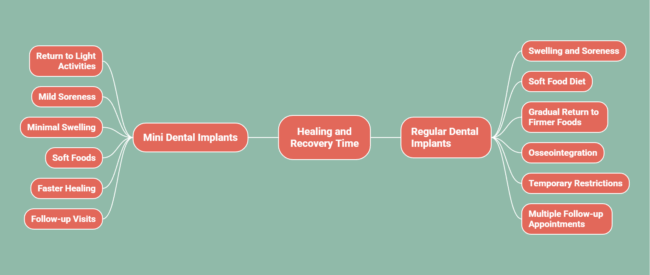
Recovery time plays a major role in how patients choose between implant options. Many people want to know how long discomfort lasts, when they can eat normally again, and whether the procedure will interrupt daily routines in mini dental implants vs regular implants. The healing process depends on how the implant is placed, how the bone responds, and how well post-treatment care is followed.
Mini Dental Implants: Healing and Recovery
Mini dental implants are known for a shorter and less demanding recovery process because the placement procedure is typically less invasive.
What patients can usually expect:
- Return to light daily activities within one to two days
- Mild soreness or tenderness that often improves within a few days
- Minimal swelling compared to larger implant procedures
- Soft foods recommended for the first few days after placement
- Faster healing due to smaller implant size and reduced tissue disruption
- Follow-up visits usually scheduled shortly after placement to monitor stability
Many patients are concerned about pain or implant failure, but discomfort is commonly manageable with over-the-counter medication when aftercare instructions are followed properly.
Although healing is quicker, patients are still advised to avoid smoking, hard foods, and intense physical activity immediately after treatment to reduce stress on the implant during early healing.
Regular Dental Implants: Healing and Recovery
Regular implants involve a longer healing timeline because the implant must fully integrate with the jawbone before final restoration.
What patients can usually expect:
- Swelling and soreness for several days after surgery
- A soft food diet is often recommended during the early healing stage
- Gradual return to firmer foods as healing progresses
- The healing period may take several months due to osseointegration
- Temporary restrictions on strenuous exercise after surgery
- Multiple follow-up appointments to monitor bone healing and implant stability
Patients sometimes worry about infection or implant failure during this phase. Maintaining good oral hygiene, attending follow-up visits, and following recovery instructions closely all help reduce these risks significantly.
The longer healing period allows the implant to form a stronger bond with the jawbone, which supports long-term durability and chewing stability.
Recovery timelines differ because the procedures themselves place different demands on the jawbone and surrounding tissue. One option focuses on quicker healing and minimal downtime, while the other prioritizes stronger long-term integration through a longer recovery process.
How Do You Choose Between Mini and Regular Implants?
It’s easy to feel uncertain when both implant options seem like the right solution. The difference usually comes down to what your mouth can support, how long you want the solution to last, and how much treatment you are comfortable undergoing in mini dental implants vs regular implants. A clearer decision framework makes the process less overwhelming and more practical.
Choose Mini Implants If:
- You have limited bone support and want to avoid bone grafting
- You want a less invasive procedure with a shorter recovery time
- You need better stability for loose dentures
- You are replacing smaller teeth or lower-pressure areas
- You prefer fewer appointments and a faster treatment timeline
- You are looking for a lower upfront cost option
- You want minimal disruption to daily activities after treatment
Mini implants are often preferred by older adults or patients who may not want extensive surgery but still want improved function and comfort.
Choose Regular Implants If:
- You need to replace molars or teeth exposed to a strong chewing force
- Long-term durability and stability are your top priorities
- You want support for bridges or full-arch restorations
- You have healthy bone support or are open to grafting procedures
- You grind your teeth or place heavy pressure on your bite
- You want a solution designed for decades of daily use
- You are comfortable with a longer healing and treatment process
Regular implants are usually recommended when long-term strength and restoration flexibility matter more than shorter treatment time.
Why a Professional Evaluation Matters
Even if two patients have similar tooth loss, their treatment needs can be completely different. Bone density scans, gum health evaluation, bite analysis, and medical history all influence which implant option is more likely to succeed.
A detailed consultation helps determine:
- Whether your jawbone can support a regular implant
- If bone grafting may be needed
- Which option fits your bite pressure and tooth location
- How medical conditions or smoking may affect healing
- What treatment timeline and maintenance to expect
The right implant choice is rarely about finding a single “better” option. It’s about matching the treatment to your bone condition, bite demands, recovery expectations, and long-term goals for the best possible outcome.
Why Choose Dentist Tree for Dental Implants in Houston?
Getting dental implants is a big decision, and the right dental team makes all the difference. At Dentist Tree of the Heights, the focus is on delivering care that is clear, comfortable, and tailored to your needs from the very first visit.
What Sets Dentist Tree Apart
- Personalized Treatment Planning: Every case is carefully evaluated to recommend the right option, whether it’s a mini or regular implant procedure.
- Experienced Dental Team: Skilled in cosmetic dentistry and complex restorations, ensuring precise and reliable results
- Advanced Technology: Modern tools and imaging help improve accuracy, comfort, and treatment outcomes
- Patient-Centered Approach: Clear guidance at every step, so you feel informed and confident throughout the process
- Comfort and Convenience: Smooth, well-managed experience from consultation to final restoration
Take the Next Step
Ready to restore your smile with confidence? Book your appointment today and get a personalized consultation tailored to your needs.
Conclusion
Replacing missing teeth is a long-term decision, and the right choice can make everyday activities feel natural again. Mini dental implants and regular implants both offer effective solutions, but the best option depends on your specific needs and expectations in dental implants mini vs regular.
Taking the time to understand your options helps you avoid unnecessary delays or treatments that may not fully meet your goals. The next step is getting expert guidance and a plan tailored to you so you can move forward with clarity and confidence.
Frequently Asked Questions
How does the cost of mini dental implants compare to regular dental implants?
The cost of mini dental implants vs regular implants is usually lower upfront for mini implants due to a simpler procedure. However, total cost depends on insurance, case complexity, and long-term needs, so a consultation is essential for an accurate estimate.
Are mini dental implants as good as regular Implants?
While mini implants are effective, traditional dental implants are generally considered more durable for long-term use, especially in areas with heavy chewing forces. The durability of any implant depends on factors like bone density, oral health, and proper care, but regular implants offer superior strength.
Can mini dental implants be used for all types of tooth replacements?
No, mini dental implants are not suitable for all situations. They are best for replacing smaller teeth or stabilizing dentures. For larger teeth or more extensive dental restorations, regular implants are usually recommended to meet the specific needs of the replacement tooth and ensure long-term success.
In what situations are mini dental implants recommended over regular implants?
Mini implants are recommended for patients with limited bone, denture stabilization, or smaller teeth. In mini dental implants vs regular implants, mini options suit low-pressure areas, while regular implants are better for stronger, long-term support.
Are Mini Dental Implants Worth It?
Mini implants are worth it for quicker procedures, lower cost, and minimal recovery. In mini dental implants vs regular implants, they work well for simpler cases, but regular implants offer better durability for long-term use.