

Key Highlights
- Dental numbness typically lasts 2 to 4 hours, but can extend up to 6 hours depending on the procedure and anesthetic used
- Simple treatments like fillings wear off faster, while extractions and root canals last longer
- Duration depends on factors like anesthetic type, dosage, injection site, and your metabolism
- You may feel tingling, heaviness, or difficulty speaking while numb, which is normal
- Avoid eating, hot drinks, or touching the area to prevent injury while numb
- Contact your dentist if numbness lasts beyond 24 hours or feels unusual
- At Dentist Tree of the Heights, we focus on precise numbing, gentle techniques, and clear aftercare to keep your experience comfortable and predictable
If you’ve ever left the dentist with a numb mouth after a filling, extraction, or root canal, the first question that comes up is simple: how long is this going to last? Dental numbing is a routine part of these treatments, so that lingering numb feeling is completely expected.
That said, knowing it’s normal doesn’t always make it less frustrating. Talking can feel awkward, eating becomes easy to misjudge, and if the numbness sticks around longer than you thought it would, it’s natural to start second-guessing whether everything is okay. Most of the confusion comes down to not knowing what’s typical.
This guide clears that up. You’ll learn how long dental numbing usually lasts, depending on the procedure, what can affect how quickly it wears off, what is considered normal, and when it might need attention, so you’re not left guessing after your appointment.
How Does Dental Numbing Work During Common Dental Procedures?
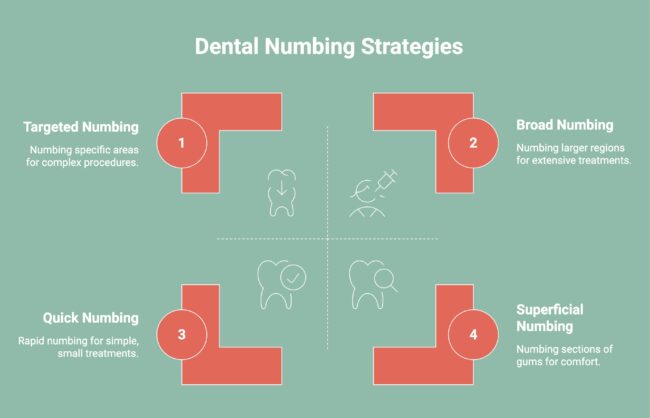
Dental numbing works by temporarily blocking the nerve signals that carry pain from your teeth and gums to your brain. Dentists use local anesthesia to target a specific area, so you stay fully awake but don’t feel pain during the procedure. You may still notice some pressure or movement, but sharp pain is effectively minimized.
Depending on the type of dental treatment, the numbing technique can vary:
- Fillings and minor cavity treatments: A small, localized injection is given near the affected tooth. This numbs only the immediate area and works quickly for shorter procedures.
- Root canals: A deeper numbing approach is used to ensure the entire tooth and surrounding tissue are desensitized, as the procedure involves working inside the tooth.
- Tooth extractions: Dentists often use a nerve block, especially for lower teeth, to numb a larger area, including the lips, tongue, and cheek.
- Gum treatments or deep cleaning: Numbing may be applied across sections of the gums to keep you comfortable during scaling or periodontal procedures.
In many cases, a topical gel is applied before the injection to make the process more comfortable. No matter the method, the goal is the same: to keep the procedure pain-free while the numbness gradually wears off afterward.
Numbness fades in hours, but your smile lasts years. Curious about long-term results? See how long veneers last and what keeps them looking great.
How Long Does Numbness Last After Different Dental Treatments?
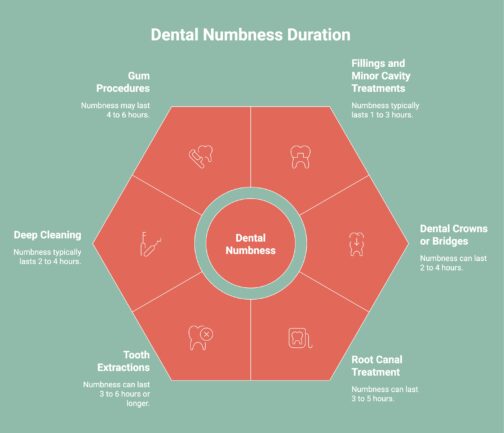
The duration of dental numbness can vary depending on the type of procedure and the anesthetic used. While most numbness wears off within a few hours, some treatments require deeper or longer-lasting numbing, which can extend the sensation.
If you’re wondering how long the numbing shot from the dentist lasts, the answer depends largely on the type of treatment you receive.
Here’s what you can typically expect after common dental procedures:
- Fillings and minor cavity treatments: Numbness usually lasts 1 to 3 hours. Since these are quick procedures, dentists often use short-acting anesthetics that wear off relatively fast.
- Dental crowns or bridges: You may stay numb for 2 to 4 hours, depending on how much work is done and whether multiple teeth are involved.
- Root canal treatment: Numbness can last 3 to 5 hours, especially if a nerve block is used to fully numb the area.
- Tooth extractions (including wisdom teeth): Expect numbness for 3 to 6 hours or longer, as stronger or long-acting anesthetics are often used for pain control during and after the procedure.
- Deep cleaning (scaling and root planing): Numbness typically lasts 2 to 4 hours, depending on how many areas of the mouth are treated.
- Gum or periodontal procedures: These may involve longer-lasting numbness, often 4 to 6 hours, especially if multiple sections are treated.
It’s important to remember that these are general estimates. The exact duration can vary based on the anesthetic used, your body’s metabolism, and the specific technique your dentist uses.
If you’re also thinking about improving your smile beyond just treatment recovery, explore our laser teeth whitening treatment to see how you can achieve a brighter smile in as little as one visit.
What Are the Types of Dental Anesthetics Used?
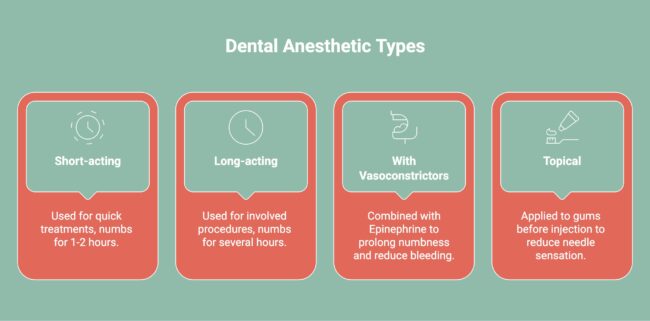
Dentists may use different types of dental anesthetics depending on the procedure, how long it is expected to take, and your comfort needs. While all of them work by blocking pain signals, they can differ in how quickly they take effect and how long the numbness may last.
Here are some of the most commonly used options:
- Short-acting anesthetics: These are often used for quicker treatments like fillings or minor repairs. A commonly used option is Lidocaine, which works relatively quickly and may keep the area numb for around 1 to 2 hours for many patients.
- Long-acting anesthetics: These may be chosen for more involved procedures such as extractions or oral surgery. Bupivacaine is one example and can provide numbness that may last several hours after treatment, depending on the situation.
- Anesthetics with vasoconstrictors: Many anesthetics are sometimes combined with Epinephrine, which helps slow blood flow in the area. This can allow the numbing effect to last longer and may also help reduce bleeding during treatment.
- Topical anesthetics: These are usually applied to the gums before an injection to help reduce the sensation of the needle. Options such as Benzocaine or Lidocaine in gel form are commonly used. They typically numb only the surface and are not enough for most procedures on their own.
Each type is selected based on your treatment and comfort needs, ensuring effective pain control without unnecessary prolonged numbness.
What Factors Affect How Long Dental Numbing Lasts?
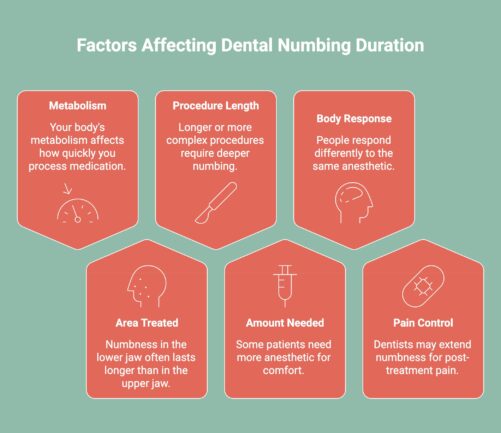
Even when two people have the same dental procedure, numbness can wear off at very different times. That variation is completely normal and comes down to how your body and your specific treatment interact.
If you’ve been wondering how long dentist numbness lasts, here are the key reasons your experience may differ:
1. Your Body’s Metabolism
Everyone processes medications at a different rate. If your metabolism is faster, you may regain feeling sooner. If it is slower, numbness may last longer without anything being wrong.
2. The Area Being Treated
Numbness in the lower jaw often lasts longer because it typically involves a nerve block that affects a wider area. In contrast, the upper jaw is more localized, so sensation may return sooner.
3. The Length and Complexity of the Procedure
Longer or more involved treatments require deeper or broader numbing to keep you comfortable. This can naturally extend how long the effects last afterwards.
4. The Amount Needed for Your Comfort
Some patients need slightly more anesthesia to stay fully comfortable during treatment. This is not unusual and can lead to numbness lasting a bit longer than expected.
5. How Your Body Responds to the Medication
Even with the same anesthetic and dose, people can respond differently. Factors like sensitivity to medications and overall health can influence how long the numbing effect lasts.
6. Whether the Area Needs Longer Pain Control
In some cases, your dentist may choose an approach that keeps the area numb for longer to help manage post-treatment discomfort. This is often intentional and part of your care plan.
Understanding these factors can help set realistic expectations. A slightly longer or shorter numbness period is usually just a reflection of your body and your treatment, not a cause for concern.
How to Make Dental Numbing Wear Off Faster?
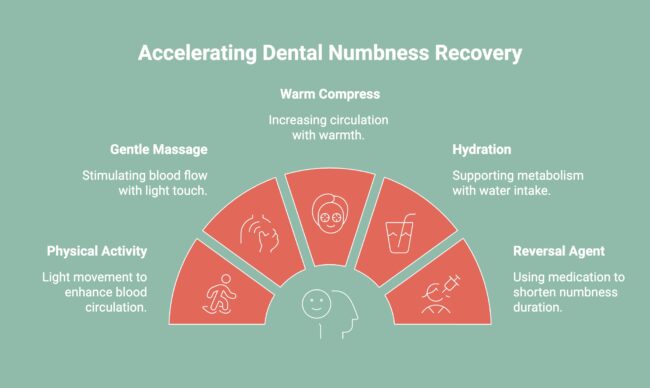
Dental numbness usually fades on its own, but if you want it to wear off sooner, a few simple steps can help your body process the anesthetic more quickly.
Here are some practical ways to speed things up:
- Stay Active: Light movement like walking or gently moving your jaw can improve blood circulation, which may help your body break down the anesthetic faster.
- Massage the Area Gently: If your dentist has no restrictions, lightly massaging the outside of your cheek near the numb area can stimulate blood flow. Avoid applying pressure directly inside the mouth.
- Use a Warm Compress: Placing a warm compress on the outside of your face can increase circulation in the area, which may help reduce the duration of numbness.
- Stay Hydrated: Drinking water supports your body’s natural metabolism, helping flush out the anesthetic more efficiently over time.
- Ask About a Reversal Agent: In some cases, dentists may use a medication such as Phentolamine mesylate to shorten the duration of numbness. This is typically used after routine procedures and works by increasing blood flow in the area.
It is not used in every case, and it may not be suitable after certain treatments like extractions or oral surgery. Your dentist will only recommend it if it is appropriate for you.
A quick note: Avoid massaging the area or using heat unless your dentist has specifically told you it is safe. After procedures like extractions or oral surgery, these actions can increase bleeding, disrupt healing, or lead to complications.
When the numbness fades, your next question might be about fixing gaps. Our guide on dental bridge cost in Houston explains the costs and choices available.
What Should You Avoid While Your Mouth Is Numb After Dental Treatment?
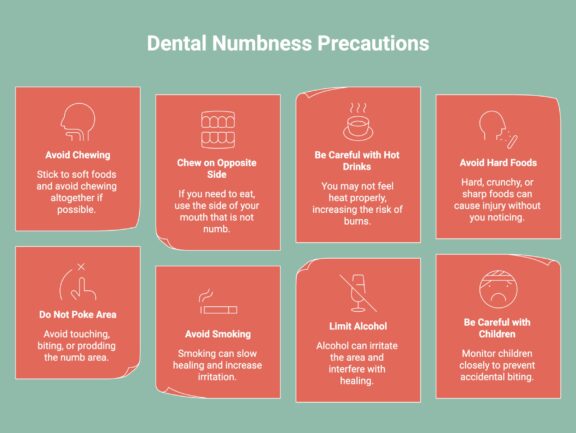
Waiting for residual numbness to disappear can be inconvenient, but there are a few things you can do to enhance your comfort and gain some peace of mind. The primary goal is to protect your mouth from accidental injury while you can’t feel it properly.
Since you won’t be able to sense temperature or pressure, it’s easy to bite your cheek, tongue, or lip without realizing it. This can cause significant irritation and swelling.
To stay safe, avoid the following:
- Avoid chewing: Stick to soft foods like yogurt, smoothies, or mashed potatoes until full sensation returns. If possible, avoid chewing altogether until the numbness fades.
- Do not chew on the numb side: If you need to eat, use the opposite side of your mouth to reduce the risk of biting yourself.
- Be careful with hot drinks and foods: You may not feel heat properly, which increases the risk of burns from coffee, tea, or hot meals.
- Avoid hard, crunchy, or sharp foods: Items like chips, nuts, or crusty bread can easily cause injury without you noticing.
- Do not poke or test the area: Avoid touching, biting, or prodding the numb area with your tongue or fingers, as this can lead to irritation or damage.
- Avoid smoking or tobacco use: Smoking can slow healing and increase irritation, especially while tissues are still sensitive.
- Limit alcohol: Alcohol can irritate the area and may interfere with the early stages of healing.
- Be extra careful with children: If a child has dental numbness, monitor them closely to prevent accidental biting of lips or cheeks.
Following these precautions will help you have a much smoother and more comfortable recovery. Before you know it, the numbness will be gone entirely.
When Should You Be Concerned About Dental Numbness?
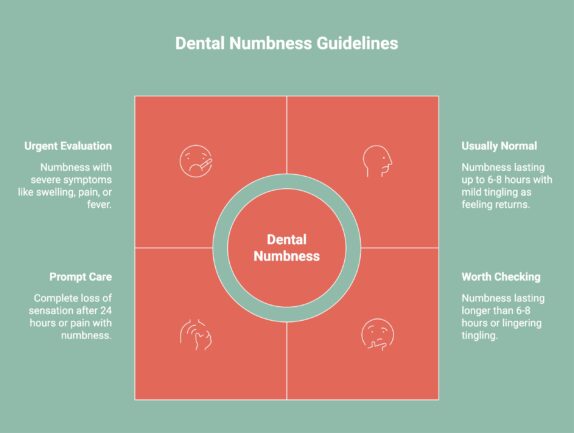
In most cases, dental numbness wears off within a few hours without any issues. However, certain symptoms may mean it is worth checking in or seeking care sooner.
Here is how to tell the difference:
- Usually normal (just monitor)
- Numbness lasting up to 6 to 8 hours: This can vary depending on the type of anesthesia used.
- Mild tingling as feeling returns: A pins and needles sensation is common as nerves wake back up.
- Worth checking with your dentist
- Numbness lasting longer than 6 to 8 hours without improvement: Especially if there is no gradual return of sensation.
- Lingering tingling or altered sensation: If it continues beyond the expected timeframe.
- Seek prompt dental care (same day if possible)
- Complete loss of sensation after 24 hours: This may indicate nerve irritation or a rare complication.
- Pain, swelling, or increasing discomfort along with numbness: These symptoms can suggest inflammation or infection.
- Urgent evaluation recommended
- Numbness with significant swelling, severe pain, or fever
- Symptoms that are spreading to the jaw, face, or neck
- Difficulty opening your mouth, swallowing, or breathing
These signs may point to a more serious issue and should be addressed as soon as possible.
While complications are uncommon, it’s always better to be cautious. If anything feels off or lasts longer than expected, contacting your dentist can help rule out any concerns and give you peace of mind.
How Dentist Tree of the Heights Keeps Your Dental Experience Comfortable?
If post-treatment numbness or discomfort bothers you, where you go for dental care makes a difference. At Dentist Tree of the Heights, we focus on efficient, well-managed treatments so your recovery feels as smooth as possible.
We combine precise techniques with a comfort-first approach and clear communication, so you know exactly what to expect, including how long numbness should last.
Here’s what you can expect from us:
- Right-sized numbing, not overdone: We use the appropriate type and amount of anesthesia to keep you comfortable without prolonging numbness unnecessarily.
- Gentle injection techniques: Our approach minimizes discomfort during numbing and helps create a smoother overall experience.
- Precision-driven treatments: Advanced imaging and modern tools allow us to work efficiently, which can reduce both treatment time and recovery impact.
- Clear aftercare guidance: You’ll know exactly what to expect as numbness wears off and how to avoid common issues like cheek or tongue bites.
- Consistent, patient-first care: We tailor every visit to your comfort level, helping reduce anxiety and improve your overall experience.
Experience dental care that’s designed around your comfort. Book your visit today and feel the difference from day one.
Final Words
Dental numbness might feel odd, but it’s temporary and completely normal. For most people, it fades within a few hours without any issues.
What really helps is knowing what to expect and how to handle it. Once you do, it becomes a small, manageable part of your dental visit rather than something to worry about.
With the right care and a dentist who prioritizes comfort, even the numbing part of treatment can feel predictable and stress-free.
Frequently Asked Questions
Is it normal for numbness to last several hours after dental work?
Yes, it’s completely normal. Dental numbness typically lasts between 2 to 4 hours, but can extend up to 6 hours depending on the procedure, anesthetic type, and whether a nerve block was used.
Can dental numbing last longer for some people than others?
Yes, numbness can last longer for some individuals. Factors like metabolism, body response, type of anesthetic, and injection site all influence duration, so it’s normal for experiences to vary from person to person.
What should I do if numbness hasn’t worn off by the next day?
If numbness persists beyond 24 hours, contact your dentist. While rare, prolonged numbness may indicate nerve irritation or sensitivity. It’s best to get it checked early to rule out any complications.
Is it safe to eat and drink while my mouth is still numb from dental anesthesia?
It’s not recommended. You may accidentally bite your cheek, tongue, or lips, or burn your mouth with hot foods or drinks. Wait until full sensation returns before eating normally.
How long does numbness last after a dental filling?
After a filling, numbness usually lasts 1 to 3 hours. Since fillings are minor procedures, dentists often use short-acting anesthetics that wear off relatively quickly compared to more complex treatments.
How long does a dental numbing injection last?
A dental numbing injection typically lasts between 2 and 4 hours. However, depending on the anesthetic used and the procedure, numbness in soft tissues may continue for up to 5 or 6 hours.
How long should dental numbing last after a surgical procedure?
After surgical procedures like extractions, numbness can last 4 to 6 hours or longer. Stronger or long-acting anesthetics are often used to manage pain during and after the procedure for better comfort.