

Not all dentists provide the same types of care, so choosing the right one from the start can make your experience smoother and more efficient. For example, if you book a regular checkup when you actually need a root canal or emergency care, you may end up needing another appointment elsewhere. With multiple dental specialties recognized by the American Dental Association, it is easy to feel unsure about who to call.
Maybe you have bleeding gums, crooked teeth, a missing tooth, or sudden tooth pain, but do not know whether you need a periodontist, orthodontist, prosthodontist, or endodontist. That confusion can turn a small issue into a bigger and more expensive one if treatment gets delayed.
This guide makes it simple. We will break down the types of dentists and what they do, and explain when to see each one, so you can book the right appointment faster and get the care you actually need.
What Are the Different Types of Dentists?
There are several dental specialties, and each is trained to treat specific oral health needs. Some focus on preventive care, while others specialize in surgery, tooth replacement, or correcting alignment issues.
Here are the main types of dental specialization you should know:
1. General Dentist: Your First Stop for Dental Care

A general dentist is one of the most common types of dentists and is the main provider for everyday dental care. They help prevent, diagnose, and treat common oral health issues, making them the first people to see for routine visits or early dental problems.
Qualifications
General dentists typically complete:
- A bachelor’s degree or pre-dental education
- A Doctor of Dental Surgery or Doctor of Dental Medicine degree
- State or national licensing exams
What Do They Do?
General dentists commonly provide:
- Dental exams and cleanings
- Fillings and crowns
- X-rays and oral exams
- Fluoride treatments and preventive care
- Basic gum disease treatment
- Some tooth extractions
- Referrals to specialists when needed
Best for: Routine checkups, preventive care, cavities, mild tooth pain, and general oral health concerns.
2. Pediatric Dentist: Specialized Dental Care for Kids

A pediatric dentist focuses on the oral health of infants, children, and teenagers. They are trained to manage developing teeth, provide preventive care, and make dental visits more comfortable for younger patients.
Qualifications
Pediatric dentists typically complete:
- A bachelor’s degree or pre-dental education
- A Doctor of Dental Surgery or Doctor of Dental Medicine degree
- Additional 2–3 years of specialized training in pediatric dentistry
- State or national licensing exams
What Do They Do?
Pediatric dentists commonly provide:
- Dental exams and cleanings for children
- Fluoride treatments and dental sealants
- Monitoring tooth and jaw development
- Cavity treatment and fillings
- Early orthodontic evaluations
- Habit counseling for thumb sucking or pacifier use
- Treatment for dental injuries or emergencies in kids
Best for: Infants, children, and teens who need preventive care, cavity treatment, or specialized dental support.
3. Orthodontist: Expert in Straightening Teeth
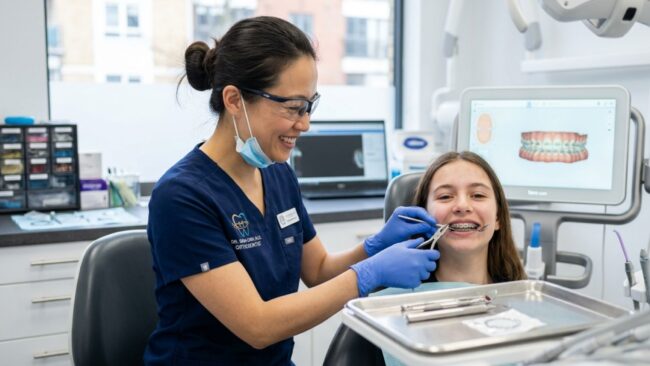
An orthodontist specializes in correcting crooked teeth, bite issues, and jaw alignment problems. They focus on improving both the appearance and function of your smile.
Qualifications
Orthodontists typically complete:
- A bachelor’s degree or pre-dental education
- A Doctor of Dental Surgery or Doctor of Dental Medicine degree
- Additional 2–3 years of specialized orthodontic training
- State or national licensing exams
What Do They Do?
Orthodontists commonly provide:
- Traditional metal braces
- Clear aligners like Invisalign
- Retainers and post-treatment maintenance
- Treatment for overbites, underbites, and crossbites
- Jaw alignment correction
- Early orthodontic treatment for children
Best for: Crooked teeth, bite issues, spacing problems, and smile alignment correction.
4. Periodontist: Gum and Implant Specialist

A periodontist specializes in preventing, diagnosing, and treating gum disease and other conditions affecting the gums and supporting structures of the teeth. They also commonly place and maintain dental implants.
Qualifications
Periodontists typically complete:
- A bachelor’s degree or pre-dental education
- A Doctor of Dental Surgery or Doctor of Dental Medicine degree
- Additional 2–3 years of specialized training in periodontics
- State or national licensing exams
What Do They Do?
Periodontists commonly provide:
- Treatment for gingivitis and periodontitis
- Scaling and root planing (deep cleaning)
- Gum grafting procedures
- Dental implant placement
- Bone grafting for implant support
- Treatment for receding gums
Best for: Bleeding gums, gum disease, receding gums, and dental implant treatment.
5. Endodontist: Root Canal and Tooth Pain Specialist
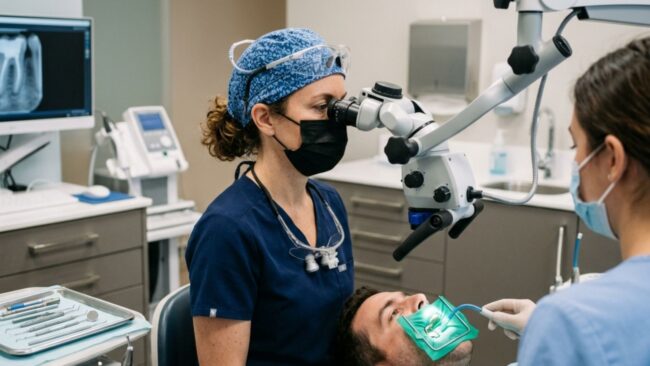
An endodontist specializes in diagnosing tooth pain and treating problems inside the tooth, especially involving the pulp and nerves. Their main goal is to save natural teeth whenever possible.
Qualifications
Endodontists typically complete:
- A bachelor’s degree or pre-dental education
- A Doctor of Dental Surgery or Doctor of Dental Medicine degree
- Additional 2–3 years of specialized training in endodontics
- State or national licensing exams
What Do They Do?
Endodontists commonly provide:
- Root canal treatment
- Retreatment of failed root canals
- Treatment for cracked or injured teeth
- Diagnosis of severe tooth pain
- Endodontic surgery, such as apicoectomy
Best for: Severe tooth pain, infected teeth, deep decay, and root canal treatment.
6. Oral Surgeon: Surgical Dental and Jaw Care

An oral surgeon, also known as an oral and maxillofacial surgeon, specializes in surgical procedures involving the mouth, teeth, jaw, and face. They handle complex cases that go beyond general dental care.
Qualifications
Oral surgeons typically complete:
- A bachelor’s degree or pre-dental education
- A Doctor of Dental Surgery or Doctor of Dental Medicine degree
- An additional 4–6 years of surgical residency training
- State or national licensing exams
What Do They Do?
Oral surgeons commonly provide:
- Wisdom tooth removal
- Dental implant surgery
- Jaw surgery
- Facial trauma treatment
- Tooth extractions for complex cases
- Treatment for oral cysts or tumors
Best for: Wisdom teeth removal, complex extractions, dental implants, and jaw-related surgery.
7. Prosthodontist: Tooth Replacement and Restoration Expert
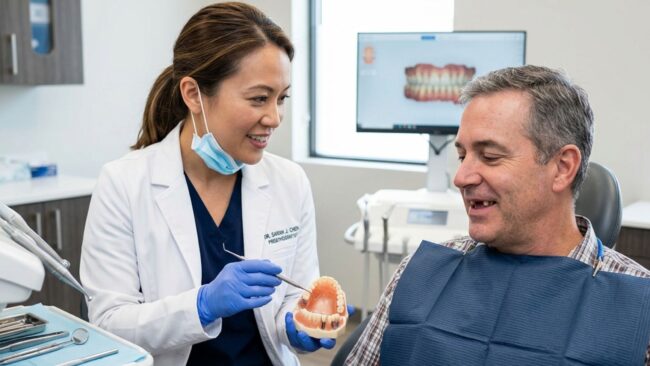
A prosthodontist specializes in restoring and replacing missing or damaged teeth. They focus on improving both the function and appearance of your smile with advanced restorative treatments.
Qualifications
Prosthodontists typically complete:
- A bachelor’s degree or pre-dental education
- A Doctor of Dental Surgery or Doctor of Dental Medicine degree
- An additional 3 years of specialized training in prosthodontics
- State or national licensing exams
What Do They Do?
Prosthodontists commonly provide:
- Dentures and partial dentures
- Dental crowns and bridges
- Veneers
- Full mouth reconstruction
- Dental implant restorations
- Cosmetic and restorative smile treatments
Best for: Missing teeth, damaged teeth, dentures, crowns, bridges, and full smile restoration.
Wondering about the cost of replacing missing teeth? Learn more about the dental bridge cost in Houston and what affects your total treatment price.
How to Choose the Right Dentist for Your Needs?
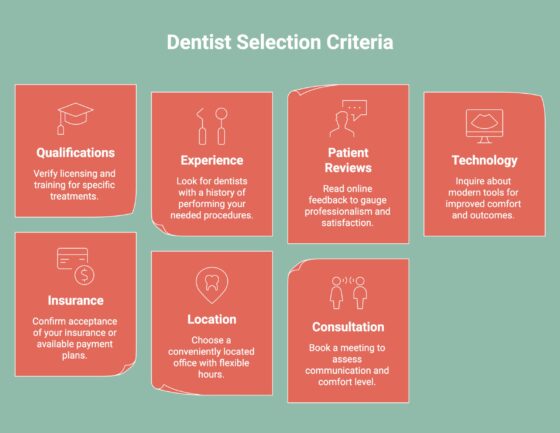
Choosing the right dentist is about more than convenience. Understanding different dentist specialist types can help you find a provider with the qualifications, experience, and approach that match your dental needs and comfort level.
Here are a few things to look for:
- Check their qualifications and specialties: Make sure the dentist is licensed and has the right training for the treatment you need. For specialized procedures like braces, implants, or root canals, look for a certified specialist.
- Review their experience: A dentist who regularly performs the procedure you need may offer better results and a smoother treatment process.
- Read patient reviews and testimonials: Online reviews can give you insight into the dentist’s professionalism, office environment, and patient satisfaction.
- Ask about technology and treatment options: Modern tools like digital X-rays, 3D imaging, or clear aligners can improve comfort, accuracy, and outcomes.
- Confirm insurance and payment options: Check whether they accept your insurance or offer financing and payment plans for expensive treatments.
- Consider location and availability: A conveniently located office with flexible hours can make appointments easier to manage.
- Book a consultation first: A consultation helps you evaluate the dentist’s communication style, professionalism, and whether you feel comfortable with their approach.
Taking a little time to research can help you choose a dentist you trust and avoid unnecessary stress later.
If you are still unsure which dentist is right for you, our guide on how to find a good dentist in Houston can help you choose a trusted provider for your specific dental needs.
What Is the Difference Between a DDS and a DMD?
If you have looked up a dentist before, you have probably seen letters like DDS or DMD after their name and wondered if one is better than the other. The short answer is no.
DDS and DMD are both professional dental degrees that qualify someone to practice general dentistry. Dentists with either title complete the same level of education, including dental school, clinical training, and licensing exams.
The difference comes down to the dental school’s naming preference:
- DDS (Doctor of Dental Surgery): The traditional degree name used by many dental schools.
- DMD (Doctor of Dental Medicine): A different title introduced by some schools, but with the same coursework and requirements.
In terms of skill or qualifications, there is no difference between a DDS and a DMD. Both can provide routine dental care and may also pursue extra training in specialties like orthodontics, periodontics, or oral surgery.
Does Dental Insurance Cover Specialist Visits?
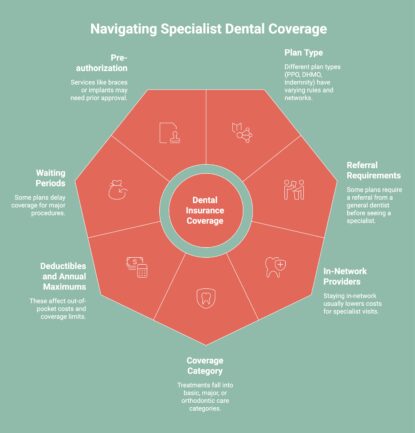
Specialist dental care often costs more than routine visits, so it is important to check your dental insurance plan before booking. Coverage varies depending on the type of plan you have and the treatment you need.
For example, many Delta Dental PPO plans may partially cover root canals from an endodontist or gum disease treatment from a periodontist, while orthodontic treatment may come with lifetime limits. Cigna, Aetna, and MetLife dental plans often follow similar structures. Cosmetic treatments like veneers or teeth whitening are usually not covered.
Before seeing a specialist, check:
- Your plan type: PPO, DHMO, or indemnity plans have different rules and provider networks.
- Referral requirements: DHMO plans may require a referral from a general dentist.
- In-network providers: Staying in-network usually lowers costs.
- Coverage category: Treatments may fall under basic, major, or orthodontic care.
- Deductibles and annual maximums: These affect how much you pay out of pocket.
- Waiting periods: Some plans delay coverage for major procedures.
- Pre-authorization: Services like braces, implants, or oral surgery may need approval.
Insurance can lower specialist costs, but rarely covers everything. A quick benefits check, or a call to your clinic, can help you avoid surprises and move forward with confidence.
What Type of Dentist Should You See Based on Your Symptoms?
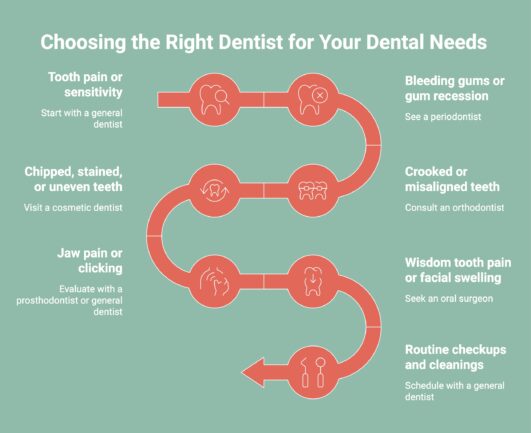
Not sure who to book with? Here’s a quick guide to help you choose the right dentist based on what you’re experiencing:
- Tooth pain or sensitivity: Start with a general dentist. If needed, they may refer you to an endodontist for root canal treatment.
- Bleeding gums or gum recession: A periodontist specializes in gum health and can treat early to advanced gum disease.
- Crooked or misaligned teeth: An orthodontist can assess and recommend braces or aligners.
- Chipped, stained, or uneven teeth: A cosmetic dentist can help with veneers, bonding, or whitening.
- Jaw pain or clicking: A prosthodontist or general dentist can evaluate bite issues or TMJ concerns.
- Wisdom tooth pain or facial swelling: An oral surgeon is best for extractions and more complex procedures.
- Routine checkups and cleanings: A general dentist is your first point of contact for preventive care.
If you are ever unsure, start with a general dentist. They can assess your condition and guide you to the right specialist if needed, helping you get the right care without guesswork.
Why Choose Dentist Tree of the Heights?
Finding the right dentist can feel overwhelming, especially when you need a provider you can trust for everything from routine cleanings to advanced treatments. Instead of visiting multiple offices for different needs, you deserve one dental team that can handle it all in one place.
At Dentist Tree of the Heights, we make dental care simple, affordable, and stress-free. We provide comprehensive care for the whole family, whether you need preventive care, cosmetic treatments, or urgent dental services.
Here’s what makes us stand out:
- We offer preventive, cosmetic, restorative, and emergency dentistry services
- We provide advanced treatments like dental implants, root canals, and orthodontics, including Invisalign
- We accept many insurance plans and offer flexible financing options
- We provide family-friendly care for children, adults, and seniors
- We focus on patient comfort, transparent communication, and personalized treatment plans
Whether you need a regular checkup, urgent dental care, or a complete smile makeover, we are here to help you get the care you need in one convenient Houston location.
Final Words
Not all dental problems need the same kind of care, and knowing who to see can save you time, money, and unnecessary stress. Whether you need a routine checkup, braces, a root canal, or help replacing missing teeth, choosing the right dentist can make treatment easier and more effective.
The best part? You do not have to guess. With a better understanding of dental specialties, you can book with confidence and get the right care for your smile from the start.
Frequently Asked Questions
What types of dentists are there in Houston?
Houston has a wide range of dental professionals, including general dentists, orthodontists, periodontists, endodontists, prosthodontists, and oral surgeons. These dental specialists provide oral health care for tooth decay, facial pain, oral diseases, cosmetic dentistry, and more.
How much do different types of dentists typically earn?
Earnings vary by area of dentistry, years of dental school, and additional training. General dentists may earn less than specialists with advanced specialized training in maxillofacial surgery, root canal therapy, or cosmetic dentistry.
Which is higher, DDS or DMD?
Neither is higher. DDS and DMD require the same years of dental school, additional education, and licensing. Both are qualified dental professionals trained to perform a wide range of dental procedures and support patient health.
What is the highest-paid type of dentist?
Oral and maxillofacial surgeons are often the highest-paid dental specialists due to advanced specialized training and complex dental procedures. Their work includes maxillofacial surgery, facial pain treatment, oral cancer care, and restoring overall health.
What is the 3-3-3 rule in dentistry?
The 3-3-3 rule encourages good oral hygiene: brush for 3 minutes, 3 times a day, and avoid eating or drinking for 3 hours after certain dental procedures to protect dental health.
How do I find a specialist if my dental problem is unique?
Start with a general dentist for evaluation and referrals. They can identify oral health problems and connect you with dental specialists with advanced training in the right area of dentistry for your unique oral health care needs.