

Key Highlights
- Dentures can be provided by general dentists for routine cases or prosthodontists for complex, customized, or implant-supported treatments.
- The right provider depends on tooth loss, need for extractions or implants, and how natural or customized you want the result.
- General dentists handle standard dentures, while prosthodontists manage advanced cases with additional training and precision.
- A denture consultation includes exams, scans, treatment planning, cost breakdown, and discussion of denture options.
- Denture types include full, partial, immediate, implant-supported, snap-in, and overdentures based on support and stability needs.
- Costs vary widely based on type, materials, and procedures, with higher pricing for implant-supported options.
- Dentist Tree of the Heights offers full-service denture care, including custom solutions, implants, and complete treatment under one roof.
Getting dentures is a big step, and one of the first questions many people have is which dentist to choose. You may already know you want to replace missing teeth and restore your smile, but with terms like general dentist, prosthodontist, and oral surgeon, it can be hard to know which one actually provides dentures.
The answer depends on your specific needs. Some people only need a simple set of full or partial dentures from a general dentist, while others may need extractions, implants, or a more customized treatment plan from a specialist. Choosing the right provider from the start can save time, reduce costs, and help you get better long-term results.
In this guide, we will explain what kind of dentist does dentures, when you may need a specialist, and how to choose the best dental professional for your smile and budget.
What Type of Dentist Does Dentures?
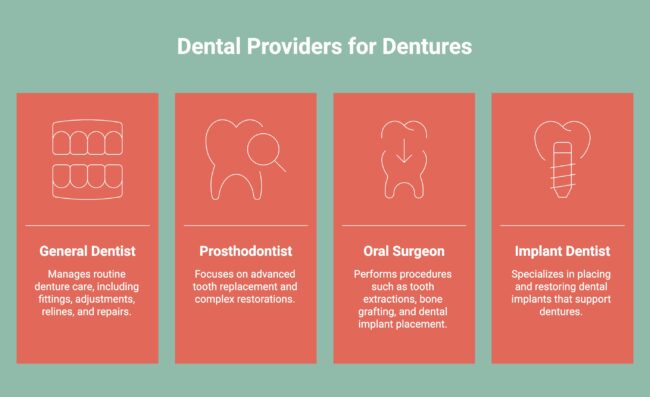
Not all denture cases require the same level of care. The right provider depends on how complex your situation is, whether implants are involved, and how customized you want your results to be. In some cases, treatment may involve more than one professional.
Here are the main types of dental providers and when they are typically needed:
- General Dentist: Manages routine denture care, including full and partial dentures, fittings, adjustments, relines, and repairs. This is usually enough for straightforward tooth loss with no surgical or advanced correction needed.
- Prosthodontist: Focuses on advanced tooth replacement and complex restorations. You will likely need a prosthodontist if you have significant bone loss, bite problems, poorly fitting dentures, or want a highly customized, natural-looking result.
- Oral Surgeon: Performs procedures such as tooth extractions, bone grafting, and dental implant placement. You will need an oral surgeon if teeth need to be removed, bone support is insufficient, or implants are part of your treatment.
- Implant Dentist: Specializes in placing and restoring dental implants that support dentures. You will need an implant dentist if you are choosing implant-supported or snap-in dentures for better stability and long-term support.
For simple cases, a general dentist can usually manage everything. When surgery, implants, or complex adjustments are involved, working with the right specialist helps ensure better fit, function, and long-term results.
Still trying to find the right dentist for your dentures? Our guide on how to find a good dentist in Houston breaks down exactly what to look for, from experience and services to reviews and patient care, so you can choose with confidence.
General Dentist vs. Prosthodontist: What’s the Difference?
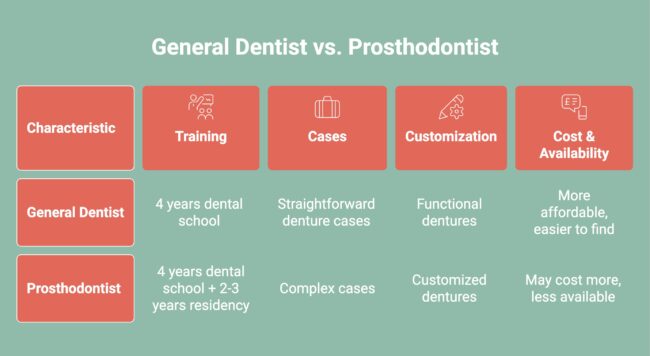
Both general dentists and prosthodontists can provide dentures, but the difference lies in their training, experience, and the type of care they offer. While a general dentist may be the right choice for routine denture treatment, a prosthodontist may be better suited for more complex or highly customized cases.
1. Training and Education
The biggest difference starts with education and specialization:
- General Dentist: Completes undergraduate coursework and 4 years of dental school to earn a DDS or DMD degree. Their training covers a broad range of dental treatments, including preventive care, fillings, crowns, extractions, and basic dentures.
- Prosthodontist: Completes the same dental education, plus an additional 2 -3 years of specialized residency training focused on restoring and replacing missing teeth. This includes advanced training in dentures, implants, bite alignment, and full-mouth reconstruction.
2. Types of Cases They Handle
The type of denture case often determines which provider is the better fit:
- General Dentist: Typically treats straightforward cases like standard full dentures, partial dentures, fittings, adjustments, and repairs.
- Prosthodontist: Often treats more complex cases involving severe tooth loss, bone loss, implant-supported dentures, bite problems, or replacing poorly fitting dentures.
3. Level of Customization
Both providers can restore your smile, but the level of customization may differ:
- General Dentist: Provides functional dentures that improve appearance and restore basic chewing and speaking ability.
- Prosthodontist: Often creates more customized dentures designed for a natural look, improved comfort, better stability, and a more precise fit.
4. Cost and Availability
Cost and convenience can also play a role in your decision:
- General Dentist: Usually more affordable and easier to find, making them a convenient option for routine denture care.
- Prosthodontist: May cost more because of specialized training and advanced treatment options, and may be less available in some areas.
Choose a general dentist for routine denture needs. Choose a prosthodontist if your case involves implants, bone loss, bite issues, or you want a more precise, long-term result.
Can a Regular Dentist Do Dentures?
Yes, a general dentist is trained to provide dentures and can manage most routine cases, including full and partial dentures, fittings, and follow-up care.
From a clinical standpoint, this is appropriate when the case is straightforward and does not involve complex bite reconstruction or anatomical challenges.
However, cases involving implant-supported dentures, significant bone loss, or advanced aesthetic and functional demands are typically better handled by a prosthodontist or in collaboration with an oral surgeon, where more specialized planning and precision are required.
If you are also exploring cosmetic options alongside tooth replacement, understanding how treatments like porcelain veneers are planned and customized can give you a clearer picture of what high-quality smile design involves.
What to Expect During a Denture Consultation?
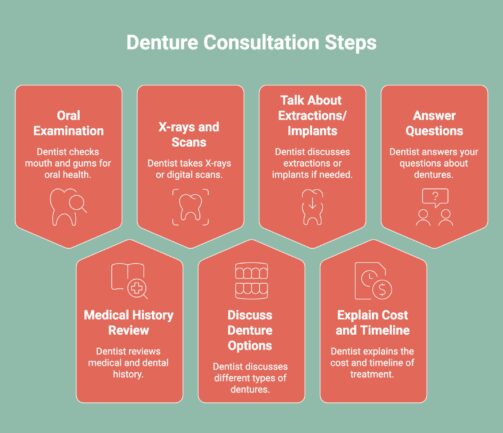
Your first appointment is all about understanding your needs and finding the best treatment option for your smile. Whether you are seeing a general dentist or a specialist, a denture consultation helps determine the type of dentures you need, whether additional procedures are required, and what the overall process will look like.
During your consultation, your dentist may:
- Examine your mouth and gums to check your oral health and look for signs of gum disease, decay, or bone loss.
- Review your medical and dental history to understand any conditions that may affect treatment or healing.
- Take X-rays or digital scans to assess your jawbone, remaining teeth, and overall oral structure.
- Discuss denture options such as full dentures, partial dentures, immediate dentures, or implant-supported dentures.
- Talk about extractions or implants if teeth need to be removed or implants are recommended for better stability.
- Explain the cost and timeline so you know what to expect financially and how long treatment may take.
- Answer your questions and help you understand the pros and cons of each option.
Preparing a list of denture consultation questions can help you make the most of your visit and feel more confident about your decision.
Dentures are not the only way to improve your smile. If you are considering cosmetic or restorative treatments, read our guide on veneers vs. crowns to see which option may be right for you.
What Questions Should You Ask Your Dentist Before Getting Dentures?
Getting dentures is a big decision, and asking the right questions can help you feel more confident about your treatment plan. If you are comparing providers or looking for the best dentists for natural-looking full dentures, knowing what to ask during your consultation can help you make the right choice.
Here are some important questions to ask your dentist:
- What type of dentures do you recommend for me and why?
This helps you understand whether full, partial, immediate, or implant-supported dentures are the best fit. - Will I need tooth extractions or other procedures first?
Some patients may need extractions, bone grafting, or implants before dentures can be placed. - How long will the process take?
Timelines can vary depending on healing time, fittings, and whether additional treatment is needed. - How many fittings or adjustments are included?
Dentures often require multiple fittings to improve comfort and fit. - What will my dentures look and feel like?
Ask about customization options like tooth shape, size, and color. - How much will dentures cost?
Make sure you understand the full cost, including follow-up visits, repairs, or relines. - Will insurance cover any part of the treatment?
Your dentist’s office may help explain your coverage and payment options. - How do I care for my dentures?
Proper cleaning and maintenance can extend the life of your dentures.
The more questions you ask upfront, the easier it will be to make an informed decision and avoid surprises later.
Along with dentures, many patients explore cosmetic options. See how a teeth whitening dentist delivers professional whitening and long-lasting results.
What Are the Different Types of Dentures?
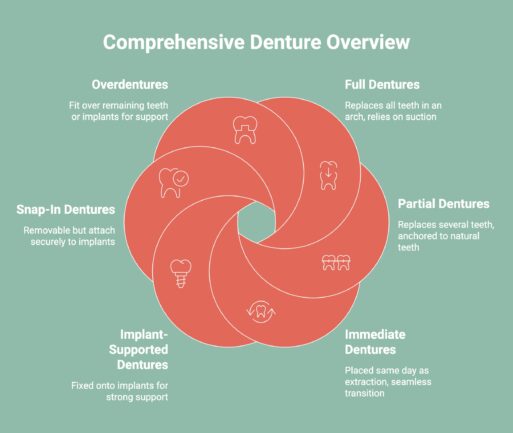
Dentures come in different styles depending on how many teeth you are missing and the level of support you need. Some are removable, while others are secured with implants for a more stable fit. Knowing your options can help you choose the right solution for your comfort, budget, and lifestyle.
Here are the main types of dentures:
1. Full Dentures
Full dentures replace an entire arch of missing teeth and sit directly on the gums. They rely on suction and adhesives for support.
Best for: People who have lost all teeth in the upper or lower jaw and want a non-surgical, budget-friendly solution.
What to expect: Affordable and widely available, but stability can be lower, especially in the lower jaw, which may affect chewing and speaking initially.
2. Partial Dentures
Partial dentures replace several missing teeth and are anchored to your remaining natural teeth using clasps or attachments.
Best for: Those who still have healthy, natural teeth and want to fill gaps without removing them.
What to expect: More stable than full dentures and helps maintain alignment of existing teeth, though they may feel slightly bulky at first.
3. Immediate Dentures
Immediate dentures are placed on the same day as tooth extraction, so you are never without teeth during the healing period.
Best for: Patients who want a seamless transition after extractions.
What to expect: Convenient in the short term, but they often require adjustments or replacement as your gums shrink and heal.
4. Implant-Supported Dentures
These dentures are fixed onto dental implants placed in the jawbone, providing strong support and improved function.
Best for: People looking for a long-term, secure solution that closely mimics natural teeth.
What to expect: Excellent stability, better chewing ability, and preserved bone health, but it involves surgery and higher upfront costs.
5. Snap-In Dentures
Snap-in dentures are removable but attach securely to implants using connectors, offering a balance between stability and flexibility.
Best for: Those who want more retention than traditional dentures but prefer a removable option for cleaning.
What to expect: More secure than regular dentures, easier to maintain than fixed options, and generally comfortable for daily use.
6. Overdentures
Overdentures fit over a small number of remaining natural teeth or implants, using them as support anchors.
Best for: Patients who still have some healthy teeth or implants and want added stability while preserving jawbone structure.
What to expect: Improved support and comfort compared to traditional dentures, along with better long-term oral health benefits.
Each type offers a different balance of cost, comfort, and stability. The right choice depends on your oral health, lifestyle, and how permanent or secure you want your solution to be.
How Much Do Dentures Cost?
The cost of dentures can vary widely depending on the type you choose, the materials used, and whether additional procedures are needed.
A basic removable denture is usually more affordable, while custom or implant-supported options tend to cost more because of the added precision and treatment involved.
The prices below are estimated ranges and can vary based on your location, provider, and treatment plan:
- Full Dentures: Typically cost between $600 and $8,000 per arch, depending on quality and customization.
- Partial Dentures: Usually range from $700 to $5,000.
- Immediate Dentures: Often cost between $1,000 and $3,500, especially if paired with extractions.
- Implant-Supported Dentures: Can range from $6,000 to $30,000+, depending on the number of implants used.
- Snap-In Dentures: Typically cost between $5,000 and $15,000.
Understanding these ranges helps you compare options more clearly and plan for the level of quality and support you want from your treatment.
How Do You Know If You Need a Denture Replacement?
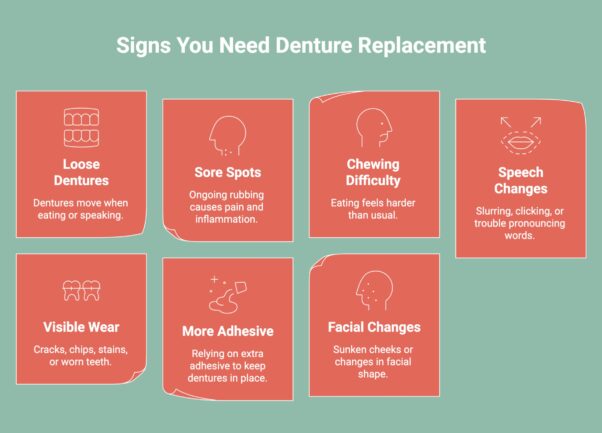
Dentures are durable, but they do not last forever. Over time, normal wear and changes in your gums and jawbone can affect how they fit and function. If your dentures no longer feel comfortable or look the way they should, it may be time for a replacement.
Here are some common signs you may need new dentures:
- Loose or slipping dentures: If your dentures move when you eat or speak, they may no longer fit properly.
- Frequent sore spots or irritation: Ongoing rubbing can cause pain and inflammation in your gums.
- Difficulty chewing: If eating feels harder than usual, your dentures may be worn down or unstable.
- Changes in speech: Slurring, clicking, or trouble pronouncing words can signal a poor fit.
- Visible wear or damage: Cracks, chips, stains, or worn teeth can affect both appearance and function.
- Needing more adhesive: If you rely on extra adhesive to keep dentures in place, they may need to be replaced.
- Changes in facial appearance: Sunken cheeks or changes in facial shape can happen when dentures no longer provide proper support.
If you notice any of these signs, schedule a denture evaluation. A dentist can determine whether you need an adjustment, reline, repair, or a full replacement.
Looking for Dentures in Houston? Dentist Tree of The Heights Can Help
Finding the best dentist for dentures is just as important as choosing the right type of dentures. You want a provider who can guide you through the process, explain your options clearly, and create a solution that feels comfortable and looks natural. That is exactly what you can expect at Dentist Tree of the Heights.
Our patients have access to personalized denture solutions based on their smile, budget, and long-term goals. Whether you are missing a few teeth or need a full smile restoration, their team can help you explore the best option for your needs.
Here’s why many patients choose us:
- Multiple denture options: From partial and complete dentures to immediate dentures, they offer solutions for different stages of tooth loss.
- All-in-one care: If you need extractions, dental implants, oral surgery, or bone grafting before getting dentures, their team can handle it all under one roof.
- Natural-looking results: Their dentures are designed to look realistic and feel comfortable, so you can smile, eat, and speak with confidence.
- Modern technology: Advanced tools and techniques help create a more precise fit and a smoother treatment experience.
- Experienced team: Their dentists have experience in restorative and cosmetic treatments, including full-mouth rehabilitation.
If you are ready to restore your smile, our team can help you find the right denture solution with expert care every step of the way.
Final Thoughts
Choosing dentures may feel overwhelming at first, but finding the right dentist can make the process much easier. Once you understand your options, it becomes simpler to choose a solution that fits your smile, comfort, and budget.
Whether you need partial dentures, full dentures, or implant-supported dentures, the right provider can help you restore more than just missing teeth. They can help bring back your confidence, comfort, and quality of life.
The next step is simple: book a consultation, ask the right questions, and start your journey toward a smile that feels like your own.
Frequently Asked Questions
How to choose a dentist for custom-made dentures?
Choose a dental specialist with additional training in dentures and restorative dentistry. Review their dental services, experience, and patient results. A doctor of dental surgery or doctor of dental medicine can assess your dental needs and create a healthy smile.
When should I see a dentist specializing in Ill-Fitting dentures?
See a dental specialist if dentures cause discomfort, tooth pain, sore soft tissues of the mouth, or slipping. A prosthodontist or periodontist can assess severe gum disease, overall health, and recommend adjustments, replacements, or dental implant surgery.
How can I find the best dentist for dentures near me?
Search for dentists with strong reviews, proven dental care experience, and accepted dental insurance plans. Check credentials through the American Dental Association (ADA), ask for a referral, and compare dental services based on your dental health needs.
Is it common for a general dentist to refer patients to a prosthodontist for dentures?
Yes, a general dentist may give a referral to a prosthodontist for complex dental needs like implant-supported dentures, severe bone loss, or cosmetic concerns. Prosthodontists have additional training in advanced restorative dentistry and customized tooth replacement solutions.
Can diabetics get dental implants?
Yes, diabetics can get dental implants if their blood sugar is well-controlled. Good overall health and strong dental health reduce complications. Your dentist may review blood vessels, healing ability, and gum disease before dental implant surgery.
What qualifications should I look for in a dentist who makes dentures?
Look for a doctor of dental surgery or doctor of dental medicine with experience in dentures and restorative dental services. Additional education, advanced technology, and strong patient reviews can help ensure quality care and a healthy smile.
Do all dental clinics offer both full and partial dentures?
No, not all dental clinics offer both full and partial dentures. Some provide basic dental care only, while others offer advanced dental services through specialists in restorative dentistry, helping people of all ages with different tooth replacement needs.
How much would a full set of dentures cost?
A full set of dentures can cost between $1,200 and $15,000 or more, depending on materials, customization, and dental services needed. Costs may increase with extractions, implant support, or advanced treatment not covered by dental insurance plans.