

Key Highlights
- In-office teeth whitening uses high-strength bleaching agents to deliver faster, noticeable results in a single visit
- Professional supervision ensures safe treatment with minimal risk to gums and enamel
- Results typically last 1–3 years, depending on lifestyle habits and oral care
- Temporary sensitivity and mild gum irritation are the most common side effects
- Costs vary widely based on treatment type, location, and case complexity
- Proper aftercare, including avoiding staining foods, helps maintain long-lasting results
- A dental consultation is essential to determine candidacy and personalize treatment
A bright, white smile can instantly boost your confidence, but if you’ve never had a professional whitening treatment before, it’s normal to feel unsure about what the visit will actually involve. Will it be uncomfortable? How long will it take? And will you really see a noticeable difference?
In-office teeth whitening is one of the quickest and most effective ways to enhance your smile, but the process is more structured than many people expect. From the initial evaluation to the final results, every step is designed to be safe, controlled, and tailored to your needs.
In this guide, you’ll learn exactly what happens during a teeth-whitening dentist visit, how the procedure works, and what you can expect before, during, and after treatment, so you can walk in prepared and leave with a brighter, more confident smile.
What Is In-Office Teeth Whitening?
In-office teeth whitening is a professional dental treatment that uses high-concentration bleaching agents to lighten tooth color during a single dental visit. The procedure is performed under controlled conditions by a dentist, who applies a whitening gel, typically containing hydrogen or carbamide peroxide, while protecting the surrounding gum tissue. The process is carefully monitored to ensure safety, comfort, and precise application throughout the treatment.
How Is Professional Teeth Whitening Different from At-Home Methods?
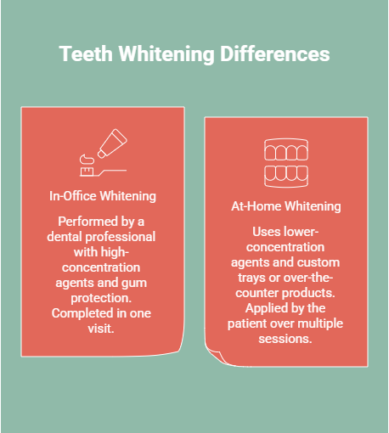
Professional teeth whitening differs from at-home methods in application method, concentration of bleaching agents, level of supervision, treatment duration, and consistency of results. While both aim to improve tooth color, they follow different approaches in how the treatment is delivered and managed.
1. In-Office Teeth Whitening
This method is performed by a dental professional using high-concentration whitening agents applied directly to the teeth. The dentist isolates and protects the gums, controls the application, and adjusts the treatment as needed throughout the session. The entire process is completed during a scheduled visit under clinical supervision.
2. At-Home Whitening Options
At-home whitening includes dentist-provided custom trays or over-the-counter products such as strips, gels, and pens. These treatments use lower-concentration agents and are applied by the patient over multiple sessions. The outcome depends on consistent use and correct application.
Key Differences Between In-Office and At-Home Whitening
- Application Control: Dentist-applied vs self-applied
- Bleaching Strength: Higher concentration vs lower concentration
- Supervision: Continuous professional monitoring vs independent use
- Treatment Time: Completed in one visit vs gradual over several days or weeks
- Consistency of Application: Even, controlled placement vs user-dependent application
- Customization: Tailored treatment plan vs standard or semi-custom products
Overall, the choice between in-office and at-home teeth whitening depends on your preferred level of control, convenience, and how quickly you want to complete the treatment process.
Schedule your appointment online and take the first step toward a brighter, more confident smile.
Is Teeth Whitening Safe and Who Should Avoid It?
Before choosing teeth whitening, it’s important to understand whether the treatment is suitable for your oral health and current dental condition.
- Teeth whitening is generally safe when performed under professional supervision and with proper dental evaluation.
- It is best suited for individuals with healthy teeth and gums and no untreated dental issues.
- People with surface stains from food, drinks, or smoking typically respond well to whitening treatments.
- Whitening may not be suitable for individuals with untreated cavities, gum disease, or weakened enamel.
- Those with severe tooth sensitivity may require adjustments or alternative treatments before proceeding.
- Dental restorations such as crowns, veneers, or tooth-colored fillings do not respond to whitening agents and may affect uniform results.
- A dental consultation helps determine if whitening is appropriate and ensures the safest approach based on your oral health.
A quick consultation with your dentist can confirm whether teeth whitening is the right and safe option for your smile.
What Happens During an In-Office Teeth Whitening Procedure?
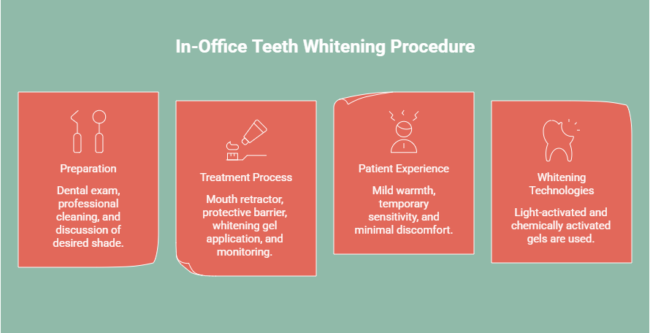
During an in-office teeth whitening procedure, your dentist prepares your teeth, applies a professional whitening gel, and carefully monitors the process to ensure a safe, effective result. The treatment follows a structured approach to ensure even application, comfort, and controlled results.
1. Preparation Before the Procedure
Before starting the whitening treatment, your dentist ensures your teeth and gums are ready:
- A dental exam is performed to check for cavities, gum disease, or sensitivity concerns
- A professional cleaning may be done to remove plaque and tartar
- You’ll discuss your desired shade and any previous sensitivity or concerns
These steps help create a safe and consistent foundation for whitening.
2. Step-by-Step Treatment Process
Once preparation is complete, the whitening procedure begins:
- A mouth retractor is placed to keep the lips and cheeks away from the teeth
- A protective barrier is applied to the gums
- A professional-strength whitening gel is applied to the teeth
- The gel remains on the teeth for 15–30 minutes
- The process may be repeated in 2–3 cycles, depending on the results
Each stage is carefully monitored to ensure even whitening.
3. What You May Feel During the Treatment
Most patients find the procedure comfortable, but you may notice:
- Mild warmth or tingling while the gel is active
- Temporary tooth sensitivity during or after treatment
- Minimal discomfort due to protective measures used by the dentist
Any sensitivity is usually short-lived and manageable.
4. Whitening Technologies Used
Dentists may use different systems to enhance the whitening process:
- Light-activated systems use a specialized light or laser to accelerate stain breakdown
- Chemically activated gels rely on high-concentration peroxide formulas without light
Your dentist selects the most appropriate method based on your needs and expected results.
Book online to get relief today.
Is Teeth Whitening Safe for Your Teeth?
Yes, teeth whitening is generally safe when performed under professional supervision, as dentists use controlled techniques that protect your gums and tooth enamel. Approved whitening agents are designed to remove stains effectively without damaging the tooth structure.
The most common side effect is temporary tooth sensitivity, which usually fades within a few days. However, overusing or improperly using whitening products can cause discomfort and harm enamel, which is why a dental evaluation is important to ensure safe and appropriate treatment.
Is Teeth Whitening Safe and What Should You Know About Side Effects?
Teeth whitening is generally safe when performed under professional supervision, especially for individuals with healthy teeth and gums. However, it may not be suitable for everyone, and understanding potential side effects and personal risk factors is important before starting treatment.
Who Should Avoid Teeth Whitening?
- Individuals with untreated cavities or gum disease
- People with severe tooth sensitivity or weakened enamel
- Those with crowns, veneers, or tooth-colored fillings on visible teeth
Common Side Effects to Expect
- Tooth sensitivity: Occurs when the whitening agent reaches deeper layers of the tooth and usually fades within a few days
- Gum irritation: May happen if the gel contacts the gums and typically resolves quickly
- Rare reactions: Mild allergic responses to the bleaching agent
Experiencing implant issues? Contact Dentist Tree today for expert care!
How Much Does In-Office Teeth Whitening Cost in the U.S.?
In-office teeth whitening in the U.S. typically ranges from $300 to $1,800, depending on the treatment and provider. It uses a high concentration of hydrogen peroxide (around 35–40%) and is performed by a dentist in a controlled setting. The procedure usually takes 60 to 90 minutes, delivering faster and more noticeable results compared to other methods.
What Factors Affect the Cost of Teeth Whitening?
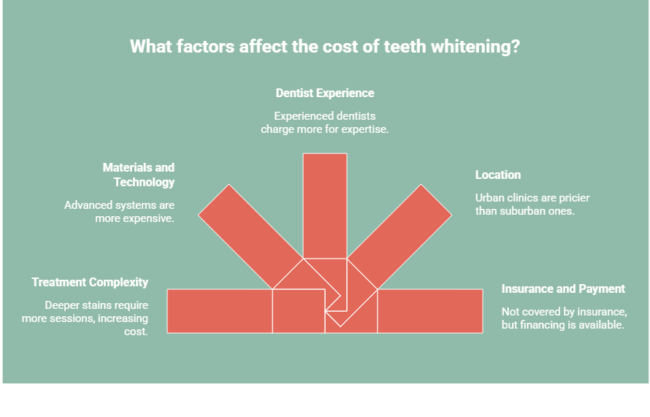
1. Treatment Complexity: The severity and type of staining significantly impact cost. Surface stains may require a single session, while deeper or intrinsic discoloration may need multiple treatments or a combination approach, increasing the overall price.
2. Materials and Technology: The whitening system used can influence pricing. Treatments that involve advanced equipment, such as light-activated systems, may cost more than standard gel-based procedures.
3. Dentist Experience: Dentists with extensive cosmetic dentistry experience may charge higher fees due to their expertise, precision in application, and ability to achieve more consistent results.
4. Location: Dental costs vary by geographic area. Clinics in major cities or high-cost regions often have higher pricing compared to suburban or smaller-town practices.
5. Insurance and Payment Options: Teeth whitening is typically considered a cosmetic procedure and is not covered by insurance. However, some clinics offer financing plans or membership programs to make treatment more accessible.
By understanding these factors, you can better evaluate your options and choose a teeth whitening treatment that fits both your goals and your budget.
Early action matters. Schedule your implant check with Dentist Tree immediately.
What Should You Do After Your Teeth Whitening Treatment?
After teeth whitening, proper aftercare helps maintain your results and reduce sensitivity, especially during the first 24–48 hours when teeth are more prone to staining.
1. Foods and Drinks to Avoid
- Coffee, tea, and red wine
- Dark sodas
- Berries and strongly pigmented foods
- Tomato- or soy-based sauces
2. Maintain Your Results
- Brush and floss daily
- Use a dentist-recommended toothpaste
- Schedule regular cleanings or touch-ups
Following these simple steps helps preserve your whitening results and keep your smile brighter for longer.
By following these aftercare steps, you can maintain a brighter, healthier smile and enjoy longer-lasting whitening results.
Why Choose Dentist Tree for Teeth Whitening in Houston?
A brighter smile should feel simple, safe, and stress-free. At Dentist Tree of the Heights, we focus on delivering professional teeth whitening with personalized care, so you get noticeable results without uncertainty.
Here’s what sets Dentist Tree apart:
- Professional Whitening Treatments – Safe, effective in-office whitening using advanced techniques for fast, even results by our team of dentists.
- Personalised Treatment Plans – Customized approach based on your tooth shade, sensitivity, and smile goals
- Modern Technology – Precision-driven treatments designed for comfort and consistent outcomes
- Transparent Pricing & Flexible Options – Clear cost estimates with financing solutions to make treatment accessible
- Experienced Dental Team – Skilled professionals focused on both cosmetic results and long-term oral health
Whether you’re preparing for a special event or simply want to enhance your smile, Dentist Tree makes the process smooth and comfortable from consultation to final results.
Ready for a brighter smile? Schedule your appointment today and take the first step toward confident, lasting results.
Final Words
Professional teeth whitening offers a fast, safe, and effective way to enhance your smile and achieve those pearly whites when done under expert care. By understanding the process, costs, and aftercare involved, you can set realistic expectations and make informed decisions based on professional advice.
If you’re considering treatment, the next step is simple: schedule a consultation to find the right whitening option for your needs and start your journey toward a brighter, more confident smile, often recommended as the most popular cosmetic dental procedure.
Frequently Asked Questions
Does Dental Insurance Usually Cover In-Office Teeth Whitening?
No, dental insurance plans typically do not cover in-office teeth whitening because it is a cosmetic procedure. The average cost of teeth whitening varies, and most patients pay out of pocket, though some dental offices offer financing or payment options.
Is Teeth Whitening Safe for Your Teeth?
Yes, teeth whitening is generally safe when performed under professional supervision. Dentists use controlled methods to protect gums and enamel, while approved whitening agents effectively remove stains. Temporary sensitivity may occur but usually fades within a few days.
When can I eat normally after I whiten my teeth?
You can usually return to your normal diet after about 48 hours following teeth whitening. During this time, your teeth are more susceptible to staining, so it’s best to avoid dark-colored foods and drinks to protect your results.
Is in-office teeth whitening worth the extra cost compared to other methods?
Yes, in-office teeth whitening is often worth the cost because it delivers faster, more noticeable, and longer-lasting results in a single visit. It also provides safer, more even outcomes compared to at-home methods, making it the right choice for many patients.
What are the Ways To Pay for Teeth Whitening?
You can pay for teeth whitening through out-of-pocket payment, in-house financing plans, medical credit options like CareCredit, or dental membership plans approved by the ADA. Some clinics also offer installment plans to make treatment more affordable and manageable.