

Key Highlights
- Composite veneers are a cost-effective cosmetic solution used to fix chips, stains, gaps, and uneven teeth.
- Made from tooth-colored resin, they are applied directly to teeth and usually completed in one visit.
- Compared to porcelain veneers, they are more affordable but may require maintenance over time.
- The cost of composite veneers typically ranges from $500 to $1,500 per tooth, depending on various factors.
- They generally last between 5 and 10 years with proper care and regular dental visits.
- Good oral hygiene and avoiding staining foods can help extend their lifespan and appearance.
- Alternative treatments include teeth whitening, dental bonding, crowns, and orthodontics.
- Most insurance plans do not cover veneers, but flexible payment options are often available.
Many people feel self-conscious about their smile due to chipped, stained, or uneven teeth. These imperfections can affect confidence in both personal and professional situations, making individuals hesitant to smile freely.
Cosmetic dentistry can feel overwhelming. Some options are expensive, others need drilling or multiple visits. Many people just want something simple, affordable, and quick that improves their smile without stress or discomfort.
This blog explains everything you need to know about composite veneers, including how they work, their cost, benefits, lifespan, and alternatives, helping you decide if they are the right choice for your smile goals.
What Are Composite Veneers and How Do They Work?
Composite veneers are a cosmetic dental solution that improves the appearance of teeth by covering imperfections like chips, stains, and gaps using tooth-colored resin.
Below are the key steps involved in how they work:
- Preparation and bonding: The dentist gently prepares the tooth by slightly roughening the surface, which helps the material stick better. A bonding agent is then applied to create a strong base while keeping your natural tooth mostly untouched.
- Layering and shaping: A tooth-colored composite resin is applied in thin layers. The dentist carefully builds and sculpts each layer to match the shape, size, and alignment of your surrounding teeth, ensuring the result looks natural and balanced.
- Curing and polishing: Each layer is hardened using a special light to lock it in place. Once the final shape is achieved, the surface is smoothed and polished to give it a natural shine similar to real enamel.
What this means for you: The procedure is typically completed in one visit, involves minimal discomfort, and requires little to no drilling, making it a quick and comfortable option.
Why patients prefer this over porcelain: Composite veneers are faster to complete and can be easily adjusted or reversed, making them a more flexible and less permanent choice.
This step-by-step process allows patients to achieve a noticeable smile improvement in just one visit.
What Types of Dental Veneers Are Available?
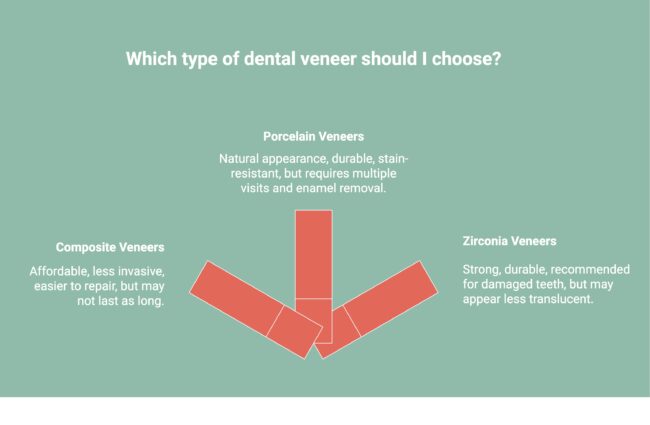
Dental veneers are a popular cosmetic solution for improving the appearance of teeth by enhancing shape, color, and overall symmetry. Below are the main types of dental veneers available, each offering different benefits based on your needs:
1) Composite Veneers
Composite veneers are made from tooth-colored resin and are applied directly to the teeth in a single visit. They are a more affordable option compared to porcelain veneers and require minimal enamel removal. Dentists carefully shape and polish the material to achieve a natural look.
While they may not last as long as porcelain, they are easier to repair and adjust, making them a practical choice for patients seeking a cost-effective and less invasive alternative to porcelain veneers.
2) Porcelain Veneers
Porcelain veneers are custom-made shells crafted in a dental laboratory and bonded to the front of the teeth. They are highly durable and known for their natural, translucent appearance that closely mimics enamel.
This option typically requires multiple visits and involves removing a small amount of enamel. Porcelain veneers resist staining better and generally last longer than composite alternatives.
3) Zirconia Veneers
Zirconia veneers are made from a strong, durable ceramic material that offers excellent strength and longevity. They are often recommended for patients who need additional reinforcement for damaged teeth.
While they may appear slightly less translucent than porcelain, they provide a solid and reliable option for both cosmetic and functional improvements, especially in cases requiring extra durability.
Each veneer type offers unique advantages, so choosing the right one depends on your goals, budget, and dental needs.
What Dental Issues Can Composite Veneers Fix?
Composite veneers are designed to address a range of common cosmetic concerns, helping improve the overall appearance of your smile without extensive dental work. Below are the most common dental issues they can fix and what they can’t:
When Composite Veneers Work Well (Mild to Moderate Cases)
- Chipped or cracked teeth: Small, surface-level chips that do not weaken the tooth.
- Tooth discoloration and stains: Moderate stains that need coverage beyond whitening.
- Gaps between teeth: Small gaps, typically 1-2 mm.
- Uneven or misshapen teeth: Slight size or shape irregularities.
- Mild misalignment: Minor crowding or slight crookedness.
- Worn-down teeth: Early-stage wear that is mostly cosmetic.
- Overall: Best for mild to moderate cosmetic concerns where structure and bite are stable.
When Composite Veneers Don’t Work Well (Moderate to Severe Cases)
- Chipped or cracked teeth: Deep cracks or fractures affecting tooth strength.
- Tooth discoloration and stains: Very dark, patchy, or internal discoloration.
- Gaps between teeth: Larger gaps above 2-3 mm or spacing due to bite issues.
- Uneven or misshapen teeth: Teeth that are heavily damaged or structurally weak.
- Misalignment: Noticeable crowding, rotation, or bite misalignment.
- Worn-down teeth: Significant wear from grinding or long-term damage.
- Overall: Not ideal for moderate to severe cases that need structural correction, orthodontics, or more durable restorations like crowns.
These improvements can make a noticeable difference, helping you achieve a more confident and natural-looking smile.
Are Composite Veneers Good Compared to Other Options?
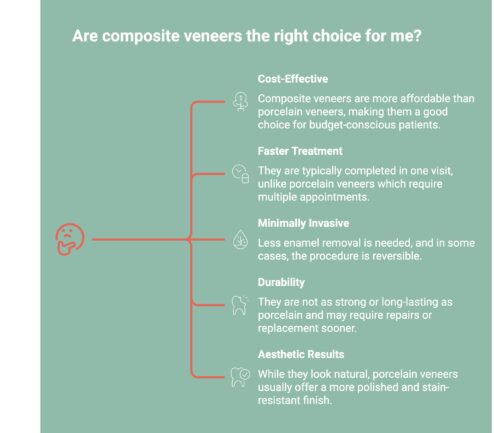
Composite veneers are a popular cosmetic option, but whether they are the right choice depends on your goals, budget, and how long you want results to last. They offer several advantages, along with a few limitations to consider.
Here is how they compare to other options:
- Cost advantage: Composite veneers are more affordable than porcelain veneers, making them a good choice for patients seeking budget-friendly smile improvements.
- Faster treatment time: They are typically completed in one visit, unlike porcelain veneers, which often require multiple appointments.
- Minimally invasive approach: Less enamel removal is needed, and in some cases, the procedure is reversible.
- Durability and longevity: They are not as strong or long-lasting as porcelain and may require repairs or replacement sooner.
- Aesthetic results: While they look natural, porcelain veneers usually offer a more polished and stain-resistant finish.
Composite veneers are a good option for quick, affordable cosmetic enhancements, especially for minor imperfections, but may not be ideal for those seeking long-term durability.
Cost of Composite Veneers: What Should You Expect?
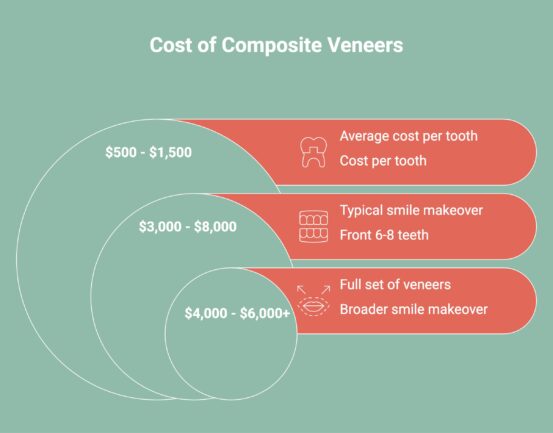
The cost of composite veneers can vary depending on your smile goals, the number of teeth treated, and the complexity of your case. Below are the key factors that influence what you can expect to pay:
- Average cost per tooth: Composite veneers typically cost between $500 and $1,500 per tooth. The composite resin veneers cost is lower than porcelain, making it a more affordable cosmetic option.
- Typical smile makeover cost (front 6-8 teeth): Most patients focus on the front visible teeth, which usually brings the total to around $3,000 to $8,000, depending on how many teeth are treated and the level of detail involved.
- Cost of a full set of veneers: For a broader smile makeover, the total cost can range from $4,000 to $6,000 or more, especially if more teeth are included.
- When cost increases significantly: Costs can rise if you need more extensive shaping, multiple layers for a natural look, repairs to damaged teeth before veneers, or if you choose a highly experienced cosmetic dentist.
- Factors that affect pricing: The final cost depends on the dentist’s expertise, location, number of veneers needed, and the level of customization required.
- Consultation and personalized estimates: A dental consultation helps determine the exact cost based on your needs, ensuring you receive a tailored treatment plan.
Composite veneers offer a cost-effective way to enhance your smile while still achieving natural-looking results.
Curious about whitening costs before choosing veneers? Check out the latest pricing details for teeth whitening Houston price to compare your options.
Does Insurance Cover Composite Veneers?
Insurance coverage for composite veneers depends on the purpose of the treatment, but in most cases, they are considered cosmetic. Because veneers are typically used to enhance appearance rather than address a medical issue, most dental insurance plans do not cover them. However, there may be exceptions if veneers are needed to repair damage caused by injury or to restore tooth function, in which case partial coverage might be available.
Since coverage is limited, many patients pay out of pocket for composite veneers. To make treatment more accessible, dental clinics often provide flexible payment options, financing plans, or in-house savings programs. It is always recommended to check with your insurance provider and dental office to understand your specific benefits, estimated costs, and available payment solutions before starting treatment.
Wondering if your treatment could be covered by insurance? Learn more about coverage, costs, and options in this guide on does insurance cover Invisalign before planning your smile transformation.
How Long Do Composite Veneers Last?
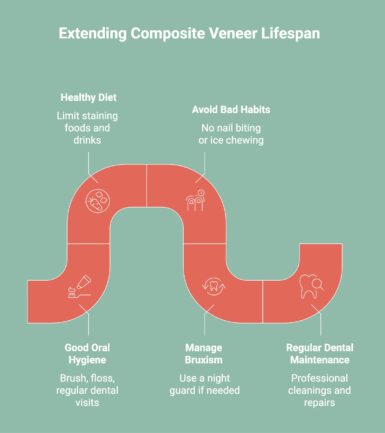
Composite veneers typically last between 5 and 10 years, depending on how well they are maintained and individual habits.
What 5 to 10 years actually means in real life is not that they stay perfect the whole time. Most patients will need occasional touch-ups, polishing, or small repairs along the way. Minor chips, surface wear, or slight staining can happen, but these are usually easy and affordable to fix, which helps extend their overall lifespan.
Their lifespan is influenced by several key factors:
- Oral hygiene routine: Brushing twice daily, flossing, and regular dental checkups help keep veneers in good condition.
- Diet and staining habits: Foods and drinks like coffee, tea, and red wine can cause discoloration over time.
- Daily wear and tear: Habits like biting nails or chewing ice can lead to chipping or damage.
- Teeth grinding (bruxism): Grinding can shorten the lifespan of veneers, and a night guard may be recommended.
- Regular dental maintenance: Professional cleanings and timely repairs can extend the life of your veneers.
With consistent care, composite veneers can stay functional and aesthetically pleasing for many years.
How to Care for Composite Veneers?

Proper care is essential to maintain the appearance and longevity of your composite veneers. With the right habits, you can keep them looking natural and extend their lifespan. Below are simple ways to care for your veneers:
- Maintain good oral hygiene: Brush twice a day with a non-abrasive toothpaste and floss daily to prevent plaque buildup and protect both your veneers and natural teeth.
- Limit staining foods and drinks: Reduce intake of coffee, tea, red wine, and dark-colored foods, as composite resin can stain over time. Rinse your mouth with water after consuming them.
- Avoid hard or damaging habits: Biting ice, chewing pen caps, or using your teeth to open packets might seem harmless, but these are common ways veneers chip in real life.
- What damages veneers fastest: Everyday pressure adds up. Grinding your teeth at night, frequent snacking on hard foods, or skipping a mouthguard can wear down veneers faster than expected.
- Visit your dentist regularly: Routine visits help catch small issues early and keep your veneers looking smooth and natural, rather than waiting until something feels off.
- What most patients ignore: Many people notice slight rough edges or a small chip and put it off. These minor issues are quick fixes at first, but can become more noticeable and costly if ignored.
- Address issues early: If something feels different when you run your tongue over your teeth, or you spot a small change in color or shape, it is best to get it checked before it worsens.
With consistent care, your composite veneers can stay strong, functional, and visually appealing for years.
What Are the Alternatives to Composite Veneers?
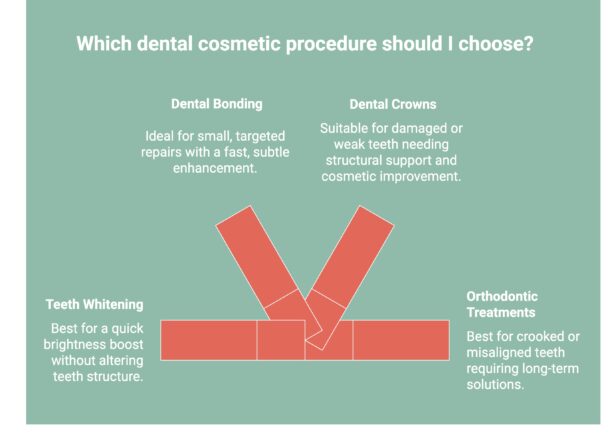
Composite veneers are not the only option for improving your smile, especially if your dental concerns vary in severity or budget. Below are effective alternatives to composite veneers that can address different cosmetic and functional needs:
1) Teeth Whitening
Professional teeth whitening is a simple, non-invasive way to remove stains and brighten your natural teeth. It works well for discoloration from food, drinks, or aging, but it does not change shape or alignment.
Best for: This option is best for patients who want a quick brightness boost without altering the structure of their teeth.
2) Dental Bonding
Dental bonding uses tooth-colored resin to fix small chips, cracks, or gaps. It is quick, affordable, and usually completed in one visit, making it ideal for minor cosmetic improvements.
Best for: This is best for patients who need small, targeted repairs and want a fast, subtle enhancement.
3) Dental Crowns
Dental crowns cover the entire tooth, making them suitable for teeth that are damaged, weak, or heavily restored. They improve both strength and appearance but require more preparation compared to veneers.
Best for: This option is best for patients who need both structural support and cosmetic improvement.
4) Orthodontic Treatments
Orthodontic options like clear aligners or braces gradually move teeth into the correct position, improving both function and appearance over time. These treatments take longer but offer lasting results.
Best for: This is best for patients with crooked, crowded, or misaligned teeth who want a long-term solution.
Quick decision guide: If your main concern is discoloration, teeth whitening is the simplest choice. If you have small chips or gaps, dental bonding is a quick and effective solution. If your teeth are damaged or weak, dental crowns provide the necessary strength and coverage. If alignment is the issue, orthodontic treatment is the most suitable long-term option.
Dealing with stains and wondering if veneers are necessary? Explore the best dental whitening procedure to see if a simpler solution can brighten your smile first.
Are Composite Veneers Right for You?
Composite veneers are a great choice if you want a quick, affordable way to improve your smile without extensive dental work. They work best for minor cosmetic concerns and deliver fast, natural-looking results.
Choose composite veneers if you want something simple and effective:
- You have small chips, gaps, discoloration, or slightly uneven teeth
- You want a budget-friendly alternative to porcelain veneers
- You prefer minimal or no enamel removal
- You want results in a single visit
- You are okay with occasional touch-ups over time
Avoid composite veneers if your needs are more complex:
- You want a long-term, highly durable solution with minimal maintenance
- You have severe misalignment or major structural issues
- You prefer stain-resistant results that last many years without upkeep
- You are looking for a permanent, one-time treatment
This helps you quickly decide whether composite veneers match your goals, timeline, and expectations.
Why Choose Dentist Tree of the Heights for Composite Veneers?
If you’re looking for an affordable way to improve your smile, Dentist Tree of the Heights offers composite veneer treatments that deliver real value without the high cost of more complex procedures. This makes it easier to achieve a confident smile while staying within your budget.
One of the biggest advantages is how quickly you can see results. Composite veneers are designed to provide noticeable improvements in a short time, so you don’t have to wait through long treatment timelines to enjoy a refreshed, more balanced smile.
Just as important, your comfort is always a priority. Our team is committed to creating an anxiety-free experience, with a calm and supportive approach from consultation to completion, so you feel relaxed and confident every step of the way.
Book your consultation today and take the first step toward a refreshed smile.
Conclusion
Composite veneers offer a practical and affordable way to enhance your smile without extensive dental work. They are ideal for addressing minor imperfections such as chips, stains, and gaps, while delivering natural-looking results in a single visit. Although they may not last as long as porcelain veneers, their lower cost and ease of repair make them a popular choice for many patients. With proper care and regular dental visits, they can maintain their appearance for years. If you are considering improving your smile, a consultation can help determine whether composite veneers are the right solution based on your goals, budget, and overall dental health.
Frequently Asked Questions
What are the main pros and cons of choosing composite veneers?
Composite veneers are affordable, minimally invasive, and completed quickly. They improve minor imperfections effectively. However, they are less durable than porcelain, may stain over time, and often require maintenance or repairs to keep their appearance.
Are composite veneers a good option for a smile makeover on a budget?
Yes, composite veneers are a budget-friendly option for improving your smile. They cost less than porcelain veneers and deliver immediate results, making them ideal for patients searching for composite veneers near me without a high upfront investment.
How do composite veneers compare to composite bonding for fixing teeth?
Composite veneers cover the entire front surface of teeth for a full cosmetic upgrade, while composite bonding targets small areas like chips or gaps. Veneers provide more uniform results, whereas bonding is best for minor, localized repairs.
Do teeth decay under composite veneers?
Teeth can still decay under composite veneers if proper oral health is not maintained. Veneers do not protect against cavities, so regular brushing, flossing, and dental checkups are essential to keep both veneers and natural teeth healthy.
Can veneers help with crooked teeth?
Composite veneers can improve the appearance of mildly crooked teeth by reshaping and adding material to create a straighter look. However, they do not correct alignment, so orthodontic treatments may be better for more severe cases.
What’s the difference between composite veneers and porcelain veneers?
Composite veneers are applied directly and are more affordable, while porcelain veneers are custom-made and longer-lasting. Porcelain offers better stain resistance and durability, whereas composite veneers are quicker to apply and easier to repair.