

Key Highlights
- Veneers improve the front surface of the tooth, while crowns restore full strength and function
- The right choice depends on the condition of your teeth, not just the appearance of your teeth
- Veneers require minimal alteration, and crowns involve more extensive tooth preparation
- Crowns are better for tooth decay, cracks, or weakened teeth, and veneers suit minor chips and cosmetic fixes
- Veneers offer flexibility but may have a shorter lifespan, while crowns provide long-term durability
- A dentist evaluates tooth strength, bite pressure, and long-term outcomes before recommending the best option
You start looking into improving your smile, and two options keep coming up: veneers and crowns. At first, they seem similar. Both improve how your teeth look. Both are long-term solutions. But the more you read, the harder it becomes to figure out which one is actually right for you.
This confusion usually comes from how these treatments are presented. Veneers are often marketed as cosmetic upgrades, while crowns are described as restorative solutions. But in real life, the decision is not that simple. The condition of your tooth, how much structure remains, and even how you bite all play a role in what will work best.
This guide breaks it down clearly. You will understand the real difference between veneers and crowns, when each option makes sense, and how a dentist decides what you actually need.
Veneers vs Crowns: What’s the Real Difference (and Why It Matters for You)?
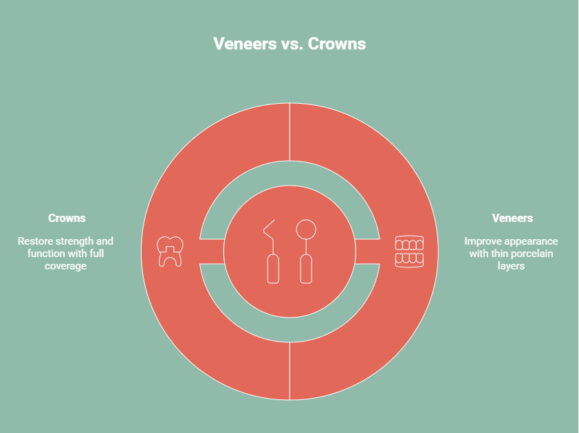
The difference between veneers and crowns comes down to coverage and purpose.
Veneers improve the front surface of the tooth, while crowns restore the entire tooth when it needs strength and support. They may seem similar, but they are used in completely different situations.
In practice:
- Veneers use a thin layer of porcelain bonded to the front of your tooth
- Crowns require full tooth preparation and cover the entire structure
- Veneers remove only a thin layer of enamel
- Crowns reshape the tooth to handle pressure and prevent further damage
This makes veneers suitable for cosmetic concerns like minor chips, uneven edges, or discoloration, where the tooth is still structurally sound.
Crowns are used when the tooth is already compromised. If there is tooth decay, cracks, large fillings, or reduced tooth strength, a veneer will not hold up. A dental crown covers the tooth fully and restores the function of your teeth.
The impact is straightforward:
- Veneers preserve more natural tooth structure
- Crowns provide stronger, full coverage protection
Choosing between them is not about preference. It is about matching the treatment to the condition of your teeth.
Veneers improve how your teeth look. Crowns ensure your teeth function and last.
Not sure which crown is right for your situation? Explore the different types, materials, and real costs involved.
Should You Get Veneers or a Crown for Your Situation?
If your tooth is healthy and you want to improve its appearance, veneers are usually the better choice. If your tooth is damaged or structurally weak, a crown is the safer and more reliable option. Now that the difference is clear, the next step is applying it to real situations.
When Veneers Make More Sense for Your Teeth
Veneers are typically recommended when your teeth are cosmetically imperfect but structurally sound.
This includes cases where teeth are:
- Discolored and do not respond to whitening
- Slightly uneven or mildly misaligned
- Chipped at the edges
- Not damaged, but visually inconsistent
In these situations, the goal is to improve appearance while preserving as much natural tooth structure as possible.
When a Crown Is the Safer Choice
Crowns are recommended when the tooth needs strength, protection, or restoration.
This is common when a tooth has:
- Large fillings or visible decay
- Cracks or fractures
- A history of root canal treatment
- Significant wear or structural weakness
Here, the priority is to prevent further damage and ensure the tooth can function normally over time.
A Simple Way to Decide:
If your teeth are healthy and your goal is to improve how they look, veneers are usually the right fit.
If your tooth is compromised and needs support, a crown is the better option.
If you are unsure about the condition of your tooth, a professional evaluation helps you make the right decision before committing to treatment.
How Veneers and Crowns Change Your Natural Teeth
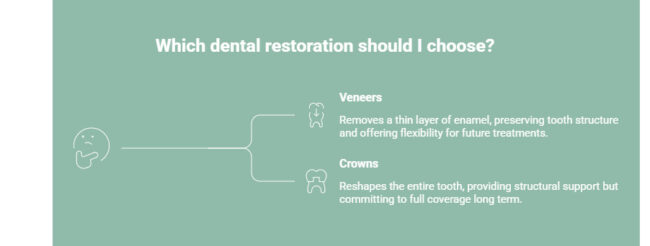
The key difference is not just the result, but how much of your natural tooth is changed permanently. Once either treatment is done, your tooth will always need a restoration moving forward.
How Much Tooth Structure Is Removed?
The biggest distinction is how much of your tooth is reduced.
- Veneers remove only a thin layer of enamel from the front surface
- Crowns require reshaping the entire tooth for full coverage
This makes veneers a more conservative option, while crowns are used when the tooth needs structural support.
Is It Reversible?
No, both treatments are irreversible.
Once enamel is removed, it does not grow back. This means:
- The tooth will always need a veneer or crown
- Future treatments will build on this decision
- Switching options later may be limited
Veneers preserve more structure, which allows more flexibility. Crowns remove more structure, which commits the tooth to full coverage long term.
What Does This Mean for Your Decision?
This is not just a cosmetic choice. It determines how your tooth will be treated for years to come.
- If the tooth is healthy, preserving structure with veneers may be the better approach
- If the tooth is weak or damaged, a crown provides the protection needed
The right choice depends on whether your tooth needs improvement or support. Once done, the direction cannot be reversed.
Which Option Lasts Longer Over Time?
Both veneers and crowns are designed to last for years, but they perform differently under pressure. Since crowns cover the entire tooth, they tend to hold up better over time, especially in areas that handle more biting force.
How Long Do Veneers Last?
Veneers typically last 10 to 15 years with proper care. They resist stains well, but since they are thinner, they can chip if you put too much pressure on them.
This makes them a strong option for front teeth, where appearance matters more than heavy function.
How Long Do Crowns Last?
Crowns usually last 10 to 20 years, sometimes longer. Because they fully cover the tooth, they handle pressure better, especially on back teeth.
This added strength is why crowns are often chosen when durability is a priority.
What Actually Affects Longevity?
It’s not just about the material. Daily habits make the biggest difference:
- How well you maintain oral hygiene
- Whether you grind or clench your teeth
- Your eating habits (hard or sticky foods)
- The quality of the dental work
In most cases, consistent care matters more than the treatment itself when it comes to how long it lasts.
And this is where many people make the wrong call. They focus on lifespan alone, without considering whether the treatment actually matches what their tooth needs.
What Does the Cost Look Like in Houston?
Cost is often one of the first things people consider when comparing veneers and crowns. However, pricing only makes sense when you understand what each treatment offers, whether it focuses on cosmetic enhancement or restoring strength and function.
- Typical Cost of Veneers: Veneers typically range from $900 to $2,500 per tooth. Since they are considered cosmetic, they are usually not covered by insurance.
- Typical Cost of Crowns: Crowns generally cost between $800 and $2,000 per tooth. If the treatment is medically necessary, insurance may cover part of the cost.
What Affects Your Final Cost?
Your final cost depends on several factors:
- Material used, such as porcelain or zirconia
- Complexity of the case and tooth condition
- Number of teeth being treated
- Additional procedures, like root canals or gum work
Cost gives you context, but it should not decide your treatment on its own. The right option is the one that fits your tooth condition, not just your budget. With cost in perspective, the next question is flexibility: can your decision be changed later if your needs evolve?
Can You Switch from Veneers to Crowns Later?
Before choosing between veneers and crowns, it is important to understand how flexible that decision will be over time. The key difference is that veneers preserve more of your natural tooth, while crowns commit the tooth to full coverage from the start.
When Veneers Can Be Replaced with Crowns?
Veneers are conservative and leave most of the tooth structure intact. This allows room for change if the condition of the tooth worsens later.
A veneer may be replaced with a crown if:
- The tooth develops cracks or fractures
- Decay forms around or beneath the veneer
- Bite pressure causes long-term wear or failure
In these situations, a crown becomes necessary to provide full coverage and protect what remains of the tooth.
Why Can’t Crowns Be Turned Into Veneers?
Crowns require reshaping the entire tooth surface, not just the front. This process removes a significant amount of enamel, which is essential for bonding veneers.
As a result:
- There is not enough enamel left to support a veneer
- The tooth relies on full coverage for protection
- A surface-level restoration is no longer stable
Once a crown is placed, the tooth will always need a crown moving forward.
What Does This Mean Before You Decide?
This decision is less about switching later and more about choosing the right starting point. Veneers preserve tooth structure and allow flexibility if your needs change. Crowns provide immediate strength but limit future options due to how much of the tooth is reduced.
If your tooth is healthy, preserving structure gives you more control long-term. If it is already weakened, choosing protection early helps avoid complications.
With flexibility clarified, the next step is understanding how dentists evaluate your tooth and decide which option is appropriate from the beginning.
How Does a Dentist Decide What You Actually Need?
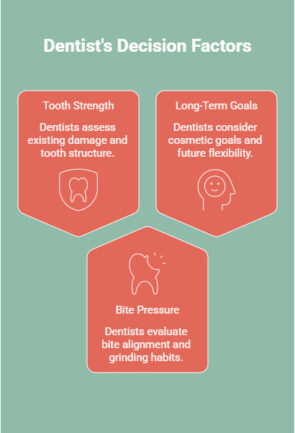
Choosing between veneers and crowns is not about preference; it is about risk and longevity. Dentists assess how much of your natural tooth can be preserved, how much force it handles daily, and whether the solution will hold up over time. The decision comes down to three core checks: structure, function, and long-term outcome.
1. Tooth Strength and Existing Damage
This is always the starting point. The question is simple: Can your tooth support a veneer, or does it need full protection?
Dentists look for:
- Existing fillings: Large fillings weaken the tooth, making crowns safer
- Cracks or fractures: Even small cracks can worsen under pressure
- Tooth structure left: Less natural tooth = higher risk with veneers
- Post root canal: Teeth become brittle, and crowns are usually required
If the tooth cannot reliably hold its shape under stress, a veneer is not enough. A crown becomes the safer option.
2. Bite Pressure and Tooth Location
Next comes function, how your teeth actually work during daily use.
Dentists evaluate:
- Back teeth (molars): Handle heavy chewing forces → crowns preferred
- Front teeth: Lower pressure, higher visibility → veneers possible
- Bite alignment: An uneven bite can cause veneers to chip faster
- Grinding or clenching: High-risk patients often need crowns or protection
Even a healthy tooth may not qualify for a veneer if the bite puts too much stress on it.
3. Long-Term Goals for Your Smile
Finally, the decision is aligned with what you want long term, not just what looks good today.
Dentists consider:
- Cosmetic goals: Shape, colour, symmetry → veneers work well
- Functional needs: Strength, durability → crowns are more reliable
- Future flexibility: Veneers preserve more tooth for later changes
- Maintenance expectations: Some solutions require more care over time
The goal is to avoid short-term fixes that lead to long-term replacements.
When these three factors align, the recommendation becomes clear. It is not about choosing veneers or crowns; it is about choosing what your tooth can actually sustain. However, many patients overlook this logic and base their decision on the wrong factors, which is where most problems begin.
Dental implants or veneers, which one actually fits your situation better? Explore the key differences, use cases, and how to choose the right option for your smile.
What Do Most People Get Wrong When Choosing Between These Options?
Many patients compare dental veneers and crowns based on appearance alone, without considering the condition of their teeth. The mistake is treating both as cosmetic upgrades when they actually serve different purposes in cosmetic dentistry and restorative care.
Most issues come from ignoring function, over-focusing on cost, and misunderstanding long-term impact.
1. Choosing Based Only on Cost
Cost comparisons often overlook what the tooth actually needs.
For example, placing composite veneers or a thin layer of porcelain on a tooth with underlying tooth decay or reduced tooth strength may lead to early failure. This results in additional tooth preparation, possible crown placement, and higher long-term costs, even with partial dental insurance or limited insurance coverage.
The better question is: which option protects both the appearance of your teeth and your oral health long term?
2. Assuming Both Options Do the Same Thing
Veneers and crowns are not interchangeable dental restorations.
- Dental veneers cover the front surface of the tooth using a thin layer of enamel removal and are ideal for minor chips, small chips, and improving the appearance of your teeth
- A dental crown covers the entire tooth, restoring the function of your teeth and protecting against further damage
Using a veneer where a permanent crown is needed can compromise both durability and results.
3. Not Thinking About Long-Term Impact
Every treatment affects what can be done later.
Veneers involve minimal alteration and preserve more tooth enamel, making them suitable for cosmetic improvements on the front of your tooth. However, they may have a shorter lifespan compared to ceramic crowns or metal crowns, especially under pressure.
Crowns, made from various materials like porcelain or metal alloy, require more preparation but offer stronger protection when the tooth is already compromised.
Both are excellent options, but only when matched to the condition of your tooth. When that alignment is clear, you achieve a more predictable result and a lasting, beautiful smile.
Want a Clear Answer for Your Teeth? Here’s How Dentist Tree Can Help
At this stage, the real question is not veneers or crowns. It is what your tooth actually needs. At Dentist Tree of the Heights, the focus is simple: Match the treatment to your tooth, not just the outcome.
During your consultation, you get:
- Clear evaluation of your tooth strength and enamel
- Guidance on whether veneers or a dental crown covers your needs better
- A precise plan using digital scan technology
- Recommendations based on long-term oral health, not guesswork
Explore your options:
Both are excellent options when used correctly.
Book your consultation and get a clear, personalised answer for your smile.
Conclusion
Veneers and crowns are both effective solutions, but they solve different problems. Veneers are best for improving how your teeth look when they are already healthy. Crowns are designed to protect and restore teeth that are damaged or weakened.
The right choice depends on your specific situation. Instead of focusing only on appearance or cost, consider what your tooth actually needs for long-term health and function. If you are still unsure, a professional evaluation can give you a clear and confident answer.
Frequently Asked Questions
How much do veneers and crowns cost in the United States?
Veneers usually cost $900 to $2,500 per tooth, while crowns range from $800 to $2,000. Pricing depends on material, case complexity, and location. Dental insurance may partially cover crowns if they are considered medically necessary.
Can I switch from crowns to veneers in the future?
No, once a tooth is prepared for a crown, significant structure is removed, making veneers unsupported. However, veneers can be replaced with crowns later if the tooth weakens or requires full coverage for protection.
Which is better for front teeth, veneers or crowns?
Veneers are typically better for front teeth when they are healthy and need cosmetic improvement. Crowns are recommended if the tooth is damaged, heavily filled, or structurally weak and requires additional support.
Why do dentists advise against veneers?
Dentists may advise against veneers when a tooth lacks strength due to decay, large fillings, or cracks. In such cases, veneers may fail under pressure, making crowns a safer option for long-term durability and protection.
When are crowns the better option?
Crowns are recommended when a tooth is cracked, decayed, worn down, or treated with a root canal. They provide full coverage, restore strength, and help prevent further damage under regular chewing pressure.
Are caps and crowns the same thing?
Yes, caps and crowns refer to the same dental restoration. “Cap” is a non-clinical term, while “crown” is used by dentists. Both describe a covering placed over a tooth to restore its shape, strength, and function.