

Key Highlights
- Dental implants are a safe and effective tooth replacement solution for older adults with missing teeth.
- Age is not a barrier; overall health and bone density are more important for implant success.
- Proper implant care is crucial for longevity and involves daily cleaning and regular dental visits.
- Implants improve functionality, allowing you to eat your favorite foods and speak with confidence.
- This treatment helps preserve facial structure and boosts overall oral health.
- For seniors, implants offer a durable and comfortable alternative to traditional dentures.
Getting older doesn’t mean giving up on a confident smile. For many older adults, missing teeth can make everyday moments, like eating, speaking, or smiling, feel uncomfortable.
Thankfully, modern dentistry offers a lasting solution.
Dental implants for seniors are designed to restore your comfort, health, and confidence, helping you enjoy life without worrying about dentures slipping or foods you can’t eat.
In this guide, we’ll walk you through how dental implants work, their benefits, and how to care for them effectively.
What Are Dental Implants and How Do They Work?
Dental implants are essentially artificial tooth roots, often shaped like screws, that an experienced dentist places into your jawbone. Over time, the implant fuses with your natural bone in a process called osseointegration, creating a sturdy foundation.
This base is then used to support your new artificial teeth, which can be a single dental crown or a bridge of multiple teeth. This makes them a strong and predictable tooth replacement option.
The implant procedure for seniors typically begins with a consultation and 3-D imaging to create a treatment plan. During the implant placement surgery, your dentist will use local anesthesia to ensure you are comfortable.
After the implant is placed, there is a healing period of a few months for it to bond with the jawbone. Finally, a small connector and your custom-made dental crown are attached, completing your new smile that looks and feels like natural teeth.
So, are implants the right choice for you? Also read our blog on Dental Bridge vs Implant: Which Option Is Right for You?
Are Implants Safe and Effective for Seniors?
Yes, dental implants are considered very safe and effective for older adults. In fact, it can be considered as one of the safest bets against the available alternatives.
Studies show that implant success rates in seniors are comparable to those in younger patients. Your age is not the most critical factor; what truly matters is your general health and commitment to the healing process.
Most healthy seniors are excellent candidates for this life-changing procedure and experience great results.
The risk of implant failure is low. However, it’s important to follow your dentist’s instructions for proper care. The bone must fuse successfully to the implant, and good oral hygiene is essential to prevent infection.
What Are The Benefits of Implants for Seniors?
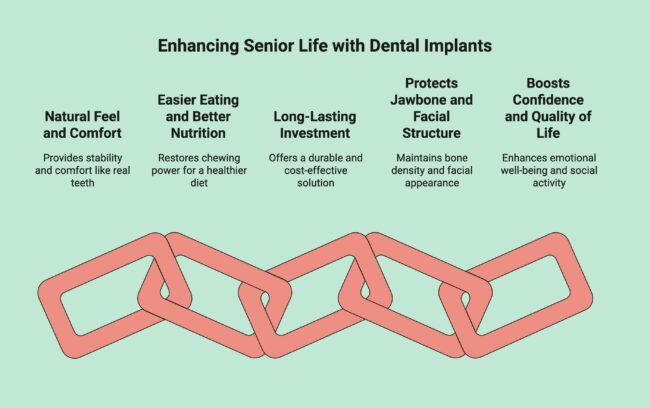
Dental implants offer a dramatic improvement in the quality of life for older adults dealing with missing teeth. They restore your ability to chew comfortably, speak clearly, and smile confidently.
Exploring these advantages further reveals just how much implants can improve your everyday life and long-term oral health.
1. Natural Feel and Improved Comfort
One of the greatest benefits of dental implants for seniors is how natural they feel. Unlike removable dentures that can slip or irritate the gums, implants are anchored securely into your jawbone. This gives you the stability and comfort of real teeth.
With implants, you can eat, speak, and smile freely without worrying about movement or discomfort. They eliminate the need for adhesives and the awkward clicking sound that sometimes comes with dentures.
Key comfort advantages:
- No slipping or need for messy adhesives
- A natural bite that feels just like your original teeth
- Improved speech clarity and everyday confidence
2. Easier Eating and Better Nutrition
Missing teeth or loose dentures can limit your food choices, but implants let you enjoy all your favorites again. Whether it’s biting into an apple or savoring a steak, implants for seniors restore chewing power and make eating a pleasure again.
This stability encourages a healthier diet rich in crunchy fruits, vegetables, and proteins, essential for maintaining strength and energy as you age.
3. Long-Lasting Investment in Oral Health
When comparing dental implants vs. dentures, longevity is a major factor. Dental implants are designed to last 20 years or more and often a lifetime with proper care. Traditional dentures, on the other hand, typically need replacement every 5 to 7 years due to wear or changes in the jawbone.
Because implants fuse with your bone, they stay stable and remove the need for constant adjustments, adhesives, or special cleaners. Over time, this makes them a more affordable and worry-free option.
Here is a quick comparison for your comprehensive view:
- Dental implants often last a lifetime, while dentures usually require replacement every few years.
- Implants are fused to the jawbone for strong, slip-free stability, whereas dentures rest on the gums and can move around.
- Implants are maintained just like natural teeth with regular brushing and flossing, while dentures must be removed daily for soaking and cleaning.
- Implants help preserve jawbone health by stimulating bone growth, while dentures do not prevent bone loss.
4. Protects Jawbone and Facial Structure
One of the most overlooked benefits of dental implants is how they preserve bone density. When teeth are missing, the jawbone naturally begins to shrink, leading to a sagging or sunken appearance.
Full mouth dental implants for seniors help maintain bone health by stimulating the jaw just like natural tooth roots. This keeps your facial structure intact and helps you maintain a youthful, healthy appearance.
5. Boosts Confidence and Quality of Life
Beyond physical health, the emotional impact of implants is life-changing. Seniors who replace missing teeth often feel more confident, social, and active again. Smiling, laughing, and talking freely without worry can greatly enhance mental well-being and overall happiness.
In short: dental implants don’t just replace teeth; they restore independence, confidence, and quality of life.
What Are The Types of Dental Implants?
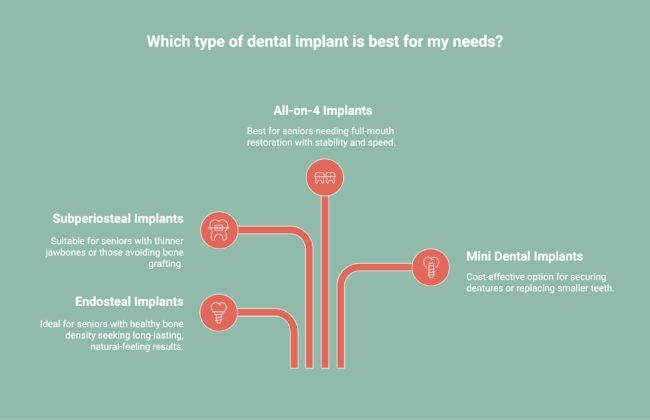
Not all dental implants are the same. Depending on your dental needs, jawbone strength, and overall health, your dentist may recommend one of several implant types. Understanding these options helps you make an informed decision about which is right for you.
1. Endosteal Implants (Most Common)
Endosteal implants are the most widely used type. They are placed directly into the jawbone and typically made of titanium. Once healed, they provide a strong base for one or more replacement teeth. These are ideal for seniors with healthy bone density.
Best for: Seniors with sufficient jawbone support who want long-lasting, natural-feeling results.
2. Subperiosteal Implants
Subperiosteal implants rest on top of the jawbone but beneath the gum tissue, rather than being inserted into the bone. They are a great option for seniors who have some bone loss and prefer to avoid bone grafting.
Best for: Patients with thinner jawbones or those who may not be candidates for bone graft surgery.
3. All-on-4 Implants (Full Mouth Restoration)
All-on-4 dental implants allow an entire arch of teeth to be supported by just four strategically placed implants. This technique provides excellent stability and is often completed faster than traditional implant methods.
Best for: Seniors missing most or all of their teeth who want a permanent, full-mouth solution.
4. Mini Dental Implants
Smaller than traditional implants, mini dental implants can be placed using a less invasive procedure. They are often used to stabilize dentures and can be a more affordable option for seniors.
Best for: Seniors seeking a cost-effective way to secure loose dentures or replace smaller teeth.
How Can Seniors Prepare and Care for Dental Implants Effectively?
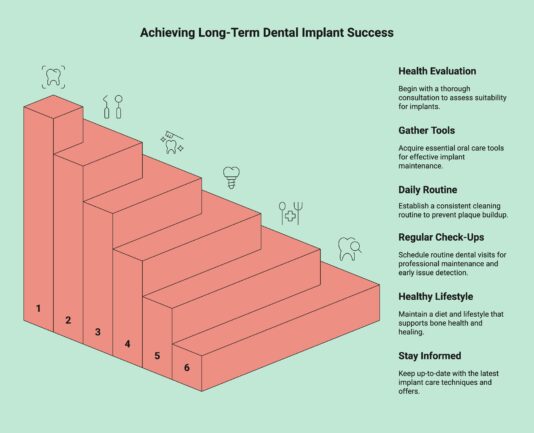
Preparing for dental implants for seniors is not just about the surgical procedure; it’s about ensuring long-term success through consistent care and healthy habits.
Below are the essential steps every senior should follow before and after getting dental implants.
Step 1: Begin with a Thorough Health Evaluation
Before starting your implant journey, schedule a detailed consultation with your dentist. This evaluation helps determine if your gums, jawbone, and overall health are ready for implants. Your dentist will review your complete medical history and may coordinate with your physician if you have conditions such as diabetes, heart disease, or osteoporosis.
During this visit, also discuss financial details.
While Medicare often doesn’t cover implant procedures, seniors discounts for dental implants and certain insurance plans can reduce out-of-pocket costs. Many clinics offer flexible payment options or financing for affordable dental implants for seniors, making treatment more accessible.
Before your implant procedure:
- Share your full medical history and medications list.
- Ask about any health conditions that may affect healing.
- Explore financial and insurance options in advance.
Step 2: Gather the Right Oral Care Tools
Proper hygiene becomes your greatest ally. Implants don’t decay like natural teeth, but the surrounding gums still need care to prevent inflammation or infection.
Having the right cleaning tools ensures your implants stay strong and your mouth stays healthy. Ask your dentist for product recommendations specifically designed for implant care.
Essential tools include:
- A soft-bristled toothbrush to protect gums.
- Interdental brushes or a water flosser for tight spaces.
- Low-abrasive toothpaste to avoid scratching implant surfaces.
These simple tools make everyday maintenance easier and more effective.
Step 3: Establish a Consistent Daily Cleaning Routine
Consistency is the secret to implant longevity. Just like natural teeth, implants require daily brushing and flossing to remove plaque and food particles. Pay special attention to the gum line, where bacteria tend to build up.
Set a routine that’s easy to follow morning and night. Using a water flosser or implant-safe floss can make cleaning more comfortable, especially for those with dexterity challenges.
Your daily routine should include:
- Brushing for two minutes, twice a day.
- Flossing or using a water flosser daily.
- Rinsing with an antibacterial mouthwash if recommended.
These habits help protect your implants and prevent gum disease.
Step 4: Keep Up with Regular Dental Check-Ups
Even with excellent home care, professional maintenance is essential. Schedule check-ups with your dentist every six months, or more often if advised. These visits allow your dental team to examine the implants, clean around them thoroughly, and catch potential issues early.
During these visits, your dentist will:
- Check gum and bone health around the implants.
- Confirm implant stability and alignment.
- Perform professional cleanings to remove tartar buildup.
Regular follow-ups ensure your implants for seniors stay strong and function perfectly over time.
Step 5: Maintain a Senior-Friendly Diet and Healthy Lifestyle
Your everyday choices can greatly influence how well your implants last. Avoid chewing very hard items like ice, nuts, or hard candy, which can damage the crown or stress the implant.
A nutrient-rich diet with calcium, vitamin D, and protein supports bone health and keeps your jaw strong. Avoiding smoking and limiting alcohol also improve healing and reduce infection risk.
For lasting implant success:
- Eat soft yet nutritious foods during healing.
- Avoid sticky or excessively hard snacks.
- Quit smoking to promote gum and bone health.
Step 6: Stay Informed and Proactive
The best way to care for your implants is to stay informed about proper maintenance and visit your dentist if you notice any discomfort, redness, or looseness.
Ask your dental team about any new products, cleaning techniques, or dental implant offers for seniors that might help you maintain your smile affordably.
Frustrated with Loose Dentures? Choose Stability and Freedom with Dental Implants in Houston
For many seniors, missing teeth or loose dentures can make even simple moments, like enjoying a meal or smiling in photos, feel frustrating or uncomfortable. You deserve a solution that restores not only your bite but also your confidence and quality of life.
That’s where Dentist Tree of the Heights steps in. Our experienced oral surgeons and compassionate team specialize in implants for seniors, offering gentle care and personalized treatment plans to help you smile with comfort again. We use advanced technology to make dental implant surgery precise and minimally invasive, even for patients with chronic conditions or those who may require bone grafting.
Ready to rediscover your smile?
Schedule your consultation today and see why so many patients searching for dental implants for seniors near me trust our team for compassionate, lasting results.
Frequently Asked Questions
What is the cost of dental implants for seniors?
Many clinics now provide affordable dental implants for seniors with flexible payment options. The cost varies based on implant options, jawbone condition, and dentist expertise.
Are dental implants safe and effective for seniors?
Implants for seniors are highly safe and effective when handled by a skilled oral surgeon. Even with chronic conditions, most seniors recover well after dental implant surgery with consistent dental care and low potential risks.
What are the benefits of dental implants for older adults?
Implants for seniors restore chewing, speech, and confidence. They also protect jawbone strength and reduce the need for bone grafting later. The good news is that they look and feel like natural teeth.
How much do dental implants typically cost for seniors?
It varies based on implant options, jawbone condition, and dentist expertise. Many clinics now provide affordable dental implants for seniors with flexible payment options.
Are there affordable or free dental implant programs available for seniors?
Some clinics offer seniors discount for dental implants or seasonal dental implants offers for seniors. You can also explore inexpensive dental implants for seniors through dental schools or local community programs.
Is it possible for seniors to get full mouth dental implants?
Full mouth dental implants for seniors are an excellent choice for those missing most teeth. After bone grafting, an oral surgeon can place implants that provide long-term stability and comfort.
What should seniors expect during the dental implant procedure?
Dental implant surgery involves placing titanium posts in the jawbone. Using local anesthesia, discomfort is minimal. After implant surgery, regular dental care and follow-ups help ensure lasting success.
Will dental insurance cover implants for seniors?
Most dental insurance plans provide partial coverage for implants for seniors. Check your plan to confirm coverage for dental implant surgery or financing options that make treatment easier to manage.
How long do dental implants last for seniors?
With excellent dental care and gum health, implants for seniors can last 20 years or more. Avoid smoking and maintain routine check-ups to prevent potential risks.
Can seniors with existing health conditions get dental implants?
Seniors with chronic conditions such as diabetes or heart issues should get medical clearance first. A skilled oral surgeon can safely customize implant options around your health issues.
Are dental implants for seniors near me better than dentures for seniors?
Implants for seniors offer superior comfort, stability, and jawbone protection. Unlike dentures, they don’t slip or irritate gums, and even screwless dental implants for seniors feel secure and natural.