

Key Highlights
- Smoking causes stubborn tobacco stains from nicotine and tar that are hard to remove.
- Achieving a bright smile is possible, but it requires a dedicated approach and often professional treatments.
- Professional in-office whitening and dentist-prescribed take-home kits offer the best whitening results.
- Maintaining good oral health and considering lifestyle changes are key to long-lasting effects.
- Cosmetic dentistry provides effective solutions to combat tooth discoloration from smoking.
- Over-the-counter products are best used for maintenance rather than deep stain removal.
Are you a smoker who feels self-conscious about tooth discoloration? Yellow or brown stains can make your smile look dull, aged, and less healthy, often affecting confidence in both social interactions and professional settings.
These stains go deeper than surface discoloration. Smoking leads to stubborn buildup that regular brushing cannot remove, and over time, teeth may appear darker, uneven, and harder to restore. This often raises concerns about whether effective smokers teeth whitening is actually possible.
This guide explains what causes these stains, whether smokers teeth can be whitened, and the best teeth whitening options for smokers. It also covers realistic results, expected costs, and practical tips to maintain a brighter smile.
What Causes Severe Teeth Staining in Smokers?
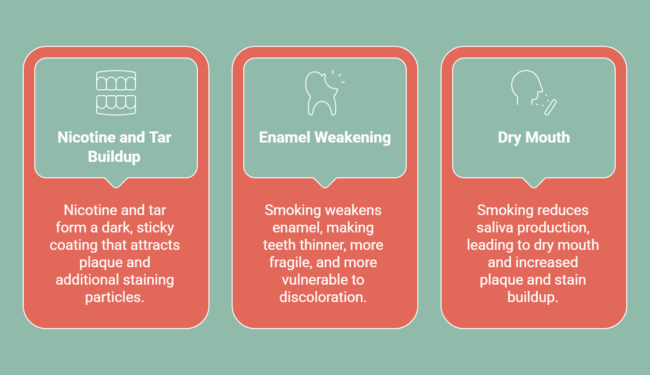
Severe teeth staining in smokers develops from chemical exposure. These chemicals stick to enamel and gradually penetrate deeper layers, creating stubborn yellow or brown discoloration. Combined with plaque buildup and enamel changes, these stains become difficult to remove with regular cleaning.
1. Nicotine and Tar Buildup
Nicotine and tar are the primary causes of tobacco stains. Tar forms a dark, sticky coating on the teeth that attracts plaque and additional staining particles. Nicotine, although colorless at first, turns yellow when exposed to oxygen and gradually darkens the enamel.
These particles do not remain only on the surface. They penetrate microscopic pores and tiny grooves within the enamel, allowing stains to settle deeper into the tooth structure over time. This microscopic stain penetration is one reason tobacco stains are harder to remove than common food stains.
2. Enamel Weakening
Smoking can weaken enamel by creating a more acidic oral environment. As the outer protective layer wears down, teeth become thinner, more fragile, and more vulnerable to discoloration.
Weakened enamel also becomes more porous, making it easier for pigments from tobacco to become trapped inside the tooth surface. As this porous enamel trapping increases, stains settle faster, and whitening results may become less even or shorter-lasting.
3. Dry Mouth
Smoking reduces saliva production, leading to dry mouth. Saliva helps wash away food particles, neutralize acids, and control bacteria, so lower levels allow plaque and stains to build up more easily.
A dry oral environment also encourages tartar formation, which traps additional stains and often requires professional cleaning to remove. In some cases, reduced saliva can also increase sensitivity during or after smokers teeth whitening treatments.
Together, these factors create deep, persistent stains that go beyond surface discolouration. This is why smokers often need more targeted treatments, as standard cleaning methods are usually not enough to fully restore the natural shade of their teeth.
Can Smokers’ Teeth Be Whitened Successfully?
Yes, smokers’ teeth can be whitened successfully, even when stains are deep and long-standing. Professional treatments can noticeably reduce yellow or brown discoloration caused by tobacco, helping improve the overall appearance of the smile.
However, whitening does have limits. Severe tobacco staining may not return teeth to their original natural white shade, especially if discoloration has penetrated deep into the enamel over many years. Results vary based on stain severity, enamel condition, and smoking habits.
It is also important to know that whitening treatments only work on natural teeth. Restorations such as crowns, veneers, bonding, or fillings will not change color during treatment, which can sometimes create uneven shade differences.
For the best outcome, a professional dental evaluation is essential. Your dentist can assess the depth of staining, check enamel health, and recommend the most effective whitening approach for safer and more realistic results.
What Are the Best Teeth Whitening Options for Smokers?
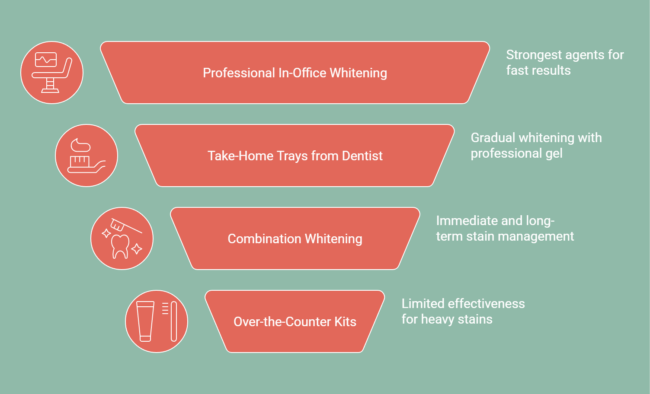
The best teeth whitening for smokers depends on how deep the stains are and how quickly results are needed. Professional treatments are usually more effective because they use stronger whitening agents that can break down stubborn discoloration. Over-the-counter products may help with mild stains but rarely deliver significant results for long-term smokers.
1. Professional In-Office Whitening
For smokers with significant staining, professional in-office whitening is often the most effective option. It delivers faster and more noticeable results than over-the-counter products, especially for stains caused by long-term tobacco use.
The treatment involves applying a high-concentration hydrogen peroxide gel directly to the teeth while the gums and lips are protected. In many cases, a special light or laser is used to accelerate the whitening process and help break down years of tobacco discoloration.
Professional whitening works best on extrinsic stains, which affect the outer surface of the teeth. However, smokers can also develop intrinsic stains that settle deeper within the tooth structure over time, making them harder to remove completely. Because of this, some patients may require multiple sessions for better improvement, and whitening relapse can occur if smoking continues after treatment.
Key benefits include:
- Strongest whitening agents available
- Faster results compared to at-home products
- Professional supervision for safer treatment
- More effective for heavy tobacco staining
- Can noticeably improve tooth shade in a short time
2. Take-Home Trays from a Dentist
Custom take-home trays are another effective option for smokers who prefer gradual whitening at home. This method combines the convenience of at-home treatment with professional-strength whitening gel, making it more effective than standard over-the-counter products.
Your dentist creates custom-fitted trays using impressions of your teeth. This allows the whitening gel, usually containing hydrogen peroxide or carbamide peroxide, to spread evenly across the teeth while reducing unnecessary contact with the gums.
Results develop more gradually than in-office whitening and typically require daily use for about two weeks or longer. Consistency is important, as irregular tray use can lead to uneven whitening results. Continued nicotine exposure during treatment can also slow progress and cause new stains to develop, making it harder to achieve or maintain a brighter shade.
3. Combination Whitening
Combination whitening is often recommended for heavy smokers because it addresses both immediate stain reduction and long-term whitening maintenance. Using both professional in-office treatment and take-home trays allows stains to be treated in multiple stages rather than relying on a single method alone.
The in-office session provides an initial oxidation effect that quickly targets concentrated tobacco discoloration and brightens the outer enamel layer. This creates a cleaner base before deeper stain management begins through at-home treatment.
Afterward, custom take-home trays gradually lift remaining discoloration over time while helping maintain more even whitening results. For smokers, this combination approach is often more effective because it improves shade consistency, supports longer-lasting results, and provides an easier way to manage future staining with touch-up treatments if needed.
4. Over-The-Counter Whitening Kits
Over-the-counter (OTC) whitening kits are widely available in pharmacies and supermarkets, but they are usually less effective for smokers with deep tobacco stains. These products, including whitening strips, pens, and generic trays, contain lower peroxide concentrations than professional treatments, limiting their ability to treat heavy discoloration.
While many products claim to be the best teeth whitener for smokers, most are designed for mild surface stains rather than long-term tobacco buildup. Whitening strips can also struggle to cover uneven teeth properly, which may lead to patchy or inconsistent results in areas where the strips do not fully contact the enamel.
Another concern is overuse. Using OTC whitening products too frequently or for longer than recommended can increase tooth sensitivity and gum irritation, especially in smokers with weakened enamel. For this reason, these products are generally better suited for maintenance after professional whitening rather than as a primary treatment for severe staining.
If you do consider OTC options, look for:
- Products with the American Dental Association (ADA) Seal of Acceptance
- Whitening toothpaste to help reduce new surface stains daily
Professional treatments still remain the most reliable option for visible and longer-lasting smokers teeth whitening results.
How Much Does Teeth Whitening for Smokers Cost in the US?
The cost of smokers teeth whitening can vary depending on the treatment method, stain severity, and number of sessions required. Understanding teeth whitening options for smokers cost usd helps compare treatments more realistically, especially for smokers dealing with deep tobacco discoloration. Professional options are more expensive than over-the-counter products, but they are generally more effective for stubborn stains.
Professional in-office whitening typically costs between $650 and $1,000+. These treatments use high-strength whitening agents and often provide the fastest visible improvement, making them a common choice for heavy smokers with severe staining.
Dentist-prescribed take-home trays usually range from $400 to $600. They include custom-fitted trays and professional-strength gel that gradually whiten teeth over several weeks, offering more controlled at-home treatment.
Over-the-counter whitening kits, such as strips or generic trays, generally cost between $20 and $100. Whitening toothpaste is the lowest-cost option, typically ranging from $5 to $20, but it mainly helps manage mild surface stains rather than deep tobacco discoloration.
The right investment depends on how severe the staining is and how long-lasting the results need to be. For smokers, treatments designed for deeper stain removal often provide more noticeable and consistent improvement.
What Results Can Smokers Expect Before and After Whitening?
Smokers can achieve visibly whiter teeth, but results depend on stain depth, enamel condition, and consistency of care. After whitening, teeth often appear brighter and more even in color, though heavy tobacco staining may limit how white they can become. Understanding smokers teeth before and after whitening helps create more realistic expectations for visible improvement.
It is also important to understand that “natural white” varies from person to person. Whitening is designed to brighten teeth and reduce discoloration, not create unnaturally paper-white teeth often seen in edited social media images. Factors such as enamel thickness, stain severity, and overall oral health all influence the final shade.
What Changes After Whitening?
- Brighter appearance: Teeth look cleaner and more even in colour
- Shade improvement: Noticeable lightening, especially with professional treatments
- Enhanced confidence: A clearer, healthier-looking smile
What Affects the Final Results?
- Severity of stains: Deeper stains limit how white teeth can become
- Enamel condition: Worn or weakened enamel can affect brightness
- Type of treatment: Professional methods deliver stronger results
- Current habits: Ongoing smoking can reduce effectiveness
How Long Do Results Last?
- Shorter longevity: Stains can return faster compared to non-smokers
- Maintenance required: Regular cleanings and touch-ups help preserve results
- Lifestyle impact: Reducing smoking helps extend the effects of smokers teeth whitening
Realistic expectations are important. Whitening can significantly improve appearance, but long-term results depend on daily habits, enamel health, and continued maintenance.
What Are the Common Side Effects of Teeth Whitening for Smokers?
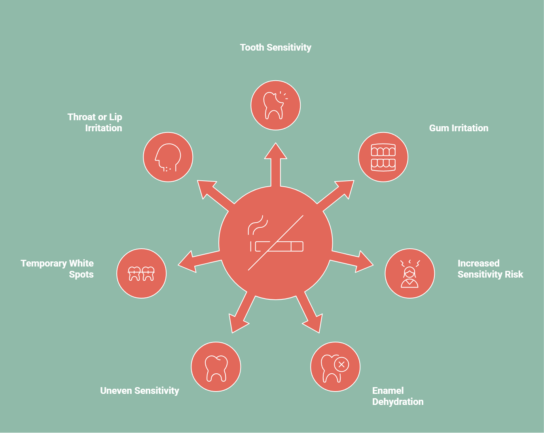
Teeth whitening is generally safe, but smokers may experience a few side effects due to existing enamel wear and deep staining. Most effects are temporary, though outcomes can vary depending on oral health and the severity of discoloration.
Here are some of the common side effects:
- Tooth sensitivity: Mild to moderate discomfort during or after treatment, especially with hot or cold foods
- Gum irritation: Temporary soreness if the whitening gel touches the gums
- Increased sensitivity risk: Weakened enamel from smoking can make sensitivity more noticeable
- Enamel dehydration: Teeth may feel slightly dry or chalky immediately after whitening, which usually resolves quickly
- Uneven sensitivity: Some teeth may feel more sensitive than others due to uneven enamel wear
- Temporary white spots: Mild white patches can appear during treatment, but typically fade within a few hours
- Throat or lip irritation: Rare irritation if whitening agents come into contact with soft tissues
Most side effects are short-term and subside within a few days after treatment, especially with proper care and guidance during smokers teeth whitening.
How Can Smokers Maintain Whiter Teeth After Treatment?

Whitening results can fade quickly if smoking continues, as new stains can begin forming soon after treatment. Maintaining a brighter smile requires smoker-specific habits that reduce repeated exposure to nicotine, tar, and other staining compounds.
Here are practical smokers teeth whitening tips to help maintain results for longer:
- Avoid smoking immediately after whitening: Teeth remain more porous for 24–48 hours after treatment and can absorb stains faster
- Rinse after every cigarette: Helps reduce stain particles before they settle into enamel
- Use a straw for coffee, tea, or soda: Minimizes direct contact between dark liquids and teeth
- Limit stain triggers: Reduce coffee, tea, and other staining drinks when possible
- Choose nicotine alternatives carefully: Some nicotine gums, lozenges, and vaping liquids may still contribute to discoloration
- Brush after smoking when possible: Helps remove fresh residue before stains deepen
- Use an electric toothbrush: More effective at removing plaque and surface buildup common in smokers
- Switch to low-abrasive whitening toothpaste: Helps control stains without wearing down enamel further
- Increase water intake throughout the day: Keeps the mouth hydrated and supports natural stain removal through saliva
- Avoid chain smoking: Frequent exposure gives stains less time to clear from the enamel surface
- Schedule smoker-focused dental cleanings: More frequent cleanings may help manage tartar and tobacco buildup earlier
- Reduce or quit smoking: The most effective way to slow recurring discoloration and maintain whitening results
Consistent maintenance is especially important for teeth whitening for smokers and coffee drinkers, as repeated exposure to staining agents can shorten how long whitening results last.
Why Choose Professional Whitening at Dentist Tree of the Heights?
Professional care makes a noticeable difference when treating deep tobacco stains. At Dentist Tree of the Heights, each whitening plan is tailored based on stain severity, enamel condition, and overall oral health, ensuring safer and more effective smokers teeth whitening results.
What Sets Dentist Tree Apart
- Personalized treatment plans: Designed for stubborn smoking-related stains
- Advanced whitening techniques: Stronger, clinically proven methods for deeper results
- Comfort-focused care: Measures in place to reduce sensitivity and protect gums
- Experienced dental team: Skilled in handling complex discoloration cases
Professional guidance helps achieve more consistent and longer-lasting results compared to generic options.
Explore your options or book an appointment with us to get started with a customized whitening plan.
Conclusion
Stubborn stains from smoking can make teeth look darker and harder to restore, but effective smokers teeth whitening options are available. The right treatment, combined with consistent care, can noticeably improve tooth shade and overall appearance.
Results depend on stain depth and daily habits, so maintenance plays a key role in keeping your smile brighter for longer. If you’re considering whitening, a professional evaluation can help identify the most suitable approach for your teeth.
Frequently Asked Questions
Can teeth whitening remove long-term tobacco stains from smoking?
Yes, professional smokers teeth whitening can significantly lighten long-term tobacco stains by breaking down discoloration deep within the enamel. Results vary based on stain severity, so a professional evaluation is important. At Dentist Tree of the Heights, tailored treatments are designed to safely deliver more effective and consistent results.
Do at-home whitening treatments work on smokers’ teeth?
OTC kits have limited impact on deep stains. They may reduce mild discoloration but won’t deliver major changes. Dentist-prescribed kits with professional-strength gel are a more effective at-home option for smokers.
How long do teeth whitening results last for smokers compared to non-smokers?
Results from smokers teeth whitening typically last a shorter time due to continued exposure to staining agents. Effects can last a few months to a year, depending on smoking habits, oral hygiene, and how often touch-up treatments are done.
Are there any side effects to teeth whitening for people who smoke?
The most common side effect is temporary tooth sensitivity, which may be slightly more noticeable in smokers. Gum irritation can also occur but is usually mild. Professional treatments help minimize discomfort and ensure safe smokers teeth whitening results.
Can whitening toothpaste help smokers get rid of dental stains?
Whitening toothpaste can help remove new surface stains but is not effective for deep tobacco discoloration. It works best as a maintenance tool after professional treatment rather than a primary solution for long-term smoking stains.
What are some effective teeth whitening tips for smokers?
Simple teeth whitening tips for smokers include rinsing after smoking, brushing twice daily, avoiding staining drinks, and scheduling regular cleanings. These habits help slow down discoloration and maintain results for longer.