

Key Highlights
- Can dental crowns be whitened? No, crowns do not respond to bleaching treatments.
- Whitening lightens natural teeth only, which can make crowns look darker by contrast.
- Surface stains can be polished off, but true dental crown whitening is not possible.
- Color mismatch after whitening is cosmetic, not a failure of the crown.
- Whitening should be completed before getting a crown for proper shade matching.
- Replacing the crown is the most effective fix when color differences are noticeable.
You glance in the mirror after whitening your teeth, expecting a brighter, more even smile. Instead, one tooth looks slightly dull or darker than the others. It can be confusing and disappointing, especially when you were hoping for a uniform result. If you have started wondering, can dental crowns be whitened, you are not alone. Many people run into this exact situation after improving the shade of their natural teeth.
It is easy to assume dental crown whitening works the same way as whitening enamel. After all, everything is part of the same smile. When the crown does not change color, frustration builds, and you may even worry that something went wrong. In reality, this difference happens for a specific reason related to the materials used in crowns.
In this guide, we will explain can dental crowns be whitened, why crowns behave differently from natural teeth, and what real options can help restore balance and confidence in your smile.
Why Dental Crowns Cannot Be Whitened?
It is common to assume whitening should work on every tooth you see, but crowns and natural teeth respond very differently. The reason comes down to material, not technique.
Natural teeth are made of enamel, which contains tiny pathways that allow whitening agents to penetrate and break apart stain molecules. Crowns, on the other hand, are artificial restorations designed to keep a stable color over time.
Crowns are typically made from:
- Porcelain or ceramic for a natural look
- Zirconia for strength and durability
- Porcelain fused to metal in some restorative cases
These materials are sealed and non-porous. Because of this structure, whitening gels cannot soak in or change their shade. The color of a crown is selected during fabrication and remains fixed after placement.
What this means during whitening:
- Natural teeth may become lighter
- Crowns stay the same shade
- Color differences can become more noticeable
- This is cosmetic, not a sign of crown failure
Whitening products are generally safe around crowns, but they do not make them lighter. Highly abrasive toothpastes may dull the surface over time, yet bleaching itself neither harms nor brightens the restoration.
Wondering how long your brighter smile will actually last? Learn what affects whitening results and how to keep your teeth looking radiant for longer.
Why Does a Crown Look Darker After Teeth Whitening?
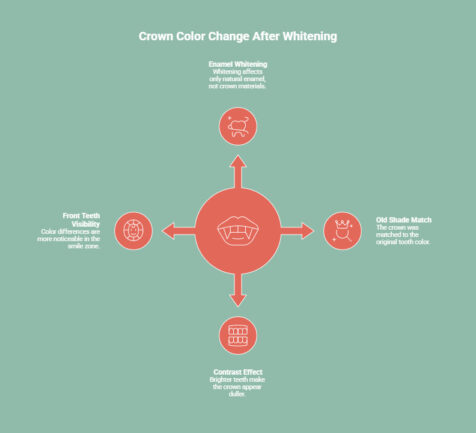
You finish whitening your teeth and expect everything to look brighter and more uniform. Instead, one tooth suddenly stands out. It can feel like something went wrong, but this change is actually a normal visual effect caused by how whitening works.
1. Whitening Only Affects Natural Enamel
Whitening treatments lighten stains inside natural teeth. Crown materials like porcelain or ceramic do not respond to bleaching agents, so their color stays exactly the same.
2. The Crown Was Matched to Your Old Shade
Your dentist originally selected a crown color that blended with your teeth at that time. Once your natural teeth become lighter, that previous match no longer holds.
3. Contrast Makes the Crown Stand Out
The crown does not darken. Brighter surrounding teeth increase contrast, which makes the crown appear more yellow or dull by comparison.
4. Front Teeth Show It More
Color differences are more noticeable in the smile zone, where light hits directl,y and attention naturally goes.
This is an aesthetic mismatch, not a problem with the crown’s health, fit, or strength.
Worried about discomfort during whitening? Learn how professional solutions make teeth whitening for sensitive teeth safer, gentler, and far more comfortable than you might expect.
Can Surface Stains Be Removed From a Crown?
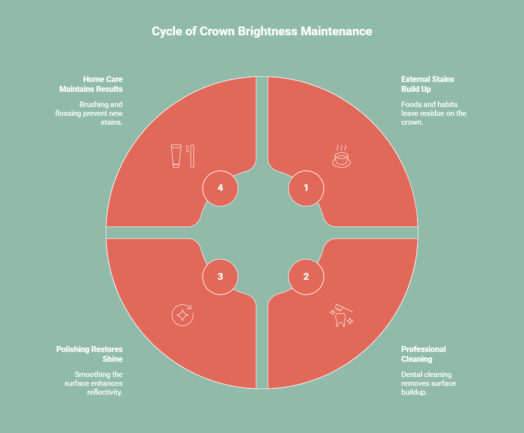
Even though crowns cannot be whitened from within, their surface can still lose brightness over time. Daily exposure to foods, drinks, and habits can leave residue that affects how reflective and clean the crown looks.
1. External Stains Can Build Up
Coffee, tea, red wine, and tobacco can leave a thin stain layer on the outer surface, making the crown appear dull.
2. Professional Cleaning Can Improve Appearance
A dental cleaning uses polishing tools and pastes to gently remove surface buildup without harming the crown material.
3. Polishing Restores Shine
Smoothing the surface helps the crown reflect light better, which improves how bright it looks.
4. Home Care Helps Maintain Results
Brushing, flossing, and regular dental visits reduce new stain accumulation and help the crown keep its original finish.
This approach refreshes the crown’s appearance, but it does not change its underlying shade.
What Cosmetic Options Fix a Dark Crown?
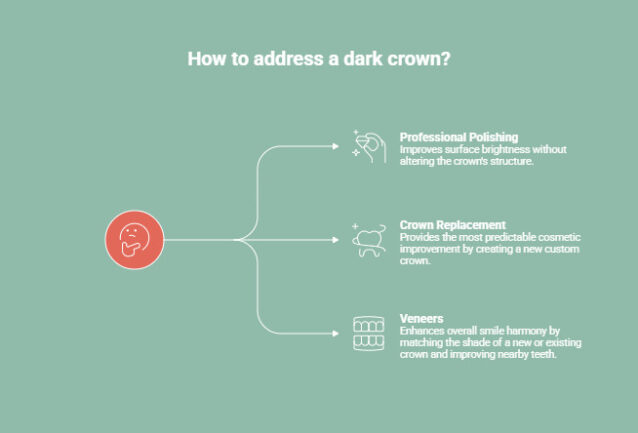
When a crown looks darker or no longer blends with your smile, whitening is not the answer. Instead, cosmetic dentistry focuses on restoring color harmony. The right solution depends on whether the issue is surface staining, aging materials, or overall smile balance.
1. Professional Polishing
Sometimes the crown itself is not truly discolored. It just has a film of buildup that makes it look dull. Professional polishing is a simple, conservative first step that improves surface brightness without altering the crown’s structure.
Your dental team can remove:
- Stains from coffee, tea, and wine
- Plaque along the gum line
- Tobacco-related surface discoloration
This treatment will not lighten the original crown shade, but it can restore its natural luster and help it blend better with surrounding teeth.
2. Crown Replacement
If shade mismatch is obvious, replacing the crown provides the most predictable cosmetic improvement. This is especially helpful after teeth whitening or when the crown is older and worn.
The process usually includes:
- A consultation to determine your ideal smile shade
- Whitening natural teeth first, if needed
- Creating a new custom crown matched to your current tooth color
A new restoration allows precise shade control and creates a more uniform smile.
When a crown needs replacement for a better shade match, dentists take careful steps to ensure it blends naturally with your smile. They use professional shade guides, check lighting, assess translucency, and coordinate closely with the dental lab so the new crown looks balanced, lifelike, and not noticeably different from surrounding teeth.
3. Veneers for Smile Balance
When several front teeth need improvement, veneers may be part of a broader cosmetic plan. Instead of focusing on one tooth, this approach enhances overall smile harmony.
Veneers can:
- Match the shade of a new or existing crown
- Improve nearby teeth with chips or uneven color
- Create a symmetrical, cohesive smile appearance
This option works best when multiple aesthetic concerns exist, not just crown color.
Choosing the right approach depends on your goals, budget, and how noticeable the mismatch feels to you. A cosmetic consultation helps you weigh these options and find the solution that restores confidence in your smile.
Should Teeth Be Whitened Before Getting a Crown?
If you are thinking about both whitening and a new crown, the order of treatment can make a big difference in how natural your smile looks. Many patients do not realize timing affects color matching, which is why planning ahead helps prevent visible shade differences later.
- Whitening should always be completed before crown shade selection
- Crowns are made to match the current color of your natural teeth
- If the teeth lighten later, the crown will not change shade
- Dentists usually recommend waiting one to two weeks after whitening
- This waiting period allows the tooth color to fully stabilize
Following this sequence gives your dentist the right foundation for shade matching and helps ensure your new crown blends smoothly with your brightest smile, reducing the chances of needing future adjustments or replacements due to color mismatch.
When Should You See a Cosmetic Dentist?
You do not need a dental emergency to seek cosmetic guidance. Sometimes the issue is simply that your smile does not look the way you hoped. When color differences or restoration mismatches affect confidence, professional cosmetic advice becomes valuable.
- A crown appears darker or brighter than nearby teeth
- Your smile looks uneven after the whitening treatment
- Older dental work no longer matches your natural teeth
- You feel self-conscious when smiling or speaking
- You want a more balanced, refreshed smile
A cosmetic dentist looks at your entire smile, not just one tooth, and recommends solutions that improve appearance while protecting oral health, helping you move forward with clarity instead of uncertainty about your options.
If this sounds familiar, a cosmetic consultation is the next step.
How Dentist Tree of the Heights Can Help?
If whitening left your crown looking darker than your natural teeth, the team at Dentist Tree of the Heights focuses on restoring balance, not just treating one tooth. They combine cosmetic expertise with patient-first care to help your smile look natural and even.
They can help by:
- Removing surface stains through professional polishing
- Replacing mismatched crowns with custom shade-matched restorations
- Providing professional teeth whitening for natural teeth
- Creating personalized cosmetic plans when multiple teeth are involved
You get clear guidance, comfortable care, and results designed around your smile goals.
Book a consultation to explore safe, professional whitening and cosmetic options.
Final Thoughts
Dental crowns cannot be whitened, but that does not mean you are out of options. Understanding how crown materials differ from natural enamel helps you avoid frustration and unrealistic expectations. If your crown no longer matches your teeth, solutions like polishing or replacement can restore balance.
The key is planning whitening and restorative work in the right order. A cosmetic consultation gives you clear guidance and personalized options, so your smile looks natural, even, and confident rather than mismatched or distracting.
Frequently Asked Questions
Will whitening my natural teeth make my crowns look darker?
Yes. Whitening lightens natural enamel but does not affect crowns. As surrounding teeth become brighter, the unchanged crown may appear darker or more yellow by comparison, creating a visible color mismatch that is cosmetic rather than a sign of failure.
Is discoloration of dental crowns permanent?
The internal shade of a crown is permanent. Surface stains may be polished during professional cleaning, but if the crown color no longer matches your teeth, the only way to change its shade is by replacing the restoration.
Do over-the-counter whitening kits damage dental crowns?
Most whitening kits do not chemically damage crowns, but abrasive products can scratch the surface, making it appear dull and more prone to staining. Consulting your dentist helps protect both natural teeth and existing restorations.
How can I make my crown white again?
Whitening treatments cannot change a crown’s color. Professional polishing can remove surface stains and restore brightness, but achieving a lighter shade usually requires replacing the crown so it matches your natural teeth after whitening.
Does hydrogen peroxide whiten crowns?
No. Hydrogen peroxide works on porous natural enamel by breaking down stain molecules. Crown materials like porcelain and zirconia are non-porous, so the bleaching agent cannot penetrate or change their color.
Why does my crown look whiter than my natural teeth?
Natural enamel stains over time from food, drinks, and aging, while crown materials resist discoloration. This difference in how they change can make your natural teeth look darker, causing the crown to stand out as noticeably whiter.