

Key Highlights
- Recognizing severe pain, swelling, and infection are key signs that you may need an emergency extraction for your wisdom teeth.
- Impacted wisdom teeth that are trapped beneath the gums can cause a dental emergency, leading to cysts, crowding, and damage to other teeth.
- An emergency procedure involves an initial X-ray, anesthesia for comfort, and the careful removal of the tooth by an oral surgeon.
- Proper aftercare is crucial for healing and preventing complications like dry socket, ensuring your long-term oral health.
- If you experience difficulty opening your mouth, fever, or swollen lymph nodes, you should seek immediate dental care.
That throbbing pain in the back of your mouth. The swelling that won’t go down. The sharp sting every time you try to eat. When your wisdom teeth act up, it’s more than just discomfort.
For many people, these teeth never cause trouble. But for others, they become a source of relentless pain, infection, or even difficulty opening the mouth, sometimes demanding emergency wisdom tooth extraction.
This guide will help you recognize when wisdom tooth pain becomes an emergency, what symptoms to watch for, and what happens during an urgent extraction.
What Are the Signs You Need To Get Emergency Removal of Wisdom Tooth?
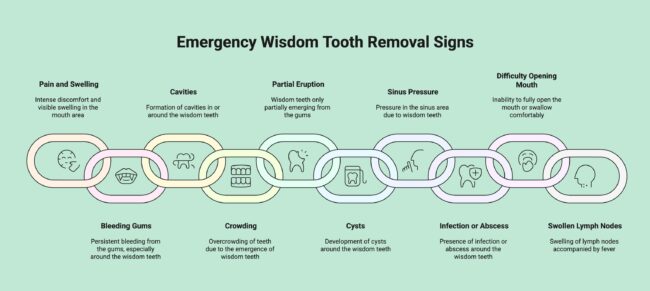
That sharp ache in your jaw might seem small now, but it can escalate fast. Before it turns into severe pain or infection, know the signs that mean it’s time for emergency wisdom tooth removal.
1. Pain and Swelling
As wisdom teeth grow or become impacted, they push against gums or neighboring teeth, causing inflammation and pressure buildup.
What to watch for:
- Throbbing pain in the back of your mouth
- Swelling or “chipmunk cheeks”
- Pain spreading to your jaw or ear
If pain is constant or swelling spreads to your face or jaw, it’s an emergency; infection may be developing. Seek dental care immediately. Mild pain can wait for a dental visit soon.
2. Bleeding Gums
Partially erupted wisdom teeth irritate gum tissue, making it swollen, tender, and prone to bleeding. Plaque and bacteria accumulate easily in these areas.
What to watch for:
- Bleeding when brushing or flossing
- Red, puffy gums
- Persistent bad breath
Occasional bleeding isn’t an emergency, but ongoing bleeding with swelling signals early gum disease. Schedule a dentist visit before it turns into an infection.
3. Cavities
Wisdom teeth sit far back in the mouth, where brushing and flossing are difficult. Food debris and bacteria get trapped, leading to decay.
What to watch for:
- Sensitivity to hot, cold, or sweet foods
- Pain while chewing
- Dark spots or visible holes in the tooth
Cavities in wisdom teeth are common but not urgent unless pain or swelling appears. Plan to see your dentist soon to prevent infection or further decay.
4. Crowding
When wisdom teeth erupt without enough space, they push existing teeth out of alignment, causing pressure and shifting.
What to watch for:
- Crooked or overlapping teeth
- Bite changes or mild jaw pain
- Tightness in your lower or upper teeth
Crowding isn’t an emergency, but it can undo orthodontic work or cause long-term bite issues. Your dentist may recommend removal to prevent future misalignment.
5. Partial Eruption
When wisdom teeth only partially break through the gum, a flap of tissue forms that traps food and bacteria, leading to pericoronitis, a painful gum infection.
What to watch for:
- Swollen, red gums
- Pain while chewing
- Bad taste or smell in your mouth
Mild irritation can wait, but swelling, fever, or increased pain mean infection is starting. If symptoms worsen, seek emergency care to prevent the infection from spreading.
6. Cysts
An impacted wisdom tooth can form fluid-filled sacs (cysts) in the jawbone that slowly expand and damage bone or nerves.
What to watch for:
- A lump or swelling near the jaw
- Persistent jaw pressure or dull pain
- Shifting or loosening nearby teeth
Cysts aren’t immediately serious, but they can cause serious bone loss over time. Your dentist may recommend surgical removal before permanent damage occurs.
7. Sinus Pressure
Upper wisdom teeth sit close to the sinus cavities. As they grow or push upward, they can press against the sinuses and cause discomfort.
What to watch for:
- Headaches or facial pain
- Nasal congestion or pressure behind the eyes
- Ear fullness or discomfort
If sinus pressure is mild, it’s not an emergency. But if pain is severe or paired with swelling or fever, seek prompt care; infection may be spreading into the sinus cavity.
8. Infection or Abscess
Impacted wisdom teeth can trap bacteria beneath the gums, leading to infection or abscess, a pocket of pus that can spread rapidly.
What to watch for:
- Severe throbbing pain
- Swollen, red gums
- Bad taste or odor in your mouth
- Fever or swollen lymph nodes
This is an emergency. Infections can spread to your jaw, face, or bloodstream. Seek urgent dental or medical care for drainage, antibiotics, or possible extraction.
9. Difficulty Opening Mouth or Swallowing
Inflammation around impacted wisdom teeth can cause trismus (lockjaw), restricting jaw movement and making eating or talking difficult.
What to watch for:
- Pain when opening your mouth
- Jaw stiffness or limited movement
- Trouble swallowing or speaking
If it’s hard to open your mouth or swallow, it could indicate a deep tissue infection. This is a dental emergency; seek immediate care to prevent it from worsening.
10. Swollen Lymph Nodes and Fever
When infection spreads beyond the tooth, your immune system activates nearby lymph nodes to fight bacteria.
What to watch for:
- Tender lumps under your jaw or neck
- Fever, chills, or fatigue
- Pain radiating from the jaw or throat
Swollen lymph nodes and fever mean the infection has moved beyond your mouth. This requires urgent treatment to prevent serious complications like sepsis.
What to Expect After Emergency Wisdom Tooth Removal?
Having your wisdom tooth removed can bring immediate relief from pain and pressure, but recovery takes a bit of time and patience. It’s completely normal to have mild swelling, soreness, or light bleeding in the first few days after oral surgery.
The key is to rest, follow your dentist’s instructions carefully, and give your body time to heal.
Here’s what you can expect throughout your recovery, and how to make the process easier and more comfortable.
Your Recovery Roadmap: What to Expect Day by Day
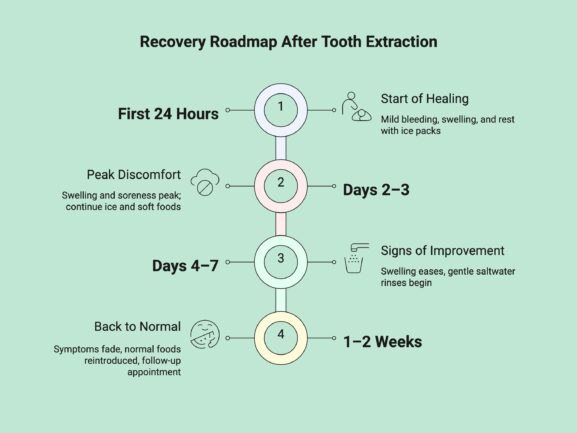
Knowing what’s normal at each stage can make recovery feel less stressful and more predictable. Here’s a general idea of how healing usually progresses after emergency wisdom tooth removal:
First 24 Hours – Start of Healing
Expect mild bleeding and swelling around the extraction site. Rest, keep your head elevated, and apply ice packs for 15–20 minutes at a time. Avoid rinsing, spitting, smoking, or using straws to protect the blood clot and prevent dry socket.
Days 2–3 – Peak Discomfort
Swelling and soreness usually peak during this stage. Continue using ice packs and take prescribed or over-the-counter pain medication as directed. Stick to soft, cool foods and avoid physical exertion to prevent irritation and help your mouth heal faster.
Days 4–7 – Signs of Improvement
You should start feeling better as swelling and discomfort ease. Resume light activities and begin gentle saltwater rinses after meals. Avoid smoking, straws, or hard foods that can disturb healing. Keep brushing carefully, avoiding the extraction site directly.
1–2 Weeks – Back to Normal
Most symptoms fade, and the back of the mouth feels close to normal. Continue saltwater rinses and gentle brushing to keep the area clean. Gradually reintroduce normal foods, and attend your follow-up appointment to ensure proper recovery and full healing progress.
Even though every recovery is slightly different, steady improvement is a good sign. If pain or swelling suddenly worsens, your body might be signaling that something’s off; reach out to your dentist right away.
Healing Like a Pro: Aftercare Tips That Make a Difference
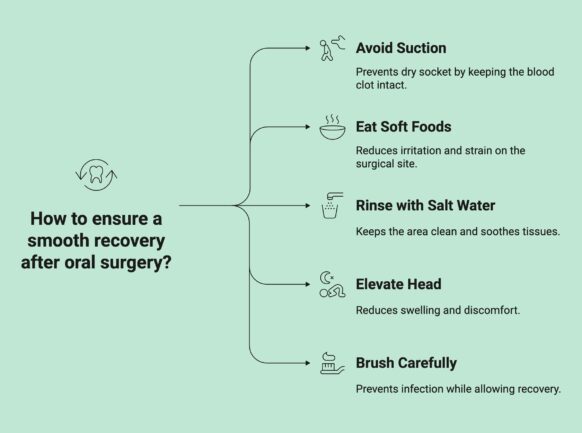
Good aftercare is what turns a smooth recovery into a successful one. These simple steps can help you heal faster and stay comfortable:
- Avoid smoking, spitting, or using straws: These actions create suction that can dislodge the blood clot protecting your healing site, leading to a painful condition called dry socket. Keeping that clot intact is key to a smooth, complication-free recovery.
- Stick to soft foods such as soups, yogurt, and mashed potatoes for the first few days. Soft textures prevent irritation and allow your mouth to heal without strain or pressure on the surgical site.
- Rinse gently with warm salt water 24 hours after surgery. This natural rinse keeps the area clean, reduces bacteria, and soothes the tissues without disturbing the healing process.
- Keep your head elevated when lying down. This helps fluid drain properly, reducing swelling and throbbing discomfort in the first few days.
- Brush carefully around the extraction site, but avoid direct contact until your dentist says it’s safe. Gentle cleaning keeps your mouth fresh and prevents infection while giving the surgical area time to recover.
It’s the little habits that make the biggest difference. Staying gentle, patient, and consistent helps your mouth heal quickly and prevents avoidable complications.
Wisdom Tooth Removal Costs: What You’re Really Paying For
Understanding potential costs can ease some of the stress before and after your procedure. Here’s a general breakdown of what to expect:
- Simple extraction: $200 to $400 per tooth
- Surgical or impacted extraction: $400 to $800+ per tooth
Here’s what’s typically included in the quoted cost:
- Initial examination and consultation: Your dentist will assess the position of your wisdom teeth and discuss treatment options.
- X-rays or digital imaging: These help determine the exact location and angle of your wisdom teeth, especially if they’re impacted.
- Local anesthesia: Used to numb the area and ensure a painless experience during extraction.
- The extraction procedure itself: Whether simple or surgical, this is the main part of your bill and includes any necessary incisions, bone removal, or sutures.
- Basic follow-up visit: Many dentists include a short check-up to make sure healing is on track.
What’s usually not included:
- Sedation or general anesthesia (extra $150–$500 depending on type)
- Prescription medications like antibiotics or pain relievers (purchased separately from the pharmacy)
- Advanced imaging, such as 3D cone-beam scans, if needed for complex cases
- Emergency or after-hours appointments that may carry additional fees
If you have dental insurance, part of the cost is often covered. For those without insurance, community dental programs and dental schools may offer reduced rates. Always ask your provider for an estimate before your procedure so you can plan confidently.
Why Choose Dentist Tree of the Heights for Emergency Wisdom Tooth Removal?
When a wisdom tooth emergency strikes, you don’t have time to second-guess your choice of care. At Dentist Tree of the Heights, we know how painful and stressful these situations can be.
That’s why our skilled oral surgeons and caring staff focus on delivering immediate relief in a calm, supportive setting.
We combine state-of-the-art technology with years of expertise to ensure your emergency extraction is safe, precise, and as painless as possible.
From severe pain to swelling or infection, we’re fully equipped to handle even the most complex wisdom tooth emergencies.
Call us today to schedule your emergency appointment, and let us restore your comfort and protect your long-term oral health.
Conclusion
Emergency wisdom tooth removal can be a daunting experience, but understanding the process can make it much more manageable.
From recognizing the signs that indicate the need for extraction to knowing what to expect during and after the procedure, being informed is important. Remember, timely intervention can prevent further complications and ensure a smoother recovery.
Frequently Asked Questions
Is it possible to get a walk-in appointment for wisdom tooth extraction in an emergency?
Many dental clinics and oral surgeons accept walk-in emergency appointments for wisdom tooth extraction if you’re in severe pain or have swelling, infection, or other urgent complications.
Are signs of Pericoronitis a reason to get wisdom tooth removed?
Yes, pericoronitis is a common reason for wisdom teeth removal. This painful infection of the gum tissue around a partially erupted wisdom tooth often recurs. Extraction is typically the most effective way to permanently resolve the infection and prevent it from returning.
How do I know if I have a dental emergency?
You likely have a dental emergency if you experience severe pain that doesn’t subside, significant swelling, signs of infection like fever or pus, or difficulty opening your mouth. If your wisdom tooth pain suddenly worsens, contact emergency dental services to protect your oral health.
Can I go to an emergency dentist for wisdom tooth removal right away?
You can and should go to an emergency dental clinic for urgent attention if your wisdom teeth are causing severe symptoms. Many clinics accommodate emergency cases and can schedule an appointment today to provide immediate relief and treatment.
Where to get emergency wisdom tooth removal near me?
You can search online for emergency wisdom tooth removal near me to find local dental clinics or 24-hour emergency dentists. Many cities have urgent dental care centers that handle wisdom tooth extractions on short notice.
What is emergency wisdom tooth removal cost?
The emergency wisdom tooth removal cost depends on factors like tooth position, impaction, and anesthesia type. On average, it ranges between $200 to $600 per tooth for simple cases and up to $1,000 for surgical extractions.
How much does emergency wisdom tooth removal without insurance cost?
Without dental insurance, the cost of emergency wisdom teeth removal varies widely depending on the complexity of the extraction and your location. It can range from a few hundred to over a thousand dollars per tooth. It’s best to discuss cost considerations with the dental services provider beforehand.
Getting emergency wisdom tooth removal medicaid?
If you have Medicaid, coverage for emergency wisdom tooth removal depends on your state and specific plan. Some states cover extractions if the tooth is infected or causing severe pain, while others may have limited benefits.