

Key Highlights
- If you feel sudden emergency tooth pain, it can be a sign of tooth decay or a dental abscess.
- A good home remedy for quick, temporary relief is a saltwater rinse or a cold compress.
- A pain reliever you get over the counter can help you feel better until you see your dentist for dental care.
- It’s important to know when you have a dental emergency, like severe pain with fever or swelling.
- These tips can provide temporary relief, but only professional dental care will solve the root cause.
- Putting clove oil on the affected tooth can work as a natural anesthetic. It can help with pain until you are able to get help.
Toothaches rank among the most common dental emergencies, and for good reason. The pain can intensify rapidly, affecting your ability to work, eat, and sleep.
Your tooth is throbbing. You’ve tried to push through, but the pain keeps pulling your focus. You need relief, not tomorrow, not next week, but today.
That’s why it’s important to schedule a dental appointment for emergency tooth pain relief. But you do not have to feel pain while you wait.
This guide gives you quick and easy tips to help with the pain. You can use these tips for temporary relief before you visit your dentist.
What Exactly Is Emergency Tooth Pain and Why Does It Occur?
Emergency tooth pain is your body’s urgent signal that something serious is happening inside your mouth, far beyond a routine cavity or mild sensitivity.
It often stems from infection, abscess, nerve damage, or a cracked tooth, all of which need emergency dental care for severe tooth pain relief before they worsen.
This pain tends to appear suddenly and intensify quickly, sometimes spreading to your jaw, ear, or face. You might also notice swelling, fever, or a bad taste in your mouth, which are clear signs that the infection could be spreading beyond the tooth.
If left untreated, the bacteria can travel into your bloodstream and lead to serious conditions like sepsis or bacterial endocarditis, both of which can become life-threatening.
You may try an emergency tooth pain remedy for quick relief, but true, lasting emergency relief for extreme tooth pain only comes from prompt professional treatment.
What Are the Most Common Causes of Sudden Tooth Pain?
That sharp, throbbing pain that comes out of nowhere isn’t just bad luck; it’s your mouth’s warning that something deeper is wrong. Here’s what’s really going on beneath the surface, why it hurts, how it feels, and what might happen if you wait too long to treat it.
1. Tooth Decay That Reaches the Pulp
When decay eats through the outer layers of the tooth, it eventually hits the pulp, the soft center filled with nerves and blood vessels. The infection and inflammation here trigger sharp, constant pain.
How it feels: You might feel a deep ache or sensitivity that worsens with hot, cold, or sweet foods. The pain can linger even after the trigger is gone.
What it could lead to: Without treatment, the infection can spread to the root, forming an abscess that requires a root canal or extraction. While an emergency tooth pain remedy may ease discomfort briefly, you’ll need professional care to stop the infection completely.
2. Dental Abscess (Infection with Pus Buildup)
An abscess forms when bacteria infect the tooth root, creating a pocket of pus that pushes on surrounding tissues and nerves. The pressure buildup causes severe, throbbing pain.
How it feels: The pain often radiates to your jaw, ear, or neck. You might also notice swelling, fever, or a bad taste in your mouth.
What it could lead to: If left untreated, the infection can spread beyond your mouth to your jaw or even your bloodstream, which can become dangerous. While emergency tooth pain relief medicine can dull the pain, this condition always requires urgent dental treatment.
3. Cracked or Broken Tooth
A fracture or crack exposes the sensitive inner layers of the tooth, allowing air, bacteria, and temperature changes to irritate the nerve.
How it feels: You’ll feel sharp, shooting pain when chewing or biting, especially on the cracked side. Sensitivity to cold or pressure is also common.
What it could lead to: If ignored, bacteria can enter through the crack, causing a severe infection or even tooth loss.
4. Damaged Fillings or Crowns
When a crown or filling loosens or breaks, it exposes the dentin or nerve underneath. This leaves the tooth sensitive and vulnerable to decay or infection.
How it feels: You may feel sudden stabs of pain while eating or notice an uneven surface when you run your tongue over the tooth.
What it could lead to: Delaying repair can let bacteria enter and worsen decay. Though you can try a temporary pain remedy for comfort, professional restoration is the only way to fix the issue and stop future pain.
What Are the Best Home Remedies for Emergency Toothache Relief?
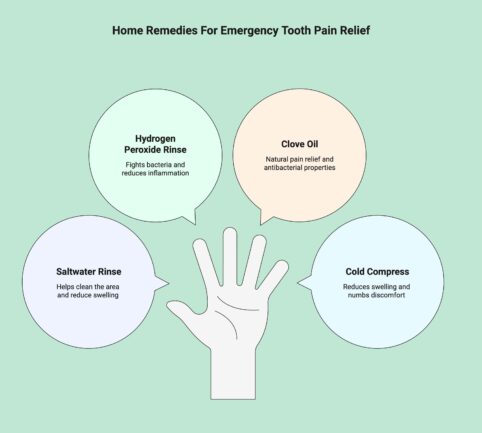
When you wait for your dental appointment, you can use a few easy home remedies for temporary relief. These remedies may not fix the problem, but they can help you handle the pain better.
- Saltwater rinse: Mix 1 teaspoon of salt in a glass of warm water. Swish it around your mouth for 30 seconds, then spit it out. This helps clean the area and reduce swelling.
- Hydrogen peroxide rinse: Combine equal parts of 3% hydrogen peroxide and water. Swish gently and spit, don’t swallow. It helps fight bacteria and reduce inflammation.
- Clove oil: Apply a few drops on a cotton ball and press it against the sore tooth. Clove oil has natural pain-relieving and antibacterial properties.
- Cold compress: Place an ice pack or cold cloth on the outside of your cheek near the painful area. It reduces swelling and numbs discomfort.
While you can try emergency tooth pain relief at home or take emergency tooth pain relief medicine, the comfort will only be temporary, and they won’t stop the infection. So seek professional help right away.
What Should You Do Right Away to Relieve Emergency Tooth Pain?
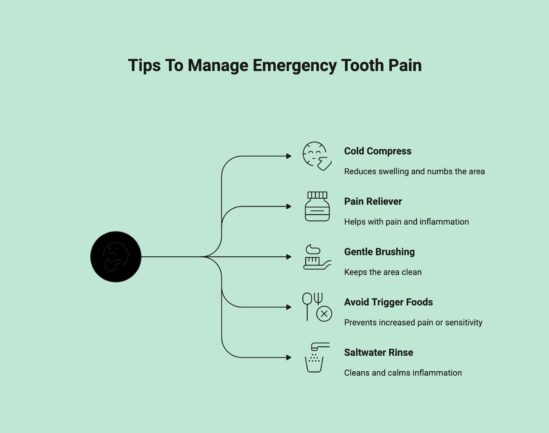
If your tooth pain suddenly worsens, take these immediate steps to manage it until you can reach a dentist:
- Apply a cold compress or ice pack on the outside of your cheek for 15-20 minutes to reduce swelling and numb the area.
- Take an over-the-counter pain reliever like ibuprofen to help with pain and inflammation (follow label directions).
- Brush gently around the sore area using a soft toothbrush to keep it clean.
- Avoid very hot, cold, or sugary foods that can trigger more pain or sensitivity.
- Rinse with warm saltwater to help keep the area clean and calm inflammation.
These steps can ease pain temporarily, but only a dentist can treat the root cause and prevent the infection from spreading.
Which Tooth Pain Symptoms Mean You Need Urgent Dental Care?
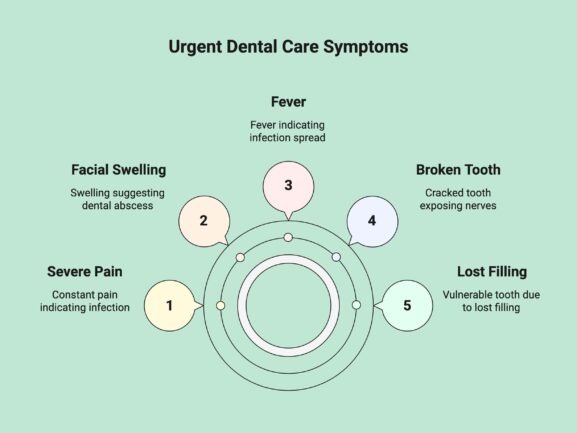
It is important to know when you should stop using home remedies and go get professional dental care right away. If you feel a toothache with severe pain that will not go away, this is a clear sign that you may have a dental emergency. If you notice any of the following, seek professional dental care immediately:
- Severe, constant tooth pain that doesn’t go away, a common sign of infection or nerve damage.
- Facial or jaw swelling that could indicate a dental abscess.
- Fever or general feeling of illness, suggesting the infection has spread.
- A broken or cracked tooth, especially if it’s causing pain or exposing nerves.
- A lost filling or crown, which can leave your tooth vulnerable to bacteria.
- Pain that worsens when lying down, a red flag for an abscess or deeper infection.
If your regular dentist isn’t available and symptoms are severe, go to an emergency dentist or the nearest emergency room to prevent further complications.
Need Emergency Dental Care in Houston? Dentist Tree of The Heights Has You Covered.
Painful toothaches, severe tooth infections, broken or missing teeth, our dentists at Dentist Tree of the Heights have seen it all.
We know how stressful dental emergencies can be, which is why our Houston team provides fast, compassionate, and expert care the moment you walk in.
From tooth abscess treatment and root canals to cracked tooth repair and gum care, we’re here when you need us most.
Don’t wait when it comes to your smile’s health; call us today for immediate, gentle emergency dental care.
Conclusion
It is important to know the signs of a dental emergency and make use of simple home remedies and over-the-counter medications. This way, you get some immediate relief and know what you can do at home.
While these steps can help for now, you still need to see a professional dental care provider for your long-term health. Do not let tooth pain take over your day.
If you feel unsure about what to do, get expert advice as soon as you can. We are here to help you manage this dental emergency. Get in touch with us for a free consultation right away!
Frequently Asked Questions
What should I do if my tooth pain gets worse at night?
Nighttime dental pain can feel worse because when you lie down, there is more blood flow to your head. You can use extra pillows to keep your head up. You may also want to take pain medications before you go to bed. A cold compress on your face can help too.
Can home remedies provide lasting relief until I see a dentist?
A home remedy can give some temporary relief when you feel pain and swelling in the affected tooth. It can help you feel better for a short time, but it does not fix the real dental problem.
When is it unsafe to treat tooth pain at home?
If you feel severe pain, have a fever, or notice swelling in your face, you need urgent care. These problems can show up if there is a serious infection. The infection can spread and get worse.
Where do you go for emergency tooth pain?
For emergency tooth pain, visit an emergency dentist or an urgent dental clinic. If unavailable, go to the nearest emergency room for temporary relief and professional guidance.
Can I get emergency pain meds for my tooth?
Yes, emergency dentists or ER doctors can prescribe pain medication or antibiotics for severe tooth pain emergency treatment, but you’ll still need a dentist to treat the underlying cause.
How can I find an emergency dentist near me quickly if my tooth pain gets worse?
Use Google Maps or an online search for “emergency dentist near me,” check clinic hours, and call ahead to confirm immediate availability before heading to the nearest location.