

Key Highlights
- A dental emergency is any issue requiring immediate attention to stop bleeding, alleviate severe pain, or treat an infection.
- Common dental emergencies include a knocked-out tooth, a bad crack, or a dental abscess causing swelling.
- If you experience severe pain or uncontrolled bleeding, it’s crucial to seek urgent dental care.
- Knowing how to manage the situation until you see an emergency dentist can prevent further damage.
- Prompt action is key; some issues, like a knocked-out tooth, have the best chance of being saved if treated within an hour.
You’re enjoying a quiet evening when suddenly, a sharp pain shoots through your jaw. Or maybe your child trips, and a tooth is knocked out before you can react.
Dental emergencies rarely come with warning signs; they strike fast, leaving you in pain, anxious, and unsure of what to do next.
Unlike routine dental issues, emergencies demand immediate attention. Ignoring the signs or waiting for a scheduled appointment can mean losing a tooth, worsening an infection, or risking your overall health.
Knowing how to recognize a true dental emergency and how to act before you reach the dentist can make the difference between saving your smile and facing long-term complications.
So, when should you seek help for a dental emergency? Let’s find out.
What is a Dental Emergency?
A dental emergency is any problem with your teeth or gums that needs immediate treatment.
Think of it as a situation that is potentially serious or life-threatening and can’t wait for a regular appointment. You can typically recognize a dental emergency if you are experiencing symptoms like uncontrolled bleeding, a severe toothache that doesn’t improve with medication, or swelling in your face or jaw. These are clear signs that you need to seek help right away to protect your oral health.
So, how can you tell if your issue requires urgent professional care?
If the problem involves broken facial bones or an infection that could compromise your airway, it’s a definite emergency. The American Dental Association classifies situations that involve ongoing tissue bleeding or severe pain and infection as emergencies. If you’re unsure, it’s always better to be safe and call your dentist. Less urgent problems, like a small chip in a tooth without pain, can usually wait for a scheduled visit.
What are the Causes of Dental Emergencies?
You might experience a dental emergency for many different reasons, often when you least expect it.
Accidents like a fall, a car crash, or even a sports injury can cause sudden dental trauma. Everyday habits also put your teeth at risk; biting down on hard foods, chewing ice, or using your teeth to open packages can all lead to cracks or breaks.
Some emergencies develop slowly over time. Advanced tooth decay or untreated gum disease can progress until they trigger severe pain, swelling, or a dental abscess. In these cases, your body sends clear warning signals: uncontrolled bleeding, intense discomfort, or noticeable swelling.
The bottom line? If you’re in doubt, treat the situation as urgent and contact your dentist right away. Acting quickly can prevent small problems from turning into lasting damage.
How to Handle Common Dental Emergencies?
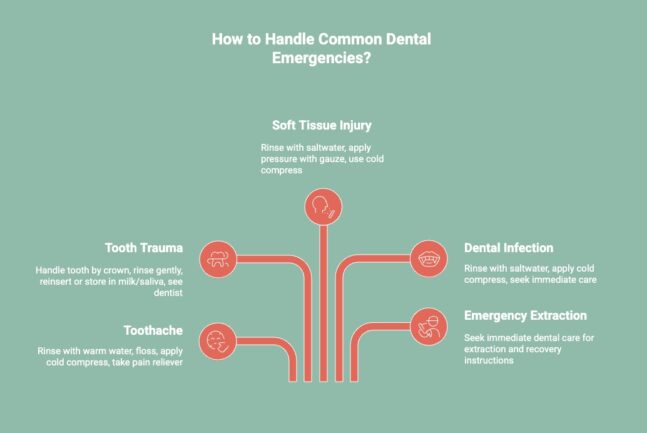
Knowing what to do when a dental crisis strikes can make a huge difference in the outcome. Quick and correct action can relieve severe pain, save a tooth, and prevent an infection from getting worse. Whether it’s a sudden toothache or a traumatic injury, your response matters.
1. Toothache
A severe toothache can signal an infection or abscess.
- Rinse your mouth with warm water.
- Floss gently to remove trapped food.
- Apply a cold compress to reduce swelling.
- Take an over-the-counter pain reliever like ibuprofen or acetaminophen.
- Do not place aspirin directly on the tooth or gums.
2. Tooth Trauma
Knocked-out or broken teeth require immediate care.
Knocked-Out Tooth:
- Hold by the crown, not the root.
- Rinse gently without scrubbing.
- Try to reinsert in the socket, or store in milk or saliva.
- See a dentist within 30–60 minutes.
Broken Tooth:
- Rinse with warm water.
- Use a cold compress to reduce swelling.
- Save broken pieces and bring them to your dentist.
3. Bitten or Cut Tongue, Cheek, or Lip
Soft tissue injuries can bleed heavily.
- Rinse with mild saltwater.
- Apply firm pressure with gauze or a tea bag for 15–20 minutes.
- Use a cold compress for swelling.
If bleeding doesn’t stop after 20 minutes, go to an emergency dentist or ER.
4. Dental Infection
Signs include severe pain, swelling, fever, or abscess.
- Rinse with warm saltwater.
- Apply a cold compress for swelling.
- Seek immediate care; antibiotics or a root canal may be needed.
Do not ignore infections; they can spread quickly.
5. Emergency Tooth Extraction
Sometimes a badly damaged or infected tooth must be removed right away.
An emergency dentist will:
- Provide pain relief.
- Remove the tooth.
- Give recovery instructions for healing.
Follow-up care is essential to prevent further complications.
What Are Some Other Urgent but Not Always Emergencies Cases?
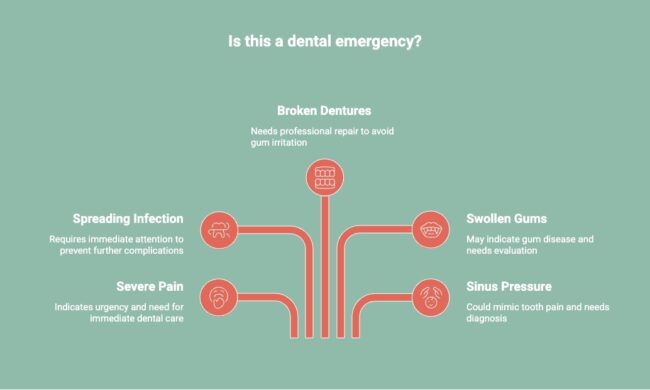
Some issues feel urgent but don’t always require the same-day care. Still, you should schedule a visit soon to prevent worsening.
1. Tooth Filling
If a cavity is causing pain, a filling can restore your tooth and stop decay. While not always an emergency, severe pain or spreading infection makes it urgent.
2. Broken Dentures
Uncomfortable or sharp-edged broken dentures can irritate gums. Avoid home fixes; call your dentist for repair or replacement.
3. Wisdom Teeth
Emerging wisdom teeth may cause pressure, pain, or infection. If swelling or fever develops, treat it as an emergency. Otherwise, schedule an exam to plan extraction.
4. Swollen Gums
Often linked to gum disease or infection. Rinse with saltwater for temporary relief, but see a dentist quickly for evaluation.
5. Sinus Pressure
Sometimes sinus issues mimic tooth pain. Use warm compresses and stay hydrated. If pain persists or swelling spreads to the jaw/face, seek dental or medical care to rule out infection.
How Can I Manage My Symptoms Until I See My Dentist?
When you’re dealing with a dental emergency, the time before your appointment can feel very long. Fortunately, there are several ways to manage your symptoms and find temporary pain relief. For toothaches or swelling, applying a cold compress to the outside of your cheek for 10-20 minutes at a time can be very effective. Rinsing your mouth with warm water can also help clean the area and soothe discomfort.
An over-the-counter pain reliever like ibuprofen or acetaminophen can also help manage pain, but remember never to place aspirin directly against your gums or tooth, as it can burn the tissue. If an object is stuck between your teeth, try to gently remove it with dental floss, but never use a sharp instrument. These steps can make you more comfortable, but they aren’t a substitute for professional care. Always follow up with a visit to your dental office as soon as possible.
How To Prevent Dental Injuries?
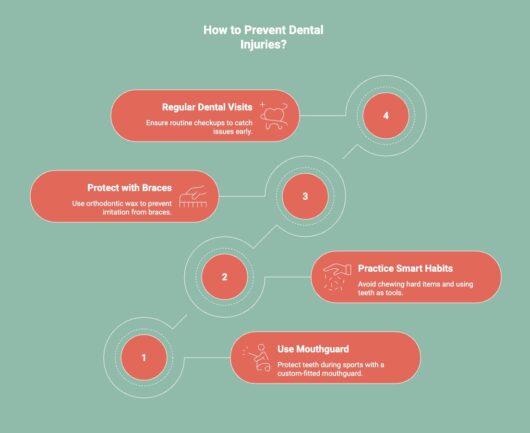
You can’t avoid every accident, but small preventive steps greatly lower your risk of dental emergencies. Protecting your teeth today can save you from pain, expensive treatments, and permanent damage tomorrow.
1. Use a Mouthguard for Sports
If you play contact sports or enjoy activities like biking or skating, a custom-fitted mouthguard is one of the best defenses for your smile. It absorbs impact and prevents knocked-out or broken teeth that might otherwise require emergency care.
2. Practice Smart Daily Habits
Your everyday choices matter. Chewing on ice, popcorn kernels, or hard candies can crack your teeth in an instant. Using your teeth as tools to tear packages may feel convenient, but it can lead to chips or breaks that demand urgent treatment. Avoiding these habits keeps your teeth stronger and safer.
3. Protect Your Mouth with Braces
For patients with braces, wires sometimes poke and irritate the cheeks or tongue. Keeping orthodontic wax on hand can stop small injuries before they become painful sores or infections.
4. Keep Up with Regular Dental Visits
Perhaps the most important prevention step is consistency. Routine checkups catch decay, gum disease, and alignment problems early, before they escalate into emergencies like infections, abscesses, or extractions. Early intervention means less pain, simpler treatment, and better long-term oral health.
Looking For Emergency Dental Care in Houston Heights When Every Minute Counts?
When dental pain strikes suddenly, it’s stressful, especially if it’s late at night or during a busy workday. Patients often worry about not knowing where to go, whether they’ll be seen quickly, or how much treatment will cost.
At Dentist Tree of the Heights, we take that stress away. Our team of experienced dentists and caring staff is here to handle everything from knocked-out teeth and severe toothaches to swelling and infections. We focus on fast, gentle treatment that helps you feel better quickly, without surprises.
Here’s why patients in Houston Heights trust us for emergency dental care:
- Same-day appointments for urgent cases
- Full-service care under one roof, from extractions to root canals
- Personalized treatment plans are explained clearly before we begin
- Comfortable, patient-focused environment
Your dental emergency doesn’t have to wait. Call Dentist Tree of the Heights today and let us restore your smile with expert, compassionate care.
Conclusion
Dental emergencies can be frightening, but knowing how to respond makes all the difference. From managing severe toothaches and knocked-out teeth to recognizing signs of infection, quick action and professional care can save your smile and protect your health. Always remember, if you’re unsure whether it’s an emergency, it’s safer to call your dentist right away.
Don’t wait until a small issue turns into a major problem. Seek help promptly, follow the right first-aid steps, and trust an experienced emergency dentist to guide you through recovery.
Frequently Asked Questions
What immediate steps should I take if I have a knocked-out tooth?
Handle the tooth by the crown, rinse gently, and keep it moist in milk or saliva. Seek a same day emergency dental appointment within an hour for the best chance of saving it.
How can I tell if my dental issue requires urgent professional care?
Severe pain, swelling, or uncontrolled bleeding are signs of what is considered a dental emergency. If unsure, it’s best to contact emergency dental professionals for advice and treatment.
Where can I find emergency dental care near me if I need treatment right away?
Search for emergency dental care Houston or visit a dental emergency room near you. Emergency dental services often offer same day emergency dental treatment.
What should I do if I have severe tooth pain late at night or on weekends?
If you ask, Can you go to emergency for dental pain? The answer is yes. Visit a dental emergency room or schedule an emergency dental appointment with available emergency dental pros.
How do I differentiate between a dental emergency and a non-urgent dental issue?
What is a dental emergency? Severe tooth pain, knocked-out teeth, or facial swelling. Minor chips or sensitivity are usually non-urgent. If unsure, emergency dental professionals can help determine the need.
Are walk-in dentists available for emergency dental situations?
Yes, many clinics offer walk-in emergency dental services. For urgent needs like infections or trauma, emergency dental pros provide immediate emergency dental treatment and same day emergency dental surgery if required.
Does dental insurance typically cover emergency treatments?
Most plans cover at least part of emergency dental treatment, but if you face a dental emergency no insurance situation, many clinics still offer payment options or financing for care.
Can children receive emergency dental care and what should parents do?
Yes, children can see emergency dental professionals for trauma or pain. Parents should call for an emergency dental appointment immediately and follow first-aid steps until emergency dental treatment is provided.
How can I temporarily relieve pain or discomfort from a dental emergency before seeing a dentist?
For dental emergencies, rinse with warm water, use a cold compress, and take OTC pain relievers. These steps ease discomfort until you reach emergency dental pros for same day emergency dental treatment.