

Key Highlights
- Porcelain veneers typically cost $1,300 to $2,500+ per tooth, while a full mouth can range from $20,000 to $50,000+, depending on your treatment plan.
- The total price depends on the number of veneers, your dentist’s experience, material quality, location, and any extra treatments like whitening, gum contouring, or orthodontics.
- Most dental insurance plans do not cover veneers because they are considered cosmetic, but you may use FSA, HSA, payment plans, or third-party financing to reduce upfront costs.
- Porcelain veneers usually last 10 to 15 years, and in some cases 20+ years, with proper care and regular dental checkups.
- The process usually takes two to three visits, including consultation, tooth preparation, custom veneer creation, and final placement.
- Choosing an experienced cosmetic dentist and reviewing before-and-after photos can help you get natural-looking, long-lasting results.
- At Dentist Tree of the Heights, we offer custom porcelain veneers, flexible financing, and personalized smile makeover plans in Houston.
Your smile is one of the first things people notice. If you have chipped, stained, or uneven teeth, it can affect your confidence in photos, conversations, and even at work. That is why porcelain veneers have become a popular choice for creating a brighter, more even, and more confident smile.
The biggest question for many people is cost. Porcelain veneers can be a significant investment, and the price varies based on how many you need, the materials used, your dentist’s expertise, and whether you need additional dental work first. A single veneer may cost a few thousand dollars, while a full smile makeover can cost much more.
This guide will break down how much porcelain veneers cost, what affects the price, and ways to make them more affordable so you can decide if they are the right choice for your smile goals.
What Are Porcelain Veneers?
Porcelain veneers are thin, custom-made shells placed over the front of your teeth to improve the look of your smile. Made from durable, stain-resistant porcelain, they are designed to mimic the natural appearance of tooth enamel.
They can fix common cosmetic concerns like stains, chips, gaps, uneven teeth, and minor misalignment. Because they are custom-crafted and permanently bonded, porcelain veneers offer a natural-looking, long-lasting smile makeover.
Ready to invest in a premium smile solution? Find out what to expect with porcelain veneers, from pricing to results.
How Much Do Porcelain Veneers Cost?
The price of porcelain veneers can vary widely depending on the number of teeth being treated, the materials used, and the expertise of your cosmetic dentist. In the U.S., the average cost of porcelain veneers is around $1,300 to $2,500 per tooth, though premium cosmetic dentists may charge more.
Note: These prices are general estimates and can vary based on your location, the complexity of your case, and the dentist you choose.
Here is a general price breakdown:
- Single porcelain veneer: $1,300 to $2,500+
- 6 veneers: $8,000 to $15,000+
- 8 veneers: $10,000 to $20,000+
- 10 veneers: $13,000 to $25,000+
The cost of porcelain veneers for a full mouth can range from $20,000 to $50,000 or more, depending on whether you are treating both upper and lower teeth.
If you live in Texas, for example, the porcelain veneers cost in Houston may be on the higher end due to demand and the experience level of cosmetic dentists in major metro areas.
Compared to other options, porcelain veneers cost more upfront but offer better durability and a more natural appearance:
- Composite veneers: $500 to $1,500 per tooth
- Porcelain veneers: $1,300 to $2,500+ per tooth
- Porcelain laminate veneers: $1,500 to $2,800+ per tooth
Understanding the true cost of porcelain veneers can help you budget for the smile transformation you want.
What Factors Affect the Cost of Porcelain Veneers?
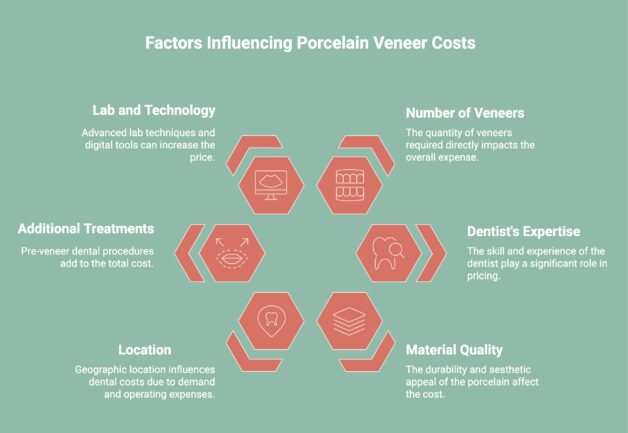
Several factors can affect the final cost of porcelain veneers, which is why pricing can vary widely from one person to another.
- Number of veneers needed: The more veneers you get, the higher the total cost. Someone fixing a single chipped tooth will pay much less than someone getting 6, 8, or more veneers for a full smile makeover.
- Dentist’s expertise: Cosmetic dentists with years of experience and advanced training often charge more because of their skill, artistry, and ability to create natural-looking results.
- Material quality: High-quality porcelain is more durable, stain-resistant, and designed to closely mimic the look of natural enamel, which can increase the price.
- Location: Dental costs often vary by area. For example, porcelain veneers cost in Houston may be different from prices in smaller towns or other major cities due to demand and operating costs.
- Additional treatments: Some patients need dental work before veneers can be placed, such as teeth whitening, gum contouring, cavity treatment, or orthodontic correction, which adds to the total cost.
- Lab and technology: Custom veneers are often made in specialized dental labs using advanced tools like digital smile design and 3D imaging, which can improve precision but also raise the price.
Knowing these factors can help you understand your quote and choose the best treatment option for your smile and budget.
Not sure whether veneers are the right choice? Explore the key differences between veneers vs crowns to understand which treatment fits your dental needs and budget best.
Does Dental Insurance Cover Veneers?
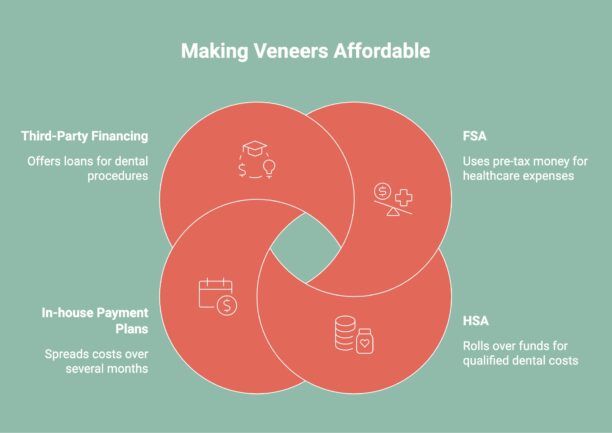
In most cases, dental insurance does not cover porcelain veneers because they are considered a cosmetic treatment. Since veneers are primarily used to improve the appearance of your smile rather than restore function, most patients pay for them out of pocket. However, if a veneer is needed after an accident or to repair structural damage, your provider may cover part of the cost.
If insurance does not cover your veneers, there are still several ways to make treatment more affordable:
- FSA (Flexible Spending Account): An FSA lets you use pre-tax money from your paycheck for eligible healthcare expenses. Depending on your plan and whether the veneers are considered medically necessary, you may be able to use these funds to reduce your out-of-pocket cost. Keep in mind that many FSAs have a “use it or lose it” rule, meaning unused funds may expire at the end of the year.
- HSA (Health Savings Account): An HSA is a tax-advantaged savings account available to people with high-deductible health plans. The money rolls over year after year, so you can save over time and use it for qualified dental expenses. Some patients use HSA funds for veneers if they meet eligibility requirements.
- In-house payment plans: Many dental offices offer monthly instalment plans that allow you to spread the cost over several months instead of paying the full amount up front.
- Third-party financing: Companies like CareCredit and LendingClub offer financing options specifically for healthcare and dental procedures. Some plans may include low-interest or interest-free promotional periods for qualified applicants.
Before starting treatment, ask your dentist for a pre-treatment estimate and check with your insurance provider or benefits administrator to understand exactly what is covered.
What Additional Costs Should You Expect With Porcelain Veneers?
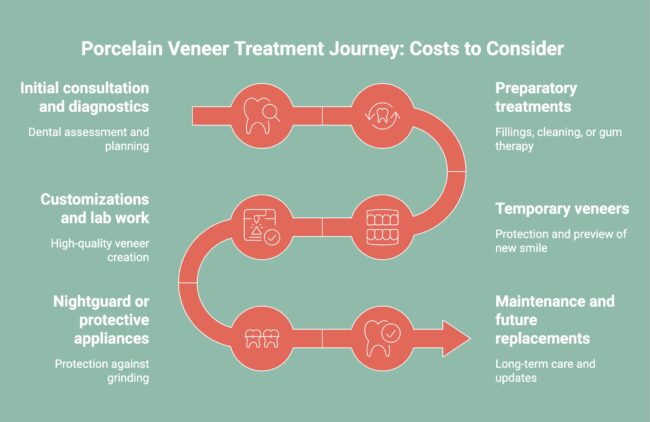
The price of porcelain veneers is just one part of the overall investment. Depending on your dental needs and treatment plan, there are a few additional costs that can come into play:
- Consultation and diagnostics: Your initial visit may include exams, X-rays, or digital scans to assess your teeth and plan your veneers. Some clinics include this in the total cost, while others charge separately.
- Preparatory treatments: Before veneers are placed, you may need treatments like fillings, professional cleaning, or gum therapy to ensure a healthy foundation. These are essential for long-lasting results but can add to the total cost.
- Temporary veneers: While your custom porcelain veneers are being created, you may wear temporary ones. These protect your teeth and give you a preview of your new smile, but they may be billed as a separate step.
- Customizations and lab work: High-quality veneers often involve advanced materials and skilled dental lab work. More natural-looking, highly customized veneers may cost more but typically offer better durability and aesthetics.
- Nightguard or protective appliances: If you grind or clench your teeth, your dentist may recommend a custom nightguard to protect your veneers from damage.
- Maintenance and future replacements: Veneers are not permanent. Over time, they may need polishing, minor repairs, or full replacement due to wear, chips, or changes in your teeth and gums.
Ask your dentist for a detailed treatment plan with all associated costs upfront. This helps you avoid surprises and plan your investment with confidence.
Porcelain Veneers vs Composite Veneers: Which Costs More?
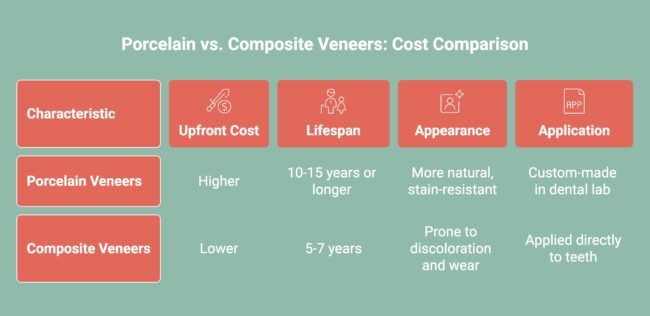
If you’re comparing veneer options, cost is often one of the biggest deciding factors. In most cases, porcelain veneers cost more upfront than composite veneers. This is because porcelain veneers are custom-made in a dental lab using high-quality materials, while composite veneers are applied directly to your teeth in a single visit.
Composite veneers are generally the more affordable option, making them appealing if you’re looking for a quicker, lower-cost cosmetic fix. Porcelain veneers, on the other hand, require more time, precision, and craftsmanship, which is reflected in their higher price.
That said, cost should not be viewed only in the short term. Porcelain veneers typically last 10 to 15 years or longer, while composite veneers may need replacement or touch-ups within 5 to 7 years. Over time, this can make porcelain veneers a more cost-effective choice for patients who want durability and long-lasting results.
In terms of appearance, porcelain veneers also tend to offer a more natural, stain-resistant finish, while composite veneers are more prone to discoloration and wear.
Which Option Is Right for You?
If you’re working within a tighter budget or want a faster solution, composite veneers can be a great starting point. If you’re looking for a long-term investment with superior aesthetics and durability, porcelain veneers are often worth the higher upfront cost.
Are Porcelain Veneers Worth the Cost?
Porcelain veneers are worth it when you’re looking for a reliable, long-term cosmetic upgrade, not a temporary fix. They can correct multiple concerns at once, including stains, chips, gaps, and uneven teeth, with results that look natural and stay consistent over time.
Their value lies in durability and low maintenance. Unlike short-term options, porcelain resists staining and typically lasts well over a decade, reducing the need for frequent touch-ups or replacements.
However, they are not for everyone. Veneers are irreversible, involve a higher upfront cost, and are usually not covered by insurance. If your concerns are minor, less invasive treatments may be more appropriate.
In simple terms, veneers make sense if you want a long-lasting, high-quality result and are prepared for the commitment. If you are focused on a quick or lower-cost solution, other options may suit you better.
How to Choose the Right Dentist for Porcelain Veneers?
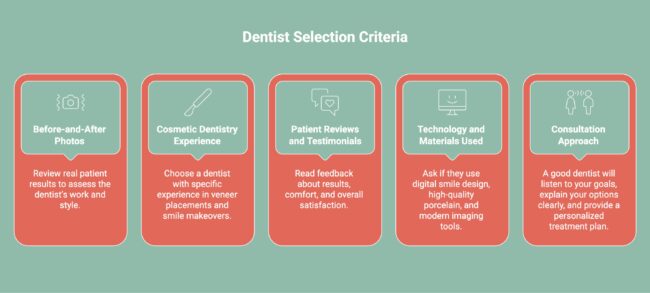
Choosing the right dentist is one of the most important factors in getting natural-looking, long-lasting porcelain veneers. Since veneers require both cosmetic artistry and technical precision, experience matters.
When comparing dentists, look for:
- Before-and-after photos: Review real patient results to assess the dentist’s work and style.
- Cosmetic dentistry experience: Choose a dentist with specific experience in veneer placements and smile makeovers.
- Patient reviews and testimonials: Read feedback about results, comfort, and overall satisfaction.
- Technology and materials used: Ask if they use digital smile design, high-quality porcelain, and modern imaging tools.
- Consultation approach: A good dentist will listen to your goals, explain your options clearly, and provide a personalized treatment plan.
Taking time to research and ask the right questions can help you feel confident in your decision and improve your chances of getting the smile you want.
Why Choose Dentist Tree of the Heights for Porcelain Veneers?
If you feel self-conscious about chipped, stained, uneven, or gapped teeth, you are not alone. Hiding your smile in photos or covering your mouth when you laugh can affect your confidence every day.
At Dentist Tree of the Heights, we help you achieve a brighter, more even smile with custom porcelain veneers designed to look natural and feel comfortable.
Here is why patients choose us for porcelain veneers in Houston:
- Custom smile design: We create veneers that match your facial features, tooth shape, and ideal shade for a seamless, natural look.
- Fast treatment: In many cases, we can transform your smile in just one to two visits.
- Advanced veneer options: We offer both traditional porcelain veneers and non-prep veneers based on your needs.
- Experienced cosmetic care: Our team combines advanced techniques with an artistic eye to create beautiful, long-lasting results.
- Flexible financing: We offer transparent pricing and payment options to make your dream smile more affordable.
Ready to love your smile again? Contact us today
Final Thoughts
Porcelain veneers can be a life-changing investment for your smile and confidence. While the cost varies based on the number of veneers, materials, and your dentist’s expertise, understanding the pricing and process can help you make an informed decision.
If you are ready to fix chipped, stained, or uneven teeth, porcelain veneers can offer a natural-looking, long-lasting solution that is worth considering. Your dream smile may be closer than you think.
Frequently Asked Questions
What should I look for while searching for porcelain veneers near me?
When searching for porcelain veneers cost near me, compare veneer pricing, the cost of dental veneers, and any additional costs like digital imaging or final placement. Check dental insurance plans for partial coverage and choose trusted dental practices for quality dental care.
What happens after 20 years of veneers?
After 20 years, veneers may show wear, chips, discoloration near edges, or gum recession. Many patients replace them to maintain a natural-looking new smile. Regular dental checkups help monitor your dental veneers and protect your underlying tooth structure.
What is the 4 8 10 rule for veneers?
The 4 8 10 rule refers to placing 4, 8, or 10 veneers on visible front teeth, depending on your smile width. More veneers create a fuller, more balanced look for a complete smile makeover and better symmetry.
How much does a full mouth of veneers cost?
A full set of veneers or full mouth treatment typically costs $20,000 to $50,000 or more. The cost of veneers depends on materials, the dentist’s expertise, and additional costs like digital imaging, minimal tooth preparation, or correcting issues.
How much are porcelain veneers in Houston?
The cost for porcelain veneers for Houston patients is often between $1,300 and $2,500 per tooth. A full set can cost much more depending on the clinic, materials, and whether your treatment includes a confidence boost or a smile makeover.
Do porcelain veneer prices vary by location or city?
Yes, veneer pricing often varies by city. Urban areas and premium dental practices may charge more due to higher overhead and demand. Searching for porcelain veneers near me helps compare local prices and your total investment.
Do porcelain veneers hurt, and do pain management costs affect the total price?
Porcelain veneers are a minimally invasive cosmetic procedure and usually involve little discomfort. Local anesthesia may be used during veneer treatment, and pain management is often included. Extra sedation or complex dental care may increase the cost of dental veneers.
Can you negotiate the price of porcelain veneers with your dentist?
Yes, you may be able to negotiate the cost of veneers with your dentist by asking about discounts for a full set, cash payments, or bundled treatment. You can also discuss payment plans or financing to make the total cost more manageable.