

Key Highlights
- Invisalign refinements are additional aligners used to fine-tune your smile near the end of your treatment.
- They are a common and normal part of the Invisalign treatment, not a sign that something went wrong.
- Refinements address teeth that haven’t moved exactly as predicted in the original treatment plan.
- You can reduce the need for extra rounds by wearing your aligners for 20-22 hours daily.
- The goal of additional aligners is to achieve the best possible results, even if it slightly extends the treatment time.
Starting your Invisalign treatment comes with the exciting dream of a smooth journey to a straighter smile. So, when your orthodontist mentions “refinements,” it’s easy to wonder if something went wrong.
Take a breath. Invisalign refinements are a normal and very common part of orthodontic treatment. They are not a setback but a valuable step in your treatment plan, allowing for small adjustments to ensure you get the beautiful, healthy smile you’ve been working toward.
In this blog, we will take a detailed look at what Invisalign refinements are, how they work and who should opt for them.
What Are Invisalign Refinements?
Invisalign refinements are simply an additional set of aligners ordered toward the end of your treatment. Think of this step in the Invisalign process as the “detail work.” Even with the best digital plan, some teeth might need a little extra push to get into their perfect final positions. These clear aligners are designed to make those final, small adjustments.
The refinement stage helps fix specific teeth that didn’t fully respond to the initial series of aligners, perfect the way your upper and lower teeth meet, and polish the overall look of your smile.
It’s a way for your orthodontist to compare the intended result with what’s actually happening in your mouth and adjust the treatment timeline accordingly. Needing refinements is not a sign of failure; it’s a sign that your treatment is being carefully managed for the best outcome.
What Are the Benefits of Invisalign Refinements?
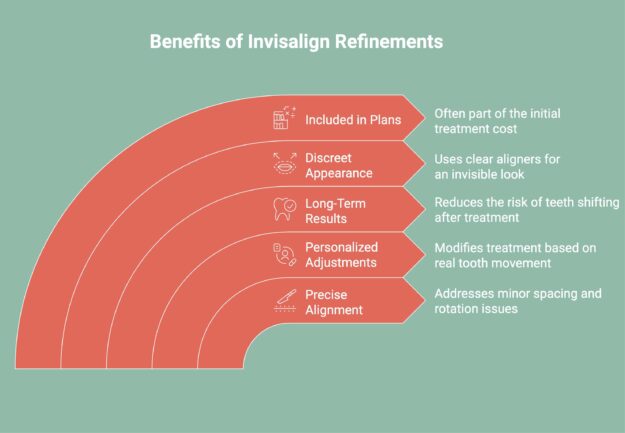
Invisalign refinements help fine-tune tooth alignment when small adjustments are needed after the initial set of aligners. They are a common and expected part of treatment focused on achieving the best possible final result.
Key benefits include:
- More precise alignment: Addresses minor spacing, rotation, or bite issues that remain after earlier trays.
- Personalized treatment adjustments: Updated scans allow your provider to modify the plan based on real tooth movement.
- Better long-term results: Proper refinement reduces the risk of teeth shifting after treatment ends.
- Same discreet appearance: Refinements use clear aligners, maintaining Invisalign’s nearly invisible look.
- Often included in treatment plans: Many Invisalign packages include refinements without additional cost, depending on the plan.
In many cases, refinements are the final step that completes the Invisalign journey.
How to Maintain Invisalign Refinements for Best Results?
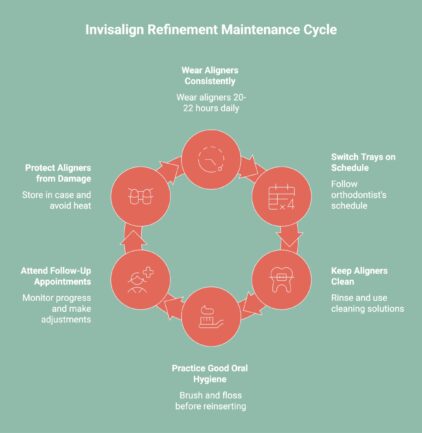
Once Invisalign refinements begin, proper care and consistency are critical to ensure the adjustments work as planned. Small lapses during this phase can affect final outcomes.
Here’s how to maintain your Invisalign refinements effectively:
1. Wear Aligners as Prescribed
Consistent daily wear is the most important factor in ensuring Invisalign refinements work as planned.
- Wear refinements 20–22 hours per day, unless your provider advises otherwise.
- Skipping wear time can delay progress or require additional trays.
2. Switch Trays on Schedule
Refinement aligners are designed to move teeth in a specific sequence, making timing critical.
- Follow the exact change schedule given by your orthodontist.
- Switching too early or too late may impact how teeth settle.
3. Keep Aligners Clean
Clean aligners help maintain oral health and ensure a proper fit during refinements.
- Rinse aligners with lukewarm water daily.
- Use aligner-safe cleaning solutions; avoid toothpaste, which can cause scratches.
4. Practice Good Oral Hygiene
Maintaining oral hygiene prevents buildup that can interfere with aligner effectiveness.
- Brush and floss before reinserting aligners to prevent plaque buildup.
- This is especially important during refinements when teeth are settling into final positions.
5. Attend All Follow-Up Appointments
Regular check-ins help confirm that refinements are progressing as expected.
- Review visits allow your provider to monitor movement and make timely adjustments.
- Report any discomfort, fit issues, or unexpected tooth movement early.
6. Protect Aligners from Damage
Damaged aligners may not fit correctly and can compromise refinement progress.
- Always store aligners in their case when not in use.
- Avoid heat exposure, which can warp trays and reduce effectiveness.
Consistent maintenance during Invisalign refinements helps lock in results and minimizes the need for further adjustments.
How Can You Tell If Invisalign Refinements Are Needed During Treatment?
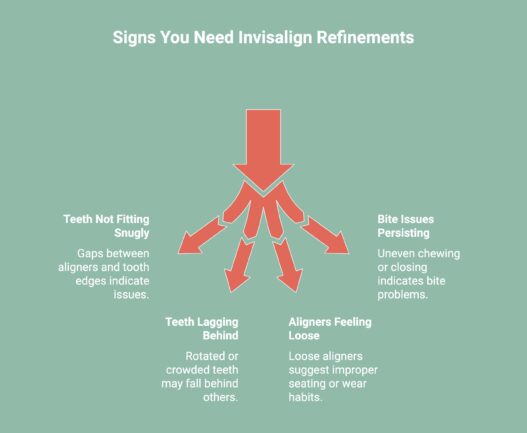
Invisalign refinements are recommended when teeth do not move exactly as planned. This is common and usually caused by biological differences or wear habits. Recognising specific signs early helps address issues before they affect final results.
- Teeth not fitting snugly into aligners, with visible gaps between trays and tooth edges.
- Certain teeth lagging behind others, especially rotated or crowded teeth.
- Aligners feeling loose or not fully seating even after several days of wear.
- Bite issues persisting, such as uneven contact when chewing or closing the mouth.
Refinements allow your orthodontist to correct these problems and guide teeth into their ideal final positions.
Can Anything Be Done to Avoid Needing Invisalign Refinements?
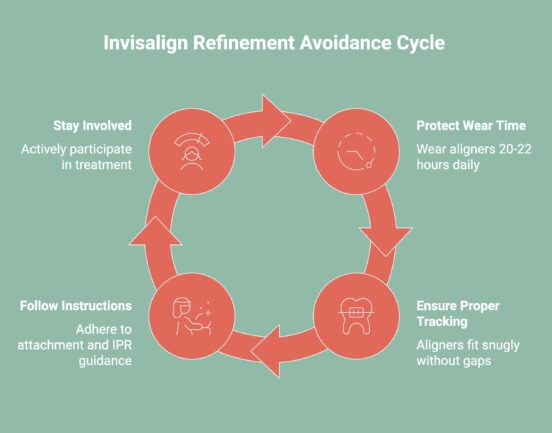
While individual biology plays a role, many refinements can be reduced with consistent habits and proper aligner use. Staying actively involved in your treatment helps aligners track correctly and keeps tooth movement on schedule, lowering the likelihood of additional refinement rounds later.
1. Protect Your Wear Time
Consistent wear is the most important factor in avoiding refinements. Invisalign aligners must be worn 20 to 22 hours daily to work as planned. Extended time out slows movement, affects fit, and can disrupt the treatment sequence, increasing the chance of refinements.
2. Make Sure Your Aligners Are Tracking Properly
Good tracking means aligners fit snugly against every tooth without visible gaps. Poor tracking may show as trays lifting or not seating fully. Ignoring this can worsen misalignment, so addressing issues early with your orthodontist helps prevent longer or repeated refinements.
3. Follow the Attachment and IPR Instructions Carefully
Attachments and IPR are designed to make tooth movement more precise and efficient. Attachments help aligners grip teeth, while IPR creates space for movement. Missing appointments or ignoring attachment issues can slow progress and increase the need for refinements.
By wearing aligners consistently and following your orthodontist’s instructions closely, you give your treatment the best chance to stay on track.
How Long Do Invisalign Refinements Usually Take?
Invisalign refinements typically add extra time to your overall treatment, but this phase is focused on perfecting results. The duration can vary based on how much adjustment is needed and how consistently aligners are worn during refinements.
- Refinements may extend treatment by a few weeks to several months.
- Minor corrections often require shorter refinement periods.
- More detailed bite or alignment adjustments can take longer.
- Refinement aligners target final movements for precise results.
- Extra time helps achieve a comfortable bite and lasting smile.
Although refinements extend the timeline, they play a key role in delivering the best possible long-term outcome.
What Happens After Invisalign Refinements Are Complete?
Finishing your last refinement tray marks the end of active Invisalign treatment, but long-term results depend on what comes next. Retainers play a critical role in maintaining your new smile and protecting the time and effort invested in treatment.
- Retainers keep teeth from shifting back to their original positions after refinements.
- Consistent retainer wear preserves alignment and bite correction long-term.
- Skipping retainer use can quickly reverse treatment progress.
- Your orthodontist will advise how often and how long to wear retainers.
- Long-term commitment ensures your Invisalign results last for years.
Wearing retainers as instructed is the final step in keeping your smile healthy, stable, and beautifully aligned.
How Does the Invisalign Refinement Process Work Step by Step?
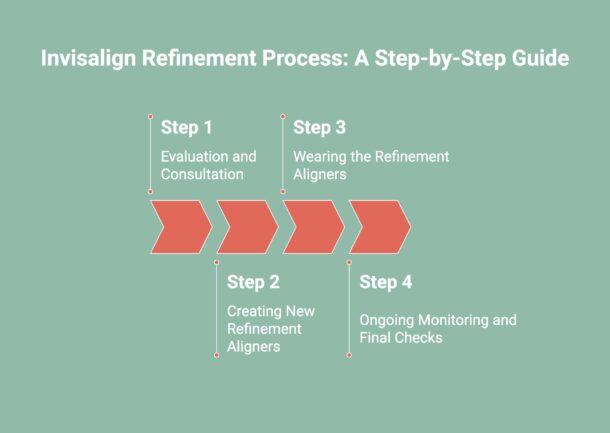
The Invisalign refinement process is a normal and purposeful phase designed to perfect your final results. If small adjustments are needed, your orthodontist updates the plan using new scans and aligners. This fine-tuning ensures your smile looks and functions exactly as intended.
Step 1: Evaluation and Consultation
Your orthodontist reviews how your teeth have moved compared to the original plan. Any teeth that need minor corrections are identified. You’ll discuss progress, expectations, and concerns before a new digital scan is taken to guide the refinement phase accurately.
Step 2: Creating New Refinement Aligners
Using the updated scan, your orthodontist designs a revised digital treatment plan. This plan focuses on precise final movements. Based on it, a new set of custom aligners is created to correct remaining gaps, rotations, or alignment details.
Step 3: Wearing the Refinement Aligners
You’ll wear refinement aligners just like your original trays, typically 20 to 22 hours daily. Consistent wear is essential at this stage, as these aligners apply targeted pressure to complete the final adjustments and lock in your desired results.
Step 4: Ongoing Monitoring and Final Checks
Regular check-ins continue during refinements to confirm that aligners fit correctly and that teeth are responding as planned. Your orthodontist monitors progress closely and determines when refinements are complete, ensuring your treatment finishes with a healthy, well-aligned smile.
What Is the Cost of Invisalign Refinements?
Many patients worry that refinements will significantly increase their Invisalign costs. In most cases, refinements are built into the original treatment plan, since minor adjustments are often needed to achieve ideal results. Still, coverage can vary by provider.
- In most comprehensive Invisalign plans, refinement aligners are included in the original treatment cost.
- Refinements are considered a standard part of completing orthodontic treatment successfully.
- Coverage and refinement limits may differ depending on the orthodontic office.
- Some providers place a cap on the number of refinements included.
- Confirm refinement policies early to avoid unexpected charges later.
Discussing refinement costs upfront helps you plan confidently and move through treatment without financial surprises.
How Do Invisalign Refinements Help Perfect Your Smile in Houston, Texas?
Even with a carefully planned Invisalign treatment, teeth may need minor adjustments toward the end of the process. At Dentist Tree of the Heights in Houston, Texas, Invisalign refinements help fine-tune alignment, close small gaps, and improve bite precision for optimal results.
Using updated digital scans, our dentists assess how your teeth have moved and design a new set of aligners tailored to your final smile goals. This personalised approach ensures your Invisalign results look natural, feel comfortable, and last long term, without starting treatment over.
Not sure if Invisalign refinements are part of your treatment plan? Schedule a consultation at Dentist Tree of the Heights today to get expert guidance and complete your smile with confidence.
Conclusion
Understanding when to consider Invisalign refinements can make a significant difference in achieving your desired results. Refinements are a normal part of the journey toward a perfect smile, and by staying proactive, like protecting your wear time and ensuring your aligners track properly, you can minimize the need for additional adjustments. Embracing this process will lead you toward not only a beautiful smile but also improved dental health.
Frequently Asked Questions
Are Invisalign refinements included in my treatment cost?
In most cases, Invisalign refinements are included in the treatment cost with comprehensive plans. These packages anticipate additional aligners if teeth don’t move as planned. Always confirm details with your orthodontist to understand limits, timelines, and extra fees.
How common is it to need extra aligners with Invisalign?
It is common to need extra aligners during Invisalign treatment. Many patients, particularly those with complex movement, require at least one refinement round. This is a normal part of progress, helping orthodontists fine-tune alignment as teeth respond.
Will needing refinements affect how effective my results are?
No, needing Invisalign refinements does not reduce effectiveness. Refinements improve results by correcting tracking issues and perfecting alignment. They help your orthodontist fine-tune the plan, ensuring your final smile meets treatment goals and delivers the best outcome.