

Key Highlights
- The average Invisalign treatment time typically ranges from 12 to 18 months, but can be as short as 6 months for minor cases.
- Unlike metal braces, these clear aligners are removable and nearly invisible, offering a discreet path to your smile transformation.
- Your final Invisalign treatment time heavily depends on factors like the complexity of your dental issues and your age.
- Following your orthodontist’s treatment plan, especially wearing your aligners for 22 hours a day, is crucial for staying on schedule.
- After treatment, retainers are necessary to maintain your results.
Are you dreaming of a straighter smile but hesitant about traditional braces? Invisalign aligners offer a modern solution. This popular orthodontic treatment uses a series of custom-made clear aligners to gradually shift your teeth into the perfect position.
Before starting treatment, your orthodontist will evaluate your teeth and provide a personalized Invisalign timeline, so you’ll know what to expect regarding the length of your journey to a straighter smile.
If you’re considering this option, one of your biggest questions is likely about the timeline. Understanding how long the process takes can help you decide if this is the right path for your smile journey. Let’s explore the typical duration and what influences it.
What Should You Know About the Invisalign Treatment Process?
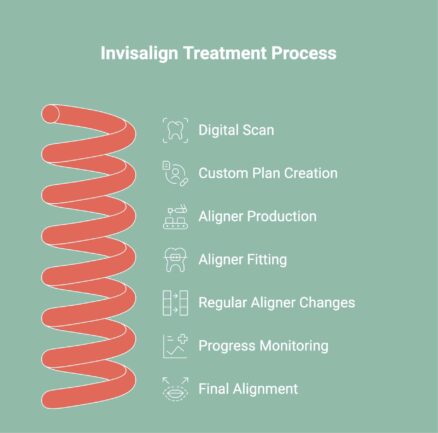
Invisalign uses a series of clear, custom-made aligners to gently move your teeth into better alignment over time. Instead of brackets or wires, the system relies on smooth, removable trays that apply controlled pressure to shift teeth gradually. Your orthodontist designs a personalized digital plan that shows how your smile will transform from beginning to end.
Key things to know about how Invisalign works:
- Customized digital planning: Treatment begins with a digital scan that maps your teeth and creates a personalized alignment plan.
- Series of clear aligners: A sequence of custom-made trays is created, each designed to make small, controlled adjustments to tooth position.
- Regular aligner changes: You’ll switch to a new set every one to two weeks as your teeth continue shifting.
- Gentle, consistent pressure: The aligners work by applying steady pressure rather than requiring tightening appointments.
- Progress toward your final smile: The process continues until your smile reaches the final alignment outlined by your orthodontist.
- Convenient and removable design: Since aligners are removable, you can eat, brush, and floss easily without dietary or hygiene restrictions.
With regular wear and guided progress, Invisalign offers a comfortable and discreet way to achieve a straighter, healthier smile.
If you’re looking to grasp the essentials of maintaining excellent oral hygiene, take a look at our comprehensive guide on Oral Hygiene.
How Long Does a Typical Invisalign Treatment Take From Start to Finish?
A typical Invisalign treatment usually takes about 12 to 18 months from start to finish, although some simple cases may finish in around six months, and more complex corrections can take up to 24 months or longer. The timeline depends on the severity of the issues being treated and how consistently aligners are worn.
What Influences Invisalign Treatment Time?
Several key factors determine how long your Invisalign treatment will take:
- The severity of spacing, crowding, or bite problems
- Wearing aligners consistently for 20 to 22 hours each day
- The need for attachments or elastics to enhance movement
- Regular check-ins every 6 to 8 weeks to track progress
When Will You Notice Changes?
Here are common signs that indicate your treatment is progressing as planned:
- Most patients begin noticing visible improvements within the first few months.
- Aligners typically fit tight initially and loosen as teeth shift.
- Photos and feedback from others gradually reveal smile changes.
Consistent wear and following your orthodontist’s plan are the biggest factors in finishing treatment on time and achieving an ideal result.
How Long Do You Wear Invisalign Trays?
You should wear your Invisalign trays for 20 to 22 hours every day to ensure effective tooth movement. Consistent daily wear allows the aligners to apply steady pressure and gradually shift your teeth into the correct position, and removing aligners too frequently can slow movement and extend treatment time. They should only be removed for eating, drinking anything other than water, brushing, and flossing.
How Often Should You Switch to New Trays?
Here’s what to expect as you progress through aligner sets:
- You’ll switch to a new aligner every one to two weeks as instructed.
- Each tray is designed to make small, precise adjustments to tooth position.
- Staying on schedule helps ensure you reach your ideal smile on time.
Following these wear instructions closely is the best way to achieve predictable results and complete treatment within the estimated timeline.
What Factors Can Make Invisalign Treatment Take Longer Than Expected?
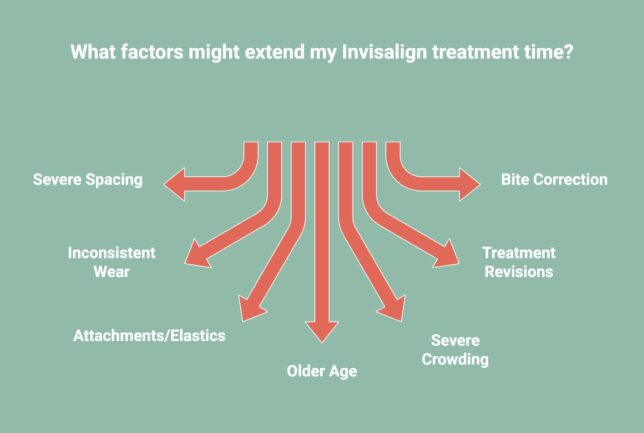
Although Invisalign is designed to straighten teeth efficiently, certain factors can extend the overall treatment timeline. Each smile is unique, and certain elements can influence how quickly results are achieved.
Here are the key elements that may cause delays in your Invisalign results:
- Multiple gaps or severe spacing: Larger spaces need more movement and additional aligner sets. Many patients ask, how long does Invisalign take to close a gap? It depends on the size and complexity of the spacing.
- Inconsistent daily wear: Not wearing aligners for the recommended 20 to 22 hours slows tooth movement and extends each phase of treatment.
- Attachments or elastics required: These tools help achieve difficult tooth or jaw adjustments, which can add time to your overall plan.
- Adult bone rigidity: Older patients may experience slower shifting because adult bone structure is less adaptable compared to teens.
- Severe crowding: Extensive movement is needed to create proper alignment space, which typically requires more aligners.
- Treatment plan adjustments: Revisions may be necessary if teeth don’t track properly due to inconsistent wear or unexpected movement changes.
- Complex bite correction: Deep bites, crossbites, or severe misalignment prolong treatment. A common concern is how long does Invisalign take to fix overbite. More complex bites naturally require longer timelines.
Here are some signs that treatment is not progressing as planned:
- Poorly fitting aligners: If new aligners feel excessively tight or do not fully seat onto your teeth when switching sets, it may indicate tracking issues.
- Teeth not following attachments: When teeth don’t move into the aligner shape as expected, you may notice gaps inside the trays or misalignment around attachment points.
- Need for mid-course refinements: If appointments require additional adjustments, refinements, or rescan planning, it may signal your teeth aren’t responding as originally projected.
Consistent aligner wear, good oral hygiene, and following your orthodontist’s instructions are the best ways to avoid delays and stay on track for your expected results.
How Long Is Invisalign Treatment for Kids, Teens, and Adults, and Who Is It a Good Option For?
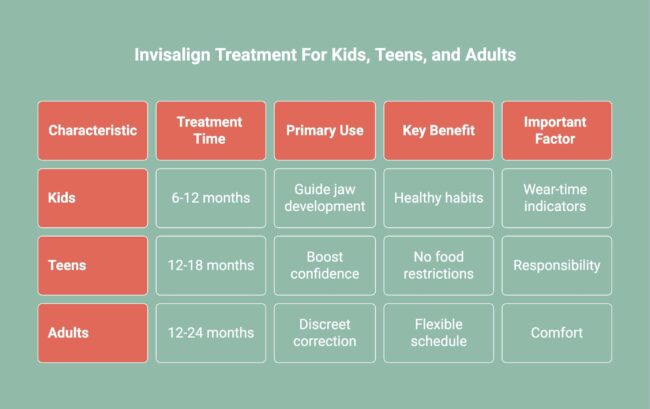
Invisalign treatment times vary based on age and case complexity, but after proper research and clinical tracking, most smiles take 6 to 24 months to straighten. Invisalign is a great option for kids, teens, and adults looking for a comfortable and discreet orthodontic solution that fits different lifestyles and treatment goals.
Let’s look at how long Invisalign treatment takes for kids, Teens, and adults:
Kids
Before exploring why Invisalign is used for younger patients, it helps to understand how it supports developing smiles:
- Phase 1 treatment typically takes 6 to 12 months, depending on jaw growth and spacing needs.
- Often used to guide jaw development and create room for permanent teeth.
- Wear-time indicators help monitor consistency and treatment progress.
- Removable trays support healthy brushing and flossing habits.
Teens
For teenagers, confidence and convenience are major considerations, and Invisalign supports both:
- Treatment time usually ranges from 12 to 18 months, based on alignment and bite correction needs.
- Nearly invisible aligners support confidence without metal braces.
- No food restrictions since trays are removed for meals and snacks.
- Works well for responsible teens who can wear aligners 20 to 22 hours daily.
Adults
Adults often prioritize appearance and flexibility, and Invisalign aligns perfectly with those needs:
- Treatment time commonly ranges from 12 to 24 months, depending on crowding, gaps, or bite issues.
- Ideal for those seeking a discreet option without brackets or wires.
- Corrects crowding, spacing, relapse shifts, and mild to moderate bite problems.
- Fits comfortably into busy professional and social schedules due to its removability.
Invisalign offers a research-backed, flexible, and effective path to a straighter smile at any age.
If you’re interested in discovering the advantages of dental insurance with no waiting period, check out Why Dental Insurance with No Waiting Period is a Game Changer.
How Long to Wear Invisalign and Why Does the 22-Hour Compliance Rule Matter?
The 22-hour rule is not just a suggestion; it’s the foundation of a successful Invisalign treatment. Your aligners can only do their job of moving your teeth when they are in your mouth. Consistent wear time of 20 to 22 hours a day ensures that your teeth are receiving the gentle, continuous pressure needed to shift into their new positions according to your treatment timeline.
If you don’t stick to this rule, your progress will slow down, and your treatment will take longer than initially planned. In some cases, your teeth may even start to shift back to their old positions between wears, which can compromise your final result. For the best results and to stay on schedule, making the 22-hour rule a non-negotiable part of your daily routine is essential.
How Does Invisalign Treatment Time Compare to Traditional Braces?
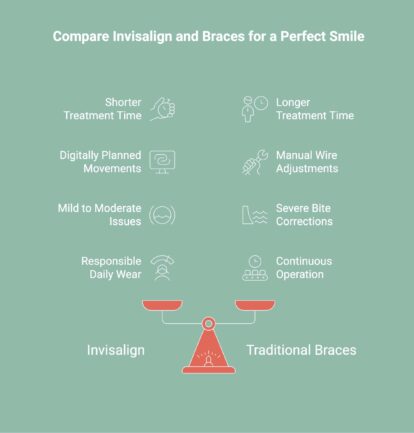
Before comparing both options, it helps to understand what influences treatment time and why results can vary based on case complexity, tooth movement needs, and patient compliance.
Let’s understand how Invisalign and traditional braces differ from each other:
- Invisalign typically takes 6 to 18 months, especially when aligners are worn 20 to 22 hours a day,
while traditional braces may take 18 to 24 months or longer for more severe or complex cases. - Invisalign movements are digitally planned, allowing efficient and controlled tooth adjustments,
while braces rely on periodic tightening and manual wire changes that may extend treatment time. - Invisalign can be faster for mild to moderate alignment issues,
while braces are often the better choice for severe bite corrections or major misalignment. - Invisalign progress depends on responsible daily wear,
while braces work continuously since they cannot be removed.
Both choices can achieve excellent results, and the right option depends on the complexity of the case, lifestyle preferences, and smile goals.
Why Choose Dentist Tree of the Heights for Your Invisalign Treatment?
If you’re considering Invisalign and want expert guidance from a team that genuinely cares, Dentist Tree of the Heights is an excellent choice. Our experienced orthodontic professionals use advanced digital technology to create personalized treatment plans that help you achieve results efficiently, comfortably, and confidently. We focus on education, transparency, and support every step of the way so you always know what to expect.
Whether you’re searching for a trusted provider for your child, teen, or adult Invisalign treatment, we’re committed to making your experience smooth and stress-free in a welcoming environment designed for families and busy professionals alike.
Ready to start your Invisalign journey with a team you can trust? Book your Invisalign consultation today!
Conclusion
Understanding the timeline for Invisalign treatment is crucial for anyone considering this innovative teeth alignment solution. From the initial consultation to the final results, various factors like age, dental issues, and patient compliance play a significant role in determining how long the process will take. By adhering to the recommended wear time and staying informed about the milestones you’ll experience along the way, you can ensure a smoother journey towards achieving your dream smile.
Frequently Asked Questions
Can I reduce my Invisalign treatment time by following certain tips?
Yes, you can support faster Invisalign progress by wearing aligners 20 to 22 hours daily and maintaining excellent compliance. Some orthodontists may recommend vibration or acceleration devices, like AcceleDent or Propel, to enhance movement efficiency when appropriate.
How does Invisalign treatment duration compare to braces?
Invisalign treatment duration often matches traditional braces, usually ranging from twelve to eighteen months. For many mild to moderate cases, Invisalign may progress quickly. However, treatment length always depends on case complexity, movement requirements, and patient consistency following professional instructions throughout treatment.
What happens if I don’t wear my Invisalign aligners as recommended?
Not wearing aligners as recommended slows progress significantly and lengthens treatment time. Teeth may shift backwards between wears, aligners may stop tracking properly, and next trays could fit incorrectly, leading to necessary refinements, discomfort, and treatment timeline disruption completely.
How many hours per day do I need to wear Invisalign aligners for the best results?
Invisalign aligners should be worn 20 to 22 hours daily for the best results. Consistent wear keeps steady pressure on teeth to support movement. Wearing them less slows progress and may extend treatment time beyond the projected schedule timeline.
When will I start to see noticeable changes in my smile with Invisalign?
Most patients begin noticing changes within a few months of starting Invisalign. Subtle shifts typically appear by the second or third aligner set. Wearing aligners consistently for 20 to 22 hours daily helps ensure visible progress stays on track.
Does the duration of Invisalign treatment vary depending on age or dental issues?
Yes, Invisalign treatment duration varies based on age and dental complexity. Teens often progress faster due to active bone growth, while adults may require longer. Mild spacing or crowding finishes sooner, whereas severe bite problems extend treatment timelines.
How long do Invisalign retainers last?
Invisalign retainers generally last several years with proper care, though replacement frequency varies by wear habits and grinding. Most orthodontists recommend replacing Vivera retainers every one to two years to maintain alignment and prevent subtle shifting over time.
How long do you have to wear Invisalign?
You must wear Invisalign aligners 20 to 22 hours daily throughout treatment for results. They should only be removed for eating, drinking anything besides water, and oral hygiene. Consistent wear ensures progress remains and treatment stays on schedule.
What is the 30-minute rule for Invisalign?
The 30-minute rule means keeping aligners out for less than 30 minutes when eating or cleaning to maintain movement. Track progress by checking aligner fit weekly, monitoring changes in photos, and attending checkups.
Do you really have to wear Invisalign for 22 hours?
Yes, you really must wear Invisalign 22 hours daily for predictable tooth movement, steady progress, and timely results. Removing trays too often slows alignment and increases treatment time, potentially requiring refinements or extensions.