

Key Highlights
- Many dental insurance plans with orthodontic coverage may help pay for your Invisalign treatment.
- Coverage often ranges from 25% to 50% of the total cost, similar to what is offered for traditional braces.
- Your specific dental insurance plan will determine the exact level of coverage, as benefits vary widely.
- Be aware of potential limitations like age restrictions, waiting periods, and lifetime maximums on your orthodontic coverage.
- If your insurance doesn’t cover clear aligners, options like payment plans, HSAs, or FSAs can make treatment more affordable.
- Always check the details of your plan with your insurance provider before beginning treatment.
If you are thinking about straightening your teeth with Invisalign, you are likely wondering about the cost. This popular orthodontic treatment offers a discreet way to achieve a new smile, but financing it is a common concern.
The great news is that many dental insurance plans can help reduce your out-of-pocket expenses. Understanding how your benefits work is the first step toward an affordable treatment.
Before you begin, it’s wise to review your plan documents to see exactly what your policy covers for orthodontic treatment.
Dental Insurance and Invisalign: What’s Covered?
Whether dental insurance covers Invisalign depends entirely on your specific policy. Many dental insurance policies that include orthodontic coverage will contribute to the cost of Invisalign, often treating it the same way they would traditional braces. However, some insurance plans may have exclusions or different coverage levels for clear aligners versus metal braces.
It is crucial to check the details of your plan with your insurance provider. They can tell you about any coverage limits, deductibles, or pre-authorizations needed for your orthodontic treatment. The following sections will explore what to look for in your plan.
Does Standard Dental Insurance Include Invisalign?
Yes, many standard dental insurance plans do offer coverage for Invisalign, provided the plan includes orthodontic benefits. When a dental insurance plan covers orthodontic treatment, it often applies to both traditional braces and Invisalign treatment. The key is to confirm that your policy doesn’t specifically exclude clear aligners.
Your insurance company will likely cover a percentage of the cost, usually between 25% and 50%. However, this is subject to the plan’s limitations. These can include annual or lifetime coverage limits, which cap the total amount your insurer will pay for orthodontic procedures throughout the duration of your policy.
Before committing to treatment, the best course of action is to contact your insurance provider directly. Ask them specifically about coverage for Invisalign to avoid any surprises. Your dental office can often help you with this process by submitting a pre-treatment estimate.
What Is the Difference Between Orthodontic Coverage and General Dental Benefits?
Dental insurance plans usually separate routine dental care from orthodontic treatment. Understanding this difference is important when budgeting for Invisalign. General dental benefits handle everyday care, while orthodontic coverage applies only if your plan specifically includes benefits for teeth alignment and bite correction.
Here’s how the two types of coverage differ:
- General Dental Benefits: Cover preventive and restorative care such as cleanings, exams, fillings, and crowns
- Orthodontic Coverage: Applies specifically to alignment treatments like Invisalign and traditional braces
Always confirm whether orthodontic coverage is included, as general dental benefits alone will not cover Invisalign treatment.
What Types of Dental Insurance Plans Typically Cover Invisalign Treatment?
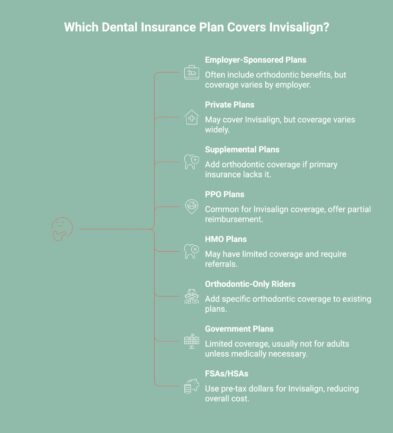
Invisalign coverage depends more on orthodontic benefits than the insurer’s name. Both employer-sponsored and private plans may help cover treatment costs if orthodontics are included. Reviewing plan details carefully ensures you understand coverage limits, eligibility rules, and potential out-of-pocket expenses before starting treatment.
1. Employer-Sponsored Dental Insurance Plans
Employer-provided dental plans often include orthodontic benefits that can help offset Invisalign costs. Coverage varies by employer, so reviewing plan documents or speaking with HR is essential. Pay attention to coverage percentages, lifetime maximums, and eligibility rules to accurately plan remaining expenses.
2. Private and Individual Dental Insurance Plans
Private dental insurance purchased independently may include orthodontic benefits, but coverage varies widely. Some plans specifically cover clear aligners like Invisalign. Always review policy details for waiting periods, coverage limits, and whether orthodontic treatment is included for adults.
3. Supplemental and Discount Dental Plan Options
Supplemental plans can add orthodontic coverage if your primary insurance lacks it. Dental discount plans are not insurance but offer reduced Invisalign rates through participating providers. These options can help lower costs when traditional orthodontic coverage is limited or unavailable.
4. PPO (Preferred Provider Organization) Dental Plans
PPO dental plans are among the most common plans that offer Invisalign coverage when orthodontic benefits are included. They typically provide partial reimbursement and allow you to choose your orthodontist, though staying in-network may reduce out-of-pocket costs.
5. HMO or DHMO Dental Plans
HMO-style dental plans usually have lower monthly premiums but more restrictions. Orthodontic coverage for Invisalign may be limited, require referrals, or be available only through specific providers. Benefits are often capped and may not cover adult orthodontics.
6. Orthodontic-Only Insurance Riders
Some insurers offer orthodontic riders that can be added to an existing dental plan. These riders specifically cover treatments like Invisalign and may be useful for families or adults seeking targeted orthodontic coverage without upgrading their full dental plan.
7. Government-Sponsored Dental Plans
Government dental plans typically offer limited orthodontic coverage. Invisalign is usually not covered for adults unless treatment is medically necessary. Pediatric orthodontic benefits may be available in select cases, depending on eligibility and plan rules.
8. Flexible Spending Accounts (FSA) and Health Savings Accounts (HSA)
While not insurance plans, FSAs and HSAs can be used to pay for Invisalign with pre-tax dollars. This effectively reduces the overall cost of treatment and is commonly used alongside partial insurance coverage or when orthodontic benefits are capped.
Understanding which dental plans cover Invisalign helps you set realistic expectations, avoid surprises, and plan treatment costs more confidently.
What Factors Influence the Cost of Invisalign Treatment?
The total cost of Invisalign treatment varies from patient to patient. While insurance may reduce expenses, treatment complexity, provider expertise, and treatment length play a major role in determining final pricing. Understanding these factors helps you budget accurately and compare treatment options more confidently.
1. Case Complexity and Treatment Duration
More complex alignment issues require additional aligners, longer treatment time, and closer monitoring. Mild spacing or crowding usually costs less, while bite corrections or significant misalignment increase overall treatment expenses.
2. Number of Aligners and Refinements Needed
The total number of aligner trays directly affects Invisalign cost. Patients who require refinements or extended treatment phases may incur higher fees, especially if refinements exceed what is included in the original treatment plan.
3. Orthodontist Experience and Provider Fees
Provider expertise influences pricing. Orthodontists with advanced Invisalign training or extensive experience may charge higher fees, reflecting specialized planning, technology use, and ongoing supervision throughout treatment.
4. Geographic Location of the Dental Practice
Invisalign costs often vary by region. Urban clinics and high-cost-of-living areas typically have higher treatment fees than practices in smaller cities or suburban locations.
5. Type of Invisalign Plan Selected
Different Invisalign plans are designed for varying levels of correction. Limited or express plans cost less, while comprehensive plans intended for full orthodontic treatment are priced higher due to extended care and aligner sets.
6. Diagnostic Scans, Retainers, and Follow-Up Care
Some practices include digital scans, retainers, and post-treatment visits in their pricing, while others charge separately. These add-ons can affect the final Invisalign cost if not bundled into the treatment fee.
Considering both insurance coverage and treatment-specific factors gives you a clearer picture of total Invisalign costs and helps you plan treatment without unexpected expenses.
Does Insurance Cover Invisalign in Houston, Texas?
Many patients wonder, “Does insurance cover Invisalign?” At Dentist Tree of the Heights, we understand that treatment cost is a key consideration when choosing orthodontic options. The good news is that most dental insurance plans that include orthodontic benefits often cover a portion of Invisalign treatment, just like traditional braces.
Our friendly team works closely with your provider to help verify benefits, estimate your coverage, and maximise your out-of-pocket savings. If your plan doesn’t fully cover Invisalign, we also offer flexible financing options and payment plans to make clear aligner treatment affordable for families and adults alike. With our expert support, you’ll never have to navigate insurance questions alone.
Want a personalized coverage estimate? Schedule an Invisalign consultation at Dentist Tree of the Heights today to check your insurance benefits and start your journey to a straighter smile.
Conclusion
Understanding how insurance coverage works for Invisalign is essential for making informed decisions about your orthodontic treatment. With various dental plans and factors like age limits and pre-authorization requirements impacting coverage, it’s crucial to do your homework. By exploring your options, whether through employer-sponsored plans or private insurance, you can better navigate the complexities of funding your smile transformation. Remember, knowledge is power when it comes to securing the best benefits for your needs.
Frequently Asked Questions
What percentage of the Invisalign cost is usually covered by insurance?
Most orthodontic plans cover 25 to 50% of treatment. Many patients ask does insurance cover Invisalign, and coverage depends on orthodontic benefits and lifetime caps. Always confirm exact limits, exclusions, and reimbursement amounts directly with your provider.
How do I find out if my current insurance plan covers Invisalign aligners?
To confirm if invisalign covered by insurance, review plan documents or call your insurer. Ask specifically about clear aligners, orthodontic riders, and age limits. Your dental office can also help verify benefits and submit a pre-treatment estimate.
What are my options if my insurance doesn’t cover Invisalign?
If insurance will not cover Invisalign, consider monthly payment plans, HSA or FSA funds, or third-party financing. Some practices offer discounts for upfront payment, helping reduce overall Invisalign costs without relying on insurance.
Are there specific insurance companies known for covering Invisalign treatments?
Several major carriers offer dental insurance that covers Invisalign when orthodontic benefits apply. Coverage varies by plan tier, employer policy, and lifetime maximums, so confirming eligibility and reimbursement percentages before starting treatment is essential.
If my insurance doesn’t cover Invisalign, what other payment options are available?
When Invisalign can not be covered by insurance is not possible, alternatives include in-house financing, CareCredit, or phased payments. These options spread costs over time and make Invisalign more accessible without a full upfront payment.
Can I get Invisalign coverage with supplemental or private dental insurance?
Yes, some supplemental plans expand dental insurance coverage for Invisalign, especially if orthodontic benefits were limited previously. Private policies may help offset costs, but waiting periods and annual caps often apply.
How much does 6 months of Invisalign cost?
Short-term treatment costs vary, but patients often ask how much is Invisalign with insurance. Limited cases may range lower, especially if partial coverage applies, though pricing depends on complexity, refinements, and provider fees.
Is there any way to claim Invisalign under insurance?
You can submit claims when what insurance covers Invisalign includes orthodontics. Offices usually file claims, apply benefits to your balance, and track reimbursements. Always keep EOB statements for accurate records.
How much does Invisalign cost without dental insurance?
Without benefits, Invisalign pricing reflects full treatment fees. Many still ask invisalign cost with insurance for comparison, but uninsured patients typically rely on payment plans to manage expenses effectively.
How can I check if my current dental insurance plan covers Invisalign aligners?
Ask your insurer directly, does dental insurance cover Invisalign, and does Invisalign take insurance through your provider. Request written confirmation, benefit percentages, and lifetime maximums to avoid surprises before treatment begins.