

Key Highlights
- Invisalign aligners offer a discreet alternative to traditional braces for your smile transformation.
- These clear aligners are removable, making it easy to eat, brush, and maintain oral hygiene.
- The orthodontic treatment is designed for comfort, using smooth plastic that avoids the irritation of metal wires.
- Invisalign can be a more convenient option, often requiring fewer dental visits than traditional braces.
- While the cost is a factor, many find the aesthetic and comfort benefits make it a worthwhile investment.
- Treatment duration can be as short as six months, depending on your specific dental needs.
Are you dreaming of a straighter, more confident smile? If the thought of metal braces makes you hesitate, there’s another path to your ideal smile transformation.
Invisalign aligners offer a modern approach to orthodontic treatment, using a series of clear, custom-made trays to gradually shift your teeth.
This method provides an effective and nearly invisible way to achieve the beautiful smile you’ve always wanted without the look and feel of traditional braces.
To learn more about how Invisalign works, its advantages, limitations, and overall effectiveness, read How Does Invisalign Work? Pros, Cons, and Effectiveness
The True Cost of Invisalign: Is It Worth the Price?
When people look into Invisalign, cost is usually the first concern. While it can seem more expensive than braces upfront, the real value often shows up in everyday life. Comfort, subtle appearance, and fewer disruptions make many patients feel the price reflects more than just straighter teeth.
So what are you really paying for with Invisalign?
- Precision and Comfort: Clear, custom-made aligners ensure accurate, predictable tooth movement, reducing setbacks and justifying Invisalign’s premium pricing.
- Everyday Convenience: Removable aligners mean fewer visits, easier hygiene, and minimal lifestyle disruption, adding real value beyond treatment results.
- Flexible Financial Options: Insurance benefits and payment plans reduce upfront burden, making Invisalign’s long-term value more accessible and manageable.
For many, Invisalign feels less like an expense and more like an investment in confidence and convenience.
What Does Invisalign Actually Cost for Different Dental Cases?
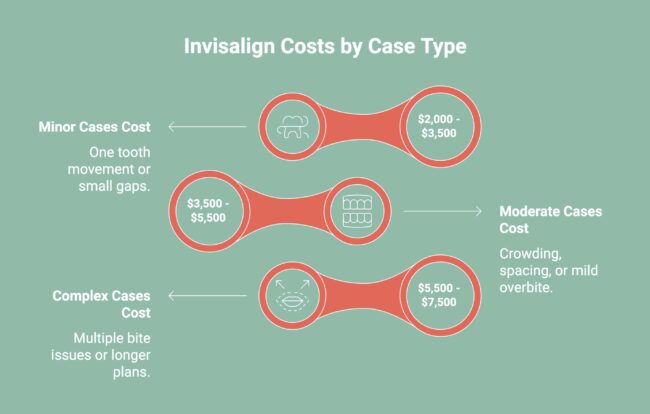
Invisalign pricing varies based on how complex your alignment needs are and how long treatment lasts. While it may feel like a big investment, costs are often comparable to other orthodontic options. Insurance coverage and payment plans can further reduce the financial burden.
Here’s a general idea of tentative Invisalign costs by case type:
- Minor Cases: For simple issues like a single tooth movement or small gaps, the cost typically ranges from $2,000 to $3,500.
- Moderate Cases: Issues such as crowding, spacing, or mild bite corrections usually fall within the $3,500 to $5,500 range.
- Complex Cases: More involved cases with multiple bite issues or extended treatment plans often range from $5,500 to $7,500.
Final pricing depends on your personalised plan, insurance benefits, and clinic payment options discussed during consultation.
To understand what results typically look like and how teeth change over time, read: Invisalign Before and After: What to Expect with Results
What Additional Invisalign Costs Should You Plan for Before Starting Treatment?
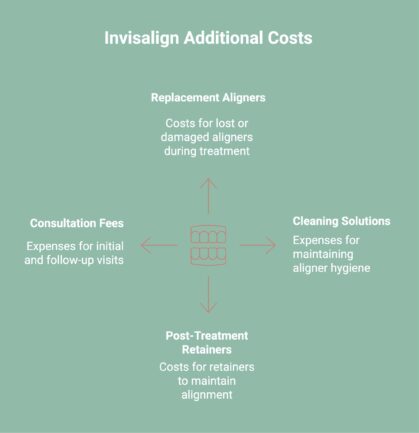
Beyond the aligners themselves, Invisalign treatment can include a few extra expenses that are easy to overlook. These costs support treatment success and long-term results. Planning for them early helps avoid surprises and gives you a clearer picture of the full Invisalign journey.
Here are some common extras worth budgeting for:
- Replacement Aligners: If an aligner is lost or damaged, replacements keep your treatment moving forward without disrupting progress or results.
- Cleaning Solutions: Proper cleaning products help keep aligners clear, fresh, and comfortable, making daily wear easier and more consistent.
- Post-Treatment Retainers: Retainers hold your teeth in place after treatment, protecting your new smile from shifting back over time.
- Consultation and Follow-Ups: These visits allow your provider to monitor progress, answer questions, and make adjustments for the best outcome.
Knowing these potential costs upfront makes Invisalign planning smoother, more realistic, and far less stressful overall.
How Does Invisalign Compare to Traditional Braces in Daily Life?
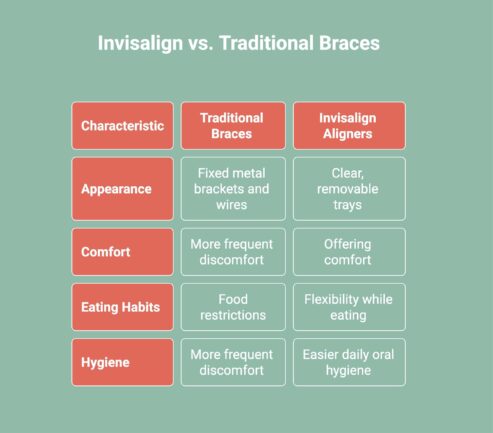
Choosing between Invisalign and traditional braces is not just about results. It is also about how each option affects your day-to-day routine. Below is a clear comparison across key lifestyle factors to help you understand what living with each option is really like.
Visibility and Confidence
How noticeable your treatment is can affect how comfortable you feel in social and professional situations.
- Traditional Braces: Metal brackets and wires are clearly visible, which can make some patients feel self-conscious when speaking or smiling.
- Invisalign Aligners: Clear trays are discreet and barely noticeable, allowing patients to maintain confidence throughout treatment.
Comfort During Daily Wear
Comfort plays a major role when something is worn for most of the day.
- Traditional Braces: Brackets and tightening wires can cause irritation to cheeks and gums, especially after adjustments.
- Invisalign Aligners: Smooth, custom-fit trays sit comfortably on teeth and generally cause less irritation to soft tissues.
Eating and Food Choices
Diet changes can significantly impact everyday enjoyment during treatment.
- Traditional Braces: Certain foods must be avoided to prevent damaging brackets or wires, limiting meal options.
- Invisalign Aligners: Removable trays allow you to eat normally without restrictions by taking them out during meals.
Oral Hygiene and Cleaning
Daily cleaning routines can become more complex depending on the treatment type.
- Traditional Braces: Brushing and flossing around wires and brackets can be challenging and time-consuming.
- Invisalign Aligners: Teeth can be brushed and flossed normally, with aligners cleaned separately for better hygiene.
Appointments and Lifestyle Impact
The time commitment required for treatment can affect work and personal schedules.
- Traditional Braces: Regular in-office adjustments and occasional emergency visits are often required.
- Invisalign Aligners: Digitally planned treatment usually means fewer appointments and less disruption to daily life.
Overall Daily Experience
When all factors are considered, the overall experience can feel very different.
- Traditional Braces: Highly effective but require more lifestyle adjustments and ongoing maintenance.
- Invisalign Aligners: Designed for flexibility and comfort, making treatment easier to manage day to day.
For many patients, these everyday differences are what make Invisalign the preferred choice throughout the treatment journey.
To understand Invisalign pricing and what influences treatment costs, read this guide: Invisalign Cost in Houston: What Affects the Final Price?
How Long Do Invisalign Results Last After Treatment Ends?
Invisalign results can last for many years, and often a lifetime, with proper care. Teeth naturally try to shift back, which is why retention matters. Wearing a retainer as advised and following your dentist’s guidance protects the alignment you worked hard to achieve.
Here’s what helps results last long term:
- Retainer Wear: After treatment ends, teeth naturally try to shift back to their original positions. Wearing retainers as recommended helps hold teeth in place while the surrounding bone and tissues stabilize, protecting your results and maintaining alignment over time.
Treatment Compliance: Consistently wearing aligners as advised during treatment ensures teeth move according to the planned timeline. Proper compliance reduces the need for corrections or refinements and leads to more predictable, stable, and long-lasting outcomes.
With good habits and follow-through, Invisalign results can stay intact well beyond the active treatment phase.
Is Invisalign Worth It for Adults Considering Orthodontic Treatment?
Starting orthodontic treatment as an adult often comes with hesitation, whether it’s concerns about appearance, time commitment, or fitting treatment into a busy lifestyle. Invisalign was designed to remove those barriers, offering a discreet and flexible approach that works seamlessly with professional and personal routines. More than just a cosmetic upgrade, Invisalign supports long-term oral health, comfort, and confidence, making it a practical and appealing option even for adults in their forties or fifties.
Here are the key reasons Invisalign works well for adults:
1. The Aesthetic Advantage
Invisalign aligners are nearly invisible, making them ideal for adults who want orthodontic treatment without noticeable hardware. The clear trays blend naturally with your teeth, allowing you to smile confidently at work, social events, and in photos throughout the entire treatment process.
2. Comfort and Everyday Convenience
Custom-made from smooth plastic, Invisalign aligners reduce irritation often caused by metal braces. They are removable, allowing normal eating, brushing, and flossing routines. This flexibility helps adults maintain comfort, hygiene, and consistency without major lifestyle changes during treatment.
3. Efficient Treatment Timelines
Many adult Invisalign cases are completed faster than traditional braces. Digitally planned aligners guide precise tooth movement, often reducing treatment length and appointments. Fewer in-office visits and predictable progress make Invisalign easier to manage busy personal and professional schedules.
For adults seeking a subtle, comfortable, and lifestyle-friendly path to straighter teeth, Invisalign offers a balanced solution that fits real life.
To compare Invisalign with traditional braces and decide which suits your needs best, read this guide: Invisalign vs Braces: Which Option Is Right for You?
Is Invisalign Worth It When You Compare the Pros and Cons?
Deciding if Invisalign is the right treatment option depends on your lifestyle, dental needs, and discipline. Compared to traditional metal braces, Invisalign trays and plastic aligners offer flexibility and comfort. For minor cases or older adults, many patients still ask if Invisalign is worth it or not.
Here’s a balanced look at the advantages and limitations to help you decide:
Pros of Invisalign
When Invisalign is a good fit, these advantages directly improve the day-to-day treatment experience.
- Discreet Appearance: Nearly invisible aligners allow confident smiling and speaking without drawing attention during professional or social interactions.
- Removable Convenience: Aligners can be removed for meals and cleaning, allowing normal eating habits and easier oral hygiene routines.
- Improved Oral Hygiene: Easier brushing and flossing reduce plaque buildup, staining, and long-term dental health risks during treatment.
- Enhanced Comfort: Smooth, custom-made trays typically cause less irritation than metal brackets and wires throughout daily wear.
- Lifestyle Flexibility: Treatment fits seamlessly into work, travel, and family life with fewer disruptions or routine adjustments.
Cons of Invisalign
These limitations can impact results if they do not align with a patient’s habits or treatment needs.
- Wear Discipline Required: Aligners must be worn consistently for most of the day to achieve planned tooth movement.
- Risk of Delays: Inconsistent wear or frequent removal can slow progress and extend overall treatment timelines.
- Limited for Complex Cases: Severe bite issues or advanced corrections may respond better to fixed traditional braces.
- Higher Treatment Cost: Digital planning, customization, and convenience often make Invisalign more expensive than metal braces.
- Not Fully Hands-Off: Success depends heavily on patient responsibility rather than constant, fixed orthodontic force.
So, are Invisalign braces worth it? For minor cases, people preferring good oral hygiene and older adults seeking discretion, many find the benefits outweigh the drawbacks.
How Do You Know If Invisalign Is the Right Treatment Option for You?
Choosing Invisalign starts with understanding whether it fits your dental needs and daily habits. A professional consultation helps assess alignment issues and suitability. Invisalign works best for mild to moderate cases, but lifestyle, discipline, and existing dental work also influence results.
Here are common situations where Invisalign is often recommended:
- Alignment Issues: Invisalign is highly effective for crooked teeth, mild crowding, spacing gaps, and rotated teeth because the aligners are digitally planned to apply controlled, gradual pressure. This precision allows teeth to move predictably without the need for brackets or wires, making it a reliable option for straightforward alignment corrections.
- Bite Concerns: For mild overbites, underbites, and crossbites, Invisalign can guide teeth into better alignment through carefully staged movements. The treatment plan is designed in advance, allowing providers to monitor progress and make adjustments as needed, which works well for bite issues that do not require extensive mechanical force.
- Cosmetic Goals: Invisalign is ideal for adults and teens who want to improve their smile without the visibility of traditional braces. The clear aligners allow patients to straighten their teeth discreetly, making treatment easier to commit to in professional, social, or school environments.
- Lifestyle Preferences: Invisalign suits individuals who value flexibility in their daily routine. The removable aligners make it easy to eat comfortably, maintain normal oral hygiene, and participate in social activities without restrictions. This convenience helps patients stay consistent with treatment while maintaining their usual lifestyle.
A personalised evaluation confirms whether Invisalign aligns with your dental needs and daily routine.
Looking for a Discreet Way to Straighten Your Teeth With Invisalign in Houston, TX?
At Dentist Tree of the Heights, Invisalign offers a modern, comfortable alternative to traditional braces for teens and adults. Our experienced dentists create a personalised Invisalign treatment plan to gently straighten crooked teeth, close gaps, and improve bite alignment, without metal brackets or wires.
Using advanced digital scans, we map your smile journey from start to finish, so you know what to expect at every stage. Invisalign aligners are removable, easy to clean, and fit seamlessly into your daily routine, making them ideal for busy professionals and families alike. With flexible financing options and a caring, patient-first approach, achieving a confident smile has never been easier.
Ready to start your Invisalign journey? Schedule your Invisalign consultation today to take the first step toward a straighter, healthier smile.
Conclusion
Deciding whether Invisalign is worth it for your smile transformation comes down to balancing benefits, costs, and long-term dental health. Clear aligners offer comfort and discretion, but existing conditions like gum disease or dental implants may affect suitability. Commitment to each new set also plays a key role. However, it’s essential to consider your unique dental needs and budget before making a decision.
Frequently Asked Questions
Can you share real-life experiences of people who tried Invisalign?
Many patients report positive Invisalign journeys, citing comfort, confidence, and visible progress. Real-life reviews often highlight improved smiles, easy routines, and professional support. These shared stories explain why Invisalign remains a popular choice among adults seeking alignment solutions today.
How effective is Invisalign for adults over 40?
Invisalign can be highly effective for adults over forty when bone health is stable. Orthodontists design a personalized treatment plan using digital scans, allowing gradual tooth movement, predictable timelines, and cosmetic improvements without braces, supporting confidence and oral health.
What are the main benefits and drawbacks of using Invisalign?
Invisalign offers a discreet way to straighten teeth, removable trays, and easier hygiene. Drawbacks include strict wear requirements and cost. Success depends on discipline, consistent use, and suitability, making professional evaluation essential before starting treatment for long-term alignment goals.
Does Invisalign work better than ceramic braces for adults?
For many adults, Invisalign performs comparably to ceramic braces for alignment. The best results depend on case complexity, compliance, and orthodontist expertise. Some severe bite issues still respond better to fixed braces than aligners in complex orthodontic treatment cases.
Is Invisalign a good option for older adults in their 50s and beyond?
Invisalign can be the right choice for adults in their fifties if their teeth and gums are healthy. It suits cosmetic alignment goals, fits active lifestyles, and avoids brackets, though dental conditions must be evaluated carefully by experienced dental professionals.
Is $6000 normal for Invisalign?
A six-thousand-dollar Invisalign fee is common for comprehensive cases. Pricing reflects duration, complexity, and refinements. Some dental insurance plans cover part of orthodontic costs, reducing out-of-pocket expenses through benefits or flexible payment options offered by dental providers.
What is the failure rate of Invisalign?
Invisalign failure rates are low when patients comply with wear guidelines. Problems usually arise from inconsistent use, poor tracking, or skipped appointments. Following instructions and progressing through each set of aligners supports predictable outcomes and long-term smile stability success.