

Key Highlights
- Dental implants are a popular and durable solution for replacing missing teeth and enhancing your oral health.
- The most common types of implants are endosteal, which are placed in the jawbone, and subperiosteal, which sit on top of it.
- For extensive tooth loss, solutions like All-on-4 provide a full arch of replacement teeth on just four implants.
- Specialized options like zygomatic implants are available for cases involving severe bone loss.
- Procedures like bone grafting can make implants possible even if you have low bone density.
Losing a tooth, or worse, multiple teeth, can turn everyday tasks like eating, speaking, or smiling into a source of frustration and self-consciousness. Many patients dream of a permanent solution, but the thought of dental implants can bring its own worries: Which type is right for me? Will it be painful? How much will it cost?
Modern dentistry offers solutions for almost every scenario, from replacing a single tooth to restoring a full arch of teeth. Options like endosteal implants, All-on-4, and even specialized zygomatic implants are designed to provide stability, functionality, and a natural look, but understanding the differences is key to making the right choice.
In this guide, we’ll break down the most common types of dental implants, explore how they work, and help you figure out which option fits your oral health needs and lifestyle.
What are Dental Implants?
Think of dental implants as artificial tooth roots, usually small posts, that are surgically placed into or onto your jawbone.
Once in place, they provide a sturdy foundation for replacement teeth. These implants fuse with your bone in a process that creates a secure and long-lasting anchor for a dental restoration, such as a crown, bridge, or denture. This makes them an effective and safe solution for replacing missing teeth.
Most dental implants are made from titanium, a biocompatible material that your body accepts well and can integrate directly with your jawbone. This fusion is what gives implants their incredible strength and stability.
The main types of dental implants are endosteal and subperiosteal, and they differ primarily in how they attach to your jaw. The dental implant procedure chosen for you will depend on your specific oral health condition and the number of teeth you need to replace.
What Are The Most Common Types of Dental Implants?
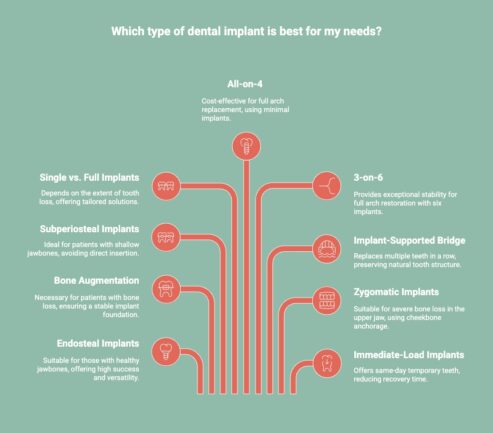
When it comes to dental implants, there isn’t a one-size-fits-all solution. A variety of options exist to meet your unique needs, ensuring you receive the best possible dental restoration. The choice among the common types of dental implants depends on several factors, including the health of your jawbone and the number of teeth you are missing.
1. Endosteal Implants
Endosteal implants are the most common type of dental implant used today. Shaped like small screws or cylinders, they are surgically inserted directly into your jawbone. This procedure provides a solid foundation for one or more replacement teeth.
To be a good candidate for this type of dental implant surgery, you generally need to have a healthy jawbone with sufficient bone density. Once the implant is placed, a healing period is required for the jawbone to fuse around the post, creating a very strong anchor. After healing, a connector (abutment) and a new artificial tooth are attached.
Endosteal implants are highly versatile and offer a number of benefits, including:
- A very high success rate and long-term stability.
- The ability to support a single crown, a bridge, or a full denture.
- A natural look and feel once the restoration is complete.
2. Endosteal Implant With Bone Augmentation
Bone augmentation, also known as bone grafting, is a procedure that rebuilds the bone in your jaw to create a solid base for implants. This is often necessary for patients who have experienced bone loss due to gum disease, injury, or other factors.
The procedure involves adding bone graft material to your jaw to restore or regenerate bone. This helps ensure your jaw can securely support the implant for long-term success. Bone grafting makes previously non-candidates now benefit from the stability of endosteal implants.
Bone augmentation is a key procedure for improving oral health because it:
- Addresses bone loss to create a suitable foundation for implants.
- Increases the likelihood of a successful implant outcome.
- Helps maintain a healthy jawbone structure.
3. Subperiosteal Dental Implants
Unlike endosteal implants, subperiosteal implants are placed on or above the jawbone but beneath the gum tissue. This type of implant consists of a custom-made metal frame that rests on top of the jawbone. Posts attached to the frame protrude through the gums to hold the replacement teeth.
This dental implant procedure is typically recommended for patients who have insufficient jawbone height and do not want to or cannot undergo a bone grafting procedure. It offers an alternative for individuals who may not be able to wear traditional dentures effectively.
The key features of subperiosteal implants include:
- Their placement on top of the jawbone, avoiding direct insertion.
- Suitability for patients with shallow jawbones.
- A minimally invasive option compared to extensive bone grafting.
4. Single vs. Full Implants
Your treatment plan depends on how many teeth you’ve lost and the extent of restoration needed. If you’ve lost just one tooth, a single-tooth implant is often the perfect fix. It uses one implant post and a custom crown to restore function and appearance without affecting nearby teeth.
If you’re missing several or all of your teeth, your dentist may suggest a multiple-tooth or full-mouth implant solution. These options can replace multiple teeth or even a full arch with strong, natural-looking results.
Here’s a quick overview:
- Single-Tooth Implant: Replaces one missing tooth with a single implant post and a custom crown.
- Multiple-Tooth Implant: Replaces several missing teeth in a row, often supported by an implant bridge.
- Full-Mouth Implant: Restores an entire upper or lower arch using multiple strategically placed implants.
5. All-on-4
If you need to replace a full arch of teeth, the All-on-4 technique is one of the most innovative dental implant solutions available. This approach uses just four strategically placed implants in your upper or lower jaw to support a full arch of replacement teeth. It’s a permanent solution that offers incredible stability and function.
The All-on-4 method is often a more cost-effective and faster alternative to placing an individual implant for every missing tooth.
One of its biggest advantages is that a temporary set of teeth can often be attached on the same day as the implant surgery.
This procedure is a great option for those with significant tooth loss because:
- It provides a full arch of teeth with minimal implants.
- It often reduces the need for bone grafting.
- It offers a permanent and stable alternative to removable dentures.
6. 3-on-6
For those seeking a highly stable and comprehensive full-arch restoration, the 3-on-6 implant solution is an excellent choice. This method replaces a full row of teeth using six dental implants that act as anchors for three separate permanent bridge segments. This approach distributes biting forces evenly across the jaw.
The dental implant process for a 3-on-6 restoration is designed to create a result that feels and functions just like natural teeth.
Dividing the full arch into smaller bridge sections allows for easier maintenance and provides a very secure fit. Your dentist will design this treatment based on your individual needs.
Key benefits of the 3-on-6 implant system include:
- Exceptional stability provided by six implants.
- Restoration of a full row of teeth with permanent bridges.
- A natural-feeling bite and smile.
7. Implant-Supported Bridge
Do you have several missing teeth in a row? An implant-supported bridge is a fantastic dental restoration option. Unlike a traditional bridge that relies on adjacent natural teeth for support, this type of bridge is anchored securely by dental implants placed on either side of the gap.
This approach is often preferred because it doesn’t require grinding down healthy teeth to place crowns on them, which helps preserve your natural tooth structure. The implants act as strong roots for the bridge, providing superior stability and durability for your replacement teeth.
This is why it’s considered a reliable solution by many dental professionals.
Consider an implant-supported bridge for these reasons:
- It effectively replaces multiple missing teeth in a row.
- It is supported by the most common type of implant, the endosteal implant.
- It helps prevent bone loss in the jaw where teeth are missing.
8. Zygomatic Implants
Zygomatic implants are a highly specialized solution designed for individuals with severe bone loss in the upper jaw. When there isn’t enough jawbone to support traditional implants, even with bone grafting, these extra-long implants offer a viable alternative. They are anchored in the cheekbone, known as the zygoma, instead of the jawbone.
This advanced dental implant procedure provides a secure foundation for replacement teeth in the upper arch. Zygomatic implants are typically used for full-arch restorations and can help patients who were previously told they were not candidates for implants finally achieve a fixed, permanent smile.
This type of implant is recommended for:
- Patients with significant bone atrophy in the upper jaw.
- Cases where conventional bone grafting is not an option.
- Providing strong support for a full set of upper teeth.
9. Immediate-Load Implants
Immediate-load implants, also known as same-day implants or “Teeth in a Day,” might be the perfect solution for you. With this technique, a temporary crown or bridge can be placed on your implant on the very same day as your surgery.
This option is ideal for patients who have sufficient natural bone and a very stable implant. After a dental exam confirms you are a candidate, your dentist can perform the procedure, allowing you to walk out with a functional tooth. This significantly reduces the overall recovery time associated with waiting for a final restoration.
Immediate-load implants offer several key advantages:
- You get a temporary tooth immediately after surgery.
- It provides an instant aesthetic improvement for a missing tooth.
- It shortens the overall dental care treatment timeline.
What Other Procedures Might You Need With Dental Implants?
Sometimes, getting dental implants isn’t just about placing the implant itself. Depending on your oral health, your dentist may recommend additional procedures to create a strong, stable foundation and ensure long-lasting results.
The most common supplementary procedures include:
- Bone Grafting (Bone Augmentation): Used when the jawbone isn’t dense or thick enough to support an implant.
- Sinus Lift: Performed in the upper back jaw to raise the sinus floor and add bone for proper implant placement.
- Ridge Expansion: Widens a narrow jaw to provide adequate support for implants.
- Mini Dental Implants: Smaller, less invasive implants are often used to stabilize dentures or for simpler restorations.
These preparatory treatments help guarantee your implants are secure, functional, and durable for years to come.
Struggling with Missing Teeth? Dentist Tree of the Heights Can Restore Your Smile
Missing teeth don’t just affect your appearance; they can lead to jawbone loss, shifting teeth, and even further dental problems like cavities or gum disease.
At Dentist Tree of the Heights, we provide beautiful, long-lasting dental implants that restore both function and confidence, tailored to your unique needs.
Whether you need a single tooth replaced, multiple teeth restored, or a full-mouth solution like All-on-4 implants, our expert periodontists guide you through every step of the process. From consultation and bone grafting if needed, to implant placement, healing, and final crown attachment, we ensure your new teeth look natural, feel comfortable, and function perfectly.
Call 281.849.8858 or schedule your consultation online today at our Houston Heights office to take the first step toward a confident, fully restored smile.
Conclusion
Missing teeth don’t have to hold you back. With the right dental implant solution, you can restore both function and confidence while protecting your oral health. Whether it’s a single tooth, multiple teeth, or a full-mouth restoration, Dentist Tree of the Heights has the expertise and options to make it possible.
Don’t wait another day living with discomfort or gaps in your smile. Your new smile is closer than you think. Take the first step today.
Frequently Asked Questions
What are the main types of dental implants and how do they differ?
The different types of dental implants include endosteal, subperiosteal, zygomatic, All-on-4, and mini implants. They differ in placement, jawbone requirements, and suitability for single, multiple, or full-mouth restorations. Types of dental implants pictures show these variations clearly.
How do I know which type of dental implant is best for me?
To determine which type of dental implants are best, your dentist evaluates jawbone health, number of missing teeth, and oral conditions. The best type of dental implants balances stability, aesthetics, and long-term success.
What materials are dental implants usually made from?
Most implants use titanium or zirconia. These types of dental implants materials are biocompatible, integrate with bone, and provide durable support for crowns, bridges, or full-mouth restorations.
Can you explain the average costs of the different dental implant types?
Types of dental implants cost vary from $3,000–$6,000 for single implants to $20,000–$45,000 for full-arch solutions. Costs depend on complexity, bone grafting, and additional procedures. Types of dental implants cost with insurance can reduce out-of-pocket expenses.
How does the recovery process vary depending on the type of dental implant?
Recovery depends on implant type. Single endosteal implants heal faster than types of full mouth dental implants like All-on-4 or zygomatic implants, which require longer osseointegration and follow-up visits.
What are the pros and cons of the most common dental implant types?
Endosteal implants are highly stable; subperiosteal implants suit low bone. Dental implant screw types affect anchoring and durability. Pros include longevity and natural look; cons include cost and potential need for bone grafting.
Are there any dental implant types specifically recommended for people with low bone density?
Patients with low bone density often benefit from subperiosteal, mini, or zygomatic implants. Types of dental implants for dentures and bone graft-supported implants are also recommended for such cases.
How many dental implant types are available and what situations are each best suited for?
Common different types of dental implants include single-tooth, multiple, full-mouth (All-on-4, 3-on-6), mini, and zygomatic. Each is suited for specific needs: tooth loss extent, bone density, and desired durability.
Which dental specialists should I consult for getting dental implants?
Consult a periodontist, oral surgeon, or prosthodontist. What type of dentist does dental implants or what type of doctor does dental implants ensures proper evaluation, placement, and restoration.
Is there a difference in lifespan between the various types of dental implants?
Yes, traditional endosteal implants and All-on-4 types of dental implants can last decades with proper care. Factors include bone health, dental implants diabetes type 2 management, and maintenance of types of crowns for dental implants.