

Key Highlights
- The dental implant procedure itself is not painful thanks to effective local anesthesia.
- Most patients report that dental implant surgery is less uncomfortable than other dental procedures, like a tooth extraction.
- Post-surgery implant pain is typically mild to moderate and can be managed with over-the-counter pain relievers.
- Discomfort is highest in the first 48 hours and usually subsides significantly within one to two weeks.
- Sedation options are available to ensure you are relaxed and comfortable during the dental implant surgery.
If you are considering a solution for missing teeth, you have likely heard about dental implant treatment. This form of dental restoration is a reliable and long-lasting tooth replacement option that can bring back your confident smile.
However, it is completely normal to have questions about the process, especially concerning potential pain.
This guide will walk you through what to expect during and after dental implant surgery, helping you approach your treatment with confidence and peace of mind.
Do Dental Implants Hurt During Procedure?
Many patients ask, “Does it hurt to get dental implants?”, and the truth is that the procedure is typically comfortable because the area is completely numbed.
Once the numbness wears off, it’s common to experience mild to moderate soreness around the gums and jaw. This is part of normal healing and is usually manageable with over-the-counter pain medication, cold compresses, and rest.
What Happens During a Dental Implant Procedure?
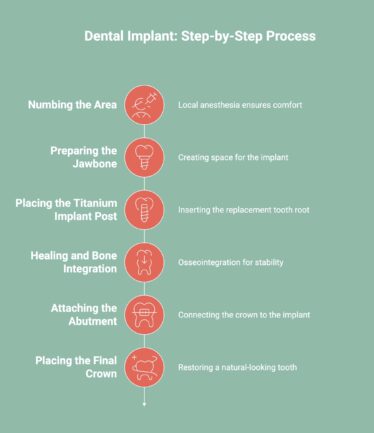
During the dental implant procedure, your dentist’s top priority is your comfort. If you’re considering dental implants, understanding the process can make everything feel clearer and less intimidating. It’s a carefully planned treatment designed to rebuild a strong, natural-looking tooth from the root up, and your comfort is the focus at every stage.
So, let’s understand how the dental implant process works, step by step, in a simple and friendly way.
Step 1: Numbing The Area
Your dentist begins by numbing the implant site with local anesthesia so you won’t feel pain during the procedure. You may notice some pressure or vibration, but nothing sharp. Sedation options are available if you’re nervous or prefer deeper relaxation.
Step 2: Preparing The Jawbone
Once the area is fully numb, a small opening is made in the gum and jawbone to create space for the implant. This part is quick and precise, and because the area is numb, it remains comfortable throughout.
Step 3: Placing The Titanium Implant Post
The titanium post, which acts like a replacement tooth root, is gently inserted into the prepared space. This post will eventually support the final crown and provide a sturdy foundation.
Step 4: Healing And Bone Integration
Over the next few months, your jawbone naturally bonds to the implant through a process called osseointegration. This creates long-term stability. A temporary tooth may be placed so you can smile confidently while healing occurs.
Step 5: Attaching The Abutment
Once healing is complete, a small connector piece called an abutment is attached to the implant. This piece will hold the final crown securely in place.
Step 6: Placing The Final Crown
A custom-made crown, matched perfectly to the shape and color of your natural teeth, is placed onto the abutment. It looks, feels, and functions like a real tooth, allowing you to eat, speak, and smile comfortably again.
Most patients say the process is easier than they expected, and the strong, long-lasting results make the experience truly worthwhile. With good care, dental implants can last for many years, often a lifetime.
If you’re interested in learning which dental implant type is best for your bite, bone structure, and long-term results, read What Are the Types of Dental Implants Perfect for a Smile?
How Long Do Dental Implants Hurt?
While the surgery itself is not painful, it is normal to experience some post-operative discomfort. After all, your body needs time to heal. The level of discomfort you feel can depend on several factors, including the complexity of your procedure and your individual pain tolerance.
Compared to other dental procedures, many patients are surprised to learn that dental implant pain is often less severe than they anticipated. We will explore how this discomfort compares to other treatments and what sensations are considered a normal part of the healing process.
Most patients can expect to feel:
- Soreness and tenderness around the surgical area.
- Mild swelling and bruising on the cheek near the implant site.
- A dull, throbbing sensation for the first couple of days.
Some patients worry and ask, “Do dental implants hurt forever?”, but long-term pain is extremely rare and usually signals an issue that can be treated.
What To Expect In The Recovery Phase?
The recovery period after dental implant surgery is an important time for healing, and knowing what’s normal can make the experience far less stressful.
Here’s what you can typically expect during recovery and how to recognize when something needs attention:
- For most patients, soreness peaks in the first 48 to 72 hours and fades significantly within a few days.
- Swelling and tenderness are normal and usually resolve within one to two weeks, but could vary based on how complex your case is.
- Mild bruising around the cheek or gum is common and fades on its own.
- Call your dentist if pain becomes worse instead of improving, if swelling or bleeding is excessive, if there is pus, fever, or a foul taste, or if pain returns unexpectedly after the area previously healed.
Understanding what’s normal versus what’s concerning helps you feel confident and supported throughout your healing journey.
If you’re exploring whether implants are the right solution for missing teeth and want clarity on function, comfort, and long-term benefits, read Could Dental Implants Solve Your Missing Tooth Problem?
What Can I Do To Manage Pain After Dental Implant Surgery?
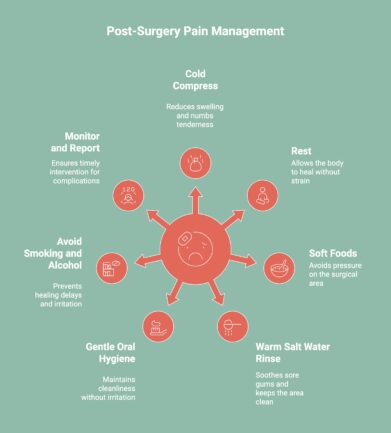
Fortunately, managing pain after dental implant surgery is very manageable when you follow a structured recovery plan. Your dentist will provide detailed instructions tailored to your procedure. These steps work together to keep discomfort minimal and support fast, healthy healing.
Let’s have a look at them.
- Apply a cold compress or ice pack for 10-15 minutes at a time because cold therapy constricts blood vessels, which reduces inflammation, swelling, and nerve activity, helping numb tenderness and speed up tissue recovery in the early stages.
- Take things slow and avoid strenuous activity for the first few days since physical exertion increases blood flow and internal pressure, which can worsen swelling and discomfort and interfere with the body’s natural healing processes.
- Choose soft foods like smoothies, yogurt, scrambled eggs, pasta, and mashed potatoes to prevent chewing pressure on the surgical site. This protects the implant, reduces strain on surrounding bone and tissue, and helps minimize irritation and pain.
- Rinse gently with warm salt water after the first 24 hours because saline creates a natural antibacterial environment, reduces oral bacteria, soothes inflamed tissue, and encourages faster healing by improving blood circulation to the gums.
- Maintain gentle oral hygiene with a soft toothbrush and follow your dentist’s instructions, since keeping the mouth clean reduces the risk of infection around the implant, which is crucial during osseointegration as the bone bonds to the implant post.
- Avoid smoking and alcohol because nicotine restricts blood flow and slows bone healing, while alcohol irritates soft tissue and dries the mouth, increasing the chance of infection and delayed recovery.
- Pay attention to your body and call your dentist if discomfort worsens instead of improving, since persistent pain or excessive swelling may signal infection or implant complications that need immediate professional evaluation.
These steps help encourage a smooth recovery and support a strong, healthy implant healing process.
What Factors Can Affect Pain Levels And Recovery After Dental Implants?
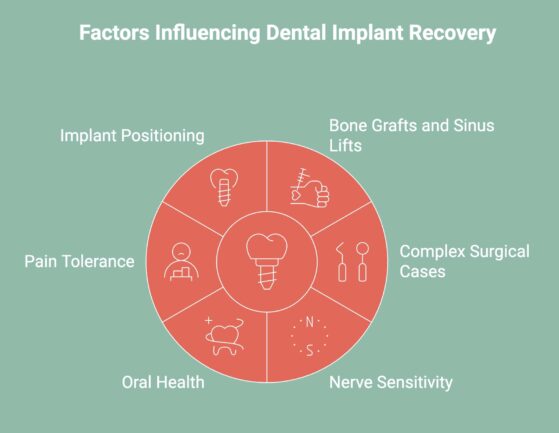
Everyone’s healing experience with dental implants is unique, and several factors can influence how much discomfort you feel and how quickly you recover.
Here are the key things that can impact pain levels and healing time:
• Bone grafts or sinus lifts may extend healing time, since additional procedures create more tissue involvement and can cause extra tenderness while the bone strengthens
• Complex or invasive surgical cases can lead to more soreness, especially when multiple implants are placed or when significant adjustments are required
• Placement near sensitive nerves may increase temporary sensitivity, which is why digital imaging and an experienced dentist are essential for precision and comfort
• Overall oral health plays a major role, as healthy gums and strong bone support faster healing and less discomfort than cases complicated by gum disease or infection
• Personal pain tolerance varies widely, so two patients with identical procedures may feel very different levels of discomfort
• Improper implant positioning can create ongoing irritation or a longer recovery, which highlights the importance of choosing a skilled implant provider and following instructions closely
Knowing these factors helps set clear expectations and allows you to work closely with your dentist to support a smooth and comfortable recovery process.
How Painful Is Dental Implant Surgery Compared To Other Dental Treatments?
It makes sense to wonder how dental implants feel compared to other procedures you may have been through. Many patients are pleasantly surprised to find that implant surgery is far less uncomfortable than they imagined.
Because the area is fully numbed during the procedure, most people feel pressure rather than pain, and the recovery is generally described as manageable and short-lived.
How implants compare to other common dental treatments:
- Usually easier and less painful to recover from than a tooth extraction.
- Typically gentler than gum surgery, which can involve more tissue irritation.
- More comfortable long-term than dealing with ongoing pain from a damaged or infected tooth.
- Often easier to manage afterwards than procedures involving multiple stitches or extensive tissue healing.
Overall, the short-term discomfort is minimal compared to the long-lasting stability and relief implants provide. Understanding what to expect helps you feel prepared, confident, and ready for a smooth recovery experience.
How Long Do Dental Implants Last?
Dental implants are built to be a long-term solution, not a temporary fix. With proper care, they often last 15-25 years or more, and the titanium post that bonds with your jawbone can last a lifetime. The visible crown may need replacement after many years due to natural wear, but the foundation beneath is extremely durable.
Dental Implants will last longer by following these steps;
- Consistent brushing, flossing, and routine cleanings.
- Healthy gums and bone.
- Avoiding smoking, which slows healing and weakens support.
- Regular dental checkups to monitor stability.
If you are considering dental implants and want a personalized understanding of your comfort level, treatment timeline, and recovery expectations, scheduling a consultation with your dentist is the best next step toward restoring your smile confidently.
What Are The Benefits Of Dental Implants?
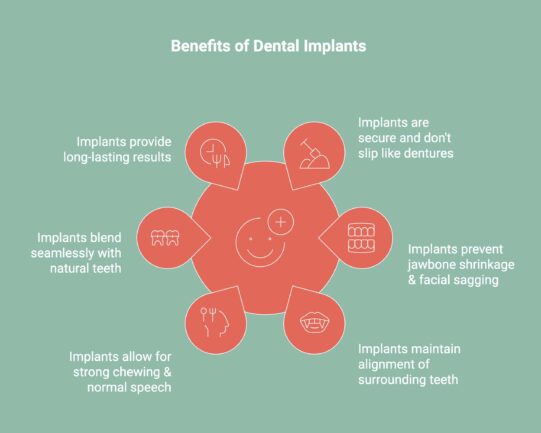
Dental implants offer a wide range of advantages that go far beyond filling a gap in your smile. They look, feel, and function like natural teeth, allowing you to eat, speak, and smile comfortably, often without ever thinking about them.
Benefits you’ll appreciate daily:
- Stable and secure, unlike removable dentures that may slip.
- Help prevent jawbone shrinkage and facial sagging.
- Maintain the alignment of surrounding teeth.
- Allow strong, confident chewing and normal speech.
- Blend seamlessly with natural teeth for a natural appearance.
- Long-lasting results that provide excellent value over time.
These everyday advantages are why so many patients choose implants as a permanent solution. When placed and cared for properly, they can last decades, delivering comfort, functionality, and confidence that truly feels life-changing.
Worried That Dental Implants Might Hurt?
If the fear of pain is holding you back from getting dental implants, you don’t have to worry. Many patients feel anxious at first, but with the caring team at Dentist Tree of The Heights, you can relax knowing your comfort is always the top priority. Our advanced technology, gentle techniques, and personalized sedation options help ensure a smooth, comfortable experience from start to finish.
Most patients are surprised by how easy dental implant placement feels and how simple recovery is with the right support. We focus on natural looking, long lasting results while keeping you calm, informed, and confident every step of the way.
Schedule your dental implant consultation at Dentist Tree of the Heights today.
Conclusion
Understanding the pain associated with dental implants can help answer any concerns you may have about the procedure. While some discomfort is expected, modern techniques and effective pain management strategies ensure a more comfortable experience than many other dental procedures. With the right preparation and care, most patients report manageable pain levels during recovery.
Frequently Asked Questions
Are dental implants more painful than tooth extractions?
Many patients find dental implant surgery to be less painful than a tooth extraction. Extractions can involve more tissue trauma, leading to greater post-procedure discomfort. In contrast, implant placement is a very precise procedure, often resulting in a comfortable recovery.
Will I need pain medication after getting dental implants?
Yes, it is common to need pain medication for a few days after the dental implant procedure. Your dentist may recommend over-the-counter pain relievers to manage soreness and swelling. For more complex procedures, a prescription might be provided.
Is recovery from dental implant surgery very painful?
Recovery from dental implant surgery is generally not considered very painful. Most patients experience mild to moderate discomfort that is manageable and subsides within a week or two after the procedure.
What is the downside of dental implants?
The downside of dental implants is the cost, healing time, and potential complications like infection or implant failure. Surgery requires healthy bone and gums, and some patients experience discomfort or extended recovery depending on individual health conditions.
Why does my dental implant hurt when I chew?
Dental implants may hurt when chewing due to healing tissues, inflammation around the implant, or bite pressure imbalance. Persistent pain can signal infection, loose hardware, or bone integration problems, so contact your dentist for evaluation and necessary adjustments.
Are dental implants painful once the numbness or sedation wears off?
Once numbness or sedation disappears, mild to moderate soreness is common, similar to typical oral surgery recovery. Discomfort usually reduces over several days and can be managed with medication. Severe or increasing pain may indicate complications requiring urgent care.
How painful are dental implants if bone grafting is required?
If bone grafting is required, dental implant pain may be slightly greater due to additional surgical steps and extended healing. Most discomfort is manageable with medications and cold compresses, gradually improving as bone integrates and swelling decreases.
What is the downside of dental implants?
The downside of dental implants involves financial expense, multiple appointments, surgical risks, and potential healing complications. Not everyone qualifies, and long-term maintenance is required. Some patients prefer less invasive or lower cost options depending on their dental needs.
Who shouldn’t get dental implants?
People with uncontrolled diabetes, severe gum disease, heavy smoking habits, insufficient jawbone, immune disorders, or those unable to undergo surgery shouldn’t get dental implants. Pregnancy, radiation therapy, or poor oral hygiene can also make candidates unsuitable for safe placement.
How long after dental implants can I eat normally without discomfort?
Most patients can eat normally without discomfort after several weeks, once swelling decreases and soft foods transition to regular chewing. Full biting pressure typically waits until osseointegration completes, which usually takes three to six months, depending on healing.