

Key Highlights
- The best dental implants are determined by your oral health, bone support, lifestyle, and long-term goals, not a one-size-fits-all solution
- Factors like gum health, jawbone density, and history of tooth loss play a critical role in implant success
- Different needs, from a single missing tooth to full smile restoration, require different implant approaches
- Implant material and placement should be chosen based on suitability, comfort, and long-term function
- Lifestyle habits and commitment to oral hygiene directly affect healing and implant longevity
- A professional evaluation helps create a personalized treatment plan and supports confident, informed decision-making
Losing a tooth or several teeth can feel more disruptive than people expect. It affects how you eat, speak, and smile, and often leads people to search online for answers. Many patients quickly find themselves asking what the best dental implants are, only to feel overwhelmed by conflicting opinions and endless options.
What is often overlooked is that dental implant treatment involves several important considerations. Factors such as oral health, bone structure, lifestyle habits, and long-term goals all play a role in determining the most appropriate approach for restoring function and appearance.
This guide is designed to make the decision clearer. You will learn how dental implants are selected, what truly matters during treatment planning, and how to move forward with confidence toward restoring your smile with professional guidance you can trust.
What Makes a Dental Implant the “Best” Choice?
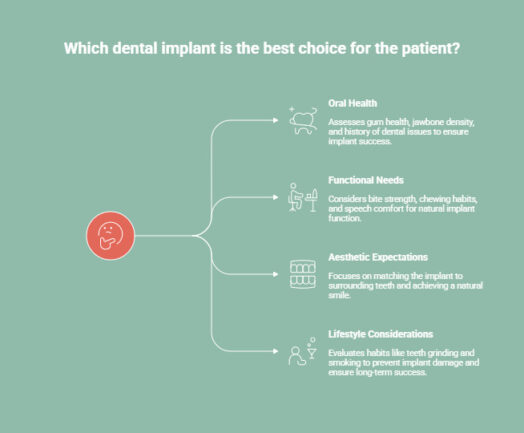
The best dental implant is one that works well with your oral health, functions comfortably in daily life, and looks natural. Rather than focusing on a single feature, dentists evaluate several key areas to determine the most suitable option for you.
1. Personal Oral Health Factors
Your oral health sets the foundation for implant success. Healthy gums protect the implant and surrounding bone, while poor periodontal health can interfere with healing. Jawbone density and volume are also critical, as implants require stable bone support.
Key factors to be considered:
- Gum health and overall periodontal condition
- Jawbone density and available bone volume
- History of tooth loss, infections, or delayed treatment
2. Functional Needs
An implant should feel natural when you eat, speak, and bite. Replacing a single tooth requires a different approach than restoring multiple teeth or a full arch. Bite strength and chewing habits also affect how the implant is planned and positioned.
Functional considerations include:
- Single tooth, multiple teeth, or full-arch replacement
- Bite force and chewing patterns
- Speech comfort and overall stability
3. Aesthetic Expectations
Dental implants should restore confidence as well as function. Matching the surrounding teeth in shape, size, and color helps the implant blend seamlessly. Gum line visibility, especially in the upper jaw, plays a key role in achieving a natural-looking smile.
Aesthetic goals often focus on:
- Natural appearance of the replacement tooth
- Balanced and healthy-looking gum line
- Seamless integration with nearby teeth
4. Lifestyle Considerations
Daily habits can influence both healing and long-term success. Teeth grinding can place added stress on implants, while smoking or frequent alcohol use may slow recovery. Consistent aftercare and good oral hygiene help protect the implant over time.
Lifestyle factors include:
- Bruxism or clenching habits
- Smoking or alcohol use
- Commitment to aftercare and oral hygiene
Wondering if dental implants hurt? This guide breaks down what patients actually experience during and after dental implant treatment, helping you feel prepared, informed, and at ease before your consultation.
What Is the Best Dental Implant Option Based on Your Needs?
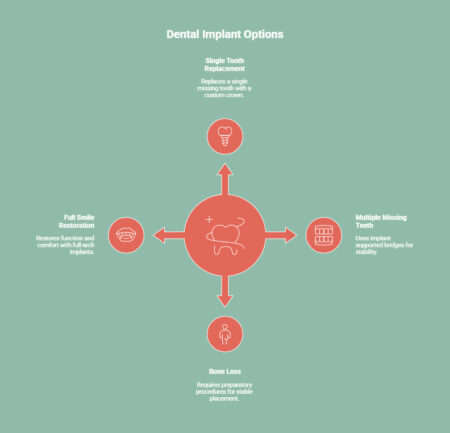
The best dental implant option depends on how many teeth are missing, the condition of your jawbone, and your long-term goals for comfort and function. Instead of a single solution, implant care is tailored to fit individual clinical needs.
1. Best Dental Implants for Single Tooth Replacement
When only one tooth is missing, a standard dental implant is often the most effective solution. It replaces the missing tooth root with an implant post and supports a custom crown that blends naturally with surrounding teeth.
This option works best when:
- The jawbone is healthy enough to support stable implant placement
- Spacing allows the crown to align naturally without affecting nearby teeth
- Long-term stability and aesthetics are a priority
2. Best Dental Implants for Multiple Missing Teeth
When several teeth are missing in the same area, implant-supported bridges offer a practical and stable alternative to replacing each tooth individually. This approach balances strength with efficiency.
Implant-supported bridges are often preferred because they:
- Provide greater stability than removable dentures
- Do not rely on neighbouring teeth for support
- Help preserve the surrounding bone and bite balance
3. Best Dental Implants for Bone Loss or a Weak Jawbone
Low bone density does not automatically rule out dental implants, but it does require a different approach to ensure stability and long-term success.
Depending on the severity and location of bone loss, options may include:
- Mini dental implants are often used when bone width is limited or to stabilize dentures without extensive bone grafting
- Short or narrow-diameter implants that work within the existing bone structure
- Bone grafting or ridge preservation to rebuild support for standard implants
- Alternative placement techniques that maximize available bone
A proper clinical evaluation and imaging are essential to determine which option is most suitable.
4. Best Dental Implants for Full Smile Restoration
When most or all teeth are missing, full-arch implant solutions provide a comprehensive way to restore function and comfort. These solutions secure a complete set of replacement teeth using strategically placed implants.
Patients often choose full-arch implants because they:
- Offer greater comfort and stability than removable dentures
- Improve chewing ability and speech clarity
- Support long-term confidence and daily function
The right dental implant solution comes from matching your specific needs with a carefully planned, professional evaluation.
Curious about newer implant options? Learn how screwless dental implants work, how they differ from traditional systems, and when they may be recommended for your smile.
What Types of Dental Implants Are Used in Modern Treatment?
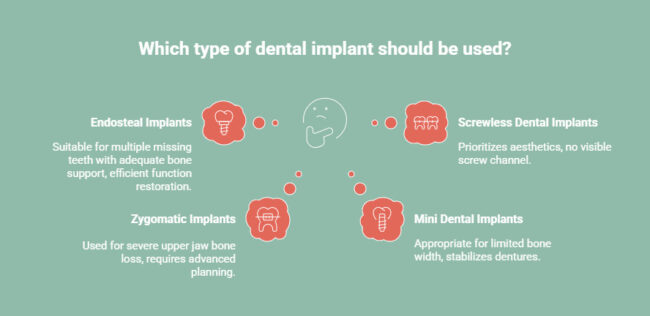
Dental implants are selected based on bone support, tooth loss pattern, and functional goals. Below are commonly used implant types and when they may be recommended.
1. Endosteal Implants With Multiple Crowns
Endosteal implants are placed directly into the jawbone and are the most commonly used implant type. When multiple adjacent teeth are missing, a few implants can support several crowns or a fixed bridge. This approach restores function efficiently while preserving bone and avoiding the need to replace each tooth individually, provided adequate bone support is present.
2. Zygomatic Implants
Zygomatic implants are longer implants anchored in the cheekbone rather than the upper jaw. They are typically used in cases of severe upper jaw bone loss where traditional implants would require extensive grafting. These implants allow full-arch restoration in complex cases but require advanced planning and specialised clinical expertise.
3. Mini Dental Implants
Mini dental implants are narrower than standard implants and may be used when bone width is limited. They are commonly used to stabilise dentures or in select cases where a less invasive option is appropriate. Mini implants are not suitable for all situations and are chosen based on bite forces, placement location, and long-term function.
4. Screwless Dental Implants
Screwless dental implants are designed without a visible screw channel, which can improve aesthetics, especially in visible areas of the smile. They are often considered when cosmetic outcomes are a priority. Proper placement and case selection are essential to ensure stability, durability, and long-term success with this implant design.
Each implant type serves a specific purpose. The best choice depends on bone quality, location in the mouth, number of teeth being replaced, and long-term functional goals. A professional evaluation, supported by imaging, helps determine which approach is most appropriate.
How Do You Choose the Right Dental Implant Material?
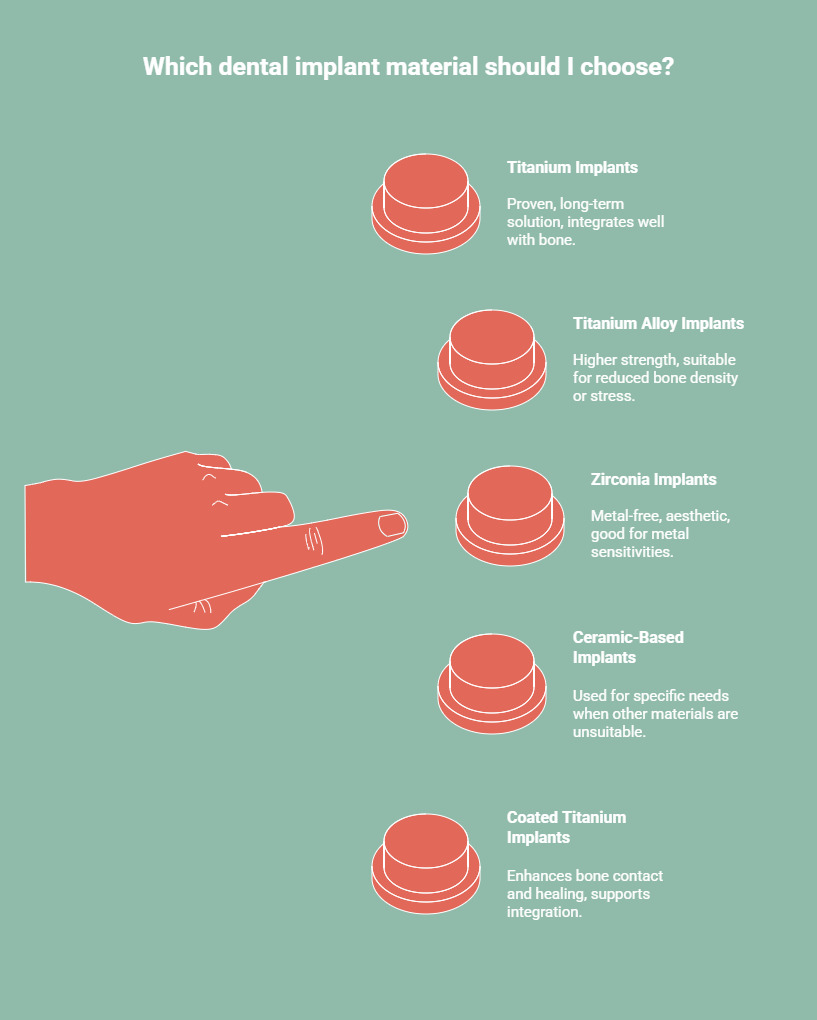
Selecting an implant material is less about choosing the most advanced option and more about finding what works best with your bone, gum tissue, and functional needs. The right choice supports predictable healing, long-term stability, and a natural result.
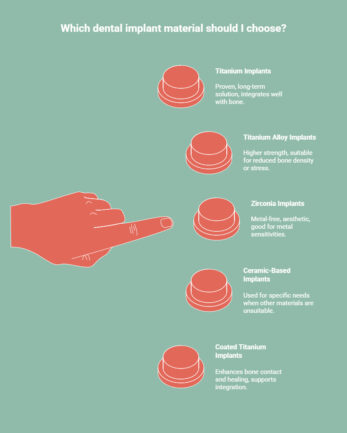
1. Titanium Implants
Titanium remains the most widely used implant material because it integrates reliably with bone and performs well in most treatment scenarios. It is often the first choice for patients seeking a proven, long-term solution.
2. Titanium Alloy Implants
When additional strength is required, titanium alloy implants may be recommended. These are designed to handle higher bite forces and may be suitable in cases where bone density is reduced or stress on the implant is greater.
3. Zirconia Implants
Zirconia implants offer a metal-free alternative and are typically considered for patients with metal sensitivities or higher aesthetic priorities. Their tooth-coloured appearance can be beneficial in visible areas of the smile.
4. Ceramic-Based Implants (Non-Zirconia)
Other ceramic implant materials are used less frequently and are usually reserved for specific clinical needs. They may be considered when traditional materials are not suitable.
5. Coated Titanium Implants
Coated titanium implants use surface treatments to enhance bone contact and support healing. These may be selected when bone quality or healing conditions require additional support for integration.
The best implant material is the one that aligns with your oral health, anatomy, and long-term goals. A thorough evaluation ensures the chosen material supports function, stability, and confidence in the final result.
What Key Factors Should You Consider When Choosing Dental Implants?
Once you understand how dental implants work and which options may suit your needs, the next step is looking at the practical factors that influence long-term success. These considerations help ensure your treatment is not only effective but also comfortable, predictable, and sustainable over time.
When evaluating your readiness for dental implants, pay close attention to the following factors:
- Overall dental health: Existing issues such as untreated decay or gum inflammation must be addressed first to create a stable foundation for implant treatment.
- Commitment to daily care: Dental implants require consistent brushing, flossing, and routine dental visits to protect the surrounding gum tissue and bone.
- Healing and recovery ability: General health, medications, and lifestyle habits can affect how smoothly your body heals after the implant procedure.
- Long-term maintenance expectations: While implants are durable, they still require professional monitoring to ensure continued stability and function.
- Treatment timeline awareness: Dental implants are completed in stages, and allowing proper healing time is essential for successful outcomes.
- Financial preparedness: Understanding costs, insurance considerations, and payment options helps reduce stress and supports informed planning.
By considering these factors together, choosing dental implants becomes a clearer and more confident decision. A personalised consultation allows your dentist to align your goals, health needs, and expectations into a treatment plan designed for lasting comfort and peace of mind.
Find out if dental implants are right for you with a personalized consultation at Dentist Tree of the Heights. Book your appointment today!
Who Is a Good Candidate for Dental Implants?
Not everyone’s path to dental implants looks the same, which is why candidacy is determined by health and readiness rather than age alone. While many patients ask what the best age for dental implants is, the more important question is whether your mouth and body can support healing and long-term stability.
Patients who are good candidates for dental implants typically meet the following criteria:
- Healthy gums and stable oral health, with no active gum disease or untreated infections
- Adequate jawbone support, or the ability to restore bone through preparatory treatment if needed
- Well-managed medical conditions, such as diabetes, that do not interfere with healing
- A commitment to good oral hygiene and regular dental care, which protects the implant over time
Even if you have experienced tooth loss for years or have mild bone loss, dental implants may still be an option with proper planning. A professional evaluation helps confirm candidacy and creates a clear, personalized path toward safe and successful implant treatment.
Bone loss can affect your eligibility for dental implants. Learn how dental bone grafting works, when it is recommended, and how it helps rebuild a strong foundation for successful implant treatment.
Why Trust Dentist Tree of the Heights for Your Dental Implants?
Choosing dental implants is a personal decision, and the right provider plays a key role in how confidently you move forward. Because every smile is different, factors such as bone support, gum health, bite function, and aesthetic goals must be carefully evaluated before recommending an implant solution.
Dentist Tree of the Heights approaches dental implant care with a strong focus on individual assessment and patient understanding. Rather than promoting a single option, the team takes time to explain available implant approaches and how each may apply to your specific needs.
Patients who visit Dentist Tree of the Heights for dental implant care can expect:
- A comprehensive implant consultation that evaluates oral health, bone support, and overall suitability
- Clear, balanced guidance on implant options, based on clinical findings rather than a one-size-fits-all approach
- Modern diagnostic imaging to support accurate assessment of bone and gum health
- Personalized treatment planning designed around comfort, function, and natural aesthetics
- Ongoing communication and follow-up care to support healing and long-term oral health
By combining thoughtful planning with patient-first care, Dentist Tree of the Heights helps patients make informed decisions about dental implants with clarity and confidence.
Schedule a dental implant consultation with Dentist Tree of the Heights to explore your options based on your oral health and goals.
Final Thoughts
Identifying the best dental implants for you starts with understanding your oral health, bone support, lifestyle, and long-term goals. There is no universal solution. The right choice comes from careful evaluation, clear guidance, and a treatment plan tailored to your needs.
With professional support, dental implants can restore function, comfort, and confidence in a way that feels natural and lasting. A consultation helps bring clarity, ensuring your next step is informed, realistic, and aligned with your smile goals.
Frequently Asked Questions
What are the best dental implants for replacing missing teeth?
The best dental implants depend on your oral health, bone support, and treatment goals. A professional evaluation helps determine the most suitable implant approach based on stability, function, and long-term success rather than a single implant type.
How do I know which dental implant is best for me?
The best dental implant for you is determined by factors such as gum health, jawbone density, number of missing teeth, and lifestyle habits. A personalized consultation helps match these factors to the best option for the right implant solution.
Why choose dental implants over other tooth replacement options?
Dental implants offer a stable, long-term tooth replacement that functions like natural teeth. They help preserve jawbone structure, improve chewing and speech, and provide greater comfort compared to removable dentures or traditional bridges.
What are the benefits of choosing dental implants?
The benefits of choosing dental implants include improved oral health, better chewing ability, a natural-looking smile, and long-term durability. Implants also help prevent bone loss, support facial structure over time, and enhance the patient’s quality of life.
Which type of dental implants are best for long-term success?
There is no single type of dental implant that is best for everyone. Long-term success depends on proper implant placement, healthy bone support, good oral hygiene, and a treatment plan tailored to your specific needs.
What is the best age for dental implants?
There is no specific best age for dental implant surgery. Adults of many ages may qualify as long as they have healthy gums, adequate bone support, and overall health that allows proper healing after the dental implant surgery procedure.
What is the best choice for dental implants if I have bone loss?
If bone loss is present, dental implants may still be an option with proper planning, especially with bone grafting procedures. Preparatory treatments or alternative placement techniques may be considered after a professional evaluation to ensure safe and stable results.
What is the difference between the top dental implant brands?
Differences between dental implant brands often relate to design, surface technology, and compatibility with bone. However, long-term success depends more on proper planning, precise placement, and overall oral health than on the brand selected.
What are the most common complications or risks with dental implants?
Possible risks include infection, delayed healing, nerve irritation, or implant failure. These risks are uncommon and are often linked to factors such as poor oral hygiene, smoking, or underlying health conditions when not properly managed.
How long do dental implants last compared to other tooth replacement options?
With proper care and regular dental visits, dental implants can last many years and often longer than bridges or dentures. Their longevity depends on oral hygiene, overall health, and ongoing professional monitoring.
Is dental implant surgery safe, and what should I expect during the procedure?
Dental implant surgery is widely considered safe when performed by an experienced dental provider. The procedure typically involves placing the implant into the jawbone under local anesthesia, followed by a healing period before the final restoration is placed.