

Key Highlights
- You can deduct qualified dental expenses that exceed 7.5 percent of your adjusted gross income (AGI).
- To claim these deductions, you must itemize your expenses on Schedule A of Form 1040 rather than taking the standard deduction.
- Deductible expenses include preventive care, restorative treatments, oral surgeries, orthodontics, and dental implants that are considered medically necessary.
- Cosmetic procedures such as teeth whitening and non-prescribed over-the-counter dental products are not tax-deductible.
- Transportation costs related to dental visits, including mileage and parking fees, may also be included if the visit is for qualifying care.
- Keeping thorough records, including receipts, appointment summaries, and payment confirmations, is essential to support your claims if questioned by the IRS.
Dental care costs often arrive unexpectedly, and even routine treatments can put pressure on your budget. When you are already managing insurance limits, co-pays, or out-of-pocket expenses, the financial stress can add up quickly. Many people assume these costs are fixed losses and never consider whether there is any form of relief available.
What many taxpayers do not realise is that certain dental expenses may be deductible under IRS rules. When claimed correctly, these deductions can reduce your taxable income and help offset the cost of care you have already paid for. Missing this opportunity often comes down to confusion about eligibility, uncertainty around documentation, or fear of making mistakes on a tax return.
Understanding how dental care tax deductions work can help you recover part of what you have spent and make informed decisions about future treatments. Knowing what qualifies, what does not, and how to approach the process correctly can turn dental expenses from a financial setback into a manageable part of your overall tax strategy.
What is Dental Care Tax Deduction?

Dental care tax deductions allow taxpayers to deduct certain dental care expenses tax deductible from their taxable income, thus reducing their tax liability. According to the IRS, dental care can be categorized as a medical expense, making it eligible for tax deductions under specific circumstances.
What Are the Tax Benefits of Dental Care Deductions?
Now that we know what dental care tax deductions are, let’s look at how these expenses can benefit you in terms of tax savings. When you meet the required threshold, the deductions can significantly reduce your overall taxable income:
- Reduces Taxable Income: Dental care expenses that exceed the 7.5% AGI threshold lower the amount of income subject to taxation.
- Potential Savings for High Earners: High-income earners with substantial dental expenses can benefit the most by claiming these deductions.
- Deductions for Families and Dependents: Expenses incurred for dependents’ dental care can also be deducted, increasing savings for families.
By maximizing dental care deductions, you can lower your tax bill and ensure that you’re getting the financial relief you’re entitled to. Keep accurate records, and consult with a tax expert to ensure you’re taking full advantage of these benefits.
Are Dental Care Premiums Tax Deductible?
You may be able to deduct the amount you pay for dental insurance premiums. These premiums are considered a medical expense, just like payments for health insurance premiums. If you pay for your dental insurance with out-of-pocket funds, you can include these payments in your total medical care expenses for the tax year. This can help you reach the 7.5% AGI threshold needed to start claiming tax deductions.
However, remember that you cannot deduct premiums paid by your employer or any amount that was paid with pre-tax money, such as through a workplace Flexible Spending Account (FSA). The deduction only applies to premiums you pay yourself. For self-employed individuals, the rules are slightly different, and they can often deduct the full cost of their premiums without having to itemize.
What is the Eligibility and Scope of Dental Care Tax?
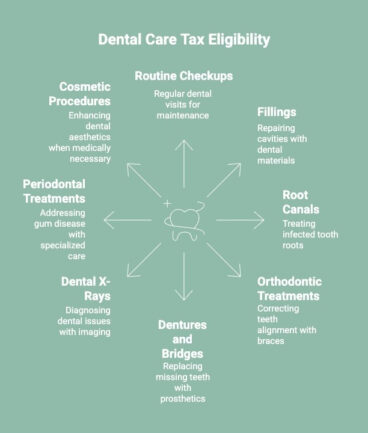
To fully understand whether your dental expenses qualify for tax deductions, it’s essential to know the specific criteria outlined by the IRS. These criteria help ensure that only eligible expenses are deducted, offering real savings on your tax bill.
Here are dental care expenses that qualify for tax deductions:
- Routine Checkups and Cleanings: Regular preventive care to maintain oral health is deductible.
- Fillings: Expenses related to filling cavities and restoring tooth structure can be claimed.
- Root Canals and Tooth Extractions: Treatments for infections and tooth extractions for medical reasons qualify for deductions.
- Orthodontic Treatments (Braces): Dental procedures aimed at correcting the alignment of teeth are deductible if medically necessary.
- Dentures and Bridges: Costs for prosthetics and bridges to restore lost teeth are tax-deductible.
- Dental X-Rays and Diagnostics: Expenses for diagnostic tests, including X-rays, are considered deductible.
- Periodontal Treatments (Gum Disease Treatment): Treatment for gum disease, including scaling and root planing, qualifies for deductions.
- Cosmetic Procedures (If Medically Necessary): Certain cosmetic procedures may be deductible if they are deemed medically necessary, such as reconstructive surgeries after accidents or injuries.
Understanding what dental expenses qualify for tax deductions ensures you can make the most of the available benefits. If you’re unsure about whether specific treatments are deductible, it’s always best to consult with a tax professional.
What Dental Expenses Are Not Tax Deductible?
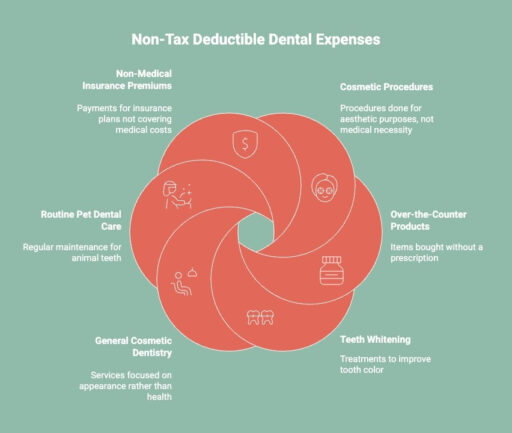
While many dental treatments qualify for tax deductions, it’s equally important to be aware of the expenses that do not meet the criteria. Let’s take a closer look at which dental costs won’t count toward your tax savings:
- Cosmetic Procedures (Unless Medically Necessary): Treatments like veneers and other purely cosmetic procedures are generally not deductible unless they are part of a necessary reconstructive procedure.
- Over-the-Counter Products: Toothpaste, toothbrushes, floss, and other dental hygiene products are not deductible, even though they are part of regular oral care.
- Teeth Whitening: Although teeth whitening is a popular procedure, it is considered cosmetic and does not qualify for tax deductions.
- General Cosmetic Dentistry: Procedures such as dental bonding for aesthetic purposes, unless medically required, are not tax-deductible.
- Routine Dental Care Costs for Pets: Dental care for pets is not tax-deductible, even if it includes procedures that could be comparable to human dental care.
- Insurance Premiums for Non-Medical Plans: Dental insurance premiums that cover non-medical services, such as cosmetic treatments, cannot be deducted.
By understanding which dental expenses are not deductible, you can ensure that you are only claiming those that qualify, avoiding mistakes when filing your taxes. If you’re unsure, it’s always a good idea to consult with a tax professional.
How to Document and Track Dental Care Spending?
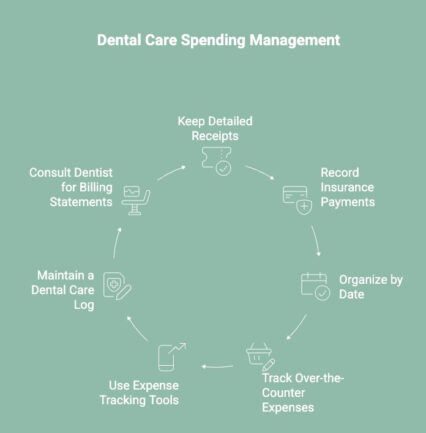
To make the most of your dental care expenses for tax purposes, it’s essential to keep accurate and organized records. Let’s dive into the best practices for tracking and documenting your spending throughout the year:
- Keep Detailed Receipts: Always request and keep receipts for every dental visit, treatment, and procedure. This will serve as proof for tax purposes.
- Record Insurance Payments: Keep track of any insurance reimbursements for dental care, as these may need to be subtracted from your total eligible expenses.
- Organize by Date: Store receipts and invoices chronologically or in separate folders by year to make it easier to find the information you need when filing taxes.
- Track Over-the-Counter Expenses: Even though some over-the-counter dental care products aren’t deductible, it’s helpful to track your purchases, so you’re clear about what you can and cannot claim.
- Use Expense Tracking Tools: Consider using expense-tracking apps or spreadsheets to record your dental expenses. Many apps allow you to categorize expenses, making it easy to tally up deductible costs at tax time.
- Maintain a Dental Care Log: Create a log to track dental procedures, dates of treatments, and payments. This can help you stay on top of expenses throughout the year.
- Consult Your Dentist for Billing Statements: In cases of complex treatments, ask your dentist for detailed billing statements that break down the costs of procedures, which can help when calculating deductions.
By keeping organized records of your dental care spending, you can confidently claim eligible expenses when tax time comes around. Consistent tracking throughout the year makes tax season a breeze and ensures you don’t miss out on potential deductions.
How to Claim Tax Back on Dental Care?
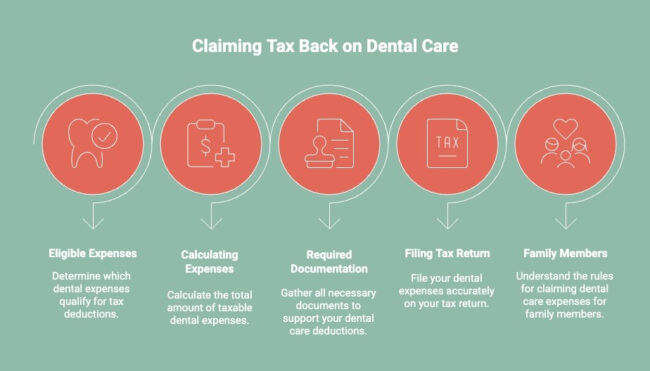
Claiming dental care expenses on your tax return can help you reduce your taxable income, offering financial relief. To ensure you claim these expenses correctly, it’s important to know what qualifies, how to calculate them, and what documentation is required.
Now, let’s break down the essential steps to claim your dental care expenses effectively:
1) Eligible Dental Expenses for Tax Deductions
To claim dental care expenses, the treatments must be medically necessary and meet IRS guidelines. These typically include preventive care, fillings, root canals, and orthodontics. Cosmetic procedures are generally not deductible unless they’re part of reconstructive treatment.
2) Calculating Taxable Dental Expenses
To calculate taxable dental expenses, the IRS allows you to deduct only the portion exceeding 7.5% of your adjusted gross income (AGI). For example, if your AGI is $50,000, only dental expenses above $3,750 qualify for deductions.
3) Required Documentation for Dental Care Deductions
You must maintain thorough records to support your dental care deductions. This includes receipts, treatment invoices, and insurance statements showing out-of-pocket costs. Proper documentation is necessary to substantiate the expenses when claiming them on your tax return.
4) Filing Dental Expenses on Your Tax Return
Dental expenses should be reported on Schedule A (Form 1040) under medical expenses. You’ll enter the amount of dental care that exceeds the AGI threshold and subtract any reimbursements from your insurance provider to calculate the deductible amount.
5) Claiming Dental Care for Family Members
Dental expenses for dependents, including children or elderly family members, can be included in your medical expense deduction. Ensure you have proof of dependency and that the expenses are medically necessary to qualify for the deduction.
By following these steps and keeping accurate records, you can maximize your dental care tax deductions and reduce your taxable income. For personalized guidance, consult a tax professional to ensure you’re claiming everything correctly.
What Are the 5 Common Mistakes to Avoid When Claiming Dental Expenses?
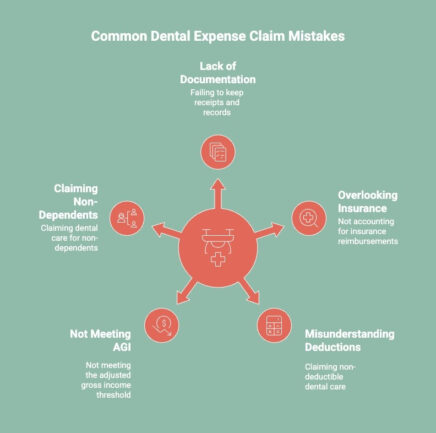
Claiming dental expenses can be a straightforward process if done correctly, but many taxpayers make mistakes that can lead to missed deductions or complications. Understanding these common pitfalls will ensure you maximize your tax benefits while avoiding errors.
Let’s explore the most frequent mistakes and how to avoid them when claiming dental expenses:
- Failing to Keep Proper Documentation: Not maintaining detailed records such as receipts, invoices, and insurance statements can make it difficult to substantiate your claims. Always keep organized records of all dental expenses.
- Overlooking Insurance Reimbursements: Many taxpayers forget to subtract insurance reimbursements from their dental expenses. Only the portion paid out-of-pocket is deductible, so ensure you track what your insurance covers.
- Misunderstanding What Dental Care Is Deductible: Not all dental treatments are eligible for deductions. Cosmetic procedures like teeth whitening are generally not deductible unless part of a medically necessary treatment. Always confirm eligibility before filing.
- Not Meeting the AGI Threshold: Dental expenses are only deductible if they exceed 7.5% of your adjusted gross income (AGI). Make sure to calculate your AGI accurately before claiming dental deductions.
- Claiming Dental Care for Non-Dependents: Dental care expenses can only be claimed for dependents who meet IRS criteria. Avoid claiming dental care for individuals who don’t qualify as dependents.
By avoiding these common mistakes and maintaining proper documentation, you can ensure that you’re claiming the right dental expenses and maximizing your tax benefits. For further guidance, consider consulting with a tax professional.
Why Choose Dentist Tree of the Heights for Your Dental Care?
At Dentist Tree of the Heights, your smile isn’t just another appointment; it’s a personalized care journey backed by a compassionate team and state-of-the-art technology.
Located in the heart of Houston, our dentists bring years of combined experience in restorative and preventive care, from dental implants and oral surgery to routine exams and cosmetic treatments. We focus on comfortable, patient-first dentistry, ensuring every treatment plan is tailored to your unique needs and long-term oral health goals.
Whether you’re seeking expert dental implant solutions or proactive oral care guidance, you’ll receive high-quality care in a welcoming, modern environment designed for your comfort and confidence. Contact us now!
Conclusion
Understanding and claiming dental care tax deductions can lead to meaningful savings, especially when dental treatments have added financial pressure. By tracking eligible expenses and keeping clear records, you can confidently maximize your tax benefits without unnecessary stress.
Frequently Asked Questions
Are dental implants considered a tax-deductible medical expense in the US?
Yes, the Internal Revenue Service (IRS) considers dental implants a tax-deductible medical expense because they restore basic function. You can include the cost of implants in your total medical expenses on your tax return, which can help you qualify for a tax deduction if you itemize.
What documentation do I need to provide to the IRS for dental deductions?
To claim a dental expense deduction, you need detailed documentation, including receipts, itemized medical statements from your provider, and proof of payment such as credit card statements. This will help substantiate your qualified medical expenses if the IRS requires verification.
Can I include dental expenses paid for my spouse or children in my deduction?
Yes, you can include qualified dental expenses you pay for yourself, your spouse, and your dependents when calculating your medical tax deduction. Combining costs for each family member makes it easier to meet the threshold required to claim the deduction on your tax return.
Is dental care tax-deductible with health care?
Yes, dental care expenses of medical care can be tax-deductible as part of medical expenses when filing taxes, provided they exceed 7.5% of your adjusted gross income (AGI). However, this only applies if your standard deduction does not exceed itemized deductions.
Does dental care count as medical for taxes?
Yes, dental care is considered a medical expense by the IRS. You can deduct dental expenses such as checkups, fillings, and surgeries, provided they exceed 7.5% of your adjusted gross income (AGI).
What is the minimum expense threshold for claiming dental deductions?
To claim dental deductions, your dental expenses must exceed 7.5% of your adjusted gross income (AGI). For example, if your AGI is $50,000, dental expenses above $3,750 are eligible for deduction.
Can I get free dental care through tax credits?
Tax credits do not provide free dental care, but eligible dental expenses may qualify as deductions that reduce your taxable income. This can lower your overall tax liability and help offset out of pocket dental costs.