

Key Highlights
- Understand what screwless dental implants are and how they differ from traditional screw-retained options.
- Learn how friction fit and cement-retained systems secure crowns without visible screw holes.
- Explore the main benefits, including better aesthetics, fewer mechanical issues, and simpler daily care.
- Know who qualifies for screwless implants based on bone health, gum condition, and cosmetic goals.
- Review important considerations like cement residue risks, crown retrievability, and long-term maintenance needs.
- Compare when screwless implants are ideal for front-tooth aesthetics or when screw-retained designs may be better.
- Follow best practices for implant care, including daily hygiene and regular dental checkups for long-term success.
Missing or damaged teeth can quietly affect daily life. Chewing becomes uncomfortable, speaking feels different, and smiling may not come as easily. Many people want a solution but feel hesitant about traditional implants because the process can seem intense.
This is where screwless dental implants offer a more comfortable alternative. If you have been wondering what are screwless dental implants, the concept is simple. They are designed to provide stability without the use of screws, making the experience feel less invasive for many patients.
In this guide, you will learn how this modern option works, who it is best suited for, and what to expect during treatment. By the end, you will have the clarity you need to decide whether screwless dental implants are the right fit for your smile.
What Are Screwless Dental Implants?
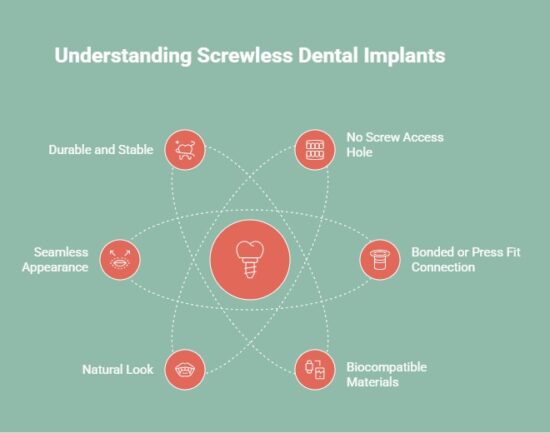
If you are looking for a way to replace missing teeth, screwless dental implants could be the answer. Also called cement retained or press fit implants, they attach the crown using dental cement or a friction fit design instead of a screw. This means no visible screw holes and a smoother, more natural-looking tooth.
The procedure is similar to traditional implants. A post is placed in your jawbone, and after it heals, the crown is attached. The main difference is how the crown connects without a screw, so your tooth looks and feels natural.
Key Features of Screwless Dental Implants
These implants stand out because of their seamless look and reliable strength. Made from biocompatible materials like titanium or zirconia, they bond with your jawbone to provide a stable and long-lasting foundation.
Key Highlights:
- No Screw Access Hole: Gives a smooth, natural finish
- Bonded or Press Fit Connection: Crown stays securely in place
- Biocompatible Materials: Safe and integrates well with your body
- Natural Look: Matches your other teeth perfectly
Screwless dental implants provide a natural look and stable foundation, making them a reliable option for replacing missing teeth.
How Do They Differ from Traditional Screw-Type Implants?
The main difference between screwless and traditional implants is how the crown attaches to the implant post. Traditional screw retained implants use a small screw that passes through the crown to connect it to the abutment. This makes it easy for dentists to remove the crown for maintenance or repairs. However, it leaves a visible screw access hole on the chewing surface, which must be covered with composite material.
Screwless implants take a different approach:
- No screw required: The crown is bonded directly to the abutment with dental cement or secured using a friction fit, often called a locking taper.
- Seamless appearance: Without a screw access hole, the tooth surface looks smooth and natural.
- Durable and stable: The friction fit provides strong retention while maintaining a continuous surface.
While traditional implants are easier to retrieve if needed, screwless implants offer superior aesthetics, making them especially suitable for teeth in the smile zone.
For a detailed look at how full‑arch implant options compare and when they might suit you better than dentures or individual implants, check out our guide on Dentures vs Implants.
How Do Screwless Dental Implants Work?
Now that we know how screwless implants differ from traditional ones, it helps to understand how they actually work. The foundation is similar, an implant post is placed in your jawbone and heals naturally over time to form a strong base.
The difference lies in how the final crown attaches. Instead of screws, screwless implants use either a precise friction fit or a strong bonding material. This creates a secure connection while keeping the tooth surface intact and natural-looking.
1. Locking Taper and Bonding Techniques
There are two main ways screwless implants hold the crown securely
- Locking Taper System: The implant and abutment fit together precisely and lock in place under pressure. No adhesives are needed, making it simple and reliable.
- Bonding Technique: A strong dental cement secures the crown to the abutment. This method is commonly used in cement-retained implants.
Both methods eliminate screws, provide stability, and create a seamless, natural-looking tooth.
2. Securing Replacement Teeth Without Screws
Screwless implants integrate naturally with your mouth. After the healing phase, the abutment is attached, an impression is taken, and a custom crown is cemented or press-fit into place. The result is a fully functional tooth that can handle chewing and speaking, looking and feeling just like your natural teeth, all without any mechanical screws.
Screwless dental implants offer a clean and simple approach that avoids mechanical parts. You get a strong, natural looking tooth with a treatment process that is easy to follow and built to last.
At Dentist Tree of the Heights, our experienced team guides you through the entire process, making sure your implant is comfortable, durable, and natural-looking.
Ready to restore your smile? Book an appointment with Dentist Tree of the Heights and see how screwless dental implants can work for you.
What Are the Advantages of Screwless Dental Implants?
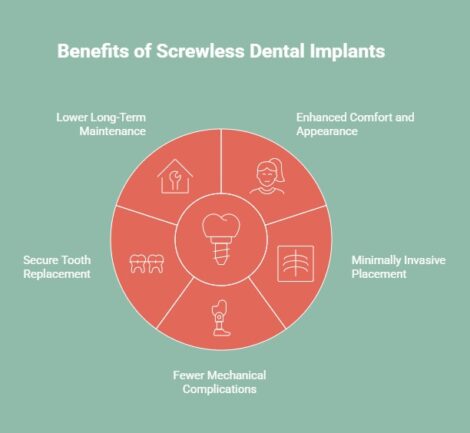
Screwless dental implants are designed to look natural, reduce mechanical issues, and simplify long-term care. Removing the screw access point improves appearance and eliminates one of the most common failure points in traditional implants.
1. Enhanced Comfort and a More Natural Appearance
Screwless implants give the crown a smooth, uninterrupted surface. This makes them ideal for front teeth, where even small flaws are noticeable. Without a screw hole, the crown maintains consistent colour and texture, leading to a more natural feel and appearance.
Key aesthetic benefits:
No visible access hole
- Better match with surrounding teeth
- Cleaner, continuous crown surface
2. Minimally Invasive Placement and Better Healing
Some screwless systems allow for a simpler placement process. With fewer internal components, the procedure can be quicker and less uncomfortable. This also supports faster healing because surrounding bone and tissue experience less disturbance.
Benefits:
- Potentially shorter procedure
- Reduced post-treatment discomfort
- Faster, smoother healing
3. Fewer Mechanical and Biological Complications
Screwless implants remove the risk of screw loosening or breaking. This reduces the need for repair visits. They also remove a potential site for bacterial buildup, improving long-term gum health when paired with good hygiene and proper cementation techniques.
Advantages:
- No screw-related failures
- Less chance of bacteria collecting
- More predictable long-term stability
3. Secure Tooth Replacement Without a Screw Channel
Screwless systems form a single, solid connection between the implant and the crown. Without a screw channel inside the crown, the ceramic remains stronger and less prone to weakness. This can be useful in cases where bone volume is limited, as the design can be more adaptable.
4. Lower Long-Term Maintenance
With no screws to tighten or replace, maintenance stays simple. Daily care mirrors natural teeth: brushing, flossing, and routine checkups. Your dentist evaluates the crown and gums but does not need to access internal hardware.
Maintenance benefits:
- No screw adjustments
- Straightforward daily care
- Fewer long-term complications
Screwless dental implants offer a clean look, fewer mechanical issues, and simpler long-term care. For many patients, they provide a reliable option that feels natural and requires minimal ongoing attention.
Looking for a deeper comparison of long‑term tooth replacement options? Also read our full guide on All‑on‑4 dental implants to see when complete-arch implants may be a better solution than dentures or single implants.
Who Is a Good Candidate for Screwless Dental Implants?
Once you understand how screwless implants work and what makes them different, the next step is knowing whether this option fits your needs. Not every patient requires a screwless system, but certain health and aesthetic factors make someone a strong candidate.
1. General Health Requirements
You are likely a good candidate if you have:
- Healthy gums with no active periodontal disease
- Good oral hygiene and no untreated decay
- Sufficient jawbone to support the implant post
- A stable bite that won’t overload the new tooth
These essentials help the implant integrate well and support long-term stability.
2. When Screwless Implants Are Especially Useful
This approach is ideal if you:
- Want the most natural appearance, especially for visible front teeth
- Prefer a restoration without mechanical parts like screws
- Have dealt with screw loosening or screw-related discomfort before
- Need a smooth, uninterrupted crown surface for aesthetic consistency
These advantages make screwless implants appealing for patients who prioritize appearance and simplicity.
Your oral health, treatment goals, and the location of the missing tooth all influence the decision. A dental consultation helps your dentist confirm bone support, gum health, and cosmetic expectations to ensure screwless implants are the right choice for you.
What Should You Know Before Choosing Screwless Implants?
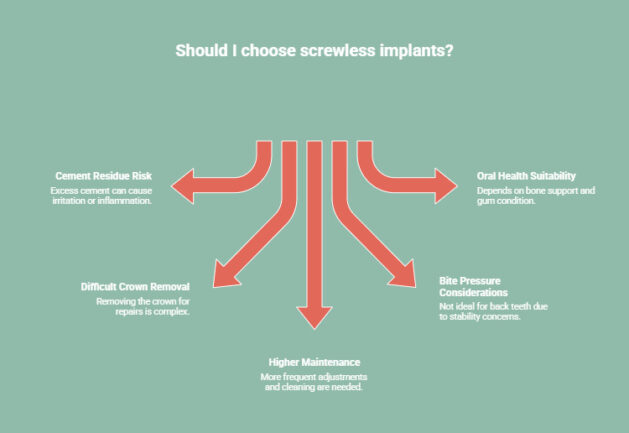
Screwless (cement-retained) implants offer a natural look, but they also come with specific risks you should be aware of. Understanding these helps you decide whether this option suits your oral health and long-term goals.
Key Points to Keep in Mind
- Cement residue risk: If excess cement slips below the gum line during placement, it can cause irritation or inflammation. This is one of the most common concerns with cement-retained implants.
- Difficult crown removal: Since the crown is cemented in place, removing it later for repairs becomes more complex and must be done by a professional.
- Higher maintenance effort: Routine adjustments and deep cleaning are easier with screw-retained implants, so maintenance may require more chair-time with screwless options.
- Bite pressure considerations: For back teeth that handle strong chewing forces, your dentist may recommend a screw-retained implant instead, as it generally offers better stability.
- Suitability depends on oral health: Your dentist will assess bone support, gum condition, and cosmetic expectations before deciding whether a screwless implant is appropriate.
A quick consultation with your dentist will help you decide whether a screwless implant is the safest and most practical choice for your smile.
How Should You Care for a Screwless Dental Implant?
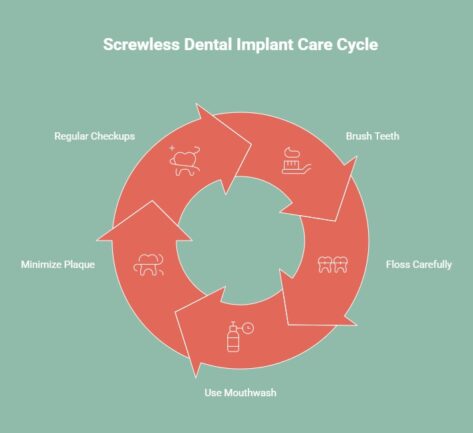
Caring for a screwless dental implant follows the same principles as caring for natural teeth, but it requires a bit more consistency. The goal is to protect the gums and underlying bone so the implant stays stable for years.
1. Daily Care
Before diving into specific steps, it helps to focus on simple habits that keep the implant area clean and irritation-free.
- Brush twice a day with a soft toothbrush
- Floss gently around the implant
- Use an alcohol-free mouthwash if recommended
- Keep plaque buildup to a minimum to prevent irritation or infection
Good hygiene protects the tissues supporting the implant and lowers the risk of complications.
2. Regular Checkups
And while home care is important, ongoing professional care ensures everything stays on track.
- Your dentist will examine the implant and crown
- Evaluate gum and bone health
- Remove any hard-to-reach buildup with professional cleaning
Since screwless implants are harder to access when the crown needs repair, staying consistent with checkups helps catch issues early.
A simple, steady care routine is the most effective way to protect your screwless implant and extend its lifespan.
Ready to Explore Screwless Dental Implants in Houston?
If you think screwless dental implants may be the right fit, the next step is getting a professional evaluation. Every smile is different, and factors like bone support, gum health, and aesthetics help determine whether a screwless or screw-retained option works best.
This is where choosing the right dental provider matters. A dentist who understands both techniques can recommend what suits your case instead of pushing a single solution.
Why Visit Dentist Tree of the Heights for Implant Care?
Dentist Tree of the Heights offers implant treatments designed around comfort, long-term stability, and natural aesthetics. Patients receive:
- A detailed implant assessment
- Clear guidance on screwless vs. screw-retained options
- Modern imaging to check bone and gum health
- Personalized treatment planning
- A focus on natural-looking and functional results
Their team has experience with cement-retained and locking-taper systems, which helps you understand exactly what to expect.
If you want trusted implant care in Houston, visit the Dentist Tree of Heights implant page to learn more or schedule an appointment.
Conclusion
Screwless dental implants offer a natural look, steady function, and a simple care routine, making them a strong option for replacing missing teeth. They reduce screw-related issues and provide a smooth crown surface that blends well with your smile. Still, they are not right for everyone, so understanding their benefits, costs, and long-term care is essential. A dental consultation helps you confirm whether this low-maintenance, natural-feeling solution fits your needs and oral health goals.
Frequently Asked Questions
How long do screwless dental implants typically last?
With proper care, screwless dental implants can last 15 years or longer, sometimes a lifetime. Their durability depends on good oral hygiene, regular dental checkups, and proper placement by an experienced dental professional.
Is the bonding process a part of screwless dental implant placement?
Yes. For cement-retained implants, dental cement secures the crown to the abutment after the post has healed. This creates a strong, screw-free connection that ensures stability while maintaining a natural, seamless appearance.
Do screwless dental implants look and feel natural in the mouth?
Absolutely. Screwless implants provide a smooth, uninterrupted crown surface without screw holes. They blend naturally with surrounding teeth, offering a realistic look and feel that delivers high patient satisfaction, especially for visible front teeth.
What is a locking-taper screwless design in dental implants?
A locking-taper design uses a precision friction fit to connect implant components. The tapered parts lock under pressure, creating a secure and stable connection without screws or cement, enhancing durability and maintaining a natural tooth appearance.
Is there a screwless dental implant that can be done?
Yes. Screwless dental implants are available for single or multiple tooth replacement. They provide a strong, durable solution, and with proper dental care, they offer a seamless, natural-looking restoration suitable for most cases.
Do general dentists do screw implants?
Some general dentists place screw implants, but complex cases are often referred to specialists like oral surgeons or periodontists. Always confirm your dentist’s experience and discuss the best treatment approach for your specific dental needs.
Are screwless dental implants more expensive?
Screwless implants can be comparable in cost to traditional implants, though they may sometimes be slightly higher due to advanced materials and technology. Prices vary depending on case complexity, materials, and your dental provider’s pricing.
Are screwless dental implants suitable for everyone?
Not everyone qualifies. Ideal candidates must have healthy gums, good oral hygiene, and sufficient jawbone density. A dentist will assess your oral health, bone structure, and treatment goals to determine suitability.
What is the procedure for getting screwless dental implants?
The procedure involves placing an implant post into the jawbone, allowing it to heal and integrate. After healing, the abutment is attached, and a custom crown is cemented or press-fitted, creating a stable, natural-looking tooth without screws.