

Key Highlights
- The right dentist can make veneers look natural, feel comfortable, and last for years.
- Check experience, before-and-after photos, reviews, credentials, and technology before choosing a provider.
- Ask about veneer options, enamel removal, treatment steps, and expected longevity during your consultation.
- Porcelain veneers last longer and look more natural, while composite veneers cost less and are quicker to apply.
- Teeth whitening, bonding, Invisalign, and crowns are common alternatives to veneers.
- At Dentist Tree of the Heights, we offer custom veneer treatments and smile makeover consultations in Houston.
A confident smile can change how you look and feel. That’s why veneers have become a popular solution for fixing stained, chipped, uneven, or gapped teeth. But great results depend on more than just the treatment. They depend on choosing the right dentist.
With so many dentists promising perfect smiles, finding the right one can feel confusing. The wrong choice can lead to unnatural-looking veneers, discomfort, and costly fixes later. Since veneers are a long-term investment, choosing an experienced cosmetic dentist matters.
This guide will show you how to find the best dentist for veneers, what to look for, what to ask, and what to avoid so you can make the right choice with confidence.
Why is Choosing the Right Dentist for Veneers So Important?
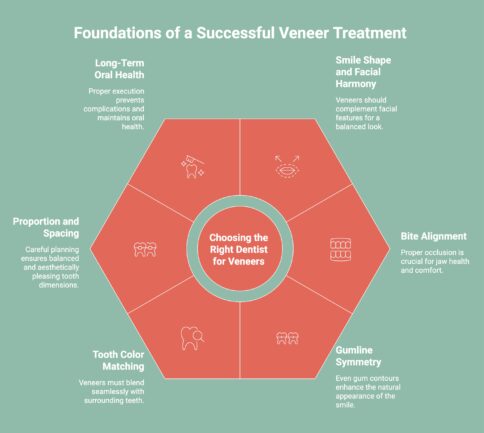
Choosing the right dentist for veneers goes far beyond just getting a brighter smile. It directly impacts how your entire smile functions, feels, and ages over time.
Veneers are not a one-size-fits-all cosmetic treatment. A highly experienced cosmetic dentist does more than place thin shells on your teeth. They carefully design your smile by balancing multiple factors at once:
- Smile shape and facial harmony: Veneers should complement your face shape, lip line, and overall features, not overpower them.
- Bite alignment (occlusion): Even small errors in how your teeth meet can lead to jaw discomfort, uneven wear, or long-term bite issues.
- Gumline symmetry: A skilled dentist ensures your gum contour looks even and natural, which is essential for a polished result.
- Tooth color matching: Veneers must blend with your surrounding teeth, or be designed as part of a full smile makeover, to avoid an artificial look.
- Proportion and spacing: The width, length, and positioning of each veneer must be carefully planned for a balanced smile.
- Long-term oral health: Poorly executed veneers can trap bacteria, irritate gums, or weaken underlying teeth, leading to complications later.
Because veneers permanently alter your teeth through enamel removal, the procedure is largely irreversible. Every decision, from planning to placement, needs to be handled with precision and long-term thinking.
A well-trained cosmetic dentist combines clinical expertise with artistic judgment. Many use tools like digital smile design, mock-ups, and trial smiles to preview results before treatment. This level of planning reduces the risk of dissatisfaction or corrective procedures later.
Choosing a dentist without deep experience in cosmetic smile design can lead to results that may look acceptable at first but feel uncomfortable, appear unnatural in different lighting, or require costly fixes within a few years.
Veneers do more than change how your teeth look. They influence your confidence, oral function, and long-term dental health. That is why choosing the right dentist is not just important; it is essential.
Want more tips on choosing the right dental provider? Check out our guide on how to find a good dentist in Houston.
How to Choose a Dentist for Veneers?
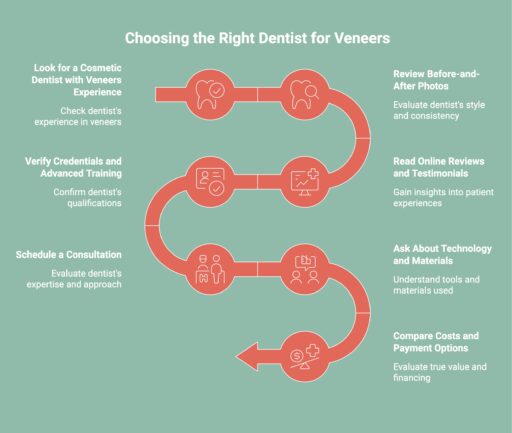
Finding the right provider takes more than comparing prices or choosing the first clinic you see online. The best cosmetic dentist will have the right mix of experience, advanced training, and a proven track record of creating natural-looking results.
Here are the most important factors to consider:
1. Look for a Cosmetic Dentist with Veneers Experience
Not every dentist specializes in cosmetic dentistry or performs veneer procedures regularly. One of the best ways to learn how to find trusted cosmetic dentists for veneers is to start by checking their experience.
A dentist with extensive veneers experience is more likely to understand smile design, facial balance, and how to create results that look natural and last longer.
Look for experience in:
- Porcelain veneers
- Minimal-prep veneers
- Smile makeovers
- Full-mouth cosmetic restorations
2. Review Before-and-After Photos
A dentist’s portfolio can tell you a lot about their style and consistency. Reviewing before-and-after photos helps you see whether their work looks natural and whether they have treated patients with concerns similar to yours.
Look for:
- Balanced tooth shape and size
- Natural color matching
- Symmetry and alignment
- Results that suit the patient’s face
3. Read Online Reviews and Testimonials
Patient reviews can provide insight into the overall experience and quality of care. They can reveal how professional the dentist is, how satisfied patients are with their veneers, and whether the clinic delivers on its promises.
Check trusted platforms like:
- Yelp
- Healthgrades
- RealSelf
4. Verify Credentials and Advanced Training
A dentist’s qualifications can help you verify their expertise. Checking certifications, memberships, and ongoing training is a smart place to start.
Look for:
- American Academy of Cosmetic Dentistry membership
- American Dental Association membership
- Cosmetic dentistry certifications
- Continuing education in veneers or smile design
5. Schedule a Consultation
A consultation is your opportunity to evaluate both the dentist’s expertise and how comfortable you feel with their approach. It should go beyond a basic discussion and give you a clear sense of how your treatment will be planned and delivered.
Here are key things to look for:
- A thorough evaluation of your smile, including your bite, gumline, and facial balance
- A clearly explained treatment plan with steps, timeline, and expected results
- Use of preview tools such as digital smile design, mock-ups, or trial smiles
- Recommendations that feel personalized to your goals, not generic
- Honest discussion of limitations, risks, and realistic outcomes
6. Ask About Technology and Materials
The tools and materials a dentist uses can affect the quality of your results. Modern technology improves precision, while high-quality materials can make veneers look more natural and last longer.
Look for clinics offering:
- Digital smile design
- 3D imaging or scans
- Premium porcelain materials
- Trusted dental lab partnerships
7. Compare Costs and Payment Options
Veneer pricing can vary widely depending on the material, number of teeth, and the dentist’s expertise. A lower price may seem appealing, but it often leaves out important elements that affect your final results and long-term satisfaction.
Focus on what the total cost actually includes:
- Cost per tooth
- Consultation and smile design fees
- Temporary veneers, if needed
- Follow-up visits and adjustments
At the same time, understand how you can comfortably manage the investment:
- In-house financing options
- Third-party payment plans
- Insurance coverage or limitations
A transparent cost breakdown combined with flexible payment options allows you to evaluate true value, not just the upfront price.
Veneers are an investment, so it’s natural to ask how long they last. Read our detailed guide on the lifespan of dental veneers.
What Questions Should You Ask a Veneers Dentist Before Treatment?
Once you have shortlisted a few providers, the consultation is where real clarity happens. This is less about screening options and more about understanding how your specific case will be handled, from design to long-term care.
Here are the key questions to ask, grouped by purpose:
- Experience and past work
- How frequently do you perform veneer cases?
- Can you show before-and-after results of cases similar to mine?
- Treatment planning and customization
- Will my veneers be fully custom-designed for my face and smile?
- What type of veneers do you recommend for my specific goals and why?
- Do you evaluate bite alignment before placing veneers?
- Can I preview my new smile through mock-ups or digital design?
- What happens if I am not happy with the preview?
- Cost and long-term maintenance
- What is included in the total cost of treatment?
- How long can I expect my veneers to last with proper care?
- What kind of maintenance or follow-up visits will be required?
- Risks, adjustments, and repairs
- How much enamel will be removed during preparation?
- What are the potential risks or limitations in my case?
- What happens if a veneer chips, breaks, or comes off?
Asking these questions helps shift the conversation from general promises to specific details about your treatment. It ensures you understand not just the outcome, but the process, risks, and long-term commitment involved.
Porcelain Veneers vs Composite Veneers: Which Is Better?
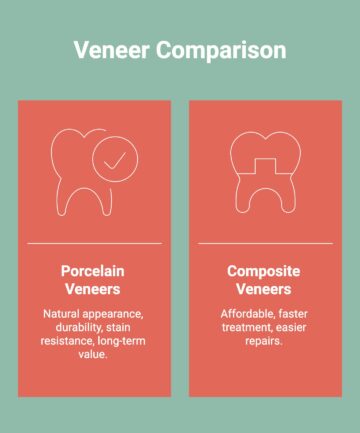
When choosing veneers, one of the biggest decisions is selecting the right material. The two most common options are porcelain and composite veneers, and each comes with its own pros and cons depending on your smile goals, budget, and long-term expectations.
Porcelain veneers are made from high-quality ceramic and are known for their natural appearance and durability. They closely mimic real teeth and can last for many years with proper care.
Porcelain veneers offer benefits such as:
- A highly natural, lifelike appearance
- Better stain resistance
- Greater durability, often lasting 10 to 15 years or more
- Long-term value despite a higher upfront cost
Composite veneers are made from tooth-colored resin and are typically a more affordable option. They can often be applied in a single visit, making them a quicker cosmetic solution.
Composite veneers offer benefits such as:
- Lower upfront cost
- Faster treatment, often completed in one visit
- Easier repairs if chipped or damaged
However, they may stain more easily and usually last around 4 to 8 years.
In general, porcelain veneers are best for people looking for premium, long-lasting results, while composite veneers may suit those looking for a quicker or more budget-friendly option.
Curious if porcelain veneers are worth it? Read our guide to understand the benefits, process, and long-term value of porcelain veneers.
Are There Alternatives to Veneers?
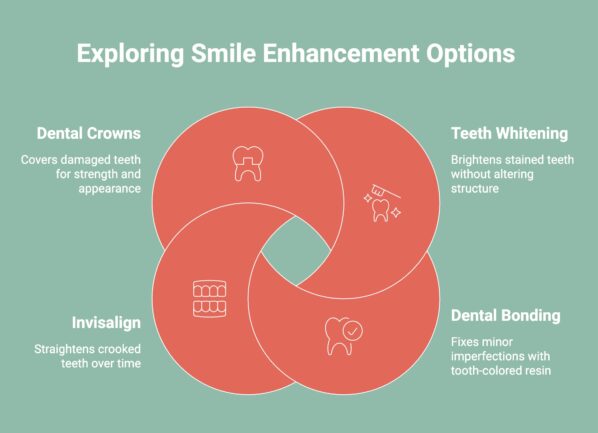
Veneers are a popular way to improve the appearance of your smile, but they may not be the best option for everyone. Depending on the issue you want to fix, there may be less invasive or more affordable treatments that can deliver similar results. In some cases, an alternative may preserve more of your natural tooth structure or better address the root cause of the problem.
Some common alternatives to veneers include:
- Teeth whitening: If your main concern is stained or discolored teeth, professional whitening can brighten your smile without changing the shape or structure of your teeth.
- Dental bonding: Bonding uses tooth-colored resin to fix minor chips, cracks, small gaps, or uneven edges. It is less expensive than veneers and usually requires little to no enamel removal.
- Invisalign: If your teeth are crooked or misaligned, Invisalign can straighten them over time rather than simply covering the issue with veneers.
- Dental crowns: Crowns cover the entire tooth instead of just the front surface. They are often recommended when a tooth is badly damaged, weakened, or has a large filling.
A cosmetic dentist can evaluate your teeth and recommend the best treatment based on your goals, budget, and oral health.
Looking for Veneers in Houston? Choose Dentist Tree of the Heights
If you are ready to improve your smile, we at Dentist Tree of the Heights offer personalized veneer treatment and cosmetic dentistry services designed to help you achieve natural-looking results. Whether you want to fix stains, chips, gaps, uneven teeth, or other cosmetic concerns, our experienced team is here to help.
Why choose us for veneers and cosmetic dentistry:
- Comprehensive cosmetic dentistry services: We offer veneers, teeth whitening, bonding, crowns, and full smile makeovers.
- Advanced dental technology: We use modern tools and techniques to improve precision, comfort, and results.
- Flexible financing options: We offer payment plans to help make cosmetic treatments more affordable.
- Patient-first approach: We create personalized treatment plans and focus on making your experience comfortable from consultation to final results.
Ready to transform your smile? Schedule a consultation with us today.
Conclusion
The right veneers can transform your smile, but the right dentist makes all the difference. Taking the time to research your options, ask the right questions, and choose an experienced cosmetic dentist can help you get results that look natural and last for years.
When you are ready to upgrade your smile, don’t settle for guesswork. Schedule a consultation, explore your options, and take the first step toward a smile you’ll feel confident showing off.
Frequently Asked Questions
What is the 4 8 10 rule for veneers?
The 4 8 10 rule refers to placing veneers on 4, 8, or 10 teeth, depending on how wide your smile is. More veneers can create a more balanced, radiant smile by covering visible imperfections evenly.
What kind of dentist should do veneers?
A cosmetic dentist with extensive experience in veneer placement is a good option. They understand tooth enamel preservation, custom veneers, and how to create a beautiful smile while protecting your gums and oral health.
How much is a porcelain tooth veneer?
Traditional porcelain veneers usually cost $800 to $2,500 per tooth. The price depends on the dentist’s experience, the veneer placement process, and whether impressions of your teeth or an initial consultation are included.
How can I find the best dentist for veneers near me?
To find the best dentist for veneers near you, check online reviews, before-and-after photos, credentials, and extensive experience in cosmetic dentistry. An initial consultation can help you compare options and choose a provider you trust.
What is the average cost of veneers when done by the best dentists?
The average cost of traditional veneers ranges from $800 to $2,500 per tooth. Pricing depends on custom veneers, materials used, the dentist’s experience, and the longevity and quality of the final results.
How do top-rated dentists typically perform the dental veneers procedure?
Top-rated dentists begin with an initial consultation, take impressions of your teeth, remove a small amount of enamel, and place custom veneers on the front of the tooth for a natural, beautiful smile.
How can I find a dentist who offers porcelain veneers?
To find the best dentist for porcelain veneers, look for a cosmetic dentist with proven experience, before-and-after photos, positive reviews, and advanced training. Scheduling a consultation can also help you compare options and choose the right provider.