

Key Highlights
- Gum disease can be reversed at home only in early stages, like gingivitis, with consistent brushing, flossing, and plaque control
- Home remedies like salt water, aloe vera, and green tea help reduce symptoms but do not remove plaque or tartar
- If symptoms don’t improve within 1–2 weeks, the condition may have progressed beyond home care
- Periodontitis cannot be cured at home and requires deep cleaning or other dental treatments
- Healing time depends on severity, consistency, and whether professional treatment is used
- Long-term control comes from daily plaque removal and addressing habits like smoking or a poor diet
- Dentist Tree of the Heights provides complete gum disease treatment with personalized care and advanced technology
Gum disease is more common than most people think. In fact, according to the World Health Organization, severe gum disease affects around 1 billion people worldwide. That is why so many people search for ways to cure gum disease at home and avoid a dental visit.
The problem is that gum disease does not always stay mild. What starts as slightly bleeding gums or bad breath can slowly turn into something more serious if ignored. This is where many home remedies and natural cures fall short. They may ease symptoms, but they do not always treat the root cause.
In this blog, you will learn how to cure gum disease without a dentist when it is actually possible, which home remedies for gum disease can help, and when it is time to stop relying on at-home care and seek professional treatment.
What Is Gum Disease? Can It Be Cured Without a Dentist?
Gum disease is a bacterial infection caused by plaque buildup along the gum line. It starts with Gingivitis, where gums become red, swollen, and may bleed easily.
So, Can Gum Disease Be Cured Without a Dentist?
The honest answer is yes, but only in specific cases. Whether you can cure gum disease without a dentist depends entirely on the stage of the condition.
In the early stage, called Gingivitis, gum disease can often be reversed without a dentist if you act early and stay consistent with your oral care routine.
However, once it progresses to Periodontitis, it cannot be cured at home.
- Infection spreads below the gum line
- Tartar builds up and cannot be removed by brushing
- Bone and supporting tissue start getting damaged
At this stage, home remedies and natural treatments can only provide temporary relief. They do not remove the underlying infection.
Not all dental care is the same, which is why knowing how to find a good dentist in Houston can help you make a more informed decision.
How to Cure Gum Disease at Home? (For Early Stages Only)
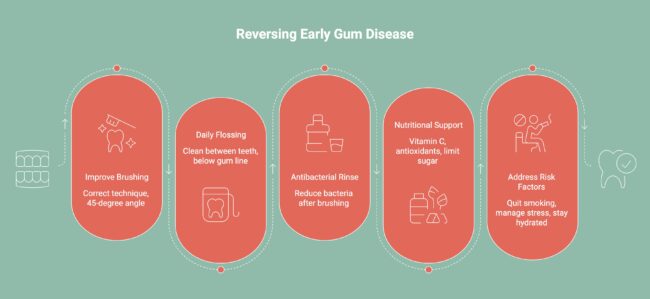
If you’re trying to figure out how to cure gum disease naturally at home, the goal is not a quick fix. It is consistent plaque control and reduces bacterial load, so your gums can heal. This only works in early-stage Gingivitis, where no permanent damage has occurred yet.
1. Fix Your Brushing Technique, Not Just Frequency
Most people brush daily but still miss the gum line where disease starts.
- Use a soft-bristled brush at a 45-degree angle toward the gums
- Make small circular motions instead of harsh scrubbing
- Brush for at least 2 minutes, twice daily
- Electric toothbrushes often remove more plaque than manual ones
Why it matters: Plaque sitting at the gum line is the main trigger for inflammation.
2. Daily Flossing Is Non-Negotiable
Brushing alone misses nearly 40% of tooth surfaces.
- Floss once daily, ideally at night
- Curve the floss around each tooth and go slightly below the gum line
- Alternatives: interdental brushes or water flossers
Why it matters: Gum disease often starts between teeth, where bacteria stay undisturbed.
3. Add a Targeted Antibacterial Rinse
This helps reduce bacteria that brushing and flossing cannot fully eliminate.
- Look for chlorhexidine (short-term use) or essential oil-based mouthwashes
- Use after brushing, not before
- Avoid immediately rinsing with water after mouthwash
Why it matters: It lowers bacterial load, which reduces gum inflammation.
4. Use Salt Water as Support, Not a Cure
This is one of the most common home remedies for gum disease, but it’s often misunderstood.
- Rinse with warm salt water 1–2 times daily
- Helps reduce swelling and discomfort
- Does not remove plaque or tartar
Why it matters: It soothes gums but does not treat the underlying cause.
5. Improve Nutritional Support for Gum Healing
Your gums need the right nutrients to repair.
- Vitamin C supports tissue repair and reduces bleeding
- Antioxidants (green tea, leafy greens) help control inflammation
- Limit sugar and refined carbs that feed oral bacteria
Why it matters: Poor nutrition slows healing even if hygiene is good.
6. Address Hidden Risk Factors
Some habits quietly make gum disease worse.
- Smoking reduces blood flow and masks symptoms
- Stress can weaken the immune response
- Dry mouth increases bacterial growth
Why it matters: Even good oral care may fail if these are not managed.
In the end, home care works only when done correctly and consistently. It can reverse early gum disease, but not advanced cases. You should see improvement within 1 to 2 weeks. If not, the condition has likely progressed beyond what home care can fix, and you’ll need to visit a dentist.
And, if you want to improve the appearance of your smile after treating gum disease, Laser Teeth Whitening can help remove stains and restore brightness.
Home Remedies for Gum Disease: What Helps and What’s a Myth?
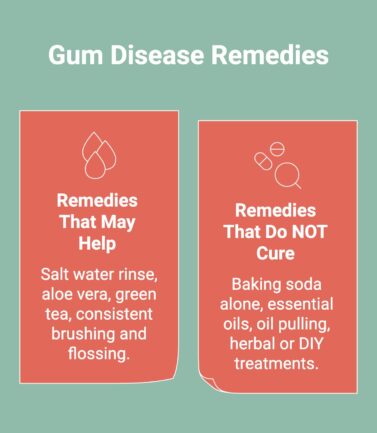
When people look for gum disease treatments at home, they are usually hoping for a simple, natural cure. The reality is a bit more nuanced. Some remedies can help control symptoms and support healing, but they only work if the condition is still in its early stage. Once the disease progresses, home treatments alone are not enough.
Remedies That May Help
These remedies can reduce bacteria, calm inflammation, and support your gums when combined with proper oral hygiene:
- Salt water rinse: This is one of the most effective and accessible remedies. Salt helps reduce swelling and creates an environment where bacteria struggle to thrive. It can provide noticeable relief, especially if your gums are tender or bleeding.
- Aloe vera: Aloe vera has natural anti-inflammatory and antibacterial properties. Applying it to the gums may help soothe irritation and support healing, but it should be used as a supplement, not a replacement for brushing.
- Green tea: Rich in antioxidants, green tea may help reduce inflammation in the gums and limit bacterial growth. Drinking it regularly can support overall gum health over time.
- Consistent brushing and flossing: This is the foundation of any successful at-home treatment. Gum disease starts with plaque buildup, so physically removing that plaque every day is what actually stops the problem from getting worse.
Remedies That Do NOT Cure Gum Disease
This is where many people get misled. Some popular “natural cures” sound effective, but do not address the real issue, which is bacteria trapped below the gum line:
- Baking soda alone: While it can help clean the surface of your teeth, it does not remove hardened plaque or bacteria beneath the gums.
- Essential oils as a substitute for oral care: Oils like tea tree or clove may have antibacterial properties, but they cannot replace brushing and flossing, which physically remove plaque.
- Oil pulling: This traditional method may reduce bacteria temporarily, but there is limited scientific evidence showing it can cure gum disease.
- Herbal or DIY treatments: Many of these lack strong clinical proof. They may provide short-term relief, but do not stop disease progression.
Thinking of using baking soda for a brighter smile? Before you try it, understand how baking soda teeth whitening really works and where it falls short.
How to Cure Periodontitis Gum Disease (Reality Check)?
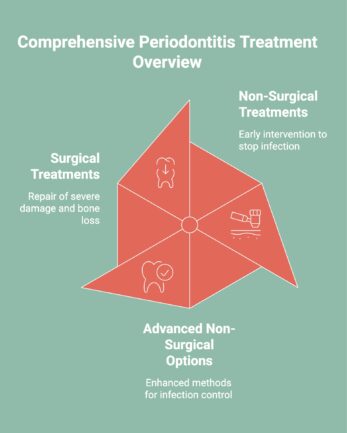
If you are trying to figure out how to cure periodontitis gum disease at home, it is important to be clear about one thing. Periodontitis cannot be cured without professional treatment.
At this stage, the infection is not just on the surface of your gums. It sits deep below the gum line in pockets that form around your teeth. These pockets trap bacteria, which slowly destroy the bone and tissue that hold your teeth in place. This is why brushing, flossing, or using home remedies alone cannot fix the problem. They simply cannot reach where the infection is.
So what actually works?
1. Non-Surgical Treatments (Early to Moderate Periodontitis)
If periodontitis is caught early, non-surgical treatments can often stop the infection and prevent further damage. Here are the most common non-surgical treatment options:
- Scaling and root planing
Think of this as a deep cleaning below your gums. A dentist or hygienist uses special tools to remove hardened plaque (tartar) and bacteria from the pockets around your teeth. Then, they smooth the root surfaces so your gums can heal and reattach. This is often the first and most important step in treatment.
- Antibiotics or antimicrobial therapy
In some cases, medication is placed directly into the gum pockets or prescribed orally. This helps reduce the bacterial load and supports healing after deep cleaning.
2. Advanced Non-Surgical Options
In some cases, standard deep cleaning alone may not be enough to control the infection. Here are some advanced non-surgical options dentists may recommend:
- Laser therapy
Dental lasers are used to target and remove infected gum tissue and bacteria. It can help reduce pocket depth and promote healing, often with less bleeding and discomfort compared to traditional methods.
- Host modulation therapy
This involves medications that reduce your body’s overactive inflammatory response. In periodontitis, it is not just bacteria causing damage, but also how your body reacts to it. This therapy helps limit that damage.
3. Surgical Treatments (For Severe Cases)
If periodontitis has caused significant damage to your gums or bone, surgery may be needed to repair it. Here are the surgical treatments used for severe cases:
- Flap surgery (pocket reduction surgery)
The gums are gently lifted back so the dentist can clean deep deposits of bacteria. After cleaning, the gums are placed back in a way that reduces the depth of the pockets, making it easier to keep them clean.
- Bone grafting
If bone has been lost, graft material is placed to rebuild it. This helps restore support around the teeth and prevents further tooth loss.
- Soft tissue grafts
If your gums have receded, tissue is added (usually from another area of your mouth) to cover exposed roots and protect your teeth.
- Guided tissue regeneration
A special material is placed between the bone and gum to encourage your body to regrow lost bone and tissue in a controlled way.
If you want to brighten your smile after improving your gum health, visiting a teeth whitening dentist can help you achieve safer, faster, and longer-lasting results compared to over-the-counter options.
How Long Does It Take to Cure Gum Disease?
The timeline depends on how early you catch it and how consistent you are with treatment.
If you are dealing with Gingivitis, improvement can happen fairly quickly. With proper brushing, flossing, and supportive home remedies for gum disease, you may start noticing less bleeding and inflammation within 7 to 14 days. In many cases, it can be fully reversed within a couple of weeks if you stay consistent.
However, if the condition has progressed to Periodontitis, the timeline is very different. There is no quick cure. Treatment can take weeks to months, and in many cases, it becomes a long-term condition that needs ongoing management rather than a one-time fix.
What Affects Healing Time?
- Severity of the disease: Early stages heal much faster than advanced cases
- Consistency of oral care: Skipping brushing or flossing slows down recovery
- Professional treatment: Deep cleaning and other procedures can significantly speed up results
- Lifestyle habits: Smoking, poor diet, and stress can delay healing.
At What Point Should You See a Dentist for Gum Disease?
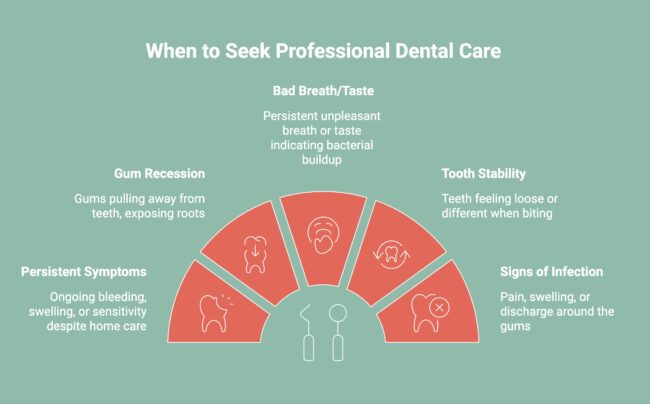
While many people look for ways to manage gum disease at home, it is important to recognize when professional care is necessary. Early-stage Gingivitis can often improve with consistent oral hygiene, but if symptoms persist or progress, a clinical evaluation is recommended.
You should consider visiting a dentist if:
- Symptoms do not improve within 1 to 2 weeks: Ongoing bleeding, swelling, or gum sensitivity despite proper brushing and flossing may indicate that the condition requires professional treatment.
- There are signs of gum recession: Gums pulling away from the teeth can expose the roots and increase sensitivity. This cannot be corrected with home remedies.
- Persistent bad breath or unpleasant taste: This may suggest bacterial buildup below the gum line, which requires deeper cleaning.
- Changes in tooth stability or bite: Teeth that feel slightly loose or different when biting can be early signs of Periodontitis.
- Visible signs of infection: Pain, swelling, or discharge around the gums should be assessed promptly to prevent further complications.
Gum disease is easier to manage when identified early. If home care does not lead to noticeable improvement, a dentist can provide appropriate treatment to control the infection and protect long-term oral health.
Ready to Stop Gum Disease for Good? Choose Dentist Tree of the Heights
If home remedies are no longer giving you consistent results, it may be time to treat the root cause instead of managing symptoms. At Dentist Tree of the Heights, we focus on long-term solutions that help restore and maintain healthy gums.
What you can expect from us:
- Complete care under one roof for everything from routine cleanings to advanced gum treatments, implants, and oral surgery
- Modern dental technology that allows for more precise diagnosis and effective treatment
- Personalized treatment plans based on your gum condition and long-term oral health goals
- A comfort-focused approach designed to make your visit stress-free, even if you have dental anxiety
- Flexible insurance support to help make treatment accessible and easier to manage
If you are looking to move beyond temporary fixes, we help you take the next step toward lasting gum health.
Final Words
If you’re searching for how to cure gum disease without a dentist, here’s the clear takeaway: home care works, but only in the early stage. Once it progresses, it needs more than DIY fixes.
The real difference comes down to two things: catching it early and staying consistent. Good plaque control can reverse early Gingivitis, but delaying treatment allows it to progress into Periodontitis, where professional care becomes necessary.
So the goal is not just to fix gum disease once. It is to stay ahead of it.
Do the basics well. Act early. And know when it is time to move beyond home care.
Frequently Asked Questions
Can gum disease be cured at home?
Early forms of gum disease, like gingival inflammation, can improve with good oral hygiene, natural remedies, and mouth rinses. However, advanced gum disease with bone loss or loose teeth requires professional dental care and periodontal treatment.
How can I use oil pulling for treating gum disease at home?
Oil pulling uses a tablespoon of coconut oil for its antimicrobial properties to reduce harmful bacteria and dental plaque. Swish daily to support dental health, but it only complements good oral hygiene and professional dental care.
Are over-the-counter mouthwashes effective at curing gum disease at home?
Over-the-counter mouth rinses with antimicrobial properties can reduce harmful bacteria and support the treatment of gingivitis. However, they do not cure periodontal disease and should be used alongside good oral hygiene and regular cleanings.
How to reverse gum disease naturally?
Early signs of gum disease can improve with natural remedies like a saltwater rinse using a teaspoon of salt in warm water, aloe vera gel, and turmeric paste. However, advanced gum disease requires professional cleanings and periodontal therapy.
What kills bacteria in the gums naturally?
Natural remedies like saltwater rinse, coconut oil, aloe vera gel, and green tea have antimicrobial properties that help reduce harmful bacteria in the gums. They support dental health, but work best alongside good oral hygiene and regular cleanings.
What is stage 3 gum disease?
Stage 3 gum disease, or advanced periodontal disease, involves deep pockets, significant bone loss, and possible loose teeth. It is a severe form of gum disease that typically requires periodontal therapy or gum surgery to prevent further damage.
Is it possible to fix gums without a procedure?
Mild gum issues like early gingival inflammation can improve with good oral hygiene, plaque control, and natural remedies. However, once periodontal disease progresses, professional dental care and procedures are needed to fully treat the condition.
How can I stop my gums from bleeding without going to the dentist?
Bleeding gums can improve with proper brushing, flossing, and a saltwater rinse using warm water. Reducing dental plaque and maintaining good oral hygiene helps. If bleeding persists, it may indicate periodontal disease requiring professional dental care.
How Do You Cure Gum Disease Without Visiting a Dentist?
Early-stage gum disease may improve with proper brushing, flossing, and antiseptic mouthwash. However, if symptoms like bleeding, swelling, or gum recession continue, professional dental treatment is necessary to prevent the disease from progressing further.