

A chipped tooth can happen in seconds while eating, playing sports, or during a minor accident. Dental injuries like chipped or cracked teeth are one of the most common reasons people seek urgent dental care. The first thought is usually simple. Do I need to see a dentist right now?
The challenge is that not all chipped teeth feel the same. Some are small and painless, while others expose deeper layers and cause pain or an infection risk. Without clarity, people either ignore it or panic. Both can lead to bigger problems.
This blog gives you clear answers. You will learn how to tell if a chipped tooth is an emergency, what to do immediately, and what treatment to expect so you can take the right step quickly.
What Does It Mean When You Chip a Tooth?
A chipped tooth means part of the tooth has broken off, weakening its protection and increasing the risk of further damage. If the chip is small, it may only affect the outer enamel and cause little to no pain. If it reaches deeper layers, it can cause sensitivity, pain, or infection.
The real concern is how deep the damage goes. Some chips are cosmetic, while others need urgent dental treatment.
How to Know If Your Chipped Tooth Needs Immediate Care?
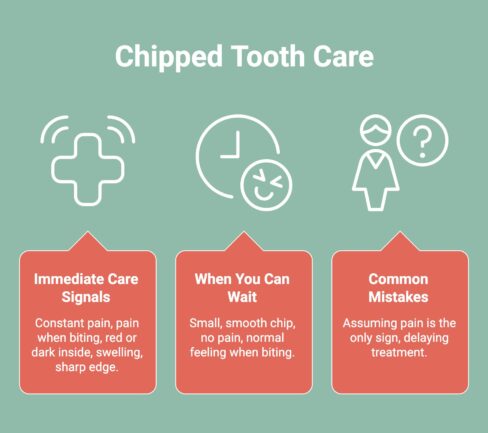
A chipped tooth becomes urgent when it affects how you feel or function, not just how it looks. Instead of guessing, use these clear signals to decide your next step. In many cases, symptoms matter more than the size of the chip when identifying a dental emergency chipped tooth situation.
Quick Self-Check You Can Do Right Now
Ask yourself these questions:
- Does it hurt without touching it?
Constant or throbbing pain usually means more serious damage - Does it hurt when you bite or chew?
This can signal a crack that is spreading - Do you see red or dark inside the tooth?
That may mean the inner nerve is exposed - Is there swelling in your gums or face?
This can indicate infection - Is the edge sharp enough to cut your tongue or cheek?
Even without pain, this needs quick attention
If you answered yes to any of these, you likely need emergency chipped tooth repair rather than waiting.
When You Can Wait a Bit
You can usually avoid urgent care if:
- The chip is small and smooth
- There is no pain or sensitivity
- The tooth feels normal when biting
Even then, do not ignore it. Minor damage can worsen if left untreated.
What Most People Get Wrong
Many assume pain is the only sign of urgency. That is not always true. Some serious cracks start without pain but worsen over time. Others delay treatment and end up seeking emergency care for a broken tooth when the issue becomes severe.
If your tooth suddenly changes in how it feels, looks, or functions, it is safer to treat it as a broken tooth emergency dentist situation and get it checked early.
What to Do Immediately After You Chip a Tooth?
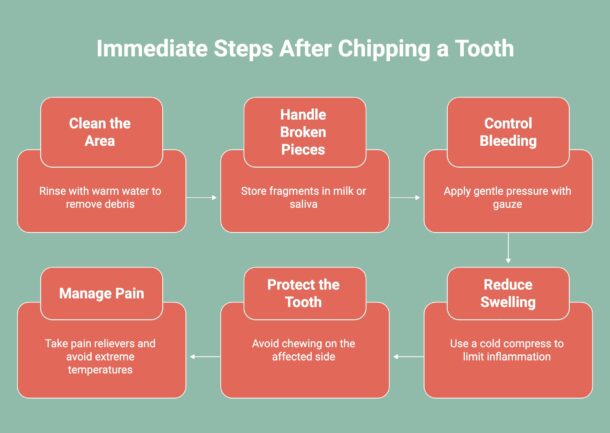
What you do right after chipping a tooth is not just about comfort. It directly affects whether the damage gets worse or stays manageable until treatment. Small mistakes at this stage can lead to cracks spreading, infection, or more complex repairs.
Here’s how to handle it the right way:
- Clean the area properly: Rinse with warm water to remove debris and bacteria. This lowers the chance of infection, especially if deeper layers are exposed
- Handle broken pieces carefully: If you find the fragment, store it in milk or saliva instead of letting it dry out. In some cases, dentists can reattach it
- Control bleeding the right way: Apply steady, gentle pressure with gauze. Avoid frequent checking, as that can restart bleeding
- Reduce internal swelling early: A cold compress helps limit inflammation and pain buildup, especially within the first hour
- Protect the tooth from further stress: Avoid chewing on that side because even light pressure can worsen a crack that is not yet visible
- Manage pain without worsening sensitivity: Take a pain reliever like Ibuprofen, but avoid extremely hot or cold foods that can trigger nerve pain
These steps are not just first aid. They help stabilize the tooth and can make a significant difference in how simple or complex the final treatment will be.
Choosing a dentist can feel overwhelming, especially when you need care quickly. This simple guide on how to find a Good Dentist in Houston helps you make the right call.
How Do Dentists Repair a Chipped or Broken Tooth?
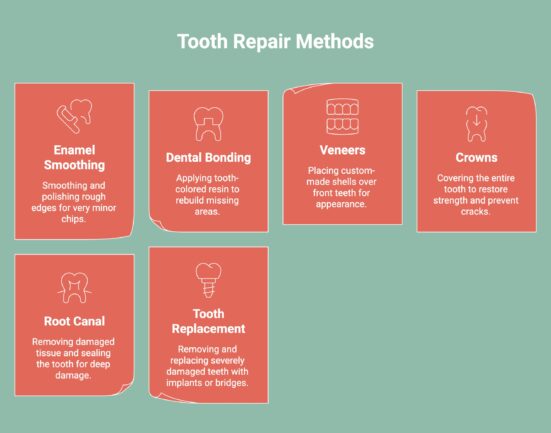
Fixing a chipped tooth is not just about filling the gap. Dentists evaluate how serious the damage is, how much pressure the tooth handles, and whether the inner layers are involved. The goal is to restore strength, protect the tooth, and prevent further damage.
In more severe cases, especially when pain or deep cracks are involved, visiting a cracked tooth emergency dentist ensures the problem is treated before it worsens.
Here are the most common ways dentists repair a chipped or broken tooth:
1. Enamel Smoothing for Very Minor Chips
If the chip is small and only affects the enamel, a dentist may smooth and polish the rough edge. This helps prevent irritation and stops the tooth from catching on the tongue or chipping further. It is a quick and simple treatment.
- Best for: Tiny chips with no pain or sensitivity
- Time: One visit
- Cost: Low
2. Dental Bonding for Small to Moderate Chips
If part of the tooth has broken off but the structure is still strong, dental bonding is a common option. A tooth-colored resin is applied, shaped, and hardened to rebuild the missing area. This restores both appearance and function.
- Best for: Visible chips or mild sensitivity
- Time: Usually one visit
- Cost: Low to moderate
3. Veneers for Front Teeth
When the chip affects a front tooth and appearance is important, veneers may be recommended. A thin custom-made shell is placed over the front of the tooth to improve shape, color, and protection.
- Best for: Cosmetic chips on front teeth
- Time: Two or more visits
- Cost: Moderate to high
4. Crowns for Larger Damage
If a larger part of the tooth is broken or the tooth feels weak when chewing, a crown may be needed. A crown covers the entire tooth, restoring strength and helping prevent more cracks.
- Best for: Large chips or weakened teeth
- Time: Usually two visits
- Cost: Moderate to high
5. Root Canal for Deep Damage
If the chip reaches the inner pulp or causes ongoing pain, sensitivity, or signs of infection, a root canal may be necessary. The damaged tissue inside the tooth is removed, and the tooth is sealed. A crown is often added afterward for protection.
- Best for: Deep cracks, severe pain, or infection risk
- Time: One to two visits
- Cost: High
6. Tooth Replacement for Severe Cases
If the tooth is cracked below the gum line or too damaged to repair, it may need to be removed and replaced with an implant or bridge. This restores both function and appearance.
- Best for: Teeth that cannot be saved
- Time: Multiple visits
- Cost: High
The key difference between simple and complex treatment often comes down to timing. A small chip treated early may only need bonding. The same tooth, if ignored, could later require a crown or even a root canal.
If you want a solution that lasts, veneers are a strong option. But how long do they actually hold up? Find out in this detailed breakdown of How Long Do Veneers Last.
What Happens If You Ignore a Chipped Tooth?
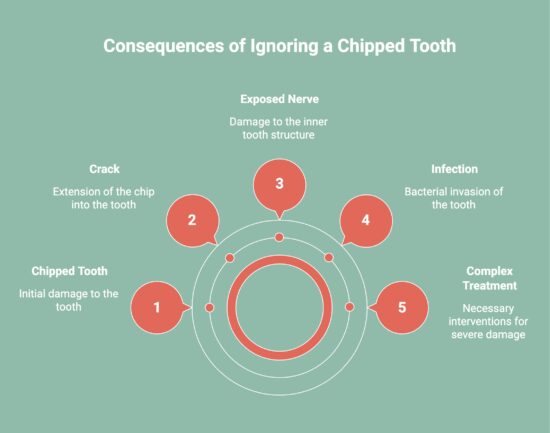
Ignoring a chipped tooth does not keep it stable. It usually gets worse because every bite adds pressure to an already weakened area. What starts as a small chip can turn into a deeper fracture or infection.
Here’s what can actually happen over time:
- The chip can turn into a full crack: Repeated chewing pressure can extend the damage deeper into the tooth. In some cases, the tooth can split, making it harder or impossible to save
- The inner nerve can get exposed: As the damage spreads, the protective layers wear down. This can lead to sharp pain, especially when eating or drinking
- Infection can develop inside the tooth: Bacteria can enter through the damaged area and reach the pulp, leading to swelling, pus, or even a dental abscess
- Pain can start suddenly or later: Many chips are painless at first, but once the nerve is involved, pain can become intense and constant
- You may need more complex treatment: A small repair like bonding can turn into a crown, root canal, or even extraction if the damage worsens
This is why many cases end up becoming a cracked tooth emergency rather than a simple fix. The longer you wait, the more the damage progresses.
How to Prevent a Chipped Tooth in the Future?
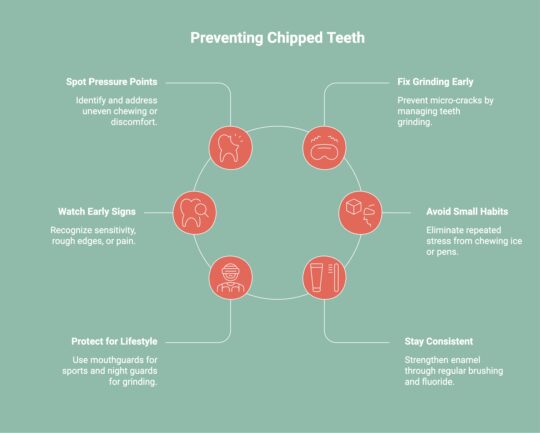
Chipped teeth are not random. Most break where stress has already built up. Prevention is about reducing that hidden pressure, not just avoiding obvious risks.
Here is what matters:
- Spot pressure points: Uneven chewing or discomfort can signal teeth that require more force
- Fix grinding early: Grinding creates micro-cracks long before a chip appears
- Watch early signs: Sensitivity, rough edges, or slight pain when biting can indicate weakening
- Avoid small habits: Chewing ice or biting pens adds repeated stress to enamel
- Protect for your lifestyle: Use mouthguards for sports and night guards for grinding
- Stay consistent: Brushing, fluoride, and limiting acids strengthen enamel over time
The key idea is simple. Teeth usually break where they are already weak. Catch it early, and you can prevent the chip entirely.
Why Do Teeth Chip or Break in the First Place?
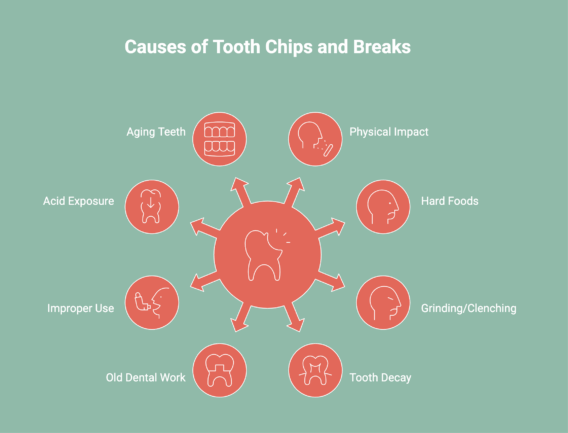
Teeth do not usually chip without a reason. In most cases, either a sudden force or an underlying weakness causes the damage. Sometimes it happens instantly, while other times the tooth has been weakening over time before it finally breaks.
Common reasons include:
- Physical impact: A fall, collision, or sports injury can cause immediate damage to the tooth
- Hard foods: Biting into ice, hard sweets, or kernels can put too much pressure on enamel
- Grinding or clenching: Repeated pressure from bruxism can wear teeth down and lead to cracks
- Tooth decay: Cavities weaken the structure, making teeth easier to break
- Old dental work: Large or worn fillings can reduce the strength of the remaining tooth
- Using teeth improperly: Opening packages or biting nails can cause small fractures over time
- Acid exposure: Frequent acidic foods and drinks can slowly erode enamel
- Aging teeth: Natural wear over the years can make teeth more fragile
Recognizing these factors helps you avoid future damage and keep your teeth stronger for longer.
Need an Emergency Dentist for a Broken Tooth in Houston? Visit Dentist Tree of the Heights
When a tooth chips, the real challenge is not just the damage. It is finding care that is fast, clear, and reliable without adding more stress.
At Dentist Tree of the Heights, we focus on treating chipped and broken teeth quickly and effectively so you can move from uncertainty to relief without delay. Whether it is a small repair or a more serious issue, we guide you through every step with clarity.
Here’s what you can expect from us:
- Fast care when it matters most: We are prepared to handle pain, fractures, and sudden damage without unnecessary waiting
- Clear and simple treatment guidance: We explain what is happening and what needs to be done so you can make confident decisions
- Complete treatment in one place: From bonding to crowns and root canals, we handle everything under one roof
- A comfortable, stress-free experience: We focus on reducing anxiety and keeping you at ease during your visit
- Modern technology for precise results: We use advanced tools to make treatment faster, more accurate, and more efficient
If you are dealing with a chipped tooth, early care can prevent bigger problems. Getting it checked now can often mean a simpler and less expensive fix.
Final Thoughts: Don’t Wait for It to Get Worse
A chipped tooth might look small, but the real issue is what you can’t see. What feels fine today can turn into pain or infection tomorrow if left unchecked.
If there’s no pain, schedule a visit soon. If there’s discomfort, swelling, or sensitivity, treat it as urgent.
The rule is simple. Check early, fix easily. Wait longer, fix bigger.
Frequently Asked Questions
Can I eat or drink normally if I have a chipped tooth before I get dental treatment?
It is best to avoid normal eating until checked. A damaged tooth can worsen with pressure. Stick to soft foods, avoid the affected area, and use counter painkillers if needed to protect oral health.
Is a cracked tooth an emergency?
Yes, it can be. A crack that causes severe pain or exposes inner layers needs emergency dental care. Ignoring it can lead to infection or tooth loss, making early action the best way forward.
How can I find a broken tooth emergency near me?
Search for emergency dentistry or a nearby dental office offering urgent dental services. Look for same-day emergency appointment options and reviews. Acting quickly helps reduce dental pain and prevents further tooth damage.
Can the ER do anything for a broken tooth?
An emergency room can provide temporary pain relief and treat soft tissues, but cannot fix the tooth. The only way to repair it is through emergency dental care at a dental office.
What do I do if half my tooth breaks off?
Rinse your mouth, save the fragment in a cup of milk, and apply a piece of gauze if bleeding. Avoid chewing and seek emergency dental care immediately to prevent severe damage or infection.
Can a chipped tooth be fixed in a day?
Yes, in many cases. Minor tooth damage can be repaired in one visit using bonding. More severe cases may need dental crowns or root canal treatment, depending on the extent of damage and pain.
Is a slightly chipped tooth a dental emergency?
Not always. If there is no tooth pain or significant pain, it may not need immediate care. However, delaying dental visits can worsen the condition, so it is still important to schedule a checkup soon.
Are there temporary at-home remedies I can use before seeing a dentist for a chipped tooth?
Yes, you can use an ice pack for swelling, avoid chewing on the affected area, and take counter painkillers. A mouth guard can help protect the damaged tooth until you receive proper emergency dental care.