

Key Highlights
- A dentist has an ethical duty to care for patients, but a dentist’s refusal is allowed in specific circumstances.
- Reasons for refusing dental treatment include patient safety risks, requests for unnecessary procedures, and non-payment.
- Patient rights are crucial, including the right to informed consent and seeking a second opinion.
- Dentists cannot refuse treatment based on discrimination.
- Understanding these ethical boundaries helps maintain good oral health and a positive dentist-patient relationship.
- Even in emergencies, a dentist can refuse treatment under certain valid conditions.
Being told your dentist won’t perform a treatment can be confusing and frustrating. You may question whether the decision is justified, whether your condition is being overlooked, or if you should seek care elsewhere.
In reality, dentists do not refuse treatment randomly. These decisions are based on patient safety, clinical judgment, and the responsibility to avoid procedures that could cause harm or offer no real benefit. At the same time, there are situations where refusal may raise concerns and require further clarification.
This guide explains why dentists refuse treatment, when it is appropriate or a red flag, and the steps you should take next. Understanding this helps you make informed decisions and avoid unnecessary risks to your oral health.
Why Dentists Refuse Treatment?
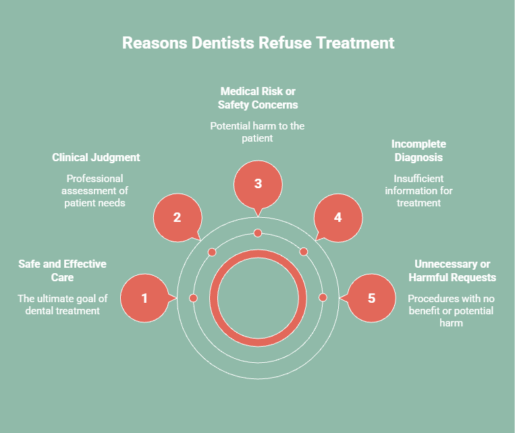
Dentists refuse treatment when providing it could harm the patient, offer no real benefit, or fall outside their ability to treat safely. These decisions are based on clinical judgment and the responsibility to deliver appropriate care.
Common reasons include:
- Medical risk or safety concerns – Certain conditions, medications, or allergies can make procedures unsafe without additional precautions
- Incomplete diagnosis – Treatment may be delayed if exams, X-rays, or records are insufficient to plan safely
- Unnecessary or harmful requests – Procedures that offer no benefit or may cause long-term damage are declined
- Lack of expertise or equipment – Complex cases are referred to specialists to ensure proper care
- Non-compliance with care plans – Treatment may be postponed if essential steps are refused or not followed
- Unsafe or disruptive behaviour – Care may be declined if it compromises the safety of staff or other patients
- Financial or payment issues – Treatment may be declined if payment terms are not agreed upon or previous balances remain unresolved
- Time-sensitive or complex case limitations – Some procedures require extended time, planning, or multiple visits that may not be feasible in a standard setting
- Conflict with prior treatment plans – Dentists may refuse to perform procedures that go against established treatment plans or could compromise ongoing care
Each of these reasons is focused on one outcome: providing care that is safe, effective, and aligned with your long-term oral health.
What are the Common Situations Patients Face?
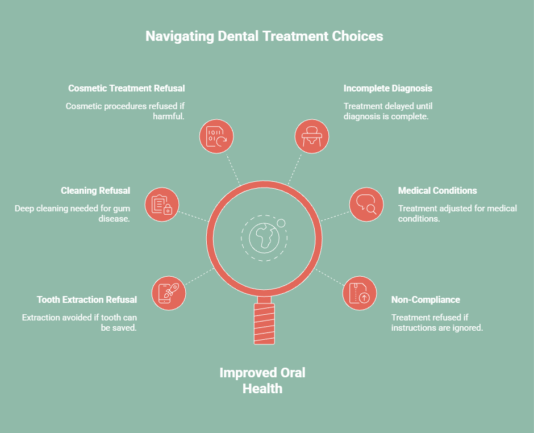
Patients often encounter treatment refusal in specific situations that may seem unexpected at first. These cases usually involve a difference between what is requested and what is clinically appropriate, requiring the dentist to recommend safer or more effective alternatives.
Below are the 7 most common situations where patients experience this.
1. Tooth Extraction Refusal
A dentist may refuse to remove a tooth if it can still be saved with proper treatment.
- The tooth can be restored instead of being removed
- A root canal or crown offers a better long-term outcome
- Extraction may lead to bone loss or shifting of teeth
If you’re unsure whether an extraction is necessary, it helps to understand when removal is actually recommended and what alternatives may be available. Learn more about your options for tooth extraction in Houston
2. Cleaning Refusal
A routine cleaning may be declined when it does not address the underlying condition.
- Signs of gum disease require deep cleaning
- A standard cleaning would not treat the infection
- Delaying proper care can worsen gum health
In these situations, a deeper periodontal approach is typically required to properly manage the condition.
3. Cosmetic Treatment Refusal
Cosmetic procedures may be refused if they could harm teeth or offer a limited benefit.
- The procedure may damage healthy enamel
- Results may not be stable or long-lasting
- It may not align with overall oral health needs
If you’re considering cosmetic changes, explore safe and appropriate options through aesthetic dentistry in Houston. Treatments are usually adjusted to balance appearance with long-term tooth health.
4. Treatment Refusal Due to Incomplete Diagnosis
A dentist may delay or refuse treatment if there is not enough information to proceed safely.
- X-rays or exams are needed before planning treatment
- The exact cause of the issue is unclear
- Proceeding without a diagnosis may lead to incorrect treatment
Additional evaluation is often necessary to ensure the treatment plan is accurate and effective.
5. Procedure Refusal Due to Medical Conditions
Certain health conditions may prevent safe treatment in a standard setting.
- Existing medical conditions increase procedural risks
- Medications may interfere with dental treatment
- Additional precautions or specialist care may be required
In these cases, care may be adjusted or coordinated with specialists to reduce risk.
6. Procedure Refusal Due to Non-Compliance
A dentist may refuse treatment if the required steps are not followed, making the outcome unreliable.
- Pre-treatment instructions are ignored
- Ongoing care or follow-ups are not maintained
- Proceeding may lead to failure or complications
Consistent follow-through is usually necessary to achieve safe and predictable results.
7. Treatment Refusal Due to Unsafe Behavior
Treatment may be declined if the patient’s behavior creates a risk during care.
- Inability to stay still during procedures
- Aggressive or disruptive behavior
- Safety concerns for staff or other patients
In such situations, treatment may be postponed until conditions allow it to be carried out safely. These scenarios reflect a focus on choosing treatment that improves long-term oral health rather than short-term results.
Can a Dentist Legally Refuse Treatment?
A dentist can legally refuse treatment, but only under specific conditions. Refusal must be based on clinical judgment, safety concerns, or the limits of the dentist’s expertise not personal bias.
Dentists may decline care if the procedure could harm you, is not medically necessary, or requires specialized treatment they cannot provide. They may also refuse if patient behavior makes it unsafe to deliver care. However, refusal cannot be based on discrimination, and dentists must provide a clear explanation and, when appropriate, guide you to another qualified provider.
When Refusal May Be Unethical or a Red Flag?
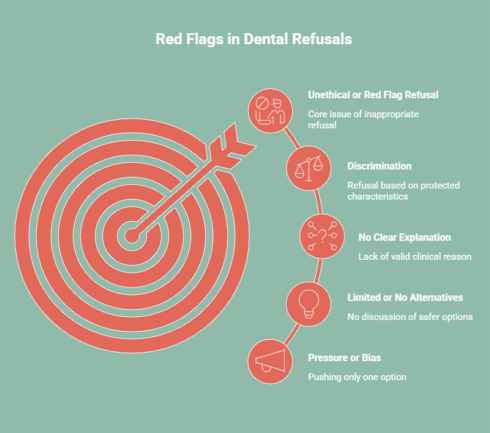
Not every refusal is appropriate. In some cases, it may signal poor judgment or a breach of professional standards.
Watch for these red flags:
- Discrimination – Refusal based on race, gender, disability, or other protected characteristics
- No clear explanation – The dentist declines treatment without a valid clinical reason
- Limited or no alternatives provided – No effort to explain safer options or next steps
- Pressure or bias – Pushing only one option without discussing alternatives
- Abandoning ongoing care – Ending treatment without notice or a transition plan
- Ignoring urgent needs – Failing to address severe pain, infection, or trauma
If you notice any of these, ask for clarification, consider a second opinion, or seek care from another provider. A refusal should always protect your health; never limit your access to fair and appropriate care.
What to Do If a Dentist Refuses Treatment?
If a dentist refuses treatment, focus on understanding the reason and evaluating your next steps. This helps you avoid confusion and make informed decisions about your care.
Start by understanding why the treatment was declined and what risks or concerns are involved. In many cases, alternative options are recommended because they are safer or more appropriate for your condition.
If you’re unsure about the decision, another dental opinion can help confirm the recommendation or provide a different perspective. Having access to your dental records, including X-rays and treatment notes, can make this process smoother.
When symptoms like pain, swelling, or infection are present, timely care becomes important. Seeking treatment from an available provider can help prevent the condition from worsening.
This approach helps you stay informed and ensures your care remains safe, appropriate, and aligned with your needs.
Should You Get a Second Opinion?
If a dentist refuses a treatment or you’re unsure about a recommendation, getting a second opinion is a practical next step. It helps confirm whether the decision is appropriate or if other treatment options should be considered.
A second opinion is especially useful when:
- The treatment plan feels unclear or incomplete
- A procedure has been declined without clear reasoning
- You want to explore alternative approaches
- The condition involves complex or high-cost treatment
Consulting another dentist can provide clarity and help you make a more confident decision about your care.
Emergency Situations: What If You’re in Pain?
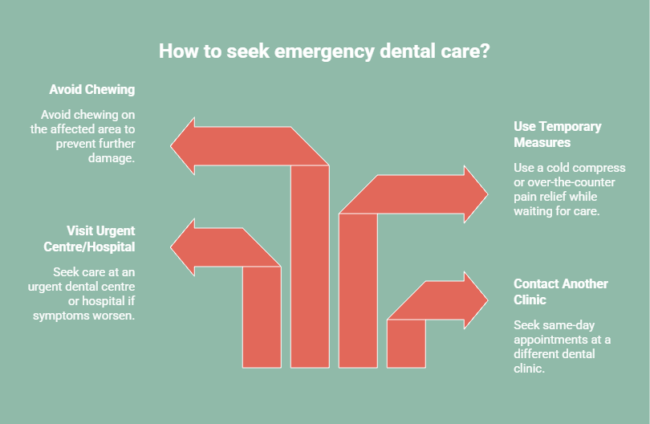
Severe dental pain, swelling, bleeding, or trauma should be treated as an emergency. These situations require immediate attention to prevent infection, tooth loss, or further complications.
While a dentist may not always be able to provide emergency treatment, due to availability, safety concerns, or case complexity, this does not mean care should be delayed.
If your dentist cannot treat you right away, consider the next available option:
- Contact another dental clinic that offers same-day appointments
- Seek care at an urgent dental centre or hospital if symptoms worsen
- Use temporary measures like a cold compress or over-the-counter pain relief
- Avoid chewing on the affected area to prevent further damage
The priority in any emergency is timely care, even if it means seeing a different provider.
Your Rights as a Dental Patient?
As a dental patient, you have the right to clear information and fair treatment when decisions about your care are made. This includes understanding why a treatment is recommended or declined, along with the risks, benefits, and available alternatives.
You can also access your dental records, including X-rays and treatment history, especially if you plan to continue care with another provider. All treatment decisions must be made without discrimination or bias.
These rights help you stay informed and ensure your care is appropriate, transparent, and aligned with your needs.
How does Dentist Tree Handles These Situations Differently?
When a dentist refuses treatment, the experience should not feel unclear or dismissive. At Dentist Tree of the Heights, every decision is explained with context, so you understand exactly what it means for your care.
Here’s what sets Dentist Tree apart:
- Clear Clinical Explanation – You’re told why a treatment isn’t recommended and what risks are involved
- Relevant Treatment Alternatives – Options are provided based on your condition, not just general suggestions
- Structured Next Steps – Guidance on what to do next, including follow-ups or specialist referrals
- Patient-First Communication – Time is taken to answer questions so you can make informed decisions
If a procedure isn’t the right fit, the focus shifts to what will work for your oral health. You’re not left guessing or pressured into unnecessary treatments.
Ready to get clear answers about your dental care? Schedule your visit
Conclusion
A dentist can refuse treatment, but only when it is necessary to protect your health or ensure proper care. These decisions are based on safety, clinical judgment, and long-term outcomes, not personal preference. At the same time, it is important to recognise when a refusal may require further clarification or a second opinion.
If you are unsure about a treatment decision, focus on understanding the reason, reviewing alternatives, and taking the next step with confidence. Staying informed and involved helps you make better decisions and ensures you receive appropriate, safe care aligned with your needs.
Frequently Asked Questions
Can a dentist legally refuse to treat a patient for any reason?
No, a dentist cannot refuse treatment for any reason. Refusal must be based on clinical judgment, safety, or scope of care, not discrimination. Dentists cannot deny care based on race, gender, disability, or other protected factors.
Can a dentist refuse treatment if a patient declines the recommended treatment plan?
Yes, a dentist may refuse treatment if a patient declines the recommended plan. Providing alternative care that is unsafe or incomplete can compromise outcomes, so the dentist may choose not to proceed.
If a dentist refuses to do a procedure, can the patient get a second opinion?
Yes, a patient can always get a second opinion if a dentist refuses a procedure. Consulting another dentist can confirm the decision or provide alternative treatment options based on your condition.
Is it common for a dentist to refuse to extract a healthy tooth if a patient requests it?
Yes, it’s common. Dentists usually refuse to extract a healthy tooth because it offers no clinical benefit and can cause long-term problems. Their goal is to preserve natural teeth and recommend safer, appropriate alternatives instead.
What are the common reasons why a dentist might refuse to perform a specific dental procedure?
Common reasons include patient safety risks, incomplete diagnosis, unnecessary or harmful requests, lack of expertise or equipment, and non-compliance with care plans. Dentists may also refuse if a procedure offers no clear benefit or could lead to complications.
Are there ethical guidelines that allow dentists to decline treating a patient?
Yes. Ethical guidelines allow dental professionals to decline treatment when it is unsafe, unnecessary, or outside their expertise. These decisions must be based on patient welfare and professional standards, not discrimination or personal bias.
Are there standard procedures for dentists when refusing treatment to a patient?
Yes. When refusing treatment, dentists typically follow a standard process: explain the reason clearly, discuss safer or appropriate alternatives, document the decision using customized templates, and, when needed, refer the patient to another qualified provider.
What rights does a patient have if a dentist refuses their treatment request?
Patients have the right to a clear explanation, informed consent, and alternative options. In the event of a malpractice lawsuit, they can seek a second opinion, access their dental records, and file a complaint if the refusal is unfair or discriminatory.
How should a patient respond if they feel their treatment rights are being violated by a dentist?
Ask for a clear explanation and document the interaction. Request your records, seek a second opinion, and contact your state dental board if needed to report concerns and understand your options.