

Key Highlights
- Baking soda, or sodium bicarbonate, is a mild abrasive that can help remove surface stains from your teeth.
- While it has natural whitening properties, it lacks fluoride, which is essential for preventing cavities and tooth decay.
- Using baking soda can increase the pH in your mouth, making it a less favorable environment for cavity-causing bacteria.
- Potential risks of overuse include enamel erosion, tooth sensitivity, and gum irritation.
- For safe use, it’s best to use commercially available toothpastes containing baking soda or consult your dentist.
- Professional whitening treatments offered by dentists are generally more effective for deeper stains.
A brighter smile is often associated with confidence and good oral hygiene. This has led many people to explore DIY solutions like baking soda teeth whitening.
While widely promoted online, questions remain about whether baking soda is good for teeth whitening. Or does it pose risks to your enamel and gums?
This guide breaks down how baking soda works, its effectiveness, potential dangers, and when it’s better to consider professional options.
What Is Baking Soda as a Teeth Whitening Solution?
Baking soda, or sodium bicarbonate, isn’t just a baking staple; it’s also one of the most popular at-home teeth-whitening remedies. Found in many toothpastes, it acts as a gentle abrasive that helps scrub away surface stains from coffee, tea, or wine. When mixed with water into a paste, it can gradually make your smile look brighter and cleaner. However, while it’s effective for removing external discoloration, it won’t change your natural tooth color or treat deeper stains. Think of it as a simple, affordable boost for maintaining brightness, not a complete whitening solution.
How Does it Work on Teeth?
The science behind baking soda’s whitening power lies in its chemical composition and physical properties. Sodium bicarbonate is a mild abrasive compound. When you brush with a baking soda paste, the small, fine grains gently scrub the tooth surface. This physical action helps disrupt and lift away stains that have accumulated on your tooth enamel, the hard, protective outer layer of your teeth.
Additionally, baking soda can help create a more alkaline environment in your mouth. Some that cause plaque and cavities thrive in more acidic conditions. By raising the pH level in your mouth, a baking soda rinse can make it harder for these bacteria to multiply. This not only helps with cleaning but also contributes to overall oral health by reducing plaque buildup.
How Effective Is Baking Soda for Whitening Teeth?
Baking soda can be an effective way to achieve a brighter smile, but its power is primarily limited to surface stains. According to the Journal of the American Dental Association, toothpastes containing baking soda are safe and effective for whitening. You might start to notice a difference in two to six weeks. However, it won’t remove stains that are deeper within the tooth.
When you compare baking soda to other home remedies, its effectiveness varies. It is generally considered safer and less abrasive than options like lemon juice, but might be less effective than products containing hydrogen peroxide.
You can expect:
- Slight brightness improvement over time.
- No dramatic shade change.
- Slower results compared to professional methods.
For noticeable transformation, clinical treatments are significantly more effective.
What Are the Benefits of Baking Soda for Teeth?
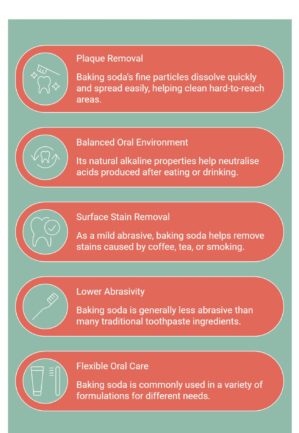
Before deciding whether baking soda is right for your routine, it helps to understand how it actually benefits your teeth. From plaque removal to gentle whitening, these key advantages explain why it remains a popular and practical oral care option.
1. Helps Remove Plaque More Effectively
Baking soda’s fine particles dissolve quickly and spread easily across the teeth, helping to clean hard-to-reach areas like the back molars and the gum line. This makes it useful for improving overall plaque removal during regular brushing.
2. Supports a Balanced Oral Environment
Its natural alkaline properties help neutralize acids produced after eating or drinking. This balance reduces the impact of plaque acids, which can otherwise weaken enamel and contribute to tooth decay over time.
3. Gently Lifts Surface Stains
As a mild abrasive, baking soda helps remove stains caused by coffee, tea, or smoking without being overly harsh. This results in gradual whitening while maintaining the natural integrity of your enamel.
4. Lower Abrasivity Compared to Many Alternatives
Baking soda is generally less abrasive than many traditional toothpaste ingredients, making it a safer option for long-term use. When paired with a soft-bristled toothbrush, it helps clean effectively without excessive enamel wear.
5. Flexible for Different Oral Care Needs
Baking soda is commonly used in a variety of formulations, including options focused on whitening, sensitivity, or gum care. It can also be used in simple at-home pastes, making it a versatile addition to everyday oral hygiene routines.
Understanding these benefits helps you use baking soda more effectively, whether as part of your regular oral care routine.
What Are the Risks and Side Effects of Whitening Teeth with Baking Soda?
Baking soda can help with surface stains, but it’s not completely risk-free, especially if used too often or incorrectly. Understanding the potential downsides can help you avoid long-term damage to your teeth and gums:
- Enamel Erosion
Baking soda is abrasive, and frequent or aggressive brushing can wear down enamel, which does not grow back once damaged. - Increased Tooth Sensitivity
As enamel thins, teeth become more sensitive to hot and cold foods, causing noticeable discomfort over time. - Higher Risk of Cavities
Weakened enamel makes teeth more vulnerable to decay, increasing the chances of developing cavities. - Gum Irritation
The gritty texture can irritate gums, leading to redness, swelling, or even bleeding if used harshly. - Lack of Fluoride Protection
Baking soda doesn’t contain fluoride, which is essential for strengthening teeth and preventing decay, making it unsuitable as a complete toothpaste replacement.
Using baking soda occasionally and gently can reduce these risks, but it’s best used in combination with a fluoride toothpaste for proper oral care.
What Is the Step-by-Step Method to Brush Your Teeth with Baking Soda?
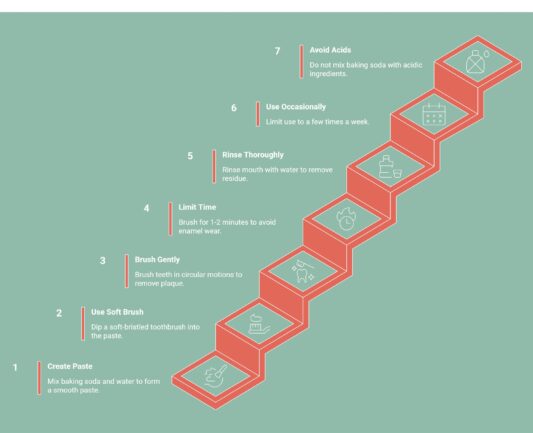
Before trying baking soda for teeth cleaning, it’s important to follow the right method. While it’s simple to use, small mistakes can lead to enamel damage or poor results. These step-by-step instructions ensure safe, effective, and balanced use:
1. Create a Simple Paste
Mix a small amount of baking soda with a few drops of water in a bowl until a smooth paste forms. This ensures even application and avoids using dry powder directly on teeth.
2. Use a Soft-Bristled Toothbrush
Dip your toothbrush into the paste and ensure it’s lightly coated. A soft brush helps reduce abrasion and protects enamel while still allowing effective cleaning.
3. Brush Gently in Circular Motions
Brush your teeth using gentle, circular motions instead of harsh scrubbing. Cover all surfaces evenly to remove plaque and surface stains without damaging enamel.
4. Limit Brushing Time to About 1-2 Minutes
Avoid over-brushing, as baking soda is mildly abrasive. Keeping the brushing time controlled helps clean effectively while minimizing the risk of enamel wear.
5. Rinse Thoroughly After Brushing
Spit out the paste and rinse your mouth well with water to remove any residue or grit, leaving your teeth clean and smooth.
6. Use It Occasionally, Not Daily
Limit use to a few times a week instead of replacing regular toothpaste. Baking soda lacks fluoride, so it should complement, not replace, your daily oral care routine.
7. Avoid Mixing with Acidic Ingredients
Do not combine baking soda with lemon juice or vinegar, as acidity can weaken enamel and increase sensitivity over time.
These steps help you use baking soda safely while getting its cleaning and whitening benefits without harming your teeth.
What Should You Avoid When Using Baking Soda for Teeth?
Knowing what to avoid is just as important as knowing the right steps. Some popular online tips can actually cause significant enamel damage. Dentists often warn against certain DIY mixtures because the risks outweigh the potential benefits.
A common mistake is mixing baking soda with acidic ingredients. While it might seem like a good idea for extra whitening power, it’s very harmful. Here are some things you should never do:
- Don’t mix with lemon juice or apple cider vinegar: The high acidity of these ingredients can severely erode your tooth enamel, making your teeth vulnerable to cavities.
- Don’t brush too hard: Aggressive brushing with an abrasive substance will wear down your enamel over time.
- Don’t use it every day: Daily use of a homemade paste can lead to sensitivity and enamel loss.
- Don’t use it if you have braces or a permanent retainer: The particles can weaken the adhesive.
If you have a pre-existing medical condition affecting your oral health, consult your dentist before trying any at-home whitening methods.
What Are Some Dentist-Recommended Alternatives?
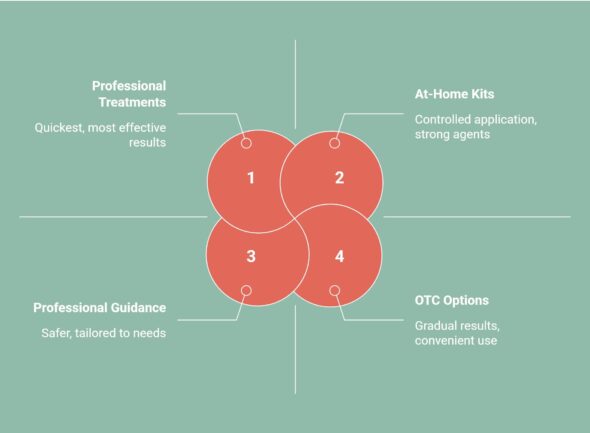
Dentists often recommend safer, clinically approved whitening solutions tailored to individual dental needs, offering more consistent results while reducing risks such as enamel damage or sensitivity. Some of the most commonly suggested alternatives include professional and at-home options:
- Whitening Toothpaste with Controlled Abrasives
Gently removes surface stains using safe polishing agents, making it suitable for daily use without damaging enamel.
Recommended when: You want mild, gradual whitening and long-term maintenance without changing your routine. - Custom Take-Home Whitening Kits
Provided by dentists, these kits use stronger whitening agents with custom trays for even application at home.
Recommended when: You want noticeable results with professional guidance but prefer the convenience of home use. - In-Clinic Professional Whitening Treatments
Delivers fast, visible results using advanced techniques under expert supervision for maximum safety.
Recommended when: You need quick, dramatic whitening for an event or want the most effective option available. - Whitening Strips or Gels (Over-the-Counter)
Easy-to-use products that provide gradual whitening when used consistently as directed.
Recommended when: You’re looking for an affordable, convenient solution with moderate results over time. - Laser or Light-Activated Whitening
A professional treatment that enhances whitening using light technology for faster, deeper results.
Recommended when: You want enhanced results beyond standard treatments and are comfortable with in-clinic procedures.
These options provide better results with minimal risk when supervised properly.
Who Should NOT Use Baking Soda on Teeth?
Before adding baking soda to your routine, it’s important to know if it’s actually suitable for your dental condition. While it works well for some, certain individuals may experience more harm than benefit if used without proper awareness or caution.
- People with tooth sensitivity: The abrasive nature can worsen sensitivity by wearing down enamel and exposing the inner dentin layer.
- Those with receding gums: It can irritate exposed root surfaces, increasing discomfort and vulnerability.
- Individuals with gum disease: The gritty texture may aggravate inflamed gum tissue and delay healing.
- People with braces or retainers: Baking soda can weaken the adhesive used in bonded dental appliances.
- Those with dental restorations (crowns, veneers, bonding): It may affect the integrity or surface of certain dental work.
- Anyone with ongoing oral health issues: Conditions such as enamel erosion or cavities may worsen with abrasive toothbrush use.
- People unsure about their dental health: Consult a dentist before trying any DIY whitening methods.
Being aware of these limitations helps you avoid unnecessary damage and make safer choices, ensuring your efforts to improve your smile don’t compromise your long-term oral health.
Why Choose Dentist Tree of Heights for Safe and Effective Teeth Whitening?
Achieving a brighter smile shouldn’t come at the cost of your oral health. That’s where professional care makes a difference.
At Dentist Tree Heights, patients receive personalized whitening treatments designed to deliver visible results safely and effectively. The clinic uses advanced techniques that minimize sensitivity while ensuring even, long-lasting whitening.
Instead of experimenting with DIY methods that may cause harm, you get a treatment plan tailored to your dental condition and goals.
Conclusion
Baking soda teeth whitening can offer a simple and affordable way to reduce surface stains, but it has clear limitations and potential risks if not used correctly. While it may slightly enhance brightness over time, it does not deliver the deep, even whitening that many people expect.
More importantly, frequent or improper use can lead to enamel erosion and sensitivity, issues that are far more costly to treat than to prevent. If your goal is a visibly whiter and healthier smile, professional treatments remain the most reliable option.
Before starting any whitening routine, it’s always best to evaluate your dental condition and consult a professional to ensure safe and effective results.
Frequently Asked Questions
How long does it take for baking soda to whiten teeth?
With careful use a few times a week, you may see a difference in your teeth in about two to six weeks. The time it takes to see results from this whitening treatment depends on the severity of the surface stains. For the best results and to safely get white teeth, avoid daily use.
Is it safe to mix baking soda with my regular toothpaste?
Yes, mixing a small amount of baking soda with your regular toothpaste can be the safest way to incorporate it into your oral care routine. This method provides gentle polishing with baking soda while ensuring you still get the enamel protection from the fluoride in your toothpaste.
Are there safer alternatives to baking soda for whitening teeth?
Absolutely. Safer and more effective alternatives include using a whitening fluoride toothpaste, over-the-counter dental products approved by the ADA, or undergoing professional whitening at your dentist’s office. These options provide better results while prioritizing your long-term dental care and enamel health.
How does baking soda compare to other natural teeth whitening methods?
Compared to other home remedies, baking soda’s whitening effects on surface stains are better proven than coconut oil oil pulling. It is significantly safer than using acidic substances like lemon juice, which can severely damage enamel. However, all natural methods are generally less effective than professional treatments.
Is baking soda better than charcoal for whitening teeth?
Baking soda is generally considered safer than charcoal for whitening natural teeth. Charcoal has more aggressive abrasive properties that can be too harsh on tooth enamel. Many dentists advise against using charcoal due to the risk of damage. For the best professional advice, consult with your dentist.
Can I use hydrogen peroxide to whiten my teeth every day?
Using store-bought hydrogen peroxide for daily whitening is not recommended, as it can cause gum irritation and enamel erosion. The safest ways to use hydrogen peroxide are through professionally formulated products or treatments administered in a dentist’s office, where the concentration is controlled.