

Key Highlights
- A dental whitening treatment using strips can be effective, but it comes with risks like tooth sensitivity and gum irritation.
- The active ingredient, peroxide, can cause unwanted side effects if the strips are overused or applied incorrectly.
- Overuse poses a significant risk of enamel erosion, which is permanent damage to your teeth.
- Protecting your long-term oral health is crucial, so always follow the product instructions carefully.
- Whitening strips are not recommended for children, and teens should only use them with adult supervision.
- Consulting a dental professional is the best way to ensure you whiten your teeth safely and effectively.
Everyone wants a brighter, more confident smile, and dental whitening strips seem like an easy and affordable solution. You have probably seen them in every drugstore, promising professional results from the comfort of your home.
But are they truly safe? While a dental whitening treatment can remove stains, it’s important to consider the potential side effects. Before you start a new whitening routine, you should understand the risks, from making your teeth sensitive to potentially harming your tooth enamel.
In this blog, we will discuss how dental whitening strips work, the most common side effects associated with them, who should use them with caution, and why protecting your tooth enamel and long-term oral health should always come first before starting any whitening routine.
What Are Dental Whitening Strips and How Do They Work?
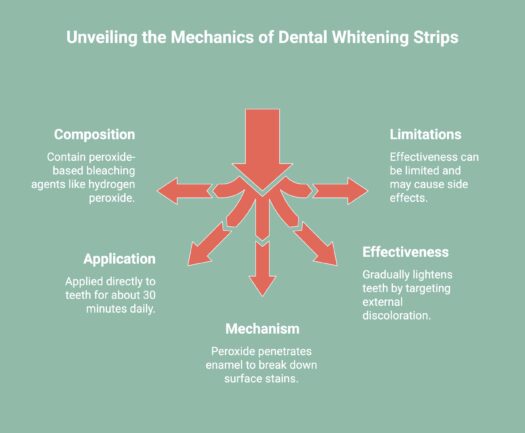
Dental whitening strips are thin, flexible plastic strips coated with a whitening gel. This gel typically contains a peroxide-based bleaching agent, like hydrogen peroxide or carbamide peroxide.
The design of these strips allows them to stick to the surface of your teeth, holding the gel in place to do its job. You apply them directly to your teeth for a set amount of time, usually around 30 minutes a day.
So, how do the strips work to give you a brighter smile? The peroxide in the gel penetrates your tooth enamel to break down and lift surface stains. These are often stains caused by things like coffee, tea, red wine, or smoking.
By targeting this external discoloration, the whitening product gradually lightens the shade of your teeth over the course of the treatment.
However, their effectiveness can be limited, and they often come with potential side effects that you need to be aware of.
What Are the Most Common Side Effects Associated with Whitening Strips?
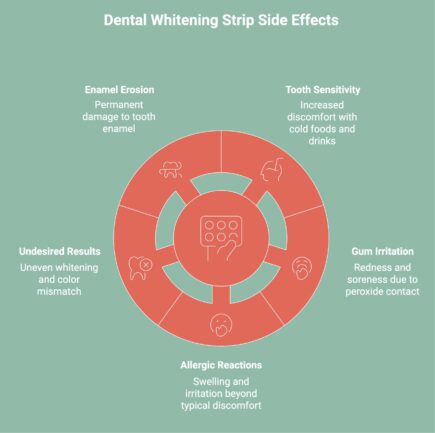
When considering whitening strips, it’s important to know about the potential downsides. Can whitening strips damage your teeth or gums? Yes, if not used correctly.
Let’s look at the dental whitening strips side effects in more detail.
1. Tooth Sensitivity
Sensitivity in teeth is a common teeth whitening strips side effects. Many people experience heightened discomfort, particularly after exposure to cold foods or drinks.
This sensitivity arises from the active ingredients, like hydrogen peroxide or carbamide peroxide, which can reach the dentin layer, irritating the nerves.
While most will return to normal sensitivity levels after discontinuing the use of the strips, consulting with a dental professional beforehand can help ensure a positive whitening experience while protecting your oral health.
2. Gum Irritation
Another common issue is gum irritation. This happens when the peroxide gel on the strips comes into contact with the soft tissues of your mouth. The result can be redness, soreness, or even a temporary whitening of your gums.
This irritation often stems from improperly placed strips. If the strip overlaps onto your gums, the bleaching solution leaks out and can cause a mild chemical burn. While this is usually temporary and resolves on its own, it can be quite uncomfortable.
To minimize the side effects of whitening strips, you should apply the strips carefully, ensuring they only cover your teeth. If you consistently experience gum irritation, it may be a sign that the product is not right for you or that you could have a mild reaction to the ingredients.
3. Potential for Allergic Reactions
While not as common as sensitivity or gum irritation, allergic reactions to whitening strips can occur. Your mouth contains delicate soft tissues, and some individuals may have a heightened sensitivity to the ingredients in the whitening gel.
The primary culprit is often the peroxide itself, but other chemicals in the strips can also trigger a reaction. Symptoms can include significant irritation, swelling, or redness in the gums, lips, or tongue that goes beyond typical irritation.
If you experience any of these signs, you should stop using the product immediately and rinse your mouth with water. An allergic reaction is a clear indicator that this whitening method is not suitable for your body and can negatively affect your oral health.
4. Undesired Results
Not everyone who uses a whitening product achieves the perfectly even, bright smile they hope for. One of the potential unwanted side effects is ending up with undesired results. This can include blotchy or uneven whitening, leaving you with spots on your teeth.
This often happens because the strips don’t make perfect contact with the entire tooth surface, especially if your teeth are crooked. Another issue is that whitening strips only work on natural teeth. They will not whiten dental work like crowns, fillings, or veneers, which can lead to a noticeable color mismatch and discoloration.
Furthermore, strips are best for surface stains. Deep, intrinsic discoloration caused by medication or injury may not respond well, leaving you with disappointing results after weeks of use.
5. Enamel Erosion
Enamel erosion is a serious concern that goes hand-in-hand with the overuse of whitening strips. This is the gradual wearing away of your tooth’s protective outer layer, the enamel.
Do whitening strips cause permanent damage to tooth enamel? Frequent or improper use can certainly contribute to it.
The hydrogen peroxide in the strips, while effective at whitening, is an acidic substance. When you use the strips too often, you are repeatedly exposing your teeth to this acid, which can slowly eat away at the enamel. This damage is irreversible.
Losing enamel can lead to chronic tooth sensitivity, an increased risk of cavities, and a yellowish appearance as the underlying dentin becomes more visible.
To avoid enamel erosion, it is vital to stick to the recommended usage cycle and not be tempted to overuse the product for faster results.
Are Teeth Whitening Strips Safe for Different Age Groups?
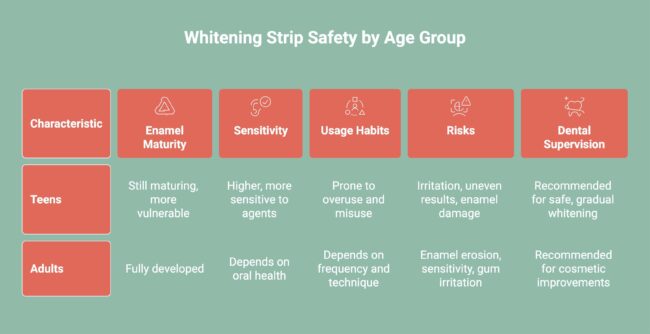
Teeth whitening strips may seem like a simple cosmetic solution, but their safety varies by age. Differences in enamel maturity, tooth sensitivity, and usage habits affect risk levels. Understanding how whitening strips impact teens and adults helps prevent unnecessary damage and supports safer, more informed whitening choices.
Whitening Strip Safety for Teens
Teen teeth are still strengthening, and enamel can be more sensitive to whitening agents. Without proper guidance, misuse may lead to irritation, uneven results, or long-term enamel damage.
- Teen enamel is still developing, making teeth more sensitive to peroxide-based whitening agents.
- Cosmetic pressure may cause teens to overuse strips or exceed recommended application time.
- Poor strip fit on developing teeth can lead to uneven whitening and localized sensitivity.
- Braces or existing dental issues may increase irritation and affect whitening consistency.
Dental supervision helps teens avoid enamel damage while setting realistic expectations for safe, gradual whitening results.
Whitening Strip Safety for Adults
Adult enamel is fully developed, but whitening safety depends heavily on frequency, technique, and oral health status. Improper or excessive use can still lead to long-term dental concerns.
- Frequent or prolonged use of whitening strips can gradually weaken enamel and increase tooth sensitivity.
- Existing enamel wear or gum recession may worsen discomfort during whitening treatments.
- Incorrect strip placement can irritate gums and cause uneven whitening near the gumline.
- Repeated treatments chasing brighter results can compromise enamel’s protective function over time.
Using whitening strips responsibly and consulting a dental professional helps adults achieve cosmetic improvements without compromising long-term oral health.
How Does Dentist Tree of the Heights Support Safe Teeth Whitening?
At Dentist Tree of the Heights, teeth whitening is guided by safety, age-appropriate care, and long-term oral health. Our team evaluates enamel strength, sensitivity risk, and cosmetic goals before recommending whitening options tailored to teens and adults.
By focusing on dentist-supervised treatments and patient education, we help prevent overuse, uneven results, and enamel damage, ensuring whitening decisions support both confidence and lasting dental health.
Schedule a whitening consultation at Dentist Tree of the Heights today to receive personalized guidance and choose a safe, effective path to a brighter smile.
Conclusion
While dental whitening strips can provide a brighter smile, it’s essential to weigh their potential side effects against the benefits. Common issues like tooth sensitivity and gum irritation may arise, and these concerns can vary across different age groups. For kids and teens, special precautions are recommended, while adults should remain vigilant about long-term impacts on enamel health. Always consult with your dentist before starting any whitening treatment to ensure that it aligns with your dental health and goals.
Frequently Asked Questions
Can whitening strips cause lasting damage to teeth or gums?
Yes, whitening strips can cause lasting damage when misused. Overuse may permanently weaken enamel, which cannot regenerate, and irritate gums. Understanding the side effects helps users avoid chronic sensitivity, irritation, and long-term oral health problems.
How soon do side effects appear after using whitening strips?
Side effects from whitening strips often appear quickly. Many people notice tooth sensitivity or gum irritation during the first use or shortly after. These reactions are usually temporary, but they signal that the teeth are responding negatively early.
Are there any safer alternatives to dental whitening strips?
Yes, safer alternatives to whitening strips exist. Dentist supervised professional whitening offers controlled treatment and reduced risk. Custom-fitted trays limit gum contact, while whitening toothpaste provides mild improvement. Dental professionals widely recommend these options for better safety.
Are there any side effects of using whitening strips?
Yes, whitening strips can cause side effects. Common issues include temporary tooth sensitivity, gum irritation, and uneven whitening. Overuse increases discomfort and enamel stress. Symptoms often resolve after stopping use, but persistent problems require dental evaluation by professionals.
How quickly do side effects from whitening strips appear after use?
Side effects from whitening strips can appear within hours or after the first few uses. Common reactions include tooth sensitivity and gum irritation, which may worsen with repeated applications or improper use of peroxide-based whitening products.
Are there safer alternatives to dental whitening strips?
Safer alternatives include dentist-supervised professional whitening, custom-fitted whitening trays, and whitening toothpaste. These options reduce gum exposure, allow controlled treatment, and lower the risk of enamel damage compared to over-the-counter whitening strips.