

Key Highlights
- The best dental whitening treatment is dentist-guided, matched to your stain type, sensitivity, and smile goals
- In-office whitening delivers the fastest, most noticeable results under safe clinical supervision
- Custom take-home trays provide gradual whitening with a precise fit and lower irritation risk
- Professional treatments use stronger agents safely, making them more effective than store kits
- Stain type, enamel health, and existing dental work all influence which method works best
- Long-lasting results depend on daily habits, diet choices, and regular dental cleanings
A bright smile does more than look nice in photos. It affects how you feel when you speak, laugh, or meet someone for the first time. Still, everyday habits like drinking coffee or tea, along with natural aging, can slowly leave teeth looking darker or dull. Even with good brushing, stains can build up in ways that feel frustrating and hard to fix on your own.
If you have been thinking about whitening your teeth, you probably want something that truly works without harming your enamel or causing pain. The goal is not an artificial look. You want a healthy, natural brightness that helps you feel confident and comfortable with your smile again.
In this guide, you will learn how professional whitening works, which options are most effective, what they cost, and how to keep your results looking great long after treatment.
What Is the Best Dental Whitening Treatment?
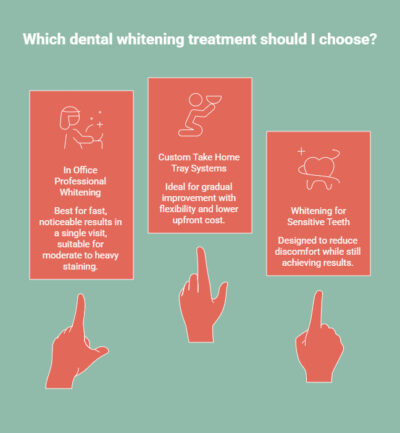
The best dental whitening treatment is usually professional whitening, either in-office or with custom trays from your dentist. These options provide stronger, safer, and more even results than store products.
The right choice then depends on your stain type, tooth sensitivity, timeline, and comfort level, since professional treatments are tailored to your needs while protecting enamel and gums.
1. In Office Professional Whitening
If you want fast, noticeable improvement, in-office whitening is often the top choice. These treatments use professional-strength whitening agents in a carefully controlled setting, allowing stronger results without increasing risk.
During the appointment, your gums are shielded, and a high-strength gel is applied to the teeth. A special light may be used to enhance the process. Because everything is monitored, whitening is more even and soft tissues stay protected.
This option is commonly chosen when patients:
- Want visible results in a single visit
- Have an event or photos coming up
- Have moderate to heavy staining
- Tried store products without success
Compared with over-the-counter options, in-office whitening works faster and typically produces a more dramatic change in tooth shade.
2. Custom Take Home Tray Systems
Not everyone wants whitening done in one session. Custom take-home trays offer a gradual approach with professional oversight. Your dentist designs trays molded to your teeth, helping the whitening gel stay in place and limiting contact with gums for a safer, more comfortable experience.
You wear the trays for a set time daily using professional strength gel. Over several days or weeks, teeth become lighter in a steady, controlled way.
Patients often prefer this option when they:
- Want flexibility to whiten on their own schedule
- Prefer gradual shade improvement
- Want a lower upfront cost than in-office treatment
- Like having trays for future touch-ups
Because the trays are custom, results are more even and irritation is less likely than with one-size kits.
3. Whitening for Sensitive Teeth
If you have sensitive teeth, whitening is still possible with the right approach. Dentists adjust treatment strength, timing, and product type to reduce discomfort while still improving tooth shade.
You may notice temporary effects that usually fade quickly:
- Tooth sensitivity to hot or cold
- Mild gum irritation if gel touches soft tissue
With gum protection and sensitivity toothpaste support, even patients with sensitivity can safely achieve a brighter, healthier-looking smile.
Wondering how long your brighter smile will really last after treatment? This guide breaks down timelines, lifestyle factors, and simple habits that help extend results. How long does teeth whitening last?
How Does Dental Treatment for Teeth Whitening Work?
Professional whitening uses peroxide-based gels that move through enamel and break down stain molecules inside the tooth. When these particles are reduced, less color shows through, so teeth appear lighter. The structure of the tooth is not scraped or altered; only the discoloration is targeted.
Unlike store products, dental treatment for teeth whitening is adjusted to your enamel condition, gum health, and stain depth. This improves results while lowering the risk of irritation.
Types of Tooth Stains
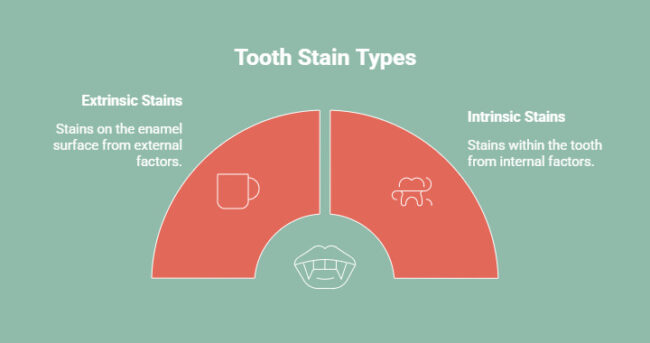
Stain type plays a major role in how well whitening works, so understanding the difference helps set realistic expectations.
Extrinsic stains form on the enamel surface from coffee, tea, wine, tobacco, and dark-colored foods. Because these stains sit on the outer layer of the tooth, they usually respond well to whitening treatments.
Intrinsic stains, on the other hand, develop inside the tooth. They can be caused by aging, certain medications, trauma, or genetics. Since these stains are deeper, they tend to be more resistant and often require professional-strength whitening approaches.
Whitening Agents Used by Dentists
To address different stain depths, dentists use specific whitening agents based on treatment type. For fast, noticeable in-office results, hydrogen peroxide is commonly used because it works quickly. For take-home treatments, carbamide peroxide is preferred since it breaks down more slowly, allowing controlled whitening over time.
In both cases, these agents release oxygen molecules that break apart stain compounds within the tooth. Although professional formulas are stronger than store-bought options, they are applied with protective measures to keep the process safe.
Why Clinical Control Matters?
Because stronger whitening agents are involved, professional supervision makes a meaningful difference. Dentists ensure the gel is applied evenly, shield the gums, and carefully control how long the teeth are exposed.
If sensitivity appears, they can adjust the strength or timing right away. This level of control reduces the risk of uneven results and soft tissue irritation while improving the overall effectiveness of the treatment.
Is In-Office Whitening the Best Teeth Whitening Dental Treatment?
For many people, in-office whitening delivers the most noticeable change in the shortest time. It is often considered the best dental teeth whitening treatment because it combines strong results with professional supervision. The whitening agents are more powerful than store products, but your gums and enamel are carefully protected throughout the process.
You are not left guessing about timing, product strength, or fit. A dental professional manages the treatment from start to finish, helping ensure even shade improvement while lowering the risk of irritation or uneven color. While dental whitening treatment cost is higher than that of over-the-counter options, many patients choose this method for its safety, speed, and reliable results.
Who Benefits Most?
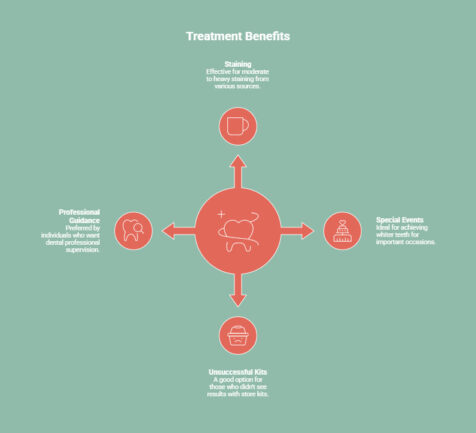
This treatment is especially helpful for people who want a visible difference, not a slight brightening. You may benefit most if you:
- Have moderate to heavy staining from coffee, tea, wine, or smoking
- Want whiter teeth for a wedding, interview, or major event
- Tried store kits and did not see the results you hoped for
- Prefer treatment guided by a dental professional
It may not be the first step if you have untreated cavities, gum disease, or several visible crowns or veneers. A dental exam helps confirm whether whitening is right for you at this time.
Speed of Visible Results
Speed is one of the biggest advantages. Teeth can often lighten by several shades in about an hour. Dentists use higher-strength whitening gels in a controlled setting, which allows deeper stains to break down more quickly than with at-home systems, leading to good results.
You walk out of the office with a brighter smile the same day, which is why this method is popular before important milestones or public events.
Situations Where It Is Preferred
Dentists often suggest in-office whitening when:
- Discoloration is significant or long-standing
- Fast results are important
- Previous whitening attempts gave uneven or weak results
- A patient wants predictable, professionally monitored care
Because your dentist evaluates your teeth and gums first, the treatment is matched to your oral health. This ensures the process supports both appearance and long-term dental well-being.
Dealing with sensitivity but still want a brighter smile? Learn how sensitive teeth whitening works, what makes it different, and how to lighten your teeth safely without triggering discomfort.
Are Store Kits as Effective as Professional Whitening?
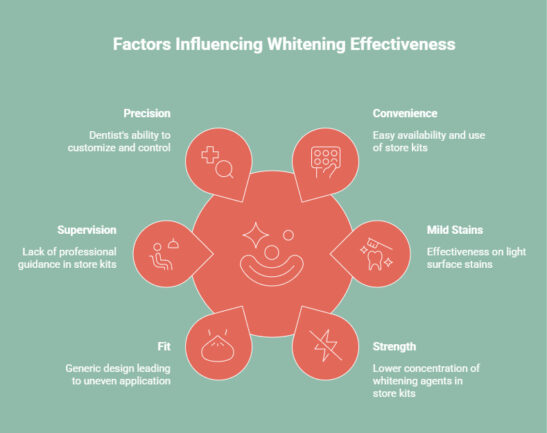
Store whitening kits are convenient and widely available, which makes them appealing. They can improve mild surface stains, especially for people with naturally lighter teeth and minimal discoloration. However, they are not built to address deeper or more stubborn stains.
The biggest differences come from strength, fit, and supervision. Store products contain lower levels of whitening agents, which limits how much they can lighten teeth. Their generic design means the material may not contact every tooth evenly, leading to patchy results or gel touching the gums. That is often when irritation begins.
Professional whitening is more precise. A dentist can adjust the formula strength, protect soft tissues, and ensure the whitening gel works evenly across your smile. This controlled approach is why professional treatments tend to produce more noticeable and longer-lasting results.
In short:
- Store kits help with mild staining
- Results are slower and often less dramatic
- Fit and comfort are less predictable
- Professional care offers stronger agents and a customized application
- Supervision reduces the risk of side effects
For people seeking a significant improvement rather than a subtle change, professional whitening is usually the more effective path.
Wondering if store products are worth trying before going professional? Find out what really happens when you use strips, who they work best for, and where they fall short in this guide on do teeth whitening strips work.
How Can Whitening Results Be Maintained Long Term?
Whitening does not end when the treatment is over. Your everyday habits strongly influence how long your smile stays bright. With proper care, results from professional whitening can remain noticeable for many months and sometimes years.
After whitening, your teeth are more receptive to staining for a short period, which makes early care especially important. Over time, small lifestyle choices continue to shape how your smile looks.
To help preserve your results:
- Brush twice daily and floss to reduce plaque and surface buildup
- Limit frequent exposure to coffee, tea, red wine, and dark sodas
- Rinse your mouth or drink water after consuming staining foods or drinks
- Use a straw when possible to reduce contact with front teeth
- Stay consistent with dental cleanings and exams
- Ask your dentist about safe touch-up treatments if you notice fading
When whitening is supported by good oral hygiene and mindful habits, your smile stays brighter and healthier-looking long after the initial treatment.
Why Choose Dentist Tree of the Heights for the Best Dental Whitening Treatment?
At Dentist Tree of the Heights, whitening is done with a focus on both appearance and oral health. Before treatment, your teeth, gums, and any dental work are carefully evaluated to ensure safe, even results and a natural-looking shade.
Patients appreciate the calm, supportive environment, especially if they feel nervous about dental visits. Every step is explained, and your comfort is checked throughout the process.
Professional whitening here includes:
- Personalized shade and smile assessment
- Gum protection and enamel-safe methods
- Options for sensitive teeth
- Guidance to help results last longer
You can schedule a consultation to get a whitening plan tailored to your smile and comfort level.
Ready for a noticeably brighter smile? Book your professional whitening consultation at Dentist Tree of the Heights today and get a treatment plan tailored to your teeth, comfort, and goals. Your whiter, more confident smile can start at your next visit.
Final Thoughts
Choosing to whiten your teeth is a personal step toward feeling more confident in your smile. Professional treatments recommended by dentists focus on safe, controlled results that match your dental health and dental care goals.
Whether you prefer fast in-office whitening or gradual take-home trays, expert guidance helps you avoid potential risks and common problems, and get more even results. By pairing treatment with strong oral hygiene and smart habits, you protect your investment and keep your smile looking bright, healthy, and naturally refreshed over time.
Frequently Asked Questions
How long do dental whitening results last?
Professional whitening results from a whitening solution can last anywhere from several months to a few years. Longevity depends on oral hygiene, diet, and habits like smoking. Regular dental cleanings, limiting stain-causing drinks, and occasional touch-ups help keep teeth brighter for longer.
Are whitening treatments safe for sensitive teeth?
Yes, whitening can be safe for sensitive teeth when supervised by a dentist. Treatment strength, timing, and products can be adjusted to reduce discomfort and prevent issues such as tooth decay. Some temporary sensitivity may occur, but dentists use protective steps to keep the process comfortable and controlled.
Can teeth whitening be done if I have crowns or veneers?
Whitening does not change the color of porcelain crowns, veneers, or fillings. These materials do not respond to bleaching agents. If natural teeth become lighter, existing restorations may look darker in comparison, so a dentist evaluates shade matching before treatment.
What is the best dental whitening treatment recommended by dentists?
Dentists often recommend professional in-office whitening or custom take-home whitening strips and tray systems. These options use stronger agents under supervision, producing faster, more even results while protecting gums and enamel. The best choice depends on stain level, sensitivity, and timeline.
What whitening treatment do dentists use?
Dentists use peroxide-based tooth whitening gels, usually hydrogen peroxide for in-office treatments and carbamide peroxide for take-home systems. These release oxygen molecules that break down stain compounds safely when applied with gum protection and controlled exposure times.
Is teeth whitening treatment good?
Teeth whitening is a safe and effective cosmetic procedure option for most people when done professionally. It improves smile brightness and confidence without damaging tooth structure. Proper evaluation ensures it is suitable based on enamel health and existing dental work.
How much is professional teeth whitening?
Professional whitening in the USA generally ranges from a few hundred dollars, depending on the method used, with in-office treatments often delivering dramatic results. In-office treatments cost more due to technology and supervision, while dentist-provided take-home kits offer a more gradual, lower-cost professional option.
What should I look for when choosing a teeth whitening kit?
Look for dentist-approved counter whitening products, clear usage instructions, and trays or applicators that fit well. Avoid overly strong products without guidance. If you have sensitivity, dental work, or gum concerns, professional advice helps prevent uneven results or irritation.
Which ingredients should I avoid in teeth whitening products?
Avoid highly abrasive ingredients or unverified bleaching agents like coconut oil that can damage enamel or irritate gums. Products without safety information or unclear concentrations should be used cautiously. When unsure, consult a dentist to choose options that are both effective and safe.