

Key Highlights
- Can dental bonding be whitened? No. Composite resin does not respond to traditional whitening treatments like natural enamel does.
- Whitening brightens surrounding teeth only, which can create visible contrast between bonded and non-bonded areas.
- If bonding looks dull, professional polishing may remove surface stains and restore some shine.
- For deeper discoloration, replacing the bonding is the most predictable way to achieve a color match.
- Do whitening strips work on dental bonding? They will not lighten bonding and may make shade differences more noticeable.
- Planning matters. Whitening natural teeth before bonding helps your dentist match a brighter, more stable shade.
- A customized cosmetic plan ensures your smile looks even, natural, and balanced, not patchy.
You look in the mirror and think your smile could be brighter. So you start researching whitening, maybe strips, maybe professional treatment. Then you remember something important, you have bonding. Suddenly, the question becomes urgent: can dental bonding be whitened, or will it stay the same forever?
You are not alone in wondering this. Patients ask about dental bonding and whitening all the time, especially after noticing color differences between bonded teeth and natural enamel. It can feel confusing, and honestly, a little frustrating when results do not match expectations.
Let’s walk through exactly can dental bonding be whitened, why whitening behaves differently on bonding, and what you can actually do for a brighter, even-looking smile.
What Is Dental Bonding and How Does It Work?
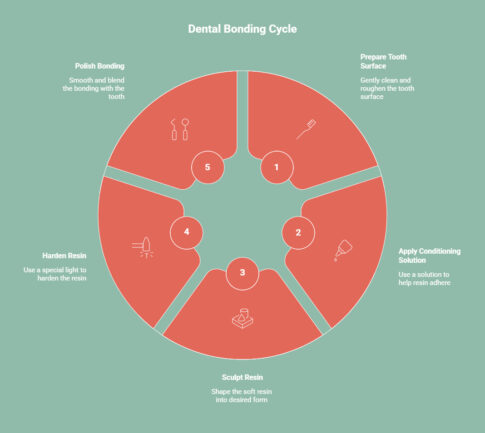
Before understanding can dental bonding be whitened, it helps to know what bonding is made of and how it functions.
Dental bonding is a cosmetic procedure where a tooth colored composite resin is applied to improve the look of a tooth. Many patients choose dental bonding for whitening-related concerns, especially to cover stains, fix small chips, close gaps, or improve tooth shape.
Dentists use bonding because it is conservative and blends naturally with your smile. The material is shade-matched to your teeth at the time of treatment for a seamless result.
The process is quick and usually done in one visit:
- The tooth surface is gently prepared
- A conditioning solution helps the resin adhere
- The soft resin is sculpted into shape
- A special light hardens the material
- Final polishing helps it blend smoothly
Bonding enhances appearance while preserving most of your natural tooth structure.
Can Dental Bonding Be Whitened?
This is one of the most common questions patients ask. The short answer is no. Dental bonding does not respond to whitening treatments because whitening works on natural enamel, not on composite resin.
When you whiten your teeth, only natural enamel becomes lighter. Bonded areas stay the same shade, which can lead to visible color differences, especially on front teeth.
You might notice:
- Natural teeth look brighter
- Bonding stays the same color
- Bonded spots appear darker or more yellow
- The smile looks uneven
So what can you do instead?
If bonding looks stained or mismatched after whitening, the solution is usually polishing, resurfacing, or replacing the bonding so it matches your new tooth shade. Whitening itself will not change the resin.
Wondering how long your brighter smile will actually last? Find out what affects results and how to maintain them here.
Why Does Dental Bonding Not Respond To Whitening?
If you are wondering can dental bonding be whitened, the answer comes down to the material. Bonding is made from composite resin, not natural tooth structure. Even though it looks like enamel, it does not react to whitening treatments the same way.
Whitening products are designed to change the shade of natural teeth. Bonding, however, has a fixed color once it is placed. That shade does not lighten with gels, strips, or professional treatments.
Why Bonding Stays the Same Color?
Bonding is made from composite resin, a synthetic material designed to match your teeth at the time it is placed. Unlike enamel, it does not have the internal structure that reacts to peroxide whitening agents.
Natural teeth can lighten because stain molecules inside enamel break down. Bonding does not absorb these chemicals the same way, so its color remains fixed.
In simple terms:
- Enamel can respond to whitening
- Bonding has a set shade
- The material does not chemically lighten
That is why dentists plan shade changes carefully when bonding is involved.
What Happens If You Whiten Anyway?
Many people try strips, gels, or even professional whitening, hoping that bonding might improve. The result is usually the same.
What typically happens:
- Surrounding teeth get lighter
- Bonding stands out more
- Color differences become obvious
- Older bonding looks more noticeable
Whitening does not damage bonding, but it can make mismatched areas easier to see.
How To Fix Bonding That Looks Dull?
This is the part most patients actually need. If bonding looks dark, stained, or uneven after whitening, dentists have several solutions.
Depending on the condition of the bonding, your dentist may recommend:
- Professional polishing to remove surface stains
- Smoothing and resurfacing minor discoloration
- Replacing bonding with a new material matched to your brighter teeth
- Touch-up shaping for a more uniform smile
Replacing bonding after whitening allows the shade to be customized so everything blends naturally again.
Should You Whiten Before Getting Bonding?
Yes, in many cases this is the best approach. Whitening first lets you choose your ideal tooth shade. Bonding can then be placed to match that brighter color.
This prevents future mismatches and reduces the chance of needing replacement later. Dentists often recommend completing whitening before cosmetic bonding on visible teeth.
When To Consider Veneers Instead?
If bonding repeatedly stains, chips, or looks uneven, veneers may be a longer-term cosmetic solution. Veneers resist staining better than bonding and provide more consistent color across the smile.
They may be considered when:
- Multiple teeth need color correction
- Bonding has been replaced several times
- You want a more durable cosmetic upgrade
A dental exam helps determine whether polishing, replacement, or veneers make the most sense for your goals.
Also dealing with sensitivity, but still want a brighter smile? Learn how to whiten safely without discomfort.
Do Whitening Strips Work On Dental Bondings?
This is one of the most common questions patients ask before trying at-home whitening. The short answer is simple, but the outcome can be surprising.
Whitening strips are designed to lighten natural tooth enamel. The peroxide gel penetrates the enamel, breaks down stains, and gradually brightens your teeth. That part works exactly as advertised.
But dental bonding is different. The composite material used in bonding does not absorb whitening agents. So while your real teeth respond, the bonded areas stay the same shade they were when placed.
Here is what that means for your smile:
- Natural teeth become lighter
- Bonded teeth stay their original color
- The difference between the two becomes more noticeable
- Bonding can look darker or dull compared to the surrounding teeth
Whitening strips usually will not damage bonding, which is reassuring. The issue is not safety. It is an appearance. Instead of a brighter, even smile, you may end up with a two-toned result that draws attention to the dental work.
What Happens To Dental Bonding After Teeth Whitening?
After whitening, the bonding itself remains stable. The materials used in professional and over-the-counter whitening are considered safe for existing bonding. They do not weaken it or cause it to fail.
The challenge is purely cosmetic.
As your natural teeth lighten, the unchanged bonding begins to stand out. Patients often notice that bonded areas look:
- Slightly yellow
- Duller than the surrounding teeth
- More obvious than before whitening
Before whitening, everything may have looked blended. After whitening, the contrast increases, and the dental work that once went unnoticed can suddenly catch your eye. This is why we always talk about planning when bonding and whitening are both part of your smile goals.
Curious about the cost of a brighter smile? Explore what affects treatment pricing and what to expect from professional whitening here:
Can Dentists Whiten Dental Bonding Professionally?
Even with professional systems, dentists cannot chemically whiten existing bonding. In office whitening uses stronger bleaching agents, but they work the same way as home kits. They target enamel, not composite resin.
The color of your bonding is set at the time it is placed. Once it is cured and polished, that shade does not change with bleaching treatments.
So what can a dentist do instead?
- Whiten your natural teeth first if you want an overall brighter smile
- Evaluate how the bonding looks against the new tooth shade
- Polish bonding if only surface stains are present
- Replace bonding that no longer matches
The goal is not to force bonding to whiten. The goal is to make sure your smile looks even, natural, and balanced after any whitening treatment. That is where professional guidance really makes a difference.
Curious about the best at-home teeth whitening options that are safe and dentist-approved? Learn how to brighten your smile from home while protecting your enamel and gums
What Are The Best Options If Dental Bonding Looks Stained?
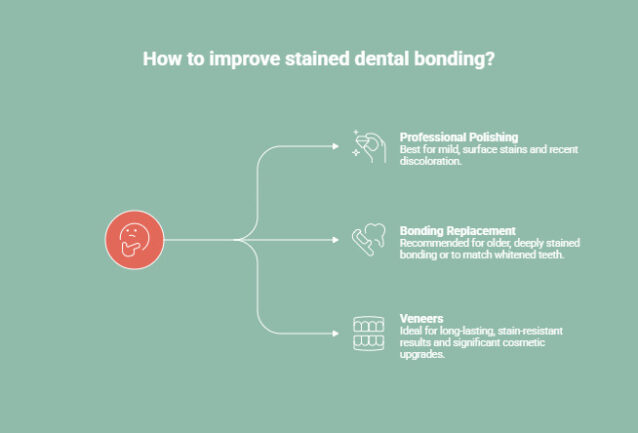
When dental bonding starts to look dull or yellow, it can be disappointing, especially if the rest of your smile still looks bright. The key thing to remember is this: whitening will not fix bonding, but you still have very effective ways to improve how it looks.
The right approach depends on how deep the staining is, how old the bonding is, and what kind of result you want long-term.
1. Professional Polishing
If the discoloration is mild, dentists usually begin with the simplest solution. Professional polishing is a gentle, non-invasive way to improve bonding that has picked up surface stains from everyday habits like drinking coffee, tea, or wine.
During the appointment, your dentist smooths and buffs the bonding using specialized tools and polishing materials. This removes surface buildup and restores some of the original shine.
Polishing is a good option when:
- Stains are mostly on the outer surface
- Discoloration is recent or light
- The bonding is still in good structural condition
Keep in mind:
- Polishing cannot change the deep or internal color of the resin
- It will not make bonding dramatically whiter
- Results are subtle but helpful for minor cosmetic refreshes
For many patients, this is a practical first step before considering more advanced treatments.
2. Bonding Replacement
If polishing does not provide enough improvement, replacement becomes the most reliable solution. Over time, bonding can absorb stains and lose its brightness. When that happens, starting with new material delivers the best cosmetic result.
Your dentist carefully removes the old bonding without damaging the natural tooth. A new composite resin is then applied, shaped, and polished to match the current shade of your teeth.
This option is especially useful if you have recently whitened your natural teeth and want everything to blend evenly.
Replacement is often recommended when:
- The bonding is older and showing wear
- Stains are deep and resistant to polishing
- You want to match a newly whitened smile
- The bonding shape or edges also need improvement
Besides improving color, replacement allows your dentist to refine the tooth’s shape for a smoother, more natural look.
3. Veneers As an Upgrade Option
For patients who want a longer-lasting and more stain-resistant solution, veneers may be discussed. A veneer is a thin porcelain shell placed over the front of the tooth, fully covering discoloration and improving overall appearance.
Porcelain is much less porous than composite resin, which means it resists stains from foods and drinks far better. While veneers involve more planning and are a bigger investment than bonding, they offer stronger durability and long-term color stability.
Mild staining may only need polishing. Older or deeply discolored bonding usually benefits most from replacement. And if you are looking for a more permanent cosmetic upgrade with better stain resistance, veneers provide a high-end, long-lasting option.
Wondering how much dental insurance really covers and what you will pay out of pocket? This simple guide breaks down costs, coverage, and what to expect before your next visit.
Should You Whiten Teeth Before Getting Dental Bonding?
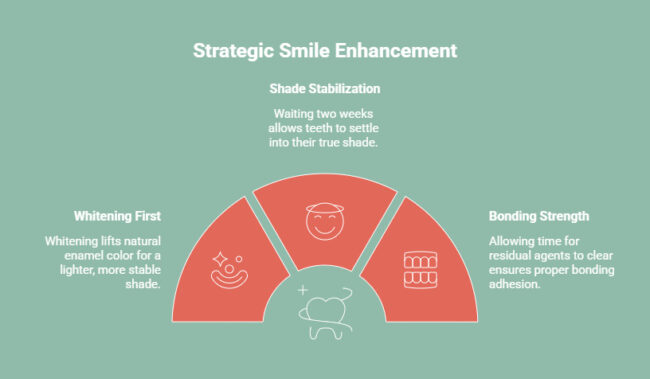
Yes, and this step makes a big difference in how natural your final smile looks. If you want both bonding and a brighter shade, whitening should come first. Whitening lifts the color of your natural enamel, giving your dentist a lighter, more stable shade to match the bonding material to. Since bonding does not change color later, this sequence helps avoid uneven tones down the road.
There is also a timing factor that many people do not realize.
After whitening, dentists typically advise waiting about two weeks before placing bonding. This short pause is important for two reasons:
- Shade stabilization: Teeth can appear slightly brighter immediately after whitening, then settle into their true shade over several days
- Better bonding strength: Allowing time for residual whitening agents to clear helps the bonding material adhere properly
Taking this planned approach sets the foundation for a smile that looks balanced, not patchy. It is a small step that protects your results and helps your bonding blend seamlessly from day one.
Can Dentist Tree of the Heights Help With Teeth Whitening?
If you are thinking about whitening and wondering how it fits with bonding, this is where expert planning makes all the difference. At Dentist Tree of the Heights, whitening is not treated as a quick cosmetic add-on. It is part of a bigger smile strategy, especially if you have existing bonding.
Before treatment, our team checks for bonding, veneers, or other dental work so your results look balanced. This prevents the common issue where natural teeth lighten but bonded areas stay the same shade.
Here is how we help you get the best outcome:
- Personalized shade planning so whitening and bonding blend naturally
- Professional-strength whitening that is safer and more effective than store-bought kits
- Clear timing guidance if you plan to place or replace bonding afterward
- Comfort-focused care in a calm, patient-centered setting
If your goal is a brighter smile that still looks natural, professional whitening is often the right first step.
Ready to see what your smile could look like? Schedule your teeth whitening consultation with Dentist Tree of the Heights today.
Final Thoughts
So, can dental bonding be whitened? Not in the way natural teeth can. Whitening treatments brighten enamel, but bonding keeps its original shade. The good news is you still have options. Professional polishing, bonding replacement, or whitening before new bonding can help you achieve a smooth, even smile.
The key is planning your treatment in the right order. A consultation with your dentist ensures your whitening and bonding work together, giving you brighter results that look natural, balanced, and long-lasting.
Frequently Asked Questions
Can dental bonding be whitened with regular teeth whitening products?
No, regular whitening products do not work on bonded teeth. The composite resin material is non-porous and won’t change color like natural enamel. While a whitening toothpaste might help remove some surface stains from the resin, it cannot alter its underlying shade, so the results will be uneven.
How does dental bonding react to whitening toothpaste or strips?
The bonding material itself will not change color. A whitening toothpaste may scrub away some external stains from the resin, but home remedies like whitening strips will only lighten the natural teeth around it. This creates a color mismatch, so it’s best to maintain good oral hygiene and consult a dentist.
How long does composite bonding whitening last?
Composite bonding does not whiten, so its “whiteness” doesn’t change. The longevity of its original color depends on your oral hygiene. Avoiding staining foods and practicing good habits can prevent surface stains from accumulating on the resin material, keeping it looking its best for 5 to 10 years.
Can teeth with bonding be whitened?
Yes, the natural tooth enamel on and around the bonded areas can be whitened. However, the bonding itself will not lighten. Using chemical agents will create a color difference between your enamel and the restoration, so always consult your dentist before starting a whitening regimen to plan accordingly.
Can I use whitening strips on bonded teeth?
You can, but it is not recommended if you want an even result. Whitening strips will not change the color of the bonding material. The resin material will remain its original shade while your natural teeth get whiter, leading to a mismatched and less-than-bright smile.
How long after whitening can I do bonding?
Your dentist will recommend waiting about two weeks after your final whitening treatment before starting a bonding procedure. This allows the color of your natural teeth to fully stabilize, ensuring the composite resin can be perfectly matched for a seamless and uniform result.
How do I whiten my teeth if I’ve had dentist bonding done today?
You should not try to whiten your teeth right after getting new bonding work. Instead, focus on maintaining good oral hygiene by brushing with a fluoride toothpaste and flossing daily. This will preserve the overall appearance of both your natural teeth and the new bonding. Discuss future whitening plans with your dentist.
Are there any professional treatments to whiten dental bonding?
Professional whitening treatments do not lighten dental bonding material. However, dentists can polish bonding to remove surface stains or replace the bonded resin to match your newly whitened teeth, helping restore a uniform, brighter smile safely and effectively.