

Key Highlights
- Achieve the best results for a brighter smile by using custom trays from your dentist, which ensure even application of the whitening gel.
- The whitening process uses a gel with hydrogen peroxide or carbamide peroxide to effectively lift stains from your teeth.
- Properly prepare for treatment by brushing and flossing to ensure your teeth are clean before applying the gel.
- Manage potential side effects like tooth sensitivity by using desensitizing toothpaste and following your dentist’s guidance.
- Maintain your results by avoiding staining foods and drinks and properly cleaning your trays after each use.
Are you dreaming of a brighter smile? If you’ve been looking for an effective and convenient way to lighten your teeth, dental whitening trays could be the perfect solution. This at-home whitening process is designed to be simple, allowing you to achieve professional-level results from the comfort of your own home. With the right tools and guidance from your dentist, you can easily remove tough stains and reveal a more confident, dazzling smile.
Using dental whitening trays at home is easy when you know the right steps. Your dentist will guide you on how long to wear them and how to apply the gel safely. With a little care, you can brighten your smile comfortably and see great results from home.
Plus, dental whitening trays are gentle on your teeth and easy to fit into your daily routine. Whether you want a quick boost for a special occasion or a gradual, lasting brightening effect, these trays make it convenient to maintain a healthy, radiant smile.
What are Dental Whitening Trays and How They Work?
Dental whitening trays are a popular method for achieving a whiter smile. The system involves a custom-fitted tooth tray and a professional-grade whitening gel. This gel contains a powerful bleaching agent, typically hydrogen peroxide or carbamide peroxide, which is the key to the entire process.
When you place the gel-filled tray over your teeth, the bleaching agent gets to work breaking down and lifting surface stains. Your dentist provides these materials and ensures you’re a good candidate for the treatment, offering a safer and more effective option than many store-bought products.
Knowing how to use dental whitening trays properly helps you get the most out of your treatment while keeping your teeth and gums safe. Now, let’s look at the different types of trays and how the gel works.
What are the Types of Dental Whitening Trays?
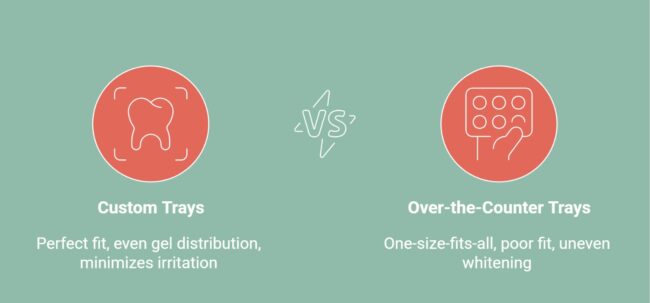
If you’re wondering how to use dental whitening trays effectively, the type of tray you choose matters. There are two main options: custom trays made by your dentist or over-the-counter trays. Custom trays are created by a dentist after taking impressions of your teeth. This ensures a perfect, snug fit that keeps the whitening gel evenly distributed and away from your gums, minimizing irritation.
On the other hand, counter products are one-size-fits-all. This often leads to a poor fit, which can cause the gel to leak onto your gums or result in uneven whitening. While more affordable, they are generally less effective and comfortable than what your dentist can provide.
Learn about another at-home whitening method and how it stacks up against trays. Do teeth whitening strips work? Find out here.
How Whitening Gel in Trays Lifts Surface Stains?
The secret to a brighter smile lies in the whitening gel’s powerful formula. The magic is in its active ingredients, which are typically hydrogen peroxide or carbamide peroxide. These compounds act as a powerful bleaching agent designed to tackle stubborn stains that brushing alone can’t remove.
When you apply the gel, the peroxide penetrates the enamel of your teeth. It then triggers an oxidation process that breaks down the discolored molecules that cause surface stains from things like coffee, tea, and red wine. This chemical reaction effectively lifts the discoloration, revealing the natural, whiter shade of your teeth underneath.
Because the gel provided by a dentist is a professional-grade bleaching agent, it is stronger and more effective at removing deep-set stains than what you can find in stores. This is why professional treatments deliver more noticeable and lasting results.
How to Prepare for Your Teeth Whitening Treatment?
To get the most out of your whitening treatment, a little preparation goes a long way in learning how to use dental whitening trays properly. The whitening gel works best on clean teeth, so starting with a fresh surface is essential for achieving even and consistent results. Before you begin, make sure you have a good routine of brushing and flossing. Next, we will cover the specific steps for prepping your teeth and applying the gel correctly.
Step 1: Clean and Prepare Teeth
Before you start, make sure your teeth are free from plaque, food debris, or any other buildup. This allows the whitening gel to work directly on your enamel. Follow these steps each time before using your trays:
- Brushing: Brush thoroughly with your regular toothpaste to remove surface debris and plaque.
- Flossing: Floss between your teeth to clear out any particles your toothbrush missed.
- Rinse and Dry: Rinse with water and gently dry your teeth. Moisture can reduce the effectiveness of the gel, so a relatively dry surface is best.
By taking these few minutes to prepare, you set the stage for a successful and even whitening treatment, helping you achieve that bright smile you’re looking for.
Step 2: Apply Whitening Gel to Trays
Once your teeth are prepped, place a small amount of whitening gel into the tray. Focus on the front-facing surfaces of your teeth for the most visible effect. Avoid overfilling to prevent the gel from leaking onto your gums.
Step 3: After Placement
After positioning the trays on your teeth, ensure they fit snugly, and the gel spreads evenly. Wipe away any excess gel that touches your gums to avoid irritation. Follow your dentist’s dental whitening tray instructions for the recommended wear time.
Taking the time to prep your teeth and use the whitening gel correctly allows your dental whitening trays to work their best. With consistent care, you can enjoy a noticeably brighter, more confident smile.
What Are the Steps to Using Dental Whitening Trays at Home?
Now that your teeth are prepped and the gel is in the trays, you’re ready to start the whitening process. Using the trays correctly is simple, but consistency is essential for the best results. Follow the recommended wear time: too long can cause sensitivity, too short may reduce effectiveness.
Let’s walk through the process step by step to ensure a brighter, more confident smile.
Step 1: Insert the Trays Carefully
Gently seat the trays over your teeth, making sure they fit snugly without shifting. Proper placement ensures the whitening gel contacts all tooth surfaces evenly.
Step 2: Wear for the Recommended Time
Follow your dentist’s guidance on session length, usually between 20–60 minutes. Wearing trays too long can cause sensitivity, while too short may reduce whitening effectiveness.
Step 3: Remove and Rinse
After your session, remove the trays carefully. Rinse your mouth to remove any leftover gel, and clean the trays before storing them in their case for next use.
Step 4: Be Consistent
Use your trays as scheduled by your dentist. Regular, consistent sessions help achieve a brighter, even smile safely and comfortably.
By following these steps and using your trays consistently, you can maximize the effectiveness of your whitening treatment. Proper care and timing ensure a safer, more comfortable experience and help you enjoy a radiant, confident smile from the comfort of your home.
Which Foods, Drinks, and Habits to Avoid During Whitening Treatment?
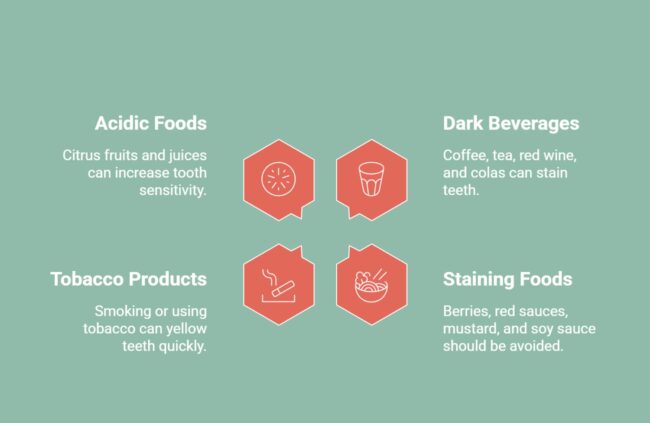
During your whitening treatment, your teeth are more porous and susceptible to stains. To protect your progress and avoid unwanted side effects, it’s important to be mindful of what you eat and drink. Consuming certain items can reverse the benefits of whitening or even cause new stains to form.
Think of it this way: if it can stain a white shirt, it can probably stain your teeth. In addition to staining agents, acidic foods can increase tooth sensitivity, which is already a potential side effect of whitening.
Here are some key things to avoid during your treatment:
- Dark-colored beverages: Coffee, tea, red wine, and colas are major culprits for staining.
- Staining foods: Berries, red sauces, mustard, and soy sauce should be avoided.
- Tobacco products: Smoking or using other tobacco products can quickly yellow your newly whitened teeth.
- Acidic foods and drinks: Citrus fruits and juices can worsen sensitivity.
Steering clear of these items will help you achieve the best possible results from your whitening trays.
How to Clean Dental Whitening Trays and Properly Maintain Them After Use?
After each session, taking a few moments to care for your trays is essential. Proper cleaning and storage not only keep your trays hygienic for the next use but also help maintain the effectiveness of the whitening process. Removing any remaining gel and saliva prevents bacteria from building up.
Knowing how to use dental whitening trays properly also means understanding how to care for them afterward, keeping your trays in good shape throughout your treatment. You can follow a few simple steps to clean your trays and maintain your brighter smile.
Step 1: Rinse Immediately
As soon as you remove your trays, rinse them thoroughly under cool water. This helps wash away any leftover whitening gel and saliva, keeping the trays clean and ready for your next use.
Step 2: Gently Scrub
Use a soft toothbrush or a cotton swab to carefully clean both the inside and outside of your trays. Avoid using toothpaste, as its abrasiveness can scratch or damage the trays.
Step 3: Dry Thoroughly
Let your trays air dry completely before putting them away. Ensuring they are fully dry prevents bacterial buildup and keeps them hygienic for your next whitening session.
Step 4: Store Safely
Place your trays in their provided case and store them in a cool, dry location, away from direct sunlight or heat. Proper storage maintains the trays’ shape and extends their lifespan.
Following this simple routine keeps your dental trays for whitening clean, safe, and effective throughout your treatment. Proper maintenance not only extends the life of your trays but also ensures you achieve the best possible whitening results every time.
Learn how to get a whiter smile from the comfort of home. Check out our guide on the best at-home teeth whitening options to brighten your smile.
What Are the Best Practices for Maintaining Whitening Results?
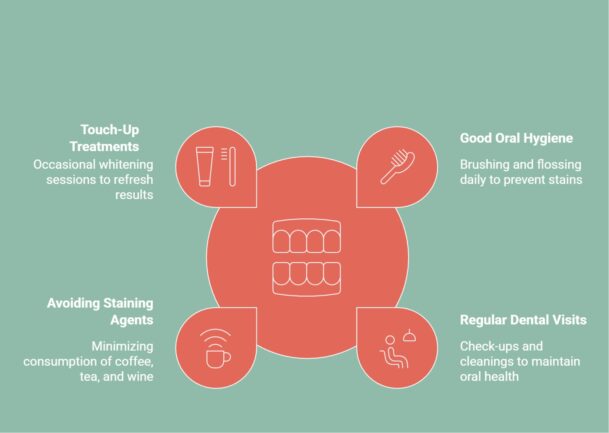
Once you’ve completed the initial whitening process and achieved your desired results, you’ll want to keep that bright smile for as long as possible. The longevity of your results depends heavily on your lifestyle and oral hygiene habits.
A few simple practices can help you maintain your newly whitened teeth and prevent stains from returning. Your dentist may also recommend occasional touch-up treatments. You can often get additional whitening gel to use with your custom trays for this purpose.
For the best long-term results, consider these maintenance tips:
- Good Oral Hygiene: Continue to brush and floss daily. You might consider using a whitening toothpaste to help manage surface stains.
- Regular Dental Visits: Schedule regular check-ups and cleanings with your dentist.
- Avoid Staining Agents: Minimize your consumption of coffee, tea, red wine, and tobacco.
- Touch-Up Treatments: Ask your dentist about a touch-up schedule, such as a short whitening session every 6 to 12 months.
Maintaining a bright, white smile is easier with consistent care, regular dental visits, and mindful habits. These practices help preserve your whitening results while keeping your teeth healthy and strong for the long term.
How Can You Address Sensitivity and Other Whitening Side Effects?
It’s not uncommon to experience some side effects from teeth whitening, with tooth sensitivity being the most frequent. This discomfort is usually mild and temporary. Gum irritation can also occur, often if the whitening gel comes into contact with the soft tissues of your mouth.
Part of understanding how to use dental whitening trays properly is knowing how to avoid common issues like sensitivity and gum discomfort. Fortunately, there are simple ways to manage these concerns and continue your treatment comfortably.
Let’s look at how to handle sensitivity and other whitening side effects.
Handling Tooth Sensitivity
Teeth may feel temporarily sensitive after a whitening session. This occurs because the peroxide in the gel can make enamel slightly more porous, causing discomfort with hot or cold foods and drinks. For most people, this sensitivity subsides within a day or two.
To manage tooth sensitivity:
- Use a toothpaste designed for sensitive teeth, often containing potassium nitrate, which helps block pain signals to the tooth nerve.
- Reduce the frequency or duration of your whitening sessions if recommended by your dentist.
- Avoid extremely hot or cold foods and drinks during the treatment period.
If sensitivity persists or becomes severe, consult your dentist for guidance on adjusting your whitening routine.
Preventing Gum Irritation
Gum irritation usually happens if whitening gel leaks from the trays onto soft tissue. To prevent this:
- Use the recommended amount of gel—more is not better.
- Wipe away any excess gel immediately with a tissue or your finger.
- Ensure your trays fit properly; custom trays from your dentist are ideal for minimizing leaks.
Taking these steps ensures your teeth and gums stay comfortable while you achieve a brighter, whiter smile.
Properly addressing sensitivity and gum issues helps make your whitening treatment comfortable and effective. With the right care and precautions, you can enjoy your whitening sessions while protecting your oral health.
What If You Have Crowns, Fillings, or Dental Work?
If you have existing dental work like crowns, fillings, veneers, or dental implants, it’s important to know that whitening products will not change their color. The bleaching agents in whitening gels are formulated to work on natural tooth enamel only. They cannot lighten the materials used in restorative dental work.
This means that if you whiten your natural teeth, your crowns or fillings may suddenly look darker or mismatched in comparison. This can result in an uneven and unnatural-looking smile, which is likely the opposite of what you’re hoping to achieve.
Before you begin any whitening treatment, a consultation with your dentist is crucial. They can assess your dental work and discuss your options. In some cases, you may need to replace old fillings or crowns after whitening to ensure they match the new, brighter shade of your natural teeth.
If you experience tooth sensitivity during or after whitening, check out this guide on dental care for sensitive teeth to learn how to protect your smile and stay comfortable
Why Choose Dentist Tree of the Heights for Dental Whitening Trays?
At Dentist Tree of the Heights, we love helping our patients achieve confident, sparkling smiles. If you’ve ever wondered how to use dental whitening trays safely and effectively, our team is here to guide you every step of the way.
We provide professional-grade whitening trays and easy-to-follow instructions so you can get great results from the comfort of home. Whether it’s coffee stains, tea, or just everyday discoloration, we make sure your teeth whitening is safe, simple, and comfortable.
Want a brighter smile you can be proud of? Book your appointment today at Dentist Tree of the Heights and learn exactly how to use dental whitening trays the right way. Your smile will thank you.
Conclusion
Using dental whitening trays can significantly enhance your smile when done correctly. By understanding the types of trays available and following best practices for application and care, you can achieve optimal results while minimizing sensitivity and discomfort. Remember to prepare your teeth properly, avoid certain foods and habits during treatment, and maintain your trays for lasting effects. A bright smile not only boosts confidence but also enhances overall oral health. By learning how to use dental whitening trays safely and consistently, you can enjoy a brighter smile with confidence.
Frequently Asked Questions
How often can I safely use dental whitening trays?
How often you use whitening trays depends on your dentist’s advice. Usually, daily use for one to two weeks is recommended initially, with maintenance touch-ups every 6–12 months. Always follow instructions to avoid overuse and ensure safe, effective results.
What should I do if my trays cause gum irritation or discomfort?
Gum irritation often happens if too much gel touches your gums. Wipe away excess gel, and if discomfort persists, stop using the trays and consult your dentist, who can check the fit and adjust your treatment for comfort.
How soon will I see results from using dental whitening trays?
You may notice initial results within about a week of starting your whitening treatment. Most visible improvements usually appear after two to four weeks of consistent use, depending on stain severity, tooth type, and gel strength.
Can I use whitening trays if I have sensitive teeth?
Yes, many people with sensitive teeth can use whitening trays, but it’s important to follow your dentist’s guidance. Using a lower-concentration gel, shorter sessions, or a desensitizing toothpaste can help minimize discomfort.
Are dental whitening trays safe for teenagers?
Whitening trays can be safe for teenagers, but it’s best to use them under a dentist’s supervision. Since their teeth are still growing, having professional guidance helps make sure the process is both safe and effective.
How Long Do You Wear Dental Whitening Trays Each Session?
Wear your whitening trays according to your dentist’s instructions, usually 20–60 minutes per session. Following the recommended schedule ensures safe, effective results. Avoid overextending wear time to prevent sensitivity and maintain consistent, noticeable whitening.
How Long Do You Leave Dental Whitening Trays In?
The duration depends on gel strength and your dentist’s guidance. Most sessions last 20–60 minutes. Consistent, regular use matters more than extended wear, keeping your teeth safe, minimizing sensitivity, and achieving a good, even whitening effect.