

Key Highlights
- Following a dental implant procedure, avoiding dairy products for a short time is crucial for the healing process and avoid future discomfort.
- Dairy can leave a film in your mouth, increasing the risk of infection at the sensitive surgical site.
- Some people experience mild nausea when mixing dairy with post-surgery medications.
- Consuming dairy can increase mucus production, which may cause discomfort during your recovery period.
- Stick to soft foods and non-dairy alternatives to support a smooth and fast recovery.
- You can typically reintroduce dairy after the first 48-72 hours, once initial healing has started.
Recovering from a dental implant is usually straightforward, and most people are surprised by how smoothly the process goes. However, you may receive a few temporary dietary guidelines during recovery, such as avoiding dairy for a short period. This can feel confusing at first, especially since milk and yoghurt are commonly associated with good health. Understanding the reason behind this advice helps you feel more confident and prepared as you heal.
The primary goal after a dental implant is simple: protect the surgical site and support proper healing. What you eat during the first few days plays a direct role in reducing discomfort, preventing infection, and helping the implant stabilise successfully. Small dietary choices can make a noticeable difference between a smooth recovery and unnecessary complications.
In this guide, we explain why dentists advise against dairy after a dental implant, what can happen if it’s consumed too early, and which foods are safer alternatives. You’ll also learn how long the restriction usually lasts and how to support healing without compromising nutrition.
Why Should You Avoid Dairy After a Dental Implant?
After a dental implant, your mouth is healing from surgery, and the main concern is simple: you don’t want to disturb the area or cause problems while it’s settling. The implant site needs time to close, calm down, and start bonding properly. What you eat during these first few days matters because certain foods can irritate the area or make it harder for your mouth to heal comfortably.
That’s why dentists usually advise avoiding dairy immediately after your procedure. Foods like milk and cheese can leave residue around the surgical site, increase bacterial buildup, and contribute to inflammation or swelling. In some cases, this raises the risk of infection or prolongs post-surgery discomfort. Avoiding dairy for a short time helps keep the area clean and gives your implant the best chance to heal properly.
What Are The Factors That Influence Recovery Success?
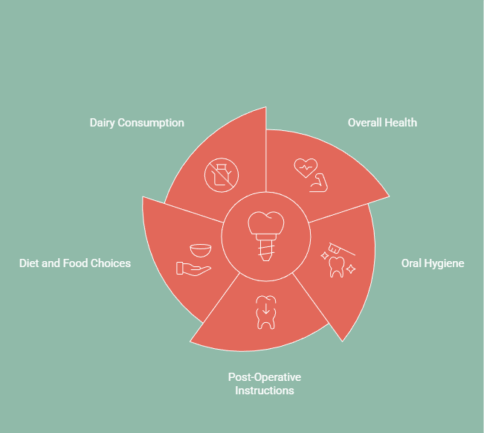
Healing after a dental implant is influenced by more than just the procedure itself. While your body does much of the work, certain factors play a direct role in how smoothly and quickly recovery progresses. Being mindful of these elements can help reduce discomfort and lower the risk of complications.
Key factors that affect recovery include:
- Overall health
Conditions such as diabetes or a weakened immune system can slow healing and increase the risk of infection, making aftercare especially important. - Oral hygiene habits
Keeping the mouth clean helps prevent bacterial buildup around the implant site, which is essential for proper tissue and bone healing. - Following post-operative instructions
Adhering to your dentist’s guidance on medication, activity, and diet supports a predictable and complication-free recovery. - Diet and food choices
What you eat directly affects healing. Soft, non-irritating foods help minimise swelling and discomfort, while unsuitable foods can delay recovery. - Type and timing of dairy consumption
Some dairy products may irritate healing tissues or encourage bacterial growth, particularly in the early recovery phase.
Understanding these factors makes it easier to see why temporary dietary adjustments, especially avoiding dairy, are recommended. Thoughtful choices during this short recovery window can significantly improve comfort and support the long-term success of your dental implant.
Why Avoid Dairy Products After a Dental Implant?
So, what’s behind the “no dairy” advice after a dental implant? It’s not because dairy is unhealthy, but because your mouth is still settling after surgery. In these first few days, the implant site is sensitive, and the focus is simply on keeping it calm, clean, and undisturbed.
Dairy foods can sometimes make that harder than it needs to be. While they’re normally part of a healthy diet, they may contribute to irritation, bacterial buildup, or extra discomfort around a healing implant.
Understanding how dairy interacts with your mouth during this period makes it easier to see why dentists suggest avoiding it briefly, and how this small adjustment can support smoother healing.
How Dairy Can Slow Healing After a Dental Implant?
In the first few days after a dental implant procedure, your mouth is still healing from surgery. The tissues around the implant are sensitive, and even small irritations, such as food residue settling near the implant, increased mucus in the mouth, or mild inflammation from certain foods, can slow recovery. While dairy may seem harmless, it can interfere with healing in several subtle but important ways.
Here’s How Dairy Can Affect Healing After A Dental Implant:
- Triggers stomach discomfort with medications
Dairy can react poorly with antibiotics or pain relievers, leading to mild nausea or digestive discomfort. This doesn’t affect the implant directly, but it can make recovery more uncomfortable than necessary. - Increases mucus production
For some people, dairy stimulates excess mucus, which can feel unpleasant after oral surgery and make the mouth feel congested or harder to keep clean. - Leaves a residue on teeth and gums
Milk, cheese, and yoghurt can leave a thin, fatty film around the implant site. This residue creates a surface where bacteria can easily cling and multiply.
Beyond discomfort, the main concern is infection. Bacterial buildup near the implant can lead to inflammation, swelling, pain, and, in serious cases, affect how well the implant bonds with the jawbone.
Avoiding dairy briefly helps keep the area clean, lowers infection risk, and supports smoother healing.
What Can Happen If You Eat Dairy Too Soon?
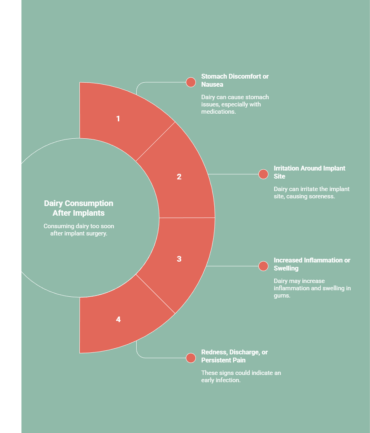
What happens if you consume dairy too soon after your implant? It’s usually not an emergency, but it can make recovery more uncomfortable and increase the chance of minor complications. Your mouth is still healing, and certain foods can interfere with that process.
Here are some common reactions and warning signs to watch for:
- Stomach discomfort or nausea, especially if dairy interacts with antibiotics or pain medication.
- Irritation around the implant site, causing tenderness or soreness.
- Increased inflammation or swelling in the surrounding gums.
- Redness, discharge, or persistent pain, which may signal early infection.
Being aware of these reactions makes it easier to act early and avoid setbacks. Following your dentist’s dietary advice gives your implant the best conditions to heal smoothly.
Are Some Dairy Products More Problematic Than Others?
Yes, certain dairy foods can be more troublesome than others during the early recovery stage. Cold dairy products like ice cream or milkshakes, while seemingly soft, can trigger sensitivity near the implant site. Additionally, some dairy foods are more acidic and can cause irritation.
For example, many flavored yogurts contain sugars and acids that are not ideal for a healing wound. Even plain yoghurt can be problematic in the first couple of days. It’s best to avoid all dairy to be safe. If you use a dairy-based protein powder, consider switching to a plant-based version temporarily.
Foods To Avoid After Dental Implant:
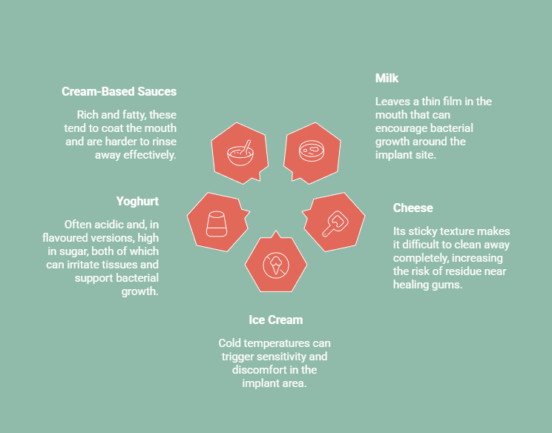
- Milk (all types)
Leaves a thin film in the mouth that can encourage bacterial growth around the implant site. - Cheese (hard and soft)
Its sticky texture makes it difficult to clean away completely, increasing the risk of residue near healing gums. - Ice Cream and Frozen Yoghurt
Cold temperatures can trigger sensitivity and discomfort in the implant area. - Yoghurt (plain or flavoured)
Often acidic and, in flavoured versions, high in sugar, both of which can irritate tissues and support bacterial growth. - Cream-Based Sauces
Rich and fatty, these tend to coat the mouth and are harder to rinse away effectively.
Avoiding these dairy products temporarily helps keep the implant site cleaner, reduces irritation, and supports a smoother, more predictable healing process.
What are the Safe Food Choices and Dairy-Free Alternatives After Dental Implants?
Now that you know what to avoid, let’s focus on what you can eat! Your dental implant diet during the recovery period should consist of soft, nutritious foods that are easy to chew and swallow. The goal is to get the nutrients your body needs to heal without putting any stress on your new implant.
There are plenty of delicious and safe foods to choose from. Opting for non-dairy alternatives and soft fruits will help ensure you have a comfortable and smooth recovery.
Nutrition-Rich Soft Foods For Dental Implants
A soft, non-dairy diet helps protect your implant while supporting healing. Choose easy-to-chew foods like non-dairy smoothies (without a straw), scrambled eggs, and tofu to reduce irritation and provide essential nutrients during recovery.
Here are some other great options to include in your diet:
- Lukewarm soups and broths
- Mashed potatoes, avocados, or bananas
- Well-cooked porridge or rice
- Plant-based protein shakes
By choosing soft, non-dairy foods during this early recovery phase, you reduce stress on the implant site while giving your body the nutrients it needs to heal comfortably and effectively.
How Can You Maintain Calcium Intake Without Dairy?
Avoiding dairy often raises one practical question: will I still get enough calcium? Calcium is essential for bone strength, especially while your jawbone is healing around a dental implant. Fortunately, this restriction is short-term usually just 48 to 72 hours and there are plenty of easy alternatives.
Simple ways to maintain calcium intake without dairy include:
- Fortified plant-based milks
Almond, soy, oat, or coconut milk often contain added calcium and are gentle on healing gums. - Tofu
Soft tofu is easy to eat and provides both calcium and protein, which supports tissue repair. - Leafy green vegetables
Spinach, kale, and broccoli are natural calcium sources. Blending them into soups or smoothies makes them easier to consume after surgery. - Calcium-fortified foods
Some cereals and plant-based yoghurts (non-dairy) offer added calcium without irritating the implant site.
By choosing these options for a few days, you can meet your nutritional needs while keeping the implant area protected and supporting proper healing.
Get Personalised Aftercare Advice From Dentist Tree
Every dental implant recovery is slightly different, which is why personalised guidance matters. While general dietary rules like avoiding dairy apply to most patients, your specific healing timeline may vary based on your oral health, implant type, and medical history.
At Dentist Tree, experienced dental professionals focus not just on the procedure itself, but on helping patients recover comfortably and confidently.
From post-implant care advice to tailored dietary recommendations, their team ensures you have clear guidance at every stage of healing.
Book an appointment or contact our team today for expert post-implant care advice and tailored dietary recommendations to support a smooth, confident recovery.
Conclusion
In summary, avoiding dairy after dental implant surgery is crucial for a smooth recovery. Dairy can interfere with the healing process, potentially leading to complications like infection or inflammation. It’s important to be mindful of your diet during this critical period and choose soft, nutritious foods that support your healing journey. By prioritizing your oral health and being cautious about what you consume, you can ensure a successful recovery. If you have any further questions or need personalized advice, don’t hesitate to reach out for a consultation to guide you through this process. Your smile deserves the best care!
Frequently Asked Questions
How long no dairy after dental implant?
Most dentists recommend avoiding dairy products for the first 48 to 72 hours after your dental implant procedure. This allows the initial, most critical phase of healing to pass. Always follow the specific timeline provided by your dentist, as your recovery period may vary.
Is the no-dairy rule based on research or just a precaution?
This recommendation is primarily a precaution, dental professionals know that dairy can increase mucus production and leave a residue that encourages bacterial growth. Avoiding it reduces the risk of infection and helps ensure a smoother healing process.
Can I drink milk after dental implant surgery?
Milk can irritate healing gums and interact with medications. Resume it only after your dentist confirms recovery is on track.
When can I safely reintroduce dairy products into my diet?
You can typically start reintroducing dairy into your diet about three to five days after your procedure, once the initial healing process is underway. Start with mild options like plain yogurt and see how your body reacts.
Can I eat dairy after dental implant surgery?
It’s best to avoid dairy for the first 24 to 72 hours after dental implant surgery. Dairy may irritate healing gums, increase inflammation, and interfere with medications.