

Key Highlights
- The longevity of your teeth whitening results can range from a few months to several years.
- Professional whitening treatments performed by a dentist typically offer the longest-lasting results.
- Your daily oral hygiene and lifestyle habits significantly impact how long your smile stays bright.
- Over-the-counter products like whitening toothpaste can help remove surface stains but have a shorter effect.
- Understanding the type of tooth stain you have helps determine the most effective whitening treatment.
- Professional dental procedures use stronger agents for more dramatic and durable outcomes.
Everyone desires a bright smile, and teeth whitening is one of the most popular cosmetic dentistry procedures to achieve it. Whether you’re considering a professional treatment or an at-home kit, you’re likely wondering how long the results will last.
Teeth whitening doesn’t last forever, and results aren’t permanent. Daily habits, food, drinks, and the whitening method itself can cause stains to return faster than expected, leading to disappointment.
This guide will walk you through everything you need to know about the longevity of teeth whitening and how to keep your smile radiant.
Why Are My Teeth Discolored?
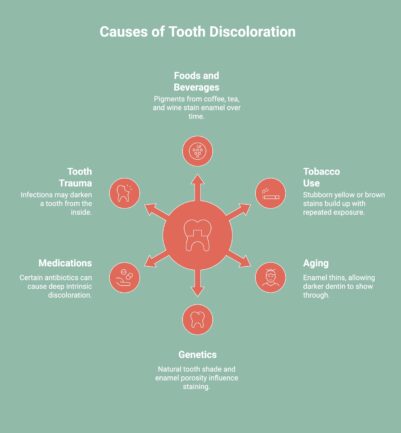
Tooth discoloration is common and can develop gradually due to everyday habits, aging, or underlying dental factors. Some stains affect only the surface, while others form deeper within the tooth structure, influencing how easily they can be treated with whitening methods.
Here are the most common reasons teeth become discolored:
- Foods and beverages like coffee, tea, red wine, and dark sauces leave pigment on enamel over time.
- Tobacco use causes stubborn yellow or brown stains that build up with repeated exposure.
- Aging naturally thins enamel, allowing the darker dentin underneath to show through.
- Genetics influences natural tooth shade and how porous enamel is to staining.
- Medications in childhood, such as certain antibiotics, can cause deep intrinsic discoloration.
- Tooth trauma or infections may darken a tooth from the inside, making stains harder to remove.
Identifying whether stains are surface-level or intrinsic helps determine whether whitening products or professional bleaching treatments will be most effective.
Learn more about the teeth whitening options available in Houston and how they deliver brighter, more confident smiles.
How Long Does Teeth Whitening Last?
Teeth whitening results typically last 6 months to 3 years, depending on the method used and daily habits. In-office professional whitening can last 1-3 years, while at-home kits usually fade within 6-12 months. Frequent coffee, tea, smoking, and poor oral hygiene can significantly shorten results, while regular dental care helps maintain brightness longer.
What Is the Difference Between Intrinsic and Extrinsic Tooth Stains?
The type of tooth stain you have plays a major role in how effective teeth whitening will be. Understanding whether discoloration is surface-level or internal helps set realistic expectations and guides you toward the most suitable whitening or professional treatment option.
Here is how intrinsic and extrinsic stains differ and affect whitening results:
- Extrinsic stains: Surface-level stains caused by foods, drinks, and smoking. These respond well to most over-the-counter whitening products and professional treatments.
- Intrinsic stains: Deep stains within the tooth structure caused by aging, medications, trauma, or infection. These are more resistant and usually require dentist-supervised whitening for noticeable results.
What Are the Different Types of Teeth Whitening Methods and How Long Do They Last?
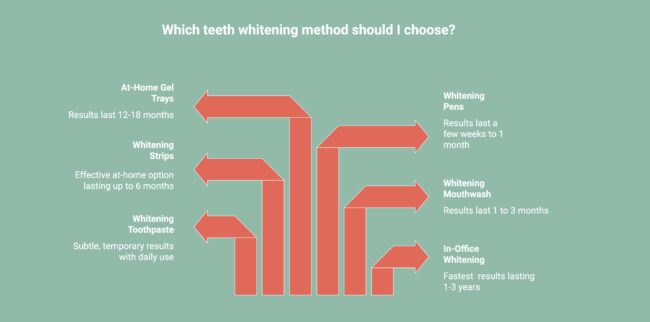
Teeth whitening treatments generally fall into professional procedures and at-home options. Each method varies in strength, application process, and how long results last. Understanding these differences helps you choose the most effective and safest whitening approach for your goals.
Below are the most common types of teeth whitening methods and their longevity, explained clearly.
1. In-Office Professional Whitening (Chairside Bleaching)
In-office whitening is performed by a dentist using high-concentration hydrogen peroxide, often activated by light or heat. This method delivers the fastest and most dramatic results, typically whitening teeth several shades in a single visit with effects lasting one to three years.
2. Whitening Toothpaste
Whitening toothpaste uses mild abrasives and low peroxide levels to remove surface stains gradually. With twice-daily use, subtle whiteness may appear in a few weeks, making it ideal for maintenance rather than deep or long-lasting whitening. Results are temporary and last only with continued daily use; stopping use allows stains to return.
3. Whitening Mouthwash
Whitening mouthwash contains small amounts of peroxide to help prevent new stains and gently lift surface discoloration. Results are short-term, gradual, and mild, usually appearing after months of use, and work best when paired with stronger whitening treatments.
4. Whitening Strips
Whitening strips are flexible, peroxide-coated strips applied directly to teeth daily for several weeks. They are among the most effective at-home options, capable of removing surface and mild intrinsic stains, with results that can last up to six months.
5. Whitening Pens
Whitening pens deliver gel directly to the teeth for quick, targeted touch-ups. While convenient and portable, their results are temporary and minimal, making them best for short-term stain control rather than full smile whitening.
6. At-Home Whitening Gel Trays
Custom whitening trays from a dentist use professional-strength gel for even, controlled application at home. Worn daily for one to two weeks, this method delivers long-lasting results that can remain visible for a year or longer with proper care.
Choosing the right whitening method depends on your stain type, sensitivity level, and desired results, making professional guidance helpful for achieving a brighter smile safely and effectively.
Discover how aesthetic dentistry can transform smiles with natural-looking results and tailored cosmetic care.
What Are the Factors That Influence How Long Teeth Whitening Lasts?
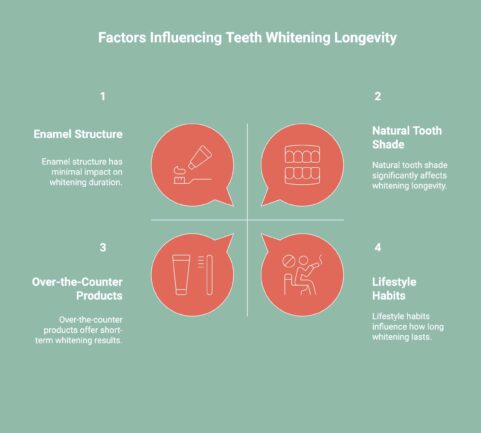
How long your teeth stay white depends on more than the treatment you choose. Your habits, oral care routine, and natural tooth characteristics all play a role in how quickly stains return and how well your whitening results hold up over time.
1. Lifestyle Habits That Affect Whitening Longevity
Every day habits have the biggest impact on how long whitening lasts. Drinks like coffee, tea, and red wine, along with smoking or chewing tobacco, reintroduce stains quickly. Even acidic foods can dull results, making mindful choices key to maintaining brightness.
2. Type of Whitening Treatment Used
Professional whitening treatments last longer because stronger bleaching agents penetrate deeper into enamel under dental supervision. Over-the-counter products work more gradually and fade sooner, often within months. Choosing between them is a balance between convenience, cost, and how long you want results to last.
3. Oral Hygiene Routine
Good oral hygiene protects your whitening investment. Brushing twice daily, flossing regularly, and removing plaque prevent new stains from settling. Adding whitening toothpaste occasionally and keeping up with professional cleanings can significantly extend the life of your brighter smile.
4. Natural Tooth Shade and Enamel Structure
Your natural tooth color affects both whitening results and longevity. Yellow-toned teeth respond better than gray or brown discoloration. Thinner enamel or intrinsic stains from medication or trauma may fade faster, making personalized expectations and dental guidance especially important.
Ultimately, everyone’s teeth are unique. Your dentist can help you set realistic expectations based on your specific teeth shade and condition, ensuring you choose a treatment that will work best for you.
To learn more about dental insurance costs, coverage options, and value, read this detailed guide.
How Can You Make Teeth Whitening Results Last Longer?
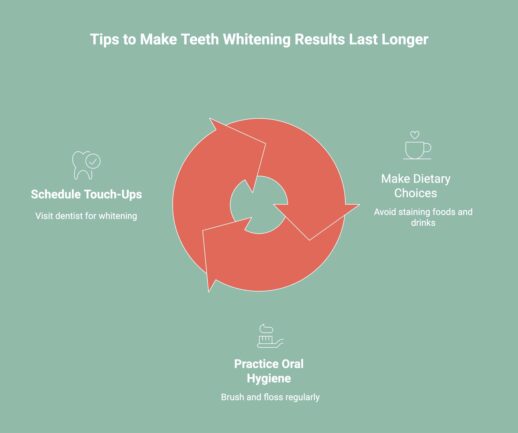
Teeth whitening delivers visible results, but keeping your smile bright requires ongoing care. Everyday choices, oral hygiene habits, and timely touch-ups all influence how long whitening effects last and how quickly stains return.
1. Dietary Choices That Help Prevent New Stains
What you eat and drink plays a major role in whitening longevity. Coffee, tea, red wine, dark berries, sauces, and tobacco can quickly re-stain teeth, especially right after treatment when enamel is more porous. Rinsing with water or brushing later helps reduce staining.
2. Oral Hygiene Habits That Protect Your Bright Smile
Consistent oral hygiene is essential for maintaining whitening results. Brushing twice daily, flossing regularly, and removing plaque prevent stains from settling. Using an electric toothbrush and occasional whitening toothpaste can help, while regular dental cleanings keep buildup from dulling your smile.
3. Knowing When to Schedule Touch-Up Treatments
Teeth whitening naturally fades over time, so touch-ups are normal. Professional whitening may need refreshing every one to two years, while at-home methods fade sooner. When your smile looks less bright, a dentist-guided touch-up can safely restore results.
With mindful habits and professional guidance, you can extend the life of your whitening treatment and enjoy a confident, brighter smile for longer.
Listen to your dentist’s advice on scheduling touch-up treatments. They can assess your teeth and recommend the best frequency to keep your smile looking radiant without over-treating. A quick touch-up is often all that’s needed to restore your smile’s brilliance.
Are There Side Effects From Teeth Whitening?
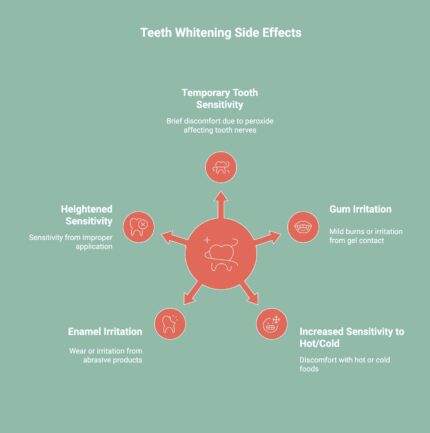
Teeth whitening is considered safe for most people, but mild side effects can occur, especially if products are overused or applied incorrectly. Understanding these effects helps you use whitening treatments more confidently and know when professional guidance is needed.
Here are the most common side effects associated with teeth whitening:
- Temporary tooth sensitivity, caused by peroxide penetrating the enamel and briefly affecting the tooth nerves.
- Gum irritation or mild burns, usually from whitening gel coming into contact with soft gum tissue.
- Increased discomfort with hot or cold foods, which typically fades soon after treatment ends.
- Enamel irritation or wear, most often linked to overuse of abrasive whitening products.
- Heightened sensitivity from improper application, such as poorly fitting trays or excessive product use.
If you experience severe pain, burning sensations, or prolonged sensitivity, stop whitening immediately and consult your dentist to protect your oral health.
Want to Get Long-Lasting Teeth Whitening Results? Visit the Dentist Tree of the Heights?
If you want to get long-lasting teeth whitening, the treatment you choose and how it’s done matter. At Dentist Tree of the Heights, professional whitening is designed to safely lift deep stains and deliver results that last longer than store-bought options.
Each treatment is tailored to your smile, helping protect enamel while maintaining brightness over time.
You also receive clear guidance on aftercare and touch-ups, so your results don’t fade quickly. Instead of short-term fixes, you get a whitening solution built for durability, comfort, and confidence.
Book your appointment today to explore long-lasting teeth whitening with expert care.
Conclusion
Understanding how long do teeth whitening results last starts with knowing the treatment you choose and how you care for your smile afterwards. Many people ask how long does dentist teeth whitening lasts, and the answer often depends on daily habits, diet, and oral hygiene.
The next step is protecting your results by limiting stain-causing foods, brushing consistently, and scheduling touch-ups when needed. With mindful care, whitening results can last longer and keep your smile looking bright, natural, and confidence-boosting over time.
Frequently Asked Questions
Does professional teeth whitening last longer than at-home treatments?
Professional whitening usually lasts longer because it penetrates deeper while protecting tooth enamel. Stronger formulas lift discoloration more evenly, producing longer-lasting brightness than at-home methods, which mainly target surface staining and require frequent touch-ups.
Can teeth whitening results fade unevenly over time?
Yes, whitening results can fade unevenly, especially when deep stains exist. Certain areas absorb whitening gel differently, so lifestyle habits and enamel thickness affect how evenly brightness holds, making some teeth darken faster than others.
When should I get my teeth whitened again after treatment?
Most people consider whitening again once the results of teeth noticeably fade. This timing varies by habits, diet, and oral care, but many wait several months to a year to maintain brightness safely.
How long do teeth whitening strips last?
Whitening strips typically last several months, depending on oral habits. They lighten teeth toward their natural color, but frequent exposure to staining foods or inconsistent use can shorten how long visible brightness remains.
How long does teeth whitening last from the dentist?
Dentist-performed whitening often lasts six to twelve months, sometimes longer. Because the whitening process is stronger and supervised, patients usually achieve whiter teeth that fade more slowly than results from over-the-counter options.
Are there certain foods or drinks that can shorten teeth whitening results?
Yes, coffee, tea, red wine, and tobacco products can quickly dull whitening results. These substances stain enamel and counter teeth brightness, especially soon after treatment when teeth are more absorbent.
How long do the effects of Crest White Strips last?
Crest White Strips results often last up to six months. Regular brushing and avoiding heavy-staining foods help preserve brightness, while inconsistent care or frequent staining habits may cause results to fade sooner.
How long does Zoom teeth whitening last?
Zoom whitening results commonly last about one year with proper care. This in-office treatment removes stains effectively, but maintenance depends on diet, hygiene habits, and avoiding frequent exposure to strong staining substances.
How long does LED teeth whitening last?
LED whitening results usually last several months. Longevity depends on the type of treatment used and aftercare. While effective for surface stains, results fade faster without maintenance or lifestyle adjustments.
How long does laser teeth whitening last?
Laser whitening performed in a dentist’s office can last up to a year or longer. The concentrated treatment deeply lifts stains, producing durable brightness when paired with good oral hygiene and mindful dietary choices.