

Key Highlights
- Hydrogen peroxide is an effective bleaching agent that breaks down stains to achieve whiter teeth.
- The whitening effect depends on the concentration and how long it’s applied.
- Common side effects of hydrogen peroxide include temporary tooth sensitivity and gum irritation.
- Overuse or high concentrations can potentially harm your tooth enamel.
- It is safest to use products with the ADA Seal of Acceptance or consult a dentist.
- Professional treatments offer the quickest and safest results.
- Dentist Tree of the Heights offers personalised, professional teeth whitening focused on long-lasting results.
Are you looking for a brighter, more confident smile? Many people are, and if you’ve explored teeth whitening, you have likely come across hydrogen peroxide.
This common ingredient is found in numerous whitening products, from toothpastes to professional treatments, and is known for its ability to tackle tough tooth stains. But does it actually whiten teeth, and is it safe to use?
This blog breaks down how hydrogen peroxide works, how effective it really is, and the safest ways to use it for lasting, healthy whitening results.
Can Hydrogen Peroxide Really Whiten Teeth?
Many people ask, “Can hydrogen peroxide whiten teeth?” or “Will hydrogen peroxide bleach teeth without causing damage?”
The simple answer is, yes, when used correctly, hydrogen peroxide teeth whitening is both effective and safe, provided you follow proper techniques, correct concentrations, and professional guidance when needed.
Teeth whitening continues to be one of the most requested cosmetic dental treatments worldwide. According to industry data, over 80% of adults want whiter teeth, and peroxide-based whitening remains the most commonly used method in both professional and at-home treatments.
Clinical studies also show that peroxide-based whitening can improve tooth shade by 2-8 shades, depending on concentration and application method.
How Does Hydrogen Peroxide Whiten Teeth on a Chemical Level?
The science behind hydrogen peroxide’s whitening power lies in a simple chemical reaction. When this active ingredient comes into contact with your teeth, it penetrates the porous outer layer, known as the enamel. Once inside, it releases unstable oxygen molecules that react with the discolored compounds, causing the stains.
This process, called oxidation, effectively breaks apart the chemical bonds holding the stains together. As the stain molecules are broken down, they become colorless, revealing the natural, whiter shade of your teeth.
This is how hydrogen peroxide whitens teeth on a chemical level, lifting both extrinsic (surface stains) and some intrinsic (deeper) stains without harming your long-term oral health when used correctly.
To learn more about enhancing both the look and function of your smile with advanced cosmetic options, read this comprehensive guide to aesthetic dentistry services in Houston, TX.
How to Whiten Teeth With Hydrogen Peroxide Safely?

Before trying any whitening method, it’s important to understand not just if hydrogen peroxide works, but how to use it safely to protect your teeth and gums. Below are the safest and most common ways to use hydrogen peroxide for teeth whitening:
1. Using Hydrogen Peroxide Whitening Toothpaste
Hydrogen peroxide toothpaste offers a gentle, gradual whitening option for daily use. These formulas help lift surface stains safely while protecting enamel, making them ideal for those wondering if hydrogen peroxide teeth whitening works with regular brushing.
- Brush at least twice daily.
- Spend two minutes per session.
- Use gentle strokes angled toward the gums.
2. Swishing With Hydrogen Peroxide Mouthwash or Rinse
Hydrogen peroxide rinses offer gentle, gradual whitening by breaking down surface stains while also reducing oral bacteria. When used in low, dentist-approved concentrations, they can lighten teeth slowly over time without aggressive bleaching, making them better suited for maintenance rather than dramatic whitening.
- Use solutions no stronger than 3%.
- Dilute with equal parts water if mixing at home.
- Swish for 60 seconds and spit completely.
3. Applying Hydrogen Peroxide Whitening Gels With Trays
Whitening gels deliver stronger, faster results, clearly answering whether hydrogen peroxide whitens teeth when used in professional or dentist-supervised treatments. Custom trays help control exposure and protect gums while maximizing whitening effectiveness.
- Brush and floss before application.
- Apply a small gel amount per tooth tray section.
- Wear trays only for the recommended time.
To learn more about building strong daily habits for healthier teeth and gums, read this complete oral hygiene guide.
What Factors Affect the Effectiveness of Hydrogen Peroxide Teeth Whitening?
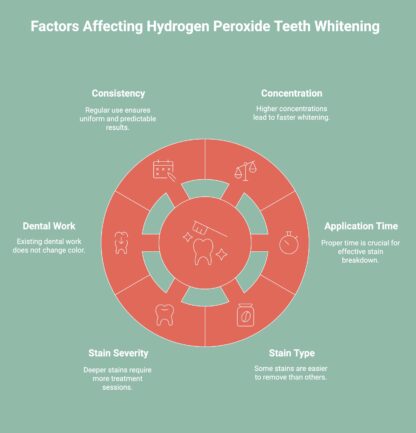
The effectiveness of hydrogen peroxide teeth whitening depends on how the treatment interacts with your teeth and stains. Here is how each factor affects whitening results and effectiveness:
- Hydrogen peroxide concentration determines how quickly oxidation occurs, with higher strengths producing faster, more noticeable whitening.
- Application time controls how long peroxide can break down stains, as too little time reduces results and too much may cause sensitivity.
- The type of stain affects responsiveness, with coffee, tea, and tobacco stains lifting more easily than medication-related discoloration.
- Severity and depth of stains influence how many sessions are needed, since deeper intrinsic stains require longer or repeated treatments.
- Existing dental work remains unchanged, creating contrast if natural teeth whiten while crowns or fillings stay the same shade.
- Consistency of use impacts uniformity, as regular, guided use leads to steadier and more predictable whitening outcomes.
Because these factors vary widely, whitening timelines can range from a single in-office visit to several weeks of gradual at-home treatment.
What Are the Potential Risks and Side Effects of Using Hydrogen Peroxide on Teeth?
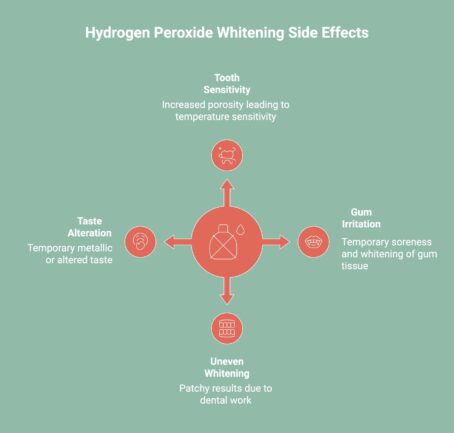
Hydrogen peroxide is effective for whitening, but improper or excessive use can lead to temporary side effects. Understanding how sensitivity, gum irritation, and enamel changes occur helps you use whitening products more safely while still achieving noticeable, long-lasting results.
1. Tooth Sensitivity and Enamel Weakening
Hydrogen peroxide can increase enamel porosity, allowing temperature sensitivity. Frequent or high-concentration use may weaken enamel, increase tooth translucency, and raise cavity risk by reducing the tooth’s natural protective barrier over time.
2. Gum Irritation and Soft Tissue Damage
When peroxide contacts gum tissue, it may cause temporary irritation, soreness, or whitening. Repeated exposure or improper application can intensify discomfort and delay healing, though symptoms usually resolve once treatment stops.
3. Uneven Whitening Results
Hydrogen peroxide does not whiten crowns, fillings, or veneers. Overuse may highlight colour differences between natural teeth and dental work, leading to patchy or uneven whitening, especially in areas with thinner enamel.
4. Temporary Taste Alteration
Some people experience a temporary metallic or altered taste after whitening. This occurs when peroxide irritates taste receptors and oral tissues, typically resolving within a few hours or days after discontinuing treatment.
Read our guide to learn more about dental insurance costs, coverage options, and whether a plan fits your needs.
Who Should Avoid Hydrogen Peroxide Whitening Treatments?
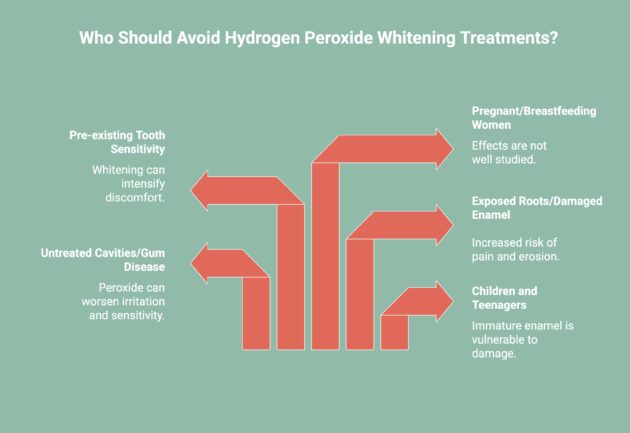
Hydrogen peroxide teeth whitening is effective, but it is not suitable for everyone. Certain oral health conditions and life stages can increase the risk of irritation or damage, making it important to assess your dental health before starting any whitening treatment.
Here are the groups who should avoid or use hydrogen peroxide whitening only with professional guidance:
- Children and teenagers with developing teeth, as whitening agents can affect immature enamel.
- Individuals with untreated cavities or gum disease, where peroxide may worsen irritation or sensitivity.
- People with exposed tooth roots or damaged enamel are at increased risk of pain and enamel erosion.
- Those with pre-existing tooth sensitivity, as whitening can intensify discomfort.
- Pregnant or breastfeeding women, since the effects of whitening agents are not well studied.
A dental evaluation helps determine whether whitening is safe for you and ensures any underlying issues are addressed before pursuing professional teeth whitening results.
Looking for Teeth Whitening That Truly Lasts?
If you’re hoping for teeth whitening that doesn’t fade right away, professional care can make all the difference. At Dentist Tree of the Heights, whitening treatments are thoughtfully tailored to your smile, helping lift stubborn stains while keeping your teeth healthy.
Every treatment is personalised to protect enamel, lift stubborn stains, and deliver natural-looking results that last. You’ll also receive clear, practical guidance to maintain your brighter smile long after treatment.
Book your consultation online today and explore whitening options tailored to your smile and lifestyle.
Conclusion
So, is hydrogen peroxide good for teeth? It can be, when used thoughtfully and with the right precautions. The key is understanding that whitening is not about faster or stronger application, but about consistency, correct concentration, and listening to your teeth. Paying attention to early signs like sensitivity or gum irritation helps you adjust before problems develop.
Taking time to learn safe usage methods and limits allows whitening to stay effective without harming enamel. With informed choices and patience, hydrogen peroxide can support a brighter smile while keeping your overall oral health on track.
Frequently Asked Questions
Is 3% hydrogen peroxide safe for everyday teeth whitening?
Yes, 3% hydrogen peroxide is generally safe for teeth whitening at low concentrations, but everyday use is not recommended. Daily exposure can increase tooth sensitivity and irritate gums, so occasional use with breaks and dental guidance is safer.
How long does it take to see results when using hydrogen peroxide?
Results from hydrogen peroxide whitening vary by stain severity and consistency. Many people notice subtle brightening within one to two weeks, while deeper stains may take several weeks of cautious, regular use to show visible improvement overall.
Are there any alternatives to hydrogen peroxide for whitening teeth at home?
Yes, there are several at-home teeth whitening alternatives to hydrogen peroxide. Options include whitening toothpaste, baking soda blends, activated charcoal, whitening strips, and custom-fit trays. Each varies in effectiveness, sensitivity, risk, and suitability, so results depend on consistency.
Is it safe to use hydrogen peroxide for teeth whitening at home?
Using hydrogen peroxide at home can be safe for teeth whitening when diluted correctly and used occasionally. Overuse or high concentrations increase risks like enamel wear, gum irritation, and sensitivity, making moderation and proper technique essential for safety.
Is it safe to swish your teeth with hydrogen peroxide?
Swishing hydrogen peroxide around your teeth is generally safe when diluted properly and not done daily. Undiluted peroxide or frequent rinsing can irritate gums, increase sensitivity, and disrupt oral tissues, so short contact times and infrequent use matter.
How to use hydrogen peroxide to whiten teeth?
To use hydrogen peroxide for teeth whitening, dilute it to a safe concentration, apply briefly with a soft toothbrush or tray, then rinse thoroughly. Limit use to a few times weekly to reduce sensitivity and protect enamel health.
Can you use hydrogen peroxide to clean your teeth?
Yes, hydrogen peroxide can clean teeth by reducing surface bacteria and stains. However, it is not a replacement for toothpaste. Overuse may weaken enamel, so it should support, not replace, regular brushing, flossing, and professional dental care routines.
Can I use hydrogen peroxide to whiten my teeth every day?
Using hydrogen peroxide every day to whiten teeth is not advised. Daily use increases sensitivity, gum irritation, and risks of enamel damage. Safer results come from limited, spaced applications combined with good oral hygiene habits and patience over time.