

Key Highlights
- At-home teeth whitening offers a convenient, cost-effective way to brighten your smile with gradual results.
- Choose products with hydrogen peroxide or carbamide peroxide for effective stain removal.
- For sensitive teeth, look for lower peroxide concentrations or products with potassium nitrate.
- Quick whitening methods like baking soda and lemon juice can provide immediate results, though temporary.
- Regular oral hygiene, including whitening toothpaste and dental cleanings, helps maintain results.
- Avoid overuse of whitening products to prevent tooth sensitivity and enamel damage.
- Professional whitening treatments offer faster and longer-lasting results for those seeking more dramatic improvements.
A bright, confident smile is something many people desire, but over time, our teeth naturally accumulate stains from food, drinks, and even the effects of aging. For some, this can lead to self-consciousness and a decrease in confidence. While professional teeth whitening treatments offer immediate and noticeable results, they often come with a hefty price tag and require time-consuming appointments.
The good news is that at-home teeth whitening has become a popular and effective alternative. With countless products available, at-home teeth whitening offers the convenience of improving your smile in the comfort of your own home, without disrupting your busy schedule or budget. From whitening strips to gels, there are many options to choose from, but finding what works best for your teeth and lifestyle is key.
In this blog, we’ll walk you through the benefits of at-home teeth whitening, what ingredients to look for, and the top products that deliver the best results. We’ll also cover some of the most common risks associated with at-home whitening and how to use these products safely to maintain your dental health.
Why Choose At-Home Teeth Whitening?
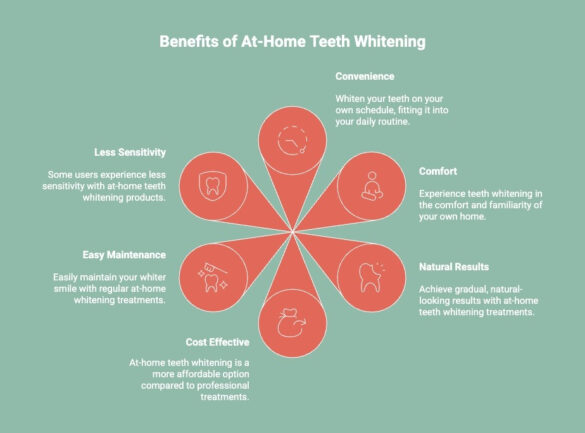
At-home teeth whitening offers a simple, flexible way to brighten your smile without disrupting your daily routine. It puts you in control of when and how you whiten, while still delivering visible results over time. When paired with good daily habits outlined in this guide to understanding oral hygiene, at-home whitening can be both effective and safe.
Here’s why you should choose at-home teeth whitening:
- Convenience on your schedule: Whiten your teeth when it suits you, whether that is during your evening routine or over the weekend, without clinic visits.
- Comfort and familiarity: Whitening at home allows you to stay in a familiar environment, which can be especially helpful if you feel anxious about in-office treatments.
- Gradual, natural-looking results: At-home treatments typically work over multiple sessions, helping teeth lighten evenly rather than appearing suddenly over whitened.
- Cost-effective option: At-home whitening is often more affordable than professional chairside treatments while still improving tooth brightness.
- Easy to maintain results: Many at-home kits can be reused for touch-ups, making it easier to maintain a brighter smile over time.
- Less sensitivity for some users: Slower whitening processes may reduce the risk of sudden tooth sensitivity compared to high-intensity treatments.
If you want this tightened further for a clinic page or adjusted for a patient education tone, I can refine it.
What Should You Look for in Safe Teeth Whitening at Home?
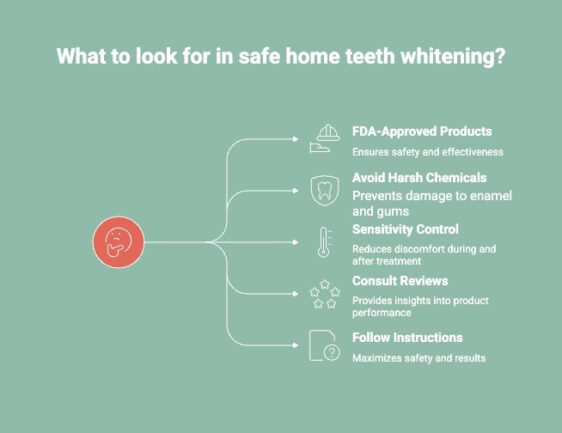
When considering at-home teeth whitening, it’s essential to prioritize safety to ensure you achieve the best results without harming your teeth or gums. With so many products and methods available, it’s easy to get lost in the options. Understanding what to look for in a safe whitening solution can help you avoid common pitfalls and ensure you’re making the right choice for your smile.
Below, we’ve highlighted key factors to consider when selecting a safe at-home whitening method:
- FDA-Approved Products: Always choose products that are FDA-approved for safety and efficacy.
- Avoid Harsh Chemicals: Look for whitening products with mild ingredients to prevent damage to tooth enamel.
- Sensitivity Control: Choose products designed for sensitive teeth, especially if you have a history of tooth or gum sensitivity.
- Consult Reviews and Ratings: Check user reviews to see how others have responded to the product, focusing on both effectiveness and safety.
- Follow Instructions Carefully: Be sure to follow the directions for each product to avoid overuse, which can harm your enamel.
By keeping these factors in mind, you can confidently choose a teeth whitening solution that is not only effective but also safe for your dental health. Remember, it’s always better to opt for a gentle approach and avoid any shortcuts that could lead to potential harm.
If you’re unsure about which whitening method is best for you, don’t hesitate to reach out to us for professional advice at Dentist Tree of the Heights. Your smile deserves the best care!
10 Best at-Home Teeth Whitening Products for Home Use: Which Ones Deliver the Best Results?
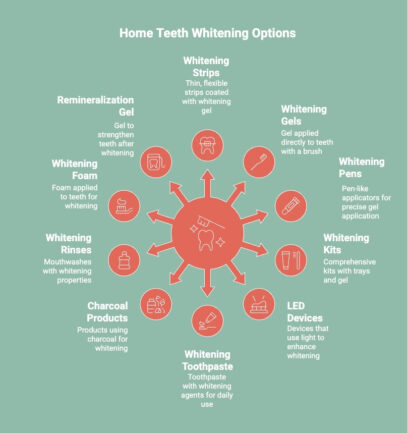
Achieving a bright, white smile from the comfort of your home has never been easier with the right teeth whitening products. With numerous options on the market, it’s crucial to select products that provide effective results without damaging your teeth. Below are 10 of the best teeth whitening products for home use that deliver fast, safe, and visible results.
1. Teeth Whitening Strips
- How They Work: Teeth whitening strips are coated with peroxide-based gel that adheres to your teeth to break down stains over time.
- Best for: Quick, visible results with minimal effort.
2. Whitening Gels
- How They Work: Whitening gels are applied directly to your teeth with a brush or tray, delivering whitening agents to remove deep stains.
- Best for: Those looking for more control over the whitening process.
3. Whitening Pens
- How They Work: Whitening pens are small, portable applicators that allow you to apply gel directly to the teeth. The gel dries quickly and doesn’t require rinsing.
- Best for: On-the-go whitening or targeted stain removal.
4. Teeth Whitening Kits with Trays
- How They Work: These kits include gel and a tray that holds it in place against the teeth. The whitening agent is absorbed over a longer period, leading to deeper whitening.
- Best for: A more comprehensive, at-home whitening solution.
5. LED Teeth Whitening Devices
- How They Work: LED whitening devices work in conjunction with a whitening gel to accelerate the whitening process, giving faster results.
- Best for: Those looking for the latest in whitening technology.
6. Teeth Whitening Toothpaste
- How They Work: Whitening toothpaste contains mild abrasives that help remove surface stains while polishing your teeth. It’s designed for daily use to maintain a white smile.
- Best for: Maintaining a bright smile with minimal commitment.
7. Charcoal Teeth Whitening Products
- How They Work: Charcoal works by binding to and lifting away stains and bacteria on your teeth.
- Best for: Those seeking a natural alternative to chemical whitening agents.
8. Whitening Rinses
- How They Work: Whitening mouthwashes often contain hydrogen peroxide or other agents that help whiten your teeth while you rinse.
- Best for: Freshening breath and whitening in one simple step.
9. Whitening Foam
- How They Work: Whitening foam is a newer method for brightening your smile. It’s applied with a pump and spreads easily across the teeth.
- Best for: Those looking for a quick and easy product for daily maintenance.
10. Home Teeth Whitening Remineralization Gel
- How They Work: Remineralizing gels help strengthen your enamel while whitening your teeth, reducing sensitivity.
- Best for: Those with sensitive teeth or anyone looking to enhance their tooth health during whitening.
If you need further assistance or want to explore professional whitening treatments, don’t hesitate to reach out to Dentist Tree of the Heights for personalized advice.
DIY Quick Teeth Whitening at Home in 2 Minutes: How Can You See Results Instantly?
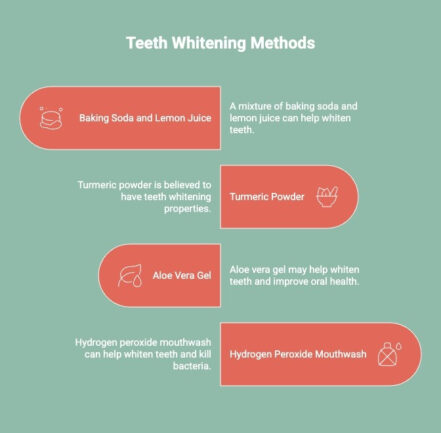
If you are looking for a quick way to brighten your smile, a few at-home natural remedies claim to show results in just minutes. While these options may help lift surface stains temporarily, they should be used carefully and with realistic expectations.
Below are some commonly used quick methods, along with what to avoid for each:
- Baking Soda and Lemon Juice: Can help remove surface stains from the surface of your teeth due to mild abrasion and acidity. Do not use it often, scrub hard, or leave it on longer than one to two minutes, as it can wear down enamel.
- Turmeric Powder: May reduce surface discoloration and support gum health with natural whitening properties. Do not use daily or brush aggressively, and rinse thoroughly to avoid staining gums or dental work.
- Aloe Vera Gel: Can soothe gums and offer mild cosmetic brightening. Do not use non-food-grade aloe or expect noticeable whitening results.
- Hydrogen Peroxide Mouthwash: May help lift surface stains when diluted and used briefly. Do not use undiluted peroxide, swish too long, or use it frequently, as this can irritate gums and increase sensitivity.
These methods may offer a short-term brightness boost, but they do not deliver lasting whitening. For more reliable results, consistent use of well-formulated at-home products or professional treatments is recommended, along with preventive care practices.
Potential Risks of At-Home Teeth Whitening: What Should You Avoid?
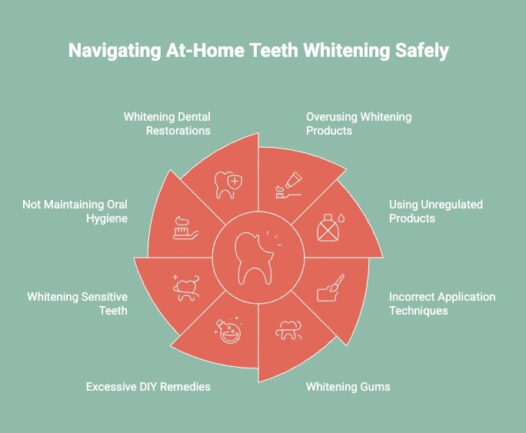
While at-home teeth whitening can provide great results, it’s important to be aware of potential risks that can arise if products are used improperly. Understanding these risks will help you make safer choices and protect your teeth and gums.
Here are some common mistakes to avoid when whitening at home:
- Overusing Whitening Products: Whitening products can be effective, but overuse can lead to tooth sensitivity and enamel damage. Always follow the recommended usage instructions and avoid excessive use.
- Using Unregulated Whitening Products: Some at-home whitening products may contain harmful ingredients. It’s important to choose FDA-approved or professionally recommended products to ensure safety.
- Incorrect Application Techniques: Incorrect application, such as leaving whitening products on for too long or unevenly applying them, can lead to inconsistent results or gum irritation. Always apply products carefully and as directed.
- Whitening Gums: Whitening products can irritate your gums, especially if they come into direct contact with them. Using properly fitted trays or strips helps prevent gum irritation.
- Excessive Use of DIY Remedies: Natural home remedies for teeth whitening, like baking soda or lemon juice, can be abrasive or acidic, potentially causing enamel erosion if used excessively. Moderation is key when using these methods.
- Whitening Sensitive Teeth: Whitening treatments can worsen sensitivity in people with already sensitive teeth. Choose products specifically designed for sensitive teeth or consult a dentist before using whitening treatments.
- Not Maintaining Oral Hygiene After Whitening: Failing to maintain regular oral hygiene after whitening can result in new stains forming quickly, diminishing the effectiveness of your whitening efforts.
- Whitening Crowns, Fillings, or Veneers: Whitening treatments only affect natural tooth enamel. Dental restorations like crowns, veneers, and fillings won’t lighten, leading to uneven coloration when your natural teeth become whiter.
By understanding the potential risks of at-home teeth whitening and following proper guidelines, you can achieve a brighter smile safely.
How to Maintain Your White Smile After Whitening?
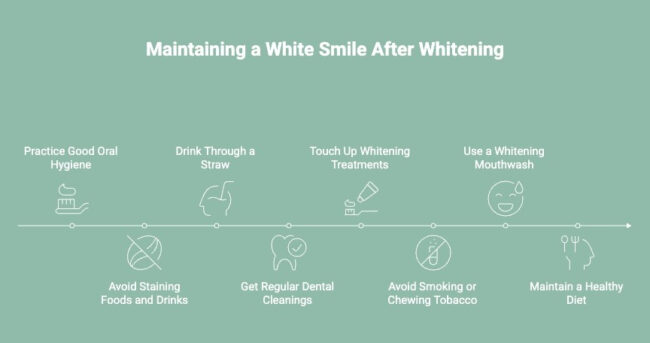
Achieving a bright, white smile is exciting, but keeping it that way requires some consistent effort. After whitening your teeth, adopting good habits can help preserve your results and ensure your smile stays radiant. Here are some essential tips for maintaining your white smile:
- Practice Good Oral Hygiene: Brush your teeth twice a day with a whitening toothpaste and floss daily to remove plaque and prevent staining.
- Avoid Staining Foods and Drinks: Limit your intake of foods and drinks that are known to stain teeth, such as coffee, tea, red wine, and berries. If you consume them, rinse your mouth with water afterward.
- Drink Through a Straw: Using a straw when drinking beverages like coffee or soda can help reduce direct contact between staining liquids and your teeth.
- Get Regular Dental Cleanings: Schedule professional cleanings with your dentist every six months to remove plaque buildup and maintain your teeth’s brightness.
- Touch Up Whitening Treatments: Use over-the-counter whitening products like strips or pens for periodic touch-ups to keep your teeth bright and fresh.
- Avoid Smoking or Chewing Tobacco: Tobacco products can stain your teeth and significantly impact the longevity of your white smile. Consider quitting for long-term oral health.
- Use a Whitening Mouthwash: Incorporate a whitening mouthwash into your daily routine to help prevent new stains and keep your smile sparkling.
- Maintain a Healthy Diet: Eating crunchy fruits and vegetables can help keep your teeth clean and promote oral health, preventing stains from setting in.
Looking for professional whitening touch-ups or advice? Contact Dentist Tree of the Heights to keep your smile at its best.
Why Choose Dentist Tree of the Heights for Your Whitening Needs?
If you’re looking for a safe, effective, and professional teeth whitening experience, Dentist Tree of the Heights is here to help. While at-home whitening solutions can be effective, professional treatments offer faster, more lasting results tailored to your specific needs. Our team of experienced dentists will work with you to determine the best whitening method for your smile, whether it’s in-office treatments or personalized at-home kits.
- Expert Care: With years of experience, our dentists provide personalized, professional whitening treatments for optimal results.
- Customized Solutions: We offer treatments that are suited to your dental health and specific whitening goals, ensuring safe and effective results.
- Comfort and Convenience: We prioritize your comfort and convenience, providing a relaxed, stress-free environment for all our services.
- Long-Lasting Results: Our whitening treatments are designed to deliver longer-lasting, brighter smiles compared to over-the-counter products.
Contact us today at Dentist Tree of the Heights to schedule a consultation and find out how we can help you achieve a whiter, healthier smile that lasts.
Conclusion
At-home teeth whitening can be a convenient option, but it’s essential to be mindful of the risks to protect your dental health. By using products as directed and following best practices, you can safely brighten your smile. If you’re looking for more effective, long-lasting results, or if you have concerns about sensitivity or safety, professional whitening treatments are a great next step.
Frequently Asked Questions
Are at-home teeth whitening kits safe for sensitive teeth?
Yes, many at-home kits are designed for sensitive teeth. Look for a peroxide gel with a lower concentration or formulas containing potassium nitrate, which helps reduce tooth sensitivity. Following the directions is crucial to protect your oral health and prevent discomfort. If you have concerns, consult your dentist first.
Can baking soda really whiten teeth effectively?
Baking soda, or sodium bicarbonate, can help remove surface stains due to its mild abrasive nature, making teeth appear brighter. However, it does not change the intrinsic color of your teeth. Be careful not to scrub too hard, as this can lead to enamel erosion over time.
How long does it take to see results from at-home whitening?
The amount of time to see results varies by product. Some people notice a difference after just a few days of regular use, while for others, the whitening process may take up to two weeks for full results. The effectiveness of the whitening treatment depends on stain severity and consistency.
What should I avoid to prevent damaging my teeth during whitening?
To prevent damage, avoid overusing whitening products or choosing high concentrations of peroxide if you have sensitive teeth. Always follow the recommended duration and frequency to protect your tooth enamel from enamel erosion. Discontinue use if you experience significant or lasting side effects and consult a dentist.
Which natural teeth whitening home remedies actually work?
Natural teeth whitening home-made remedies like baking soda, hydrogen peroxide, coconut oil pulling, and activated charcoal can help remove surface stains. However, they may not provide dramatic results and should be used carefully to avoid enamel damage.
Are drugstore teeth whitening kits effective?
Drugstore whitening kits can be effective for removing surface stains, particularly those containing peroxide-based gels or strips. Results vary, and consistency is key. Professional treatments often offer faster, more noticeable results for long-term whitening.
Does LED light actually work to whiten teeth?
LED light can accelerate the whitening process when used with a whitening gel, helping to break down stains more quickly. However, it works best as part of a complete whitening system rather than on its own.
What ingredients should you look for in a teeth whitening kit?
When searching for the best teeth whitening from home, look for kits containing hydrogen peroxide or carbamide peroxide, which effectively break down stains. Choose products with enamel-safe ingredients and avoid overly abrasive agents to prevent tooth sensitivity or enamel damage.